Two of the world’s largest alcohol companies—France’s Pernod Ricard and the U.S.-based Brown-Forman, owner of the Jack Daniel’s brand—officially confirmed on March 26, 2026, that they are in talks regarding a potential merger. This would be one of the largest mergers in the history of the alcohol industry, creating an entity capable of challenging the global leader—the British company Diageo.
Market context and valuations
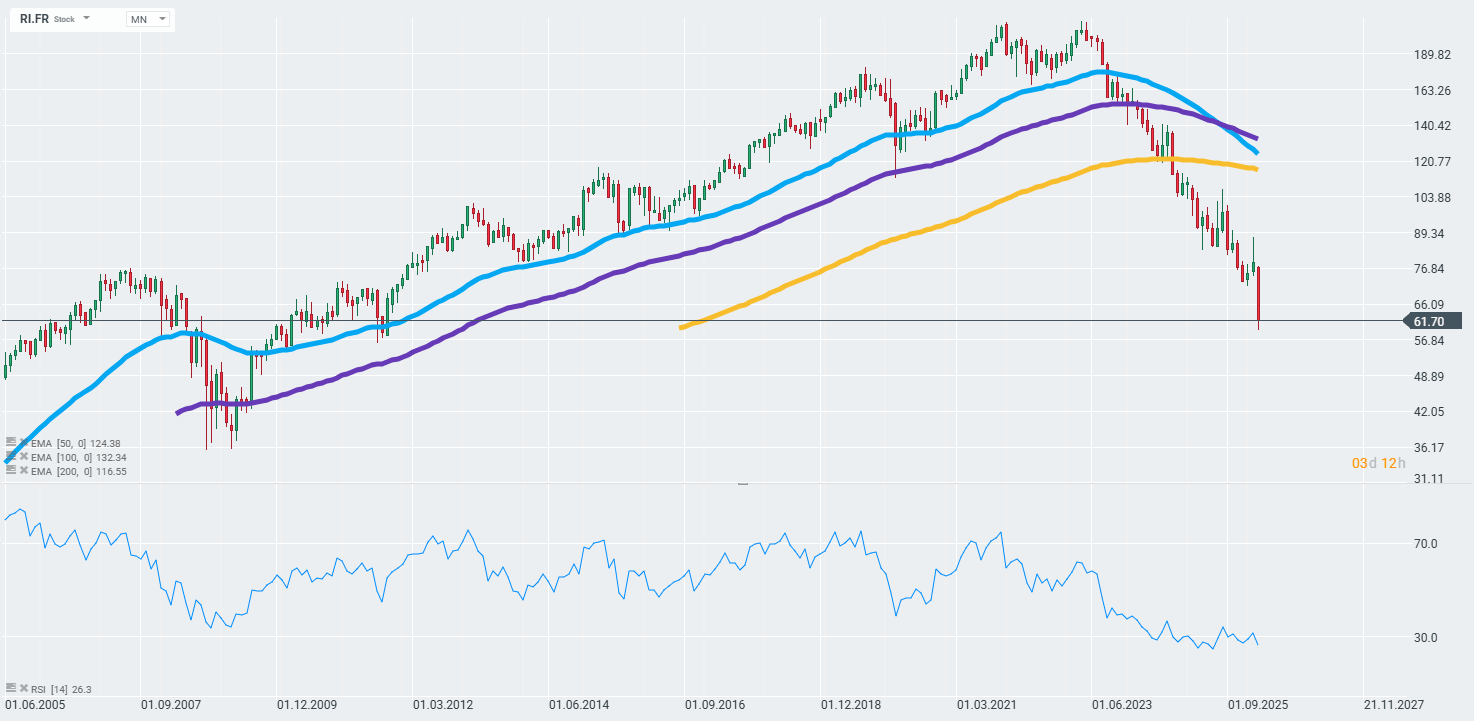
Pernod Ricard is entering these negotiations from a significantly weakened market position. The company is currently valued at approximately €15.6 billion, while its shares have lost nearly three-quarters of their value since their 2023 peak. The P/E ratio stands at just 10.33x—the lowest since 2009—with the share price at €61.70. At the same time, the dividend yield has risen to 7.62%, the highest in the company’s history. Brown-Forman, with a market capitalization of $11.8 billion, has also lost about two-thirds of its value since its 2021 peak.
Brand portfolios and strategic logic
A merger of the two companies would create an impressive portfolio of global brands—Pernod would bring Absolut Vodka, Jameson Irish Whiskey, Martell Cognac, Chivas Regal, Ballantine’s, Beefeater, and Havana Club, while Brown-Forman would contribute Jack Daniel’s, Herradura Tequila, Fords Gin, and Diplomatico Rum. Jefferies analysts emphasize that the combined entity would become the second-largest player in the U.S. market (after Diageo), and the synergy between the Jack Daniel’s and Jameson brands could create a halo effect for the broader portfolio. Such a transaction would potentially create a leader in the American whiskey segment and strengthen Pernod’s position in tequila—which aligns with the company’s strategy to diversify beyond cognacs.
Transaction structure and family ownership
A key feature of the planned merger is that it will be a stock-for-stock transaction. Pernod is grappling with a financial leverage ratio of 3.9x net debt/EBITDA, which virtually rules out a cash transaction. Both families—the Ricards on the French side and the descendants of George Garvin Brown on the American side—would contribute large blocks of shares to the new entity, retaining a combined total of approximately 29% of the economic interest and 39% of the voting rights in the combined company. It is precisely Pernod’s family-owned nature that facilitates reaching an agreement, as the Brown family—which has historically rejected all takeover proposals—may be willing to accept a stock-for-stock deal while retaining control.
The causes of the structural crisis
The spirits industry is undergoing a severe downturn caused by a confluence of several adverse trends. Consumers in the U.S. and Europe are switching to cheaper alcoholic beverages and cutting back on consumption, partly due to the popularity of GLP-1 weight-loss drugs and growing competition from marijuana. Brown-Forman is also grappling with the consequences of U.S. trade tariffs; sales in Canada fell by about 60% over three months due to retaliatory restrictions. Pernod, in turn, is feeling the effects of Chinese restrictions on duty-free sales of cognac, introduced in retaliation for EU tariffs on Chinese electric cars.
Market reaction and Wall Street analysts’ assessments
The market reacted to the news of the talks with mixed feelings: Brown-Forman shares rose as much as 21% during the session (a daily record), while Pernod shares initially fell by 6% before rebounding by 4.2% on Friday. Deutsche Bank upgraded its recommendation on Pernod from “sell” to “hold,” but analyst Mitch Collett remained skeptical about the ability to create real value for shareholders. Barclays and Bernstein remain constructive, recognizing significant potential for cost synergies, but note that no merger will solve the fundamental problem of weak revenue growth across the entire industry. TD Cowen analysts, in turn, point out that the Brown family’s willingness to engage in talks alone may signal a structurally weaker growth environment for the entire sector—which in itself is a troubling message for investors.
The company’s shares are trading at their lowest levels since 2011.
Source: xStation
The material on this page does not constitute financial advice and does not take into account your level of understanding, investment objectives, financial situation or any other specific needs. All information provided, including opinions, market research, mathematical results and technical analyzes published on the Website or transmitted To you by other means, it is provided for information purposes only and should in no way be construed as an offer or solicitation for a transaction in any financial instrument, nor should the information provided be construed as advice of a legal or financial nature on which any investment decisions you make should be based exclusively To your level of understanding, investment objectives, financial situation, or other specific needs, any decision to act on the information published on the Website or sent to you by other means is entirely at your own risk if you In doubt or unsure about your understanding of a particular product, instrument, service or transaction, you should seek professional or legal advice before trading. Investing in CFDs carries a high level of risk, as they are leveraged products and have small movements Often the market can result in much larger movements in the value of your investment, and this can work against you or in your favor. Please ensure you fully understand the risks involved, taking into account investments objectives and level of experience, before trading and, if necessary, seek independent advice.