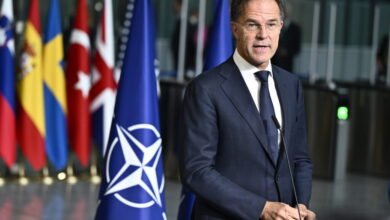
Carving Up the World: The Geopolitical Landscape of Major Powers

The Tensions of Taiwan: China’s Assertive Moves
In recent years, the Taiwan Strait has emerged as a focal point for escalating tensions, primarily due to China’s assertive military and diplomatic maneuvers. China has conducted extensive military drills near Taiwan, showcasing its growing capabilities and unwillingness to tolerate what it perceives as challenges to its sovereignty. These drills are often timed to coincide with significant political events in Taiwan or international events involving the United States, demonstrating a clear strategy to assert dominance in the region.
China’s motivations for its aggressive posture towards Taiwan are multifaceted. Primarily, the Chinese government views Taiwan as a breakaway province that must be reunited with the mainland, by force if necessary. The long-standing policy of reunification underpins China’s national identity and the legitimacy of the Communist Party’s rule. Furthermore, Taipei’s increasing ties with Washington have aggravated these tensions, as the United States has consistently affirmed its commitment to Taiwan’s defense, albeit ambiguously.
The implications of these actions extend beyond the strait itself and significantly affect U.S.-China relations. Each demonstration of military might by China is met with a strategic recalibration by the U.S. and its allies, which can ignite an arms race or lead to a greater military presence in the Indo-Pacific region. As such, U.S. policymakers face the challenge of balancing support for Taiwan while avoiding direct confrontation with China.
Moreover, the broader geopolitical landscape is impacted as nations in the region observe closely. Countries such as Japan, Australia, and members of the Association of Southeast Asian Nations (ASEAN) increasingly recognize the necessity of strengthening ties to counterbalance China’s assertive approach. The situation in the Taiwan Strait exemplifies the precarious nature of power dynamics in a multipolar world, highlighting the potential for miscalculations that could lead to significant conflict.
Russia and Ukraine: A Continuing Conflict
The ongoing conflict between Russia and Ukraine, which erupted in 2014, continues to shape the geopolitical landscape of Eastern Europe. At the heart of this strife is Russia’s annexation of Crimea and its support for separatist movements in Eastern Ukraine, fundamentally challenging international norms regarding sovereignty and territorial integrity. Military engagements have escalated, with both conventional and hybrid warfare tactics employed by Russia, reflecting its strategic goals of maintaining influence in the region.
Recent developments have indicated an uptick in military activities, with increased troop presence along the borders and periodic skirmishes in the Donbas region. The use of advanced weaponry and cyber operations has further complicated the conflict, demonstrating Russia’s capabilities in modern warfare. Ukraine, bolstered by international support, particularly from NATO and European Union nations, has sought to strengthen its defenses and assert its sovereignty. This escalating tension highlights a significant confrontation between Russian ambitions and the West’s commitment to upholding European security.
International responses to the conflict have varied, with Western nations imposing sanctions on Russia in an attempt to deter further aggression. These sanctions aim to cripple Russia’s economy and signal a collective stance against violations of international law. NATO’s enhanced presence in Eastern Europe also signifies a commitment to collective defense, aimed primarily at reassuring member states near Russia. Nonetheless, diplomatic solutions remain elusive, as Russia continues to pursue its strategic interests while navigating the complex geopolitical dynamics of Europe.
In this context, the Russia-Ukraine conflict remains a pivotal point in the broader discussion regarding power, influence, and security in Europe. The outcomes of this protracted struggle have profound implications for international relations and will continue to impact the geopolitical landscape for the foreseeable future.
America’s Reach: Venezuela and Greenland
The geopolitical landscape of Latin America and the Arctic has seen a significant influence from the United States, particularly marked by its strategies pertaining to Venezuela and Greenland. In Venezuela, the U.S. has adopted a foreign policy aimed at fostering political stability amidst the country’s enduring turmoil. The nation’s descent into chaos posed not only humanitarian concerns but also threats to regional security and American interests. By supporting opposition movements and imposing sanctions on the Maduro regime, the U.S. strives to curb authoritarianism and promote democratic governance.
Furthermore, the importance of Venezuela as a country rich in oil resources cannot be overlooked. The U.S. stance on Venezuela intertwines with its energy policies and broader regional ambitions, reflecting a desire to secure a reliable energy supply and reduce dependence on foreign oil. Consequently, U.S. actions in Venezuela are emblematic of a strategy to stabilize the region and ensure that its influence remains predominant in the face of rival powers, notably Russia and China, which have also expressed interest in the country’s oil sector.
In the Arctic, the U.S. is keen to solidify its claims and strategic positioning, particularly through its interest in Greenland. The region has gained attention due to its potential for vast natural resources and new shipping routes made accessible by climate change. The U.S. has actively sought partnerships and initiatives to bolster its presence in Greenland, both through direct government outreach and support for indigenous aspirations for economic development. As Arctic navigation increases, ownership over territorial waters becomes paramount, and the U.S. aims to assert its influence while countering the advancements made by other global powers in this increasingly contested space.
A Three-Way Standoff: The Implications for Global Order
The current geopolitical landscape is profoundly shaped by the strategic maneuvers of three dominant powers: the United States, Russia, and China. The interactions among these nations signify a complex three-way standoff, where regional tensions and power plays influence global stability. Each superpower’s ambition impacts international relations, presenting both potential pathways to conflict and avenues for cooperation.
Russia’s assertive actions, particularly in Eastern Europe and the Arctic, display its intention to re-establish its status on the world stage. Simultaneously, China’s rapid economic rise and military modernization have led to assertiveness in the South China Sea and beyond, challenging U.S. influence in the Asia-Pacific. Meanwhile, the United States remains committed to its allies, promoting a rules-based international order that counters the expansionist tactics of its rivals. This dynamic creates a precarious balance where regional disputes can escalate into broader confrontations.
Despite the power rivalry, the potential for cooperation exists. For instance, climate change and global health emergencies demand collaborative efforts that transcend nationalistic agendas. However, the distrust rooted in past grievances complicates such cooperation, suggesting a propensity towards a divided world. The implications of this standoff could lead international policy into uncharted territory, where decisions made by these powers affect not only their bilateral relations but also the entire global order.
As these superpowers navigate their interests, the international community must remain vigilant and engaged. The future of global order depends on how effectively they balance competition with collaboration, ultimately influencing peace and stability across the globe.