Facts:
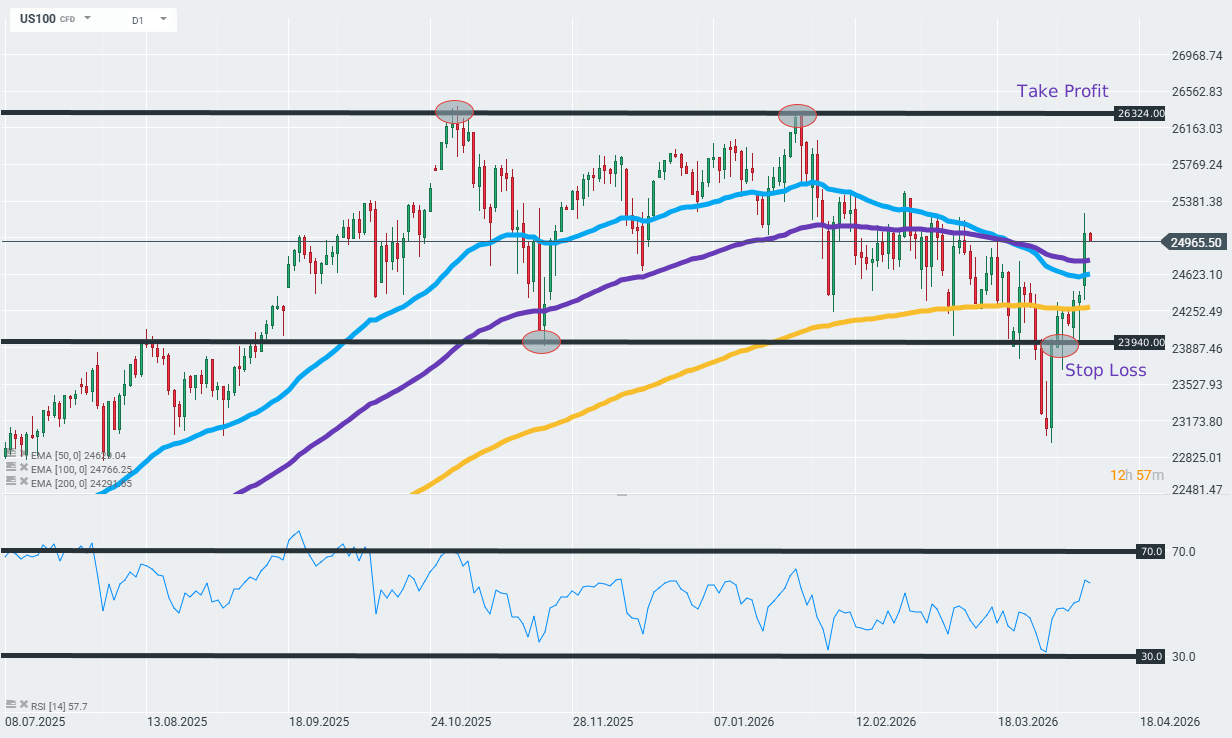
- The US100 index has broken above the 50-day, 100-day, and 200-day EMAs
- The RSI (14) is 57.7
Recommendation:
Trade: Long position on US100 at market price
Take Profit: 26,324.00
Stop Loss: 23,940.00
Opinion:
The key catalyst for the market rebound remains the marked geopolitical thaw in the Middle East. The United States, Israel, and Iran have agreed to a two-week ceasefire, under which Iran has confirmed the resumption of free transit through the Strait of Hormuz—a route through which nearly 20% of the world’s oil and gas supplies pass. The reduction in the geopolitical risk premium has eased pressure on energy commodity prices and restored investor appetite for risky assets. However, it is worth remaining vigilant—the ceasefire is temporary, and the issue of the Strait of Hormuz may be put to the test again, for example in the face of reports of possible underwater mines or unresolved terms of the agreement. For the market, however, this may signal the formation of a local bottom—the agreement has effectively boosted sentiment, and any sporadic tensions will likely be viewed as a buying opportunity rather than a signal to retreat.
Regardless of geopolitical developments, the upcoming Q1 2026 earnings season provides solid fundamental support for long positions in the US100. Earnings estimates for the S&P 500 are higher than at the start of the quarter, and companies are showing above-average optimism in their forecasts. See the supporting chart below. Strong corporate earnings, if they confirm the outlined trends, could serve as a catalyst for the US100 to return toward the Take Profit level at 26,324 points.
Methodology and assumptions:
This recommendation is based on technical and fundamental analysis of the US100 chart. Classical technical analysis was used to assess the situation and analyze the trend. The target level—take profit 1—was set at the level of previous price reactions near historical highs, using price action methodology. The defensive stop-loss order was set above the most recent local peak of the consolidation zone using price action methodology.
Attachments:
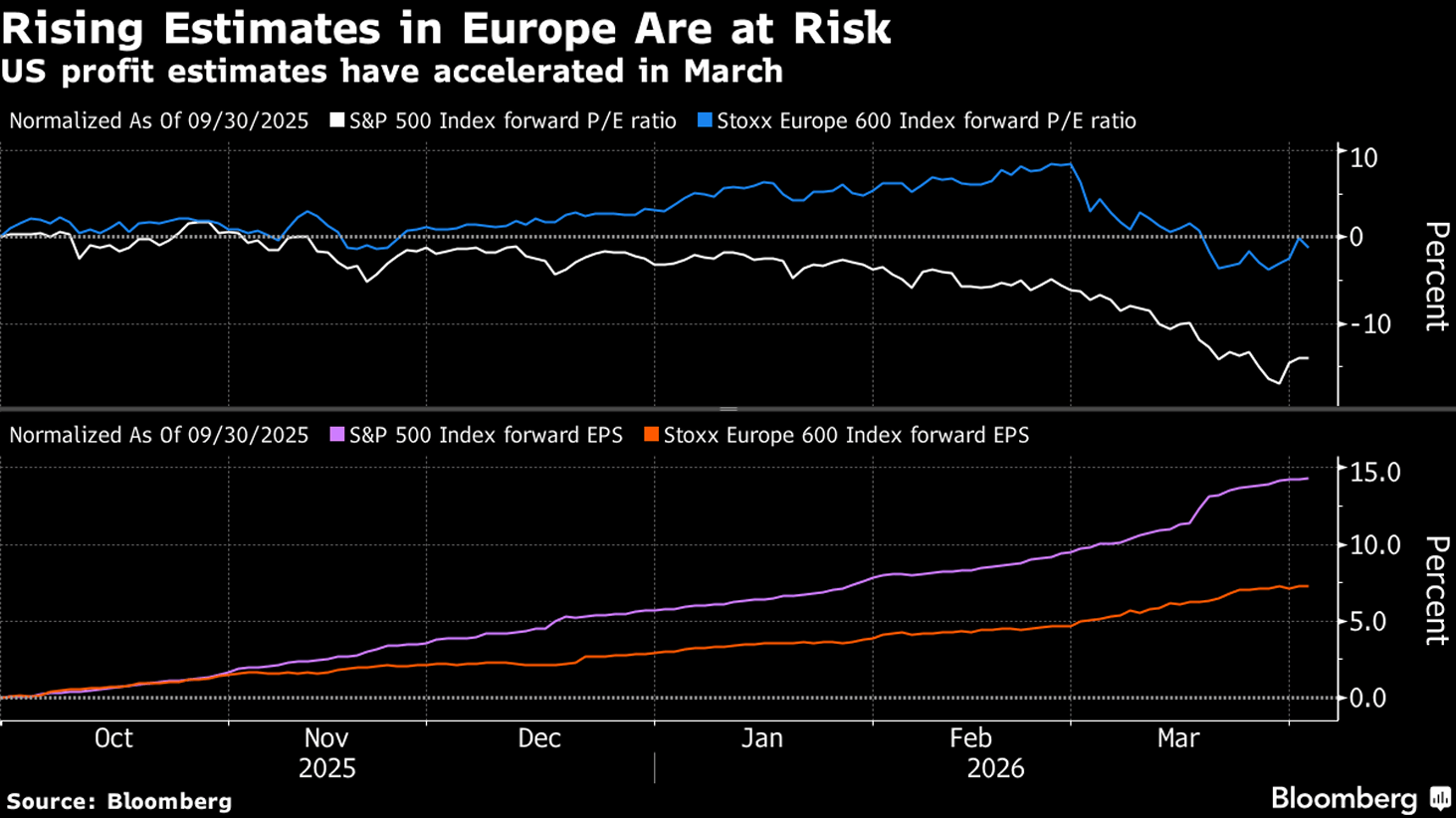
As the Bloomberg data above shows, U.S. stock indices have fallen much more sharply in recent months compared to their European counterparts, while earnings per share (EPS) revisions have risen much more slowly in Europe than for Wall Street companies during the same period. Source: Bloomberg Financial LP