S&P 500 — US Large Cap Index
 FTSE 100 — UK Blue Chips
 Euro Stoxx 50 — Eurozone Leaders
 DAX 40 — German Equities
 CAC 40 — French Market Index
 Nikkei 225 — Japan Benchmark
 Hang Seng — Hong Kong Index
 Shanghai Composite — China Mainland
 ASX 200 — Australian Market
 TSX Composite — Canada Index
 Nifty 50 — India Large Cap
 STI Index — Singapore Market
 KOSPI — South Korea Index
 Bovespa — Brazil Equities
 JSE Top 40 — South Africa Index
 IPC Index — Mexico Market
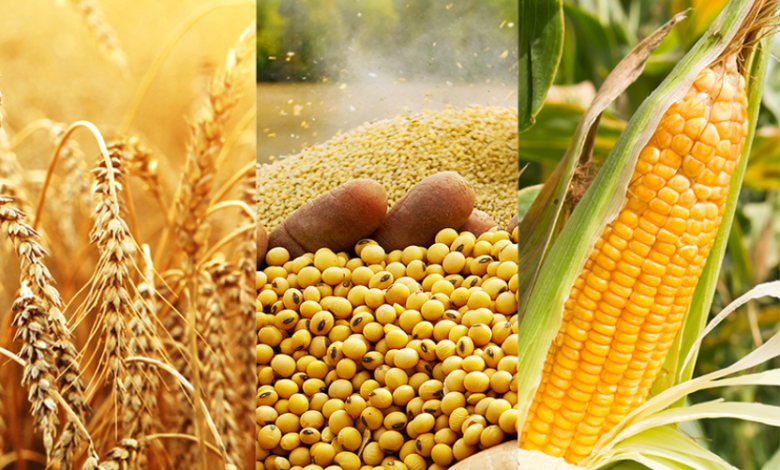
The key story is the divergence across agricultural commodities: sugar, corn and oats are under pressure, while canola is posting a modest gain. For the outlook, the important question is whether these moves develop into a broader weakness across agricultural markets or remain commodity-specific.
Market Snapshot
- Market trend: Mixed, with a bearish bias across several agricultural commodities
- Leading loser: Sugar, down 0.90%
- Other declines: Corn, down 0.77%; oats, down 0.72%
- Leading gainer: Canola, up 0.53%
- Key drivers to monitor: Crop supply, weather conditions, export demand, inventories and broader commodity-market sentiment
Sugar Price Outlook: Downside Pressure Persists
Sugar is leading the agricultural commodity declines, falling 0.90% as selling pressure weighs on the market. The next move will depend on the balance between global sugar availability and demand from food manufacturers, consumers and industrial users.
Ample supplies, favourable crop prospects in major producing countries or weaker import demand could reinforce the downward trend. Conversely, adverse weather, production disruptions or stronger export demand could provide support and trigger a recovery.
Market participants should monitor crop estimates, export availability and changes in inventories to determine whether the current weakness is developing into a sustained decline or creating the conditions for stabilisation.
Corn Market: Demand and Crop Supply in Focus
Corn is down 0.77%, placing it among the weakest-performing agricultural commodities in the current snapshot. Its outlook will depend on the interaction between harvest progress, crop yields, export competitiveness and demand from livestock feed and ethanol production.
Expectations of abundant harvests could continue to weigh on prices, particularly if inventories increase and overseas buyers have sufficient supply options. However, adverse weather, lower-than-expected yields or stronger export demand could alter the balance and support a rebound.
The coming sessions are likely to place greater emphasis on crop production estimates, export sales and evidence of changing demand. Until a clearer catalyst emerges, corn remains exposed to further fluctuations as traders reassess the global supply-demand balance.
Oats: Further Weakness Remains Possible
Oats are down 0.72%, extending the pattern of losses across several agricultural markets. Price direction will depend on crop availability, regional weather conditions, feed demand and the competitiveness of alternative grains.
If supplies remain comfortable and demand fails to strengthen, prices could face additional pressure. A deterioration in crop prospects or a recovery in feed demand, however, could help stabilise the market.
Traders should watch for changes in production expectations and inventory levels rather than assuming that the current decline will necessarily continue.
Canola: Relative Strength Amid Mixed Conditions
Canola is the strongest performer in the snapshot, gaining 0.53% while sugar, corn and oats move lower. Its positive performance suggests that agricultural commodities are not moving uniformly, with individual supply-demand factors continuing to influence price direction.
Canola prices may find support from concerns over oilseed production, weather-related risks, export demand and demand for vegetable oils and biofuel feedstocks. The strength of competing oilseeds and changes in global vegetable-oil inventories will also be important.
To establish whether the advance can continue, market participants should look for confirmation from physical demand, export activity and production estimates. A single session of gains is not sufficient to confirm a sustained bullish trend.
Macroeconomic Outlook: Currencies, Energy and Agricultural Trade
Agricultural commodities are influenced by more than crop fundamentals. Exchange rates can change the competitiveness of exports, while energy prices affect fuel, fertiliser, processing and transportation costs.
A stronger US dollar can make dollar-denominated commodities more expensive for some overseas buyers, potentially affecting demand. Currency movements also influence the local-currency revenues received by exporters and the cost of imported agricultural inputs.
Energy-market fluctuations can have mixed effects. Higher fuel and fertiliser costs may increase production expenses, while changes in biofuel economics can affect demand for corn and vegetable oils, including canola.
Global trade conditions, interest rates and economic growth will remain important background factors. However, the impact will differ across commodities, making individual crop balances and regional supply conditions essential to the forecast.
Bullish Scenario: Supply Risks Support a Recovery
Agricultural commodities could recover if supply concerns intensify or demand proves stronger than expected.
Potential upside catalysts include:
- Adverse weather affecting crop yields in major producing regions.
- Stronger-than-expected export demand for sugar, corn, oats or canola.
- Lower production estimates or declining inventories.
- A recovery in industrial, feed or biofuel demand.
- Currency movements that improve export competitiveness in key producing countries.
Under this scenario, the current losses could attract buying interest, particularly in markets where production risks increase or available supplies become tighter. Confirmation would require stronger price action alongside improving physical-market indicators.
Bearish Scenario: Abundant Supplies Extend the Declines
The downside scenario remains relevant if crop availability is comfortable and demand fails to absorb production.
Key risks include:
- Favourable harvest conditions and higher-than-expected yields.
- Rising inventories or increased export availability.
- Weaker import demand from major consuming countries.
- Reduced demand from livestock feed, food processing or biofuel production.
- Currency and trade conditions that intensify competition among exporters.
If these factors persist, sugar, corn and oats could face further pressure. Canola’s relative strength could also fade if oilseed supply expands or demand expectations weaken.
Agricultural Commodities Forecast
The short-term outlook is mixed, with sugar, corn and oats showing downside momentum while canola provides a contrasting positive signal.
Sugar’s 0.90% decline makes it the weakest of the four commodities, followed by corn at 0.77% lower and oats at 0.72% lower. Canola’s 0.53% gain indicates that the broader agricultural complex is experiencing divergent price movements rather than a uniform sell-off.
The next phase will depend on whether the declines are supported by fundamental changes in supply and demand. Strong harvests and comfortable inventories would favour continued weakness, while production risks or stronger buying could encourage stabilisation.
For now, the outlook favours close monitoring of individual market fundamentals rather than treating the agricultural sector as a single directional trade.
Market Outlook: What to Watch Next
Market participants should focus on crop production forecasts, harvest progress, weather developments, export sales and inventory data. For sugar, production and export availability will be central. Corn traders will need to assess harvest yields, feed consumption and ethanol demand, while oats will remain sensitive to regional crop conditions and alternative-grain pricing. Canola’s performance will depend on oilseed supply, vegetable-oil demand and biofuel-related developments.
Currency movements and energy prices should also remain on the watchlist because they can influence production costs and international competitiveness.
If supply remains plentiful and demand subdued, the weaker-performing commodities could face additional selling pressure. If crop risks increase or demand strengthens, a recovery becomes more plausible. The market’s direction will depend on whether the next round of fundamental data confirms or challenges current expectations.
Currency Hedger View
Diverging agricultural commodity prices highlight the importance of assessing individual market conditions alongside foreign exchange exposure. For agricultural traders, importers, exporters and food manufacturers, commodity-price changes and currency movements can combine to affect procurement costs, sales revenues and operating margins.
A stronger or weaker currency can alter the effective cost of imported sugar, corn, oats and oilseeds, while also changing the value of export receipts. Businesses with international supply chains should therefore assess both commodity-price risks and the currencies in which their costs and revenues are denominated.
Currency Hedger monitors foreign exchange markets alongside broader commodity and macroeconomic conditions, helping businesses assess and manage their international currency exposure.
Open a Currency Hedger Account: https://currencyhedger.numito.com/onboarding
Currency Hedger: https://currencyhedger.numito.com/onboarding
Website: https://currencyhedger.com/
Analysis: Louis Roche, Today Markets
Disclaimer: This material is provided for informational and analytical purposes only and does not constitute investment advice, a recommendation or an offer to buy or sell any financial instrument or commodity. Market prices can fluctuate significantly, and forecasts are uncertain. Readers should conduct their own research and consider their individual circumstances before making financial decisions.