S&P 500 — US Large Cap Index
 FTSE 100 — UK Blue Chips
 Euro Stoxx 50 — Eurozone Leaders
 DAX 40 — German Equities
 CAC 40 — French Market Index
 Nikkei 225 — Japan Benchmark
 Hang Seng — Hong Kong Index
 Shanghai Composite — China Mainland
 ASX 200 — Australian Market
 TSX Composite — Canada Index
 Nifty 50 — India Large Cap
 STI Index — Singapore Market
 KOSPI — South Korea Index
 Bovespa — Brazil Equities
 JSE Top 40 — South Africa Index
 IPC Index — Mexico Market
The year 2026 brings heavy turbulence to the gold market: first, massive rallies to levels above $5,500, motivated by central bank purchases, acquisition plans, and market uncertainty; followed by sharp declines related to profit-taking amid a significant increase in market risk and demand for cash. What is currently happening in the central bank purchasing market?
Central banks intended to continue purchasing gold for their reserves in 2026, diversifying away from the US dollar. The war in Iran has raised questions about whether central banks will start using gold to offset the impact of the Middle East situation on economies or currencies. Central bank actions look as follows: on one hand, the People’s Bank of China (PBOC) continues a multi-month buying streak; on the other, the Central Bank of the Republic of Turkey (CBRT) is liquidating dozens of tons of bullion in a short period to defend the lira during the war in Iran. Simultaneously, forecasts from the World Gold Council (WGC) and financial institutions indicate that total official demand in 2026 will remain relatively high compared to historical averages, though it likely will not exceed the 1,000-ton level.
China: 17 months of uninterrupted gold accumulation
At the end of March 2026, China’s official gold reserves stood at 74.38 million troy ounces, up from 74.22 million ounces in February. This marks the seventeenth consecutive month of reported PBOC purchases. The value of these reserves fell in dollar terms ($342.76 billion vs. $387.59 billion) due to the sharp sell-off in gold following the outbreak of the USA–Iran conflict, but in terms of quantity, Beijing continues to systematically add metal. It is often pointed out that China unofficially buys significantly more gold than official data suggests, as part of an attempt to dethrone the dollar as the world’s primary reserve currency.
The World Gold Council has noted for years that China is one of the main drivers of structural central bank demand for gold, and independent estimates suggest that the actual level of Chinese reserves may be up to twice as high as officially reported. For the PBOC, gold serves as a diversification tool against the dollar, a hedge against financial sanctions, and a long-term stabilizer for the yuan’s credibility. However, it is worth noting that the yuan currently accounts for only 2–3% of global reserves.
Turkey: Aggressive sell-off and gold swaps to defend the lira
At the opposite end is the Central Bank of Turkey, whose gold reserves fell by over 118 tons in two weeks—from 820–830 tons to 702.5 tons. In the last week of that period alone, gold holdings decreased by 69.1 tons, marking the largest weekly drop since the bank began publishing such detailed data.
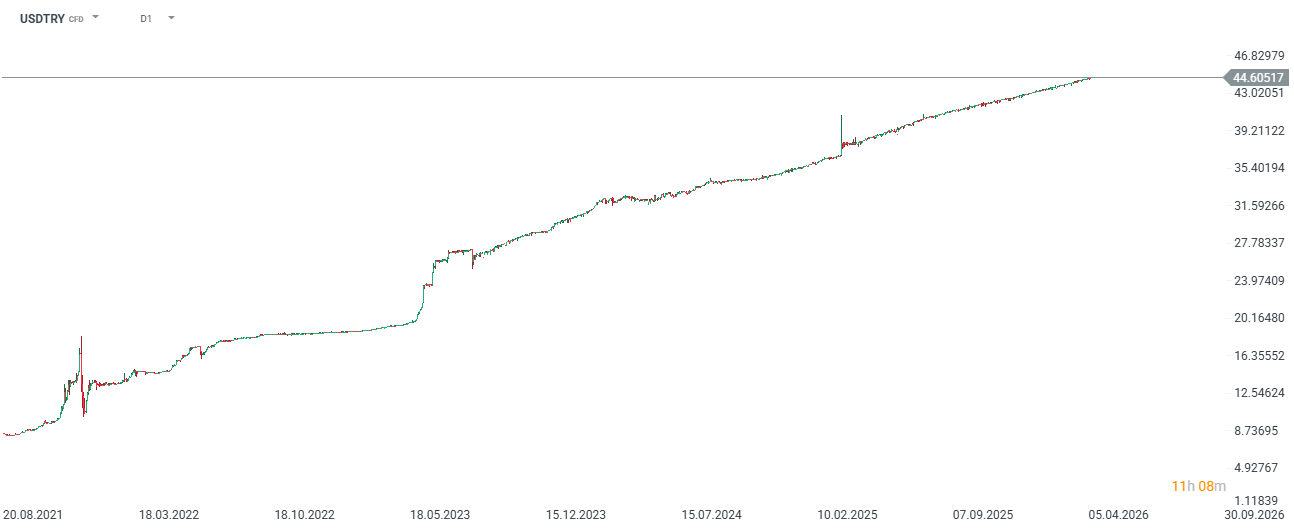
Data and estimates from local banks show that approximately 26 tons of bullion were sold directly, while about 42 tons were used in gold–lira swap transactions to increase liquidity and foreign exchange intervention capabilities. The CBRT openly communicates that under the conditions of the war in Iran, spiking energy prices, and gold’s large share in reserves (over 60%), using “gold-backed” transactions is a “natural” tool to support foreign currency liquidity. This action by the CBRT should not be seen as a benchmark for other central banks. The Turkish lira has lost nearly 15% against the US dollar over the past year, even with interest rates maintained significantly higher than in the US. In the last 5 years, the lira has lost over 80% of its value.
Central banks still intend to buy gold
Despite the Turkish sell-off, the global picture has not changed significantly. The WGC estimates that central bank purchases in 2026 will total approximately 850 tons, only slightly less than the 863 tons in 2025 and still near the record levels of recent years. This represents nearly double the annual average purchases from 2010–2021 (approx. 400–500 tons), highlighting a permanent shift in the demand regime. Furthermore, once the war in Iran concludes, the world will again worry about extreme global debt growth, including in the US, which may once again cast doubt on the stability of the dollar as the primary reserve asset.
According to the latest WGC surveys, as many as 43% of central banks plan to increase gold’s share in their reserves in 2026, and 95% expect global central bank gold holdings to continue growing over a five-year horizon. The main motives cited are: diversification from the dollar, protection against inflation and systemic risk, and growing concerns over the stability of public debt in G10 countries.
Which central banks are planning further purchases?
In WGC data and market analysis, those most frequently mentioned as active or planning further accumulation in 2026 include China, Poland, India, Kazakhstan, Uzbekistan, Malaysia, Indonesia, as well as the Czech Republic and Serbia.
Overall, this means that even if some banks like Turkey or Russia (or, as some suggest, Qatar) temporarily move to the supply side for liquidity or sanction-related reasons, the structural number of institutions increasing their gold share is growing. There is also a chance that once the situation stabilizes, the selling banks will return to buying gold.
What does this mean for gold prices in 2026?
Since 2022, central banks have become the backbone of global gold demand. Central banks buy with a multi-year horizon, are largely indifferent to short-term price movements, and very rarely decide to sell. Other global assets, such as silver or stocks (though ETF purchasing occasionally occurs), do not have demand from official institutions. This means that gold continues to have long-term fundamentals for a continuation of its uptrend. If central bank purchases were to drop by half, only then would it pose a risk to the long-term growth fundamentals.
Gold starts this week with a slight rebound. At the moment, the key resistance zone is around $4,750–$4,800 per ounce. If crude oil were to rise into the $120–$150 per barrel range, gold could fall below $4,000 per ounce, but even then, the support zone remains the upward trend line, which should halt any larger correction at the 50.0 retracement of the last major upward wave. Source: xStation5
The material on this page does not constitute financial advice and does not take into account your level of understanding, investment objectives, financial situation or any other specific needs. All information provided, including opinions, market research, mathematical results and technical analyzes published on the Website or transmitted To you by other means, it is provided for information purposes only and should in no way be construed as an offer or solicitation for a transaction in any financial instrument, nor should the information provided be construed as advice of a legal or financial nature on which any investment decisions you make should be based exclusively To your level of understanding, investment objectives, financial situation, or other specific needs, any decision to act on the information published on the Website or sent to you by other means is entirely at your own risk if you In doubt or unsure about your understanding of a particular product, instrument, service or transaction, you should seek professional or legal advice before trading. Investing in CFDs carries a high level of risk, as they are leveraged products and have small movements Often the market can result in much larger movements in the value of your investment, and this can work against you or in your favor. Please ensure you fully understand the risks involved, taking into account investments objectives and level of experience, before trading and, if necessary, seek independent advice.