Global Markets
S&P 500 — US Large Cap Index
NASDAQ 100 — Tech Growth Index
Dow Jones — Industrial Average
FTSE 100 — UK Blue Chips
Euro Stoxx 50 — Eurozone Leaders
DAX 40 — German Equities
CAC 40 — French Market Index
Nikkei 225 — Japan Benchmark
Hang Seng — Hong Kong Index
Shanghai Composite — China Mainland
ASX 200 — Australian Market
TSX Composite — Canada Index
Nifty 50 — India Large Cap
STI Index — Singapore Market
KOSPI — South Korea Index
Bovespa — Brazil Equities
JSE Top 40 — South Africa Index
IPC Index — Mexico Market
S&P 500 — US Large Cap Index
NASDAQ 100 — Tech Growth Index
Dow Jones — Industrial Average
FTSE 100 — UK Blue Chips
Euro Stoxx 50 — Eurozone Leaders
DAX 40 — German Equities
CAC 40 — French Market Index
Nikkei 225 — Japan Benchmark
Hang Seng — Hong Kong Index
Shanghai Composite — China Mainland
ASX 200 — Australian Market
TSX Composite — Canada Index
Nifty 50 — India Large Cap
STI Index — Singapore Market
KOSPI — South Korea Index
Bovespa — Brazil Equities
JSE Top 40 — South Africa Index
IPC Index — Mexico Market
AED • EUR • GBP • USD IBANs   |   CROSS BORDER FX   |   LOCAL CURRENCIES   |   GLOBAL COVERAGE
AIMarketsSoftwareStocksTech

Schneider Electric pays a high price for AI and software growth

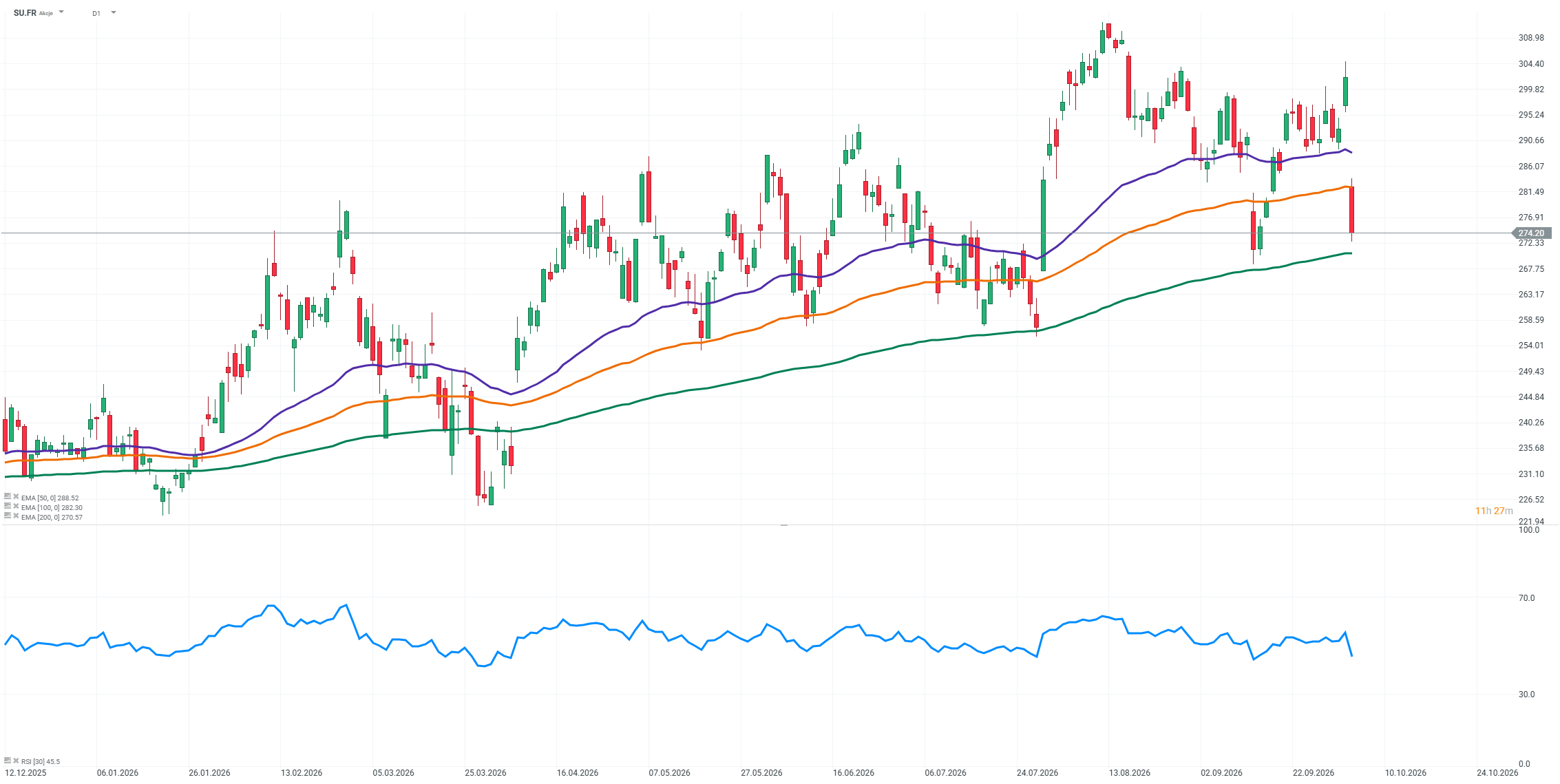
Schneider Electric has agreed to the largest transaction in its history, acquiring US based PTC for USD 22.6 bilion. The offer values PTC at USD 205 per share, representing a premium of around 40% to the company’s share price before the deal was announced. Given the significant scale of the acquisition, investors have reacted cautiously despite its strategic rationale, with Schneider Electric shares falling sharply today. The main objective of the transaction is to accelerate Schneider Electric’s transformation from a provider of equipment and automation solutions into a supplier of comprehensive industrial solutions combining infrastructure, software, data and AI. PTC complements the group’s portfolio with solutions used, among other things, for product design and lifecycle management. Combined with Schneider’s existing assets, including AVEVA and Cognite, the acquisition is expected to create a broader offering covering more stages of the industrial value chain.
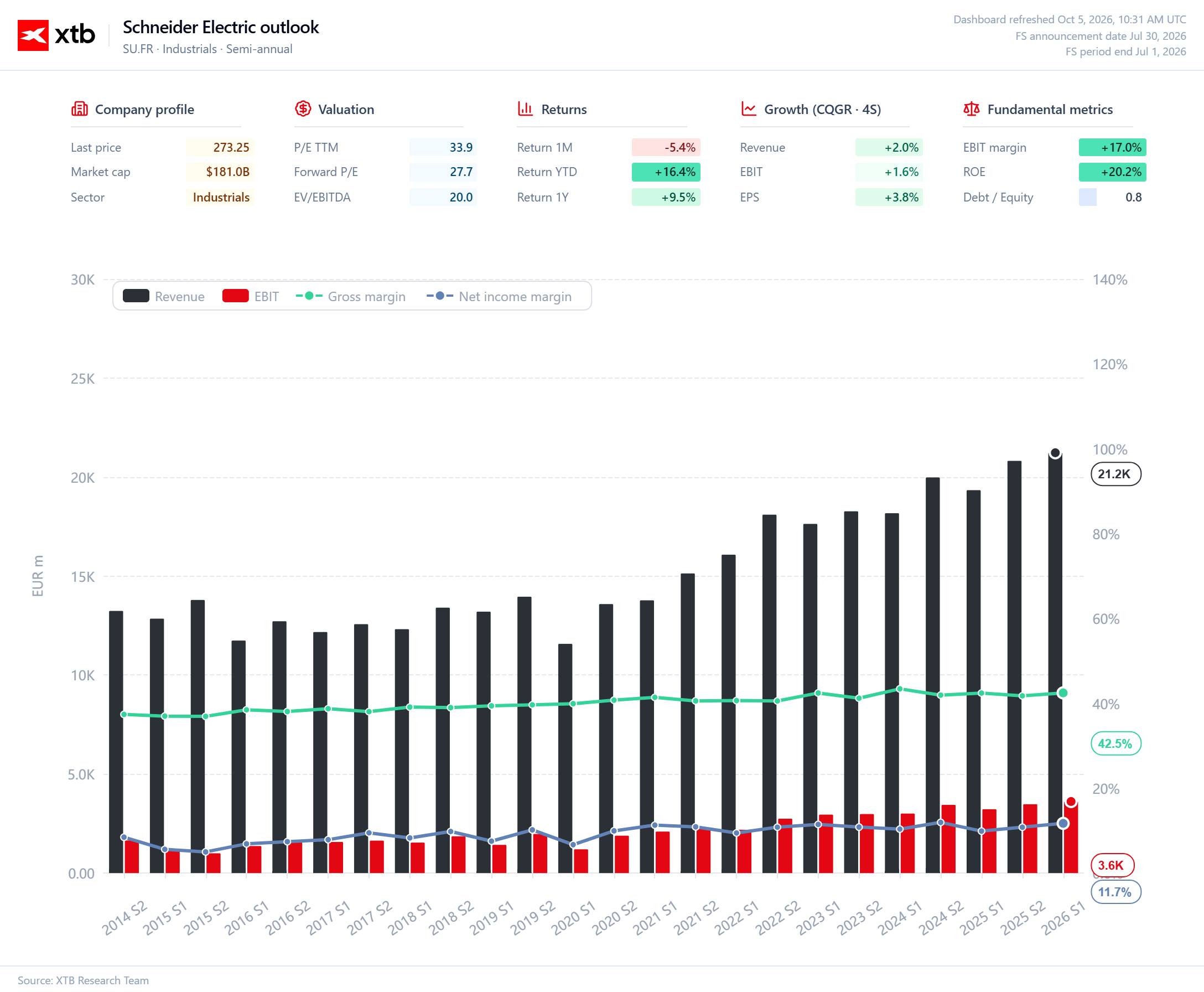
This is also important given the growing role of AI in industry. Access to software and data allows Schneider not only to sell equipment, but also to participate in the digital optimisation of its customers’ processes. This should increase the share of more recurring software and services revenue, while additional growth could come from cross selling PTC products to Schneider’s existing customers and vice versa. The company estimates around EUR 800m of additional revenue synergies and EUR 250m of annual cost savings by the third year after closing. The main concern, however, is the price. Schneider is paying a very high premium, while the transaction will be financed through both a new share issuance and additional debt. This will dilute existing shareholders and increase the burden on the balance sheet, while the expected benefits will materialise gradually. Another risk is the integration of PTC with Schneider’s existing assets, as well as uncertainty over how quickly AI will translate into new revenue opportunities in industrial software. As a result, the market is facing a classic dilemma. Strategically, the acquisition of PTC fits well with Schneider’s development direction and could significantly strengthen its position in industrial software and AI. The key issue, however, is the size of the investment and whether future synergies will be sufficient to justify the price paid. Ultimately, the successful execution of these assumptions, rather than the acquisition itself, will be crucial for the long term assessment of the transaction.

Register a Revolut Business Account
```

Market Analysis & Disclaimer

The market information, analysis, commentary, forecasts and opinions contained in this publication are provided by Octalas Group Ltd on behalf of Today Markets and Currency Hedger using information and data obtained from sources believed to be reliable. However, Octalas Group Ltd, Today Markets and Currency Hedger do not warrant or guarantee the accuracy, completeness or timeliness of the information presented and accept no responsibility for any loss or damage arising from reliance upon information contained herein, to the extent permitted by applicable law.

Market forecasts, expectations and opinions are based on analysis of available information and a number of assumptions regarding economic, financial, political and market conditions. Such assumptions may prove to be incorrect, and actual market developments may differ materially from those described or anticipated.

Nothing contained in this publication constitutes investment advice, financial advice, a personal recommendation, an offer, solicitation or invitation to buy, sell or otherwise transact in any financial instrument or investment product. The information is provided for general informational and educational purposes only and does not take into account the investment objectives, financial situation, experience or particular circumstances of any individual reader.

Past performance is not indicative of future results. Financial markets, including foreign exchange, commodities, equities, derivatives and other financial instruments, involve risk and prices can move rapidly. Readers should conduct their own independent research and, where appropriate, obtain advice from an appropriately authorised financial professional before making any investment or trading decision.

Where this publication refers to Today Markets, it represents market news, research, analysis and commentary published for informational purposes. Where Currency Hedger is referenced, it represents commentary concerning foreign exchange, currency exposure, international payments and hedging-related topics. References to particular financial instruments, markets, companies, currencies or commodities should not be interpreted as a recommendation to transact in them.

Octalas Group Ltd, Today Markets and Currency Hedger may have commercial interests or relationships with businesses, financial-service providers, technology providers or other market participants mentioned in their publications. Where relevant, such relationships or interests may create potential conflicts of interest. Appropriate measures are intended to be taken to ensure that published analysis and commentary are presented objectively and that commercial considerations do not determine the substance of market analysis.

The views expressed in this publication are those of the author or contributors at the time of publication and may change without notice as market conditions develop. Readers should not assume that any information contained herein has been updated following publication.

Related Articles

Leave a Reply

Your email address will not be published. Required fields are marked *

Back to top button