S&P 500 — US Large Cap Index
 FTSE 100 — UK Blue Chips
 Euro Stoxx 50 — Eurozone Leaders
 DAX 40 — German Equities
 CAC 40 — French Market Index
 Nikkei 225 — Japan Benchmark
 Hang Seng — Hong Kong Index
 Shanghai Composite — China Mainland
 ASX 200 — Australian Market
 TSX Composite — Canada Index
 Nifty 50 — India Large Cap
 STI Index — Singapore Market
 KOSPI — South Korea Index
 Bovespa — Brazil Equities
 JSE Top 40 — South Africa Index
 IPC Index — Mexico Market
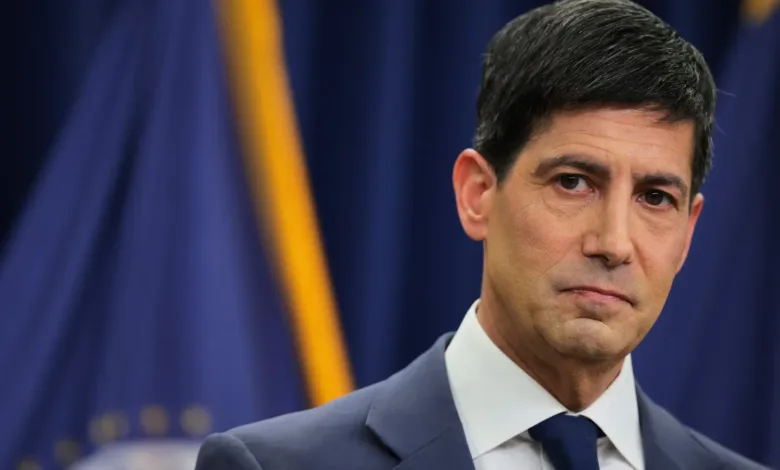
Wednesday marked the most important event related to the ECB economic symposium in Sintra, Portugal. Today, a panel discussion featured the new Fed chief, who has recently become known for his more hawkish side, although he remains a significant puzzle for the markets. His remarks today, coupled with slightly weaker US data, are not only weakening the dollar but also restoring hope for investors in the gold market, which is not only breaking back above $4,000 but even testing the $4,100 per ounce level.
Key takeaways from Kevin Warsh’s speech
- The death of “forward guidance”: Warsh definitively breaks with the tradition of his predecessors. The Fed will not provide the market with clear signals regarding future interest rate moves. Investors must look at hard data. Warsh strongly supported ECB chief Christine Lagarde on this issue.
- Uncompromising fight against inflation: Warsh stated bluntly: “We want to achieve price stability.” He added that if anyone thought the Fed would accept inflation above 2%, they would be disappointed. He still considers prices too high. This issue, however, remains quite hawkish.
- Slight optimism and decline in inflation expectations: The Fed chief noted that during the first four weeks of his tenure, inflation expectations and risks associated with inflation have fallen. He also emphasized that bond yields and market volatility have moved lower. This gives hope to investors in the gold market.
- “Family fight” in July: He announced that at the next FOMC meeting (in 4 weeks), there will be a sharp discussion. He refused to speculate whether the current spike in inflation caused by the conflict with Iran is transitory.
- Fed Balance Sheet Reduction (QT): He confirmed his well-known hawkish stance, wanting the Fed’s balance sheet to be smaller because, in his view, a balance sheet that is too large “borders on fiscal policy” and works mainly by inflating asset prices. However, changes will be introduced carefully and transparently. This, in turn, is slightly negative news for the indices.
- Fed Independence Untouched: He assured that despite recent Supreme Court rulings (including after the Cook case), the Fed will remain fully independent and will strictly adhere to its mandate.
- Technological optimism (AI): He considers the US to be the main beneficiary of the AI revolution. While the tech boom boosts inflation in the short term (demand for components), in the long term, higher productivity could change the rules of the game for monetary policy.
Is Warsh Toning Down Sentiment?
One could state in a typically analytical way: both yes and no. Warsh plays the role of an “objective judge,” which the markets receive with relief. After his first June meeting, Wall Street feared Warsh would be an extreme hawk, ready to sharply raise rates in response to the conflict with Iran. In Sintra, Warsh did not toughen his rhetoric. Although he reiterates that the goal is 2% inflation, he simultaneously sent several reassuring signals to the markets:
- He admitted that inflation pressure and expectations have slightly fallen over the last month.
- He noted falling bond yields with satisfaction.
- By moving away from forward guidance, he removed market fear that the Fed would announce a series of rate hikes “in advance.”
This means markets no longer feel the immediate threat of an instant hawkish strike, which, combined with the latest macro data, gave an impulse for a weaker dollar and a rise in risk-on assets.
EURUSD returns to 1.14, and gold explodes to $4,100?
Parallel to Warsh’s speech, key data from US manufacturing (ISM Manufacturing) hit the market, which perfectly explains these major moves:
- Weaker ISM and a collapse in prices: The headline ISM manufacturing index fell to 53.3 (forecast 53.9), and new orders also came in weaker. Most importantly, the ISM Prices Paid index saw a massive drop to 73 (previously as high as 82.1, forecast 77.5).
- EURUSD Reaction (move to 1.14): Since the US price sub-index is falling sharply, and Warsh himself says inflation risks are diminishing, investors conclude that the Fed won’t need to panic-hike rates. US bond yields are falling, which automatically hits the dollar (USD) and drives the EURUSD exchange rate up.
- Spectacular return of gold to $4,100: Gold received an ideal fuel cocktail today:Geopolitics: The ongoing conflict with Iran and uncertainty (Vance’s and White House comments mentioned in dispatches about chances for a deal, but with risk still looming) maintain demand for “safe havens.”Weaker dollar and lower yields: Since the ISM data cools Fed’s hawkish ambitions and Warsh is not threatening hikes, the opportunity cost of holding gold falls.Lack of forward guidance: Since the Fed is giving up on guiding the market by the hand, uncertainty about the future increases – and gold loves uncertainty. The return to the $4,100 area is a technical and fundamental display of strength for this metal in the era of the new Fed chief.
- Geopolitics: The ongoing conflict with Iran and uncertainty (Vance’s and White House comments mentioned in dispatches about chances for a deal, but with risk still looming) maintain demand for “safe havens.”
- Weaker dollar and lower yields: Since the ISM data cools Fed’s hawkish ambitions and Warsh is not threatening hikes, the opportunity cost of holding gold falls.
- Lack of forward guidance: Since the Fed is giving up on guiding the market by the hand, uncertainty about the future increases – and gold loves uncertainty. The return to the $4,100 area is a technical and fundamental display of strength for this metal in the era of the new Fed chief.
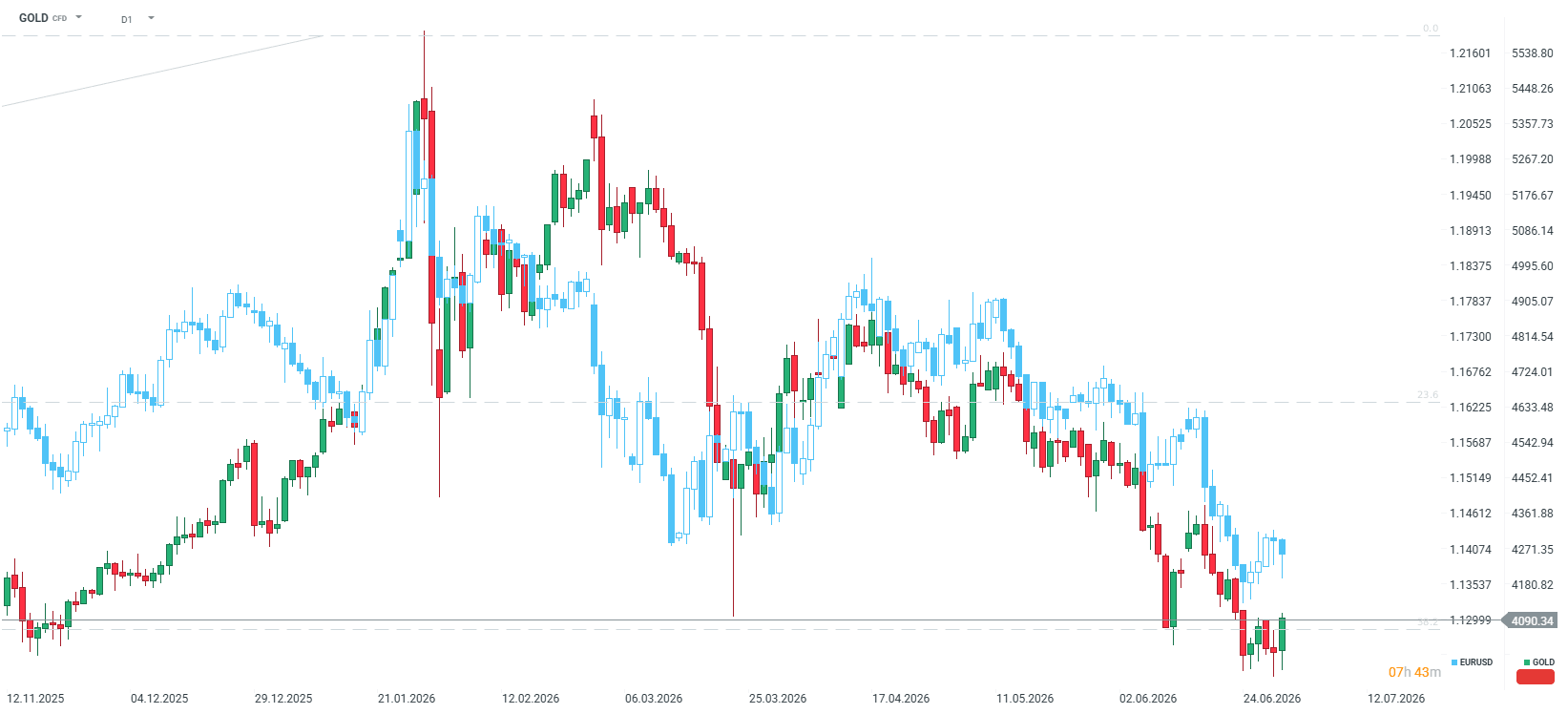
Gold started today’s session with a drop below $4,000, but for several days we have observed that this is becoming increasingly strong support. Today, gold returns above the 38.2 retracement. It is worth noting that in November 2025, the $4,000 level was tested several times. If expectations for hikes are indeed decreasing (there is still a pricing of more than 1 hike by the end of this year), gold has a chance for a rebound. EURUSD is also rebounding but remains below the 1.14 level. Source: xStation5