S&P 500 — US Large Cap Index
 FTSE 100 — UK Blue Chips
 Euro Stoxx 50 — Eurozone Leaders
 DAX 40 — German Equities
 CAC 40 — French Market Index
 Nikkei 225 — Japan Benchmark
 Hang Seng — Hong Kong Index
 Shanghai Composite — China Mainland
 ASX 200 — Australian Market
 TSX Composite — Canada Index
 Nifty 50 — India Large Cap
 STI Index — Singapore Market
 KOSPI — South Korea Index
 Bovespa — Brazil Equities
 JSE Top 40 — South Africa Index
 IPC Index — Mexico Market
South Korean Won Holds Near Two-Year Highs as Semiconductor Exports Strengthen Currency Outlook

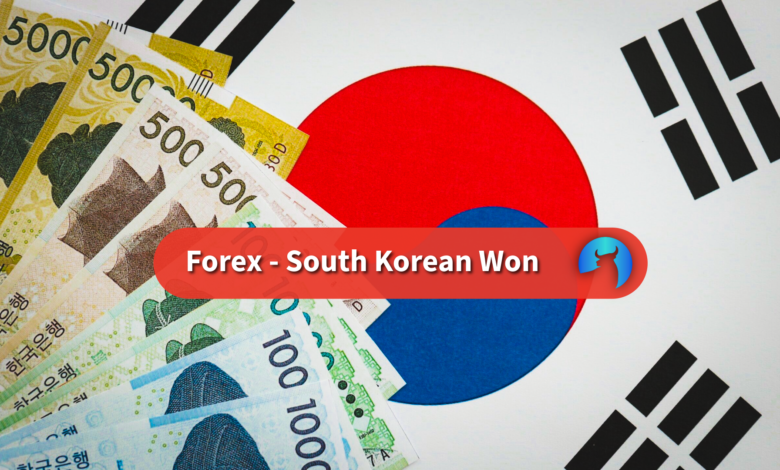
The South Korean won is trading around 1,358 per US dollar, holding near two-year highs as strong semiconductor demand continues to improve the country’s export outlook. September exports are expected to show substantial year-on-year growth, while semiconductor exports surged 259.4% in the first 20 days of the month, reinforcing expectations for stronger export revenues and foreign-currency inflows.
The outlook is also being supported by expectations for robust earnings from major Korean chipmakers as demand for artificial intelligence infrastructure continues to drive the global semiconductor cycle. At the same time, higher US Treasury yields, elevated oil prices and uncertainty surrounding US-Iran negotiations remain important risks for the won through their impact on interest-rate differentials, capital flows and Korea’s import costs.
Market Snapshot
| Factor | Current Situation | Potential Market Impact |
|---|---|---|
| USD/KRW | Around 1,358 | Won remains close to multi-year highs |
| Semiconductor exports | Up 259.4% in the first 20 days of September | Supports export revenues and FX inflows |
| September exports | Forecast to rise sharply year-on-year | Positive for the trade balance |
| Korean chipmakers | Strong AI-related demand | Supports corporate earnings expectations |
| US Treasury yields | Elevated | Increases pressure from the US-Korea rate differential |
| Oil prices | Moving higher amid Middle East uncertainty | Raises Korea’s import costs |
| Policy coordination | Finance ministry and Bank of Korea increasing cooperation | Could support market stability |
Current South Korean Won Price Action
The won is holding around 1,358 per dollar, keeping it close to its strongest levels in roughly two years.
The move is being supported primarily by improving expectations for South Korea’s external trade position. Semiconductor exports are particularly important because the sector represents a major source of export revenue and foreign-currency inflows.
For the currency, the key question is whether strong export performance can continue to offset pressure created by higher US yields and elevated energy prices.
Semiconductor Exports Strengthen the External Balance
South Korea’s semiconductor industry remains the central driver of the improving export outlook.
Semiconductor exports surged 259.4% year-on-year during the first 20 days of September, highlighting the strength of global demand for Korean chip products. Expectations for continued artificial-intelligence investment are also supporting the earnings outlook for major Korean semiconductor companies.
If export growth remains strong, increased foreign-currency receipts could provide continued support for the won by improving the country’s external trade position.
Stronger Corporate Earnings Could Support Capital Flows
The semiconductor cycle is also becoming increasingly important for Korean equity valuations and corporate earnings.
Major chipmakers are expected to report strong third-quarter results as AI-related demand continues to support investment in advanced computing infrastructure.
Stronger earnings expectations can reinforce foreign investor interest in Korean assets, potentially providing another source of support for the won. However, this relationship remains sensitive to global risk sentiment and movements in US interest rates.
Higher US Yields Remain a Currency Headwind
The positive export outlook is being offset by higher US Treasury yields.
Rising US yields increase the relative return available from dollar-denominated assets and can widen the interest-rate differential between the United States and South Korea.
If US yields continue moving higher, pressure on Asian currencies could increase even if South Korea’s domestic export fundamentals remain strong.
The future direction of USD/KRW will therefore depend partly on whether improving Korean trade flows can outweigh changes in global interest-rate expectations.
Oil Prices Increase Korea’s Import Costs
Higher oil prices represent another risk for the won.
South Korea is heavily dependent on imported energy, meaning higher crude prices increase the cost of energy imports and can reduce the benefit of stronger merchandise exports.
Uncertainty surrounding a potential US-Iran agreement is keeping attention on Middle Eastern supply risks. A prolonged period of elevated oil prices could therefore create a less favourable trade environment for Korea even while semiconductor exports remain strong.
Coordinated Financial-Market Policy
The finance ministry and Bank of Korea are also increasing cooperation on financial-market monitoring and response.
The authorities are seeking a more coordinated policy approach as the currency responds to external factors including US interest rates, energy prices and global financial-market conditions.
For traders, increased policy coordination could become particularly relevant if USD/KRW volatility rises or external pressure on Asian currencies intensifies.
Bullish Sentiment
- Semiconductor exports remain exceptionally strong, supporting South Korea’s export revenues and foreign-currency inflows.
- AI-related semiconductor demand is improving the earnings outlook for major Korean chipmakers.
- A stronger external trade position could provide fundamental support for the won.
- Potential foreign investment inflows could increase if Korean corporate earnings remain strong.
- Greater policy coordination between the finance ministry and Bank of Korea could help contain excessive currency volatility.
Bearish Sentiment
- Higher US Treasury yields could increase demand for the US dollar and widen interest-rate differentials.
- Further Federal Reserve tightening expectations could increase pressure on Asian currencies.
- Higher crude oil prices could increase South Korea’s import bill and weaken the trade benefit from stronger exports.
- Geopolitical uncertainty could trigger periods of defensive demand for the US dollar.
- A reversal in the global semiconductor cycle would reduce one of the won’s most important sources of fundamental support.
Price Forecast: What Traders Are Watching
The 1,358 area remains an important reference point for USD/KRW as the won trades close to multi-year highs.
The next phase of the move will depend on the balance between strong Korean export fundamentals and external pressure from US yields and energy prices.
A continuation of exceptionally strong semiconductor exports could reinforce demand for the won and maintain downward pressure on USD/KRW. Conversely, a renewed rise in Treasury yields or a sharp increase in oil prices could limit further won appreciation.
Traders will therefore be watching the next export data, semiconductor earnings expectations, US rate expectations and developments in global energy markets.
Supply Outlook
For the won, the effective supply of US dollars can increase when Korean exporters convert foreign-currency earnings back into local currency.
The exceptional growth in semiconductor exports is therefore an important positive factor for the Korean currency.
However, stronger demand for dollars from importers, particularly when energy prices rise, could offset part of those export-related flows.
Demand Outlook
Demand for the Korean won is being supported by expectations for stronger export revenues, improving semiconductor earnings and potentially stronger foreign investment flows.
Dollar demand remains supported by elevated US Treasury yields and global risk aversion.
The balance between these two forces will remain central to USD/KRW direction over the coming sessions.
Market Outlook for the Coming Sessions
The South Korean won enters the next phase of trading with a strong fundamental export story but several important external risks.
Semiconductor exports and AI-related demand provide a clear source of support, while higher US yields and oil prices create opposing pressure.
The next major signals will come from Korean export data, semiconductor-sector expectations, US interest-rate pricing and developments in energy markets.
If export strength continues while US yields stabilise, the won could retain its recent strength. If US yields and oil prices continue to rise together, the currency could face renewed pressure despite strong Korean trade fundamentals.
Currency Hedger View
The South Korean won demonstrates how currency exposure can be driven by several markets simultaneously. Semiconductor exports support foreign-currency inflows, while US Treasury yields influence capital flows and oil prices directly affect Korea’s import costs.
For businesses with Korean suppliers, customers or payments, movements in USD/KRW can therefore affect margins even when the underlying business remains unchanged.
Currency Hedger helps businesses and individuals manage international currency requirements while providing a broader understanding of the market forces influencing exchange rates.
Analysis Louis Roche – Today Markets
The Korean won is benefiting from an unusually strong semiconductor export cycle, giving the currency a solid fundamental foundation. The key issue going forward is whether that strength can continue to offset the pressure created by higher US yields and elevated energy costs.
With semiconductor demand still supporting Korean exports, USD/KRW remains highly sensitive to the interaction between Korea’s external trade position and the broader direction of the US dollar.
Louis Roche – Today Markets