S&P 500 — US Large Cap Index
 FTSE 100 — UK Blue Chips
 Euro Stoxx 50 — Eurozone Leaders
 DAX 40 — German Equities
 CAC 40 — French Market Index
 Nikkei 225 — Japan Benchmark
 Hang Seng — Hong Kong Index
 Shanghai Composite — China Mainland
 ASX 200 — Australian Market
 TSX Composite — Canada Index
 Nifty 50 — India Large Cap
 STI Index — Singapore Market
 KOSPI — South Korea Index
 Bovespa — Brazil Equities
 JSE Top 40 — South Africa Index
 IPC Index — Mexico Market
The bond market is leading the sell off today, even though gains for the oil price are moderate compared to Thursday, and European stock markets are stabilizing. The bond sell-off is a problem for the global economy, particularly the UK. The decline in Gilts and the relentless rise in yields is continuing at the end of the week.
UK debt sell off worse than elsewhere
The UK is looking like an outlier, and multiple factors are causing this. Events in the Middle East are a major factor, along with the unprecedented repricing of UK interest rate expectations. More than 3 rate hikes are still expected this year from the BOE, even after Andrew Bailey attempted to calm markets after yesterday’s press conference. There are also idiosyncratic factors that make the UK more vulnerable to energy price shocks. Our blunt energy pricing mechanism will cause bills to surge later this year, and we have a Labour government that is spending more in welfare than it is bringing in through taxation, which is also spooking bond investors in the current environment.
Historic move in yields
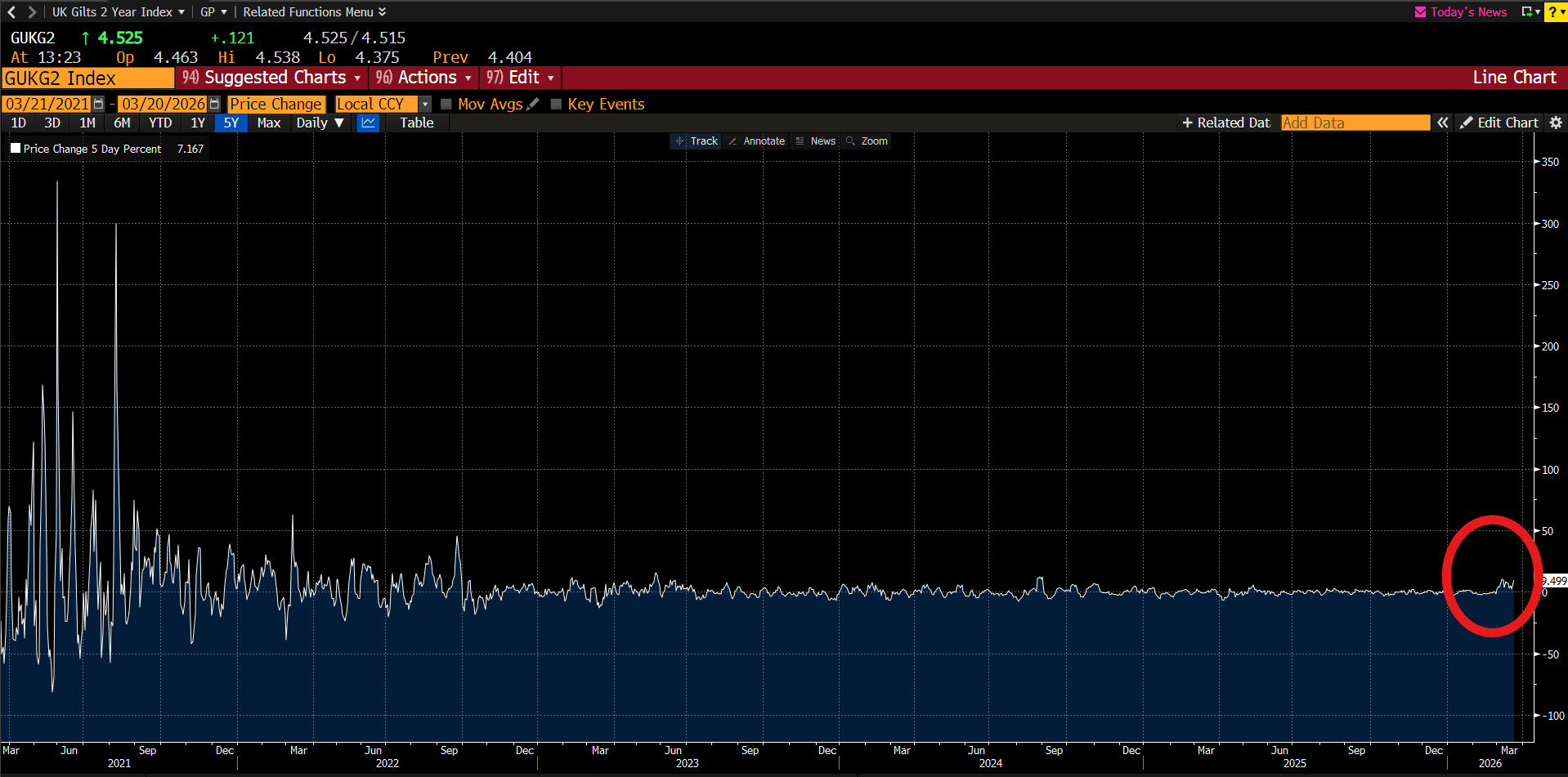
The 2-year yield is higher by another 9 bps today and is up 40bps in the past week. The 10-year Gilt yield, the benchmark, is higher by 16bps this week. At 4.92%, the 10-year Gilt yield is now at its highest level since the financial crisis, while the 30-year yield is up 7bps today and has broken above last week’s high and is at its highest level since 1998. The question now is, will the rapid rise in yields break something in the UK economy?
Chart 1: It’s been a volatile decade for UK debt: UK 2-year yield % move on a weekly basis, this is one of the biggest moves since 2022
Source: XTB and Bloomberg
The political risks impacting bonds
The UK is in a dangerous position as today’s public finance figures show us. The sell-off in Gilts was exacerbated by the February borrowing figures, which showed that public sector net borrowing was £14.3bn, more than £5bn more than expected. This data suggests the UK’s fiscal problems were in place long before the war started. The UK’s welfare bill is bulging, and if Starmer is replaced after local elections in May then we could get a left-leaning PM at the exact time the Gilt market is groaning under the public sector debt burden. The fact that UK debt is selling off more than anywhere else should be a warning sign to this government: be careful about making promises around energy subsidies, as the Gilt market may not have the bandwidth for any more handouts.
Political risks are mounting for the UK as £66bn of tax increases under this government so far has not plugged any holes, fictitious or not. This suggests that the UK’s current economic path is extremely damaging and there needs to be a major re-set.
The rising risk of owning UK debt
While the Iran war is one factor that is weighing on UK Gilts right now, it is not the only one. If there is a ceasefire, then some of the upward pressure on yields will abate, however, it won’t completely return to normal. The risk premium attached to UK Gilts is only going to get wider, in our view. The UK is now considered a high inflation economy that cannot withstand energy price shocks. What is particularly worrying is that the UK has a widening budget deficit, and the sell off in UK Gilts is far worse than our neighbors. For example, our Gilt yields are rising at double the rate of France and Italy this week. This is a lonely place to be and needs to be urgently addressed.
This is also weighing on the GBP today, and GBP/USD is back at the lows of the day and is testing support around $1.3350. It has also retraced around 50% of yesterday’s upside move. A steeper sell off in GBO would be a negative development as the same time as yields are rising, since it would suggest that fiscal stresses are building.
Why equities are more resilient than bonds
The bond market has been deeply affected by this crisis, and it has sold off more sharply than equities. There is some expectation that equity markets will align with bonds and a steeper selloff is coming, but we disagree. The energy price shock caused by the war in the Middle East is exposing the vulnerabilities of highly indebted western nations. This is a major problem for them. In contrast, some corporates have more resilient balance sheets, which is a benefit in this environment. Thus, we could see more buying of equities compared to sovereign debt as long as this war rages on. Eventually bond buyers will come back into the market, but recent price action suggests that it may take some time.
The material on this page does not constitute financial advice and does not take into account your level of understanding, investment objectives, financial situation or any other specific needs. All information provided, including opinions, market research, mathematical results and technical analyzes published on the Website or transmitted To you by other means, it is provided for information purposes only and should in no way be construed as an offer or solicitation for a transaction in any financial instrument, nor should the information provided be construed as advice of a legal or financial nature on which any investment decisions you make should be based exclusively To your level of understanding, investment objectives, financial situation, or other specific needs, any decision to act on the information published on the Website or sent to you by other means is entirely at your own risk if you In doubt or unsure about your understanding of a particular product, instrument, service or transaction, you should seek professional or legal advice before trading. Investing in CFDs carries a high level of risk, as they are leveraged products and have small movements Often the market can result in much larger movements in the value of your investment, and this can work against you or in your favor. Please ensure you fully understand the risks involved, taking into account investments objectives and level of experience, before trading and, if necessary, seek independent advice.