S&P 500 — US Large Cap Index
 FTSE 100 — UK Blue Chips
 Euro Stoxx 50 — Eurozone Leaders
 DAX 40 — German Equities
 CAC 40 — French Market Index
 Nikkei 225 — Japan Benchmark
 Hang Seng — Hong Kong Index
 Shanghai Composite — China Mainland
 ASX 200 — Australian Market
 TSX Composite — Canada Index
 Nifty 50 — India Large Cap
 STI Index — Singapore Market
 KOSPI — South Korea Index
 Bovespa — Brazil Equities
 JSE Top 40 — South Africa Index
 IPC Index — Mexico Market

Oil prices fall. Saudi Arabia resumes transport via key pipeline amid reports of US–Iran talks Crude oil prices continue a clear correction. WTI crude fell below $90 per barrel, marking its fifth consecutive session of losses, while Brent crude dropped below $100. Pressuring sellers were reports of a gradual restoration of Saudi export infrastructure and speculation regarding a possible de-escalation of tensions between the United States and Iran. Restart of East-West pipeline and exports from Yanbu port A key factor easing market supply concerns was the resumption of operations on the Saudi East-West pipeline, which had been halted following earlier drone attacks. The pipeline, with a maximum capacity of around 7 million barrels per day, connects the kingdom’s eastern oil fields to the port of Yanbu on the Red Sea. This infrastructure allows Saudi Arabia to export crude while bypassing the Strait of Hormuz. Market reports indicate that Saudi Aramco has already informed initial Asian buyers of its readiness to resume oil loading at Yanbu, significantly reducing the risk premium in the commodities market. Additionally, it is worth noting that Saudi Arabia exported nearly 3 million barrels per day through the Strait of Hormuz over the past week.
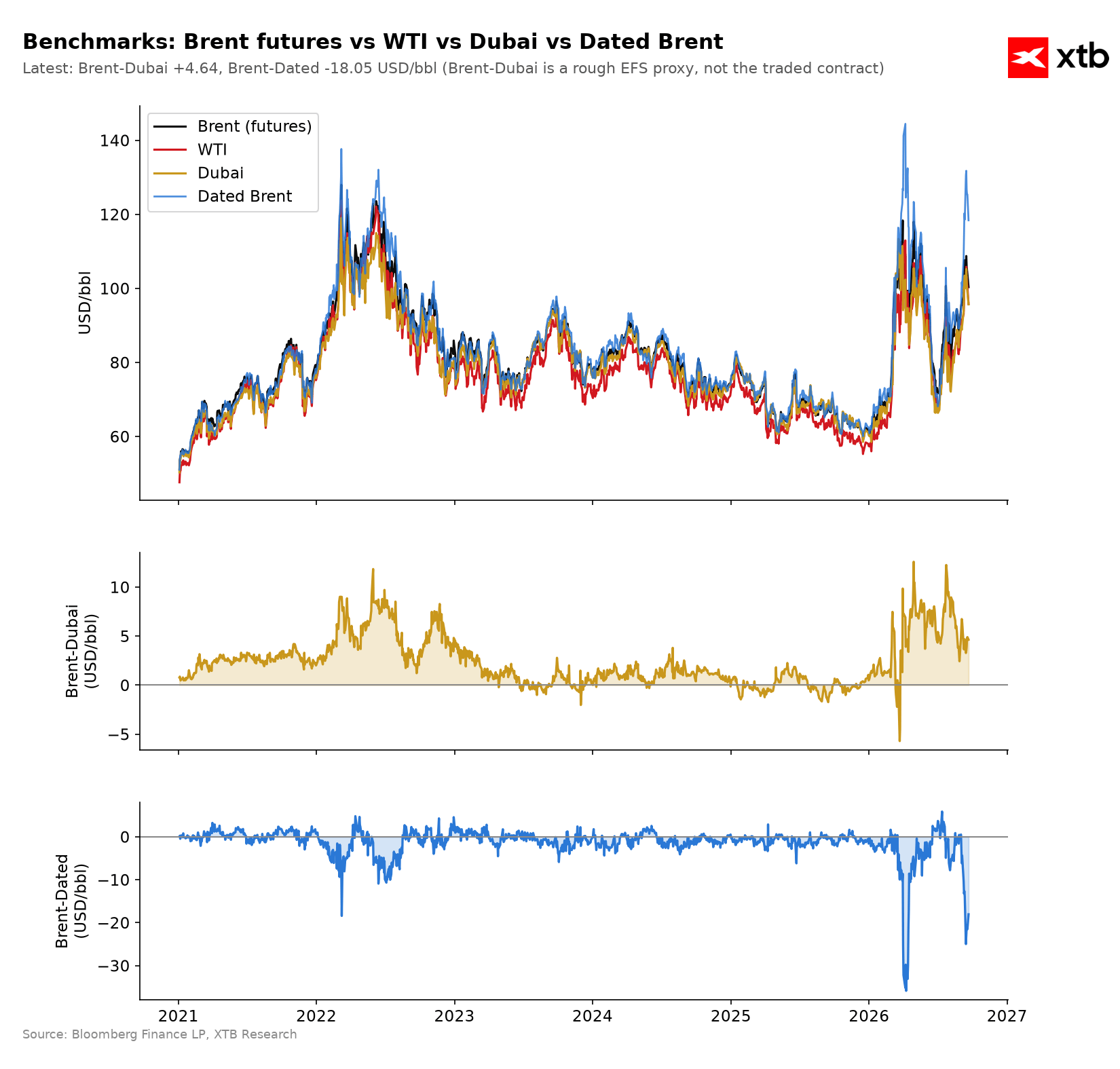
Physical oil prices have begun to fall, and the Dubai benchmark price has stopped rising, which may signal an end to extreme pressure in the prompt delivery market. Source: Bloomberg Finance LP, XTB
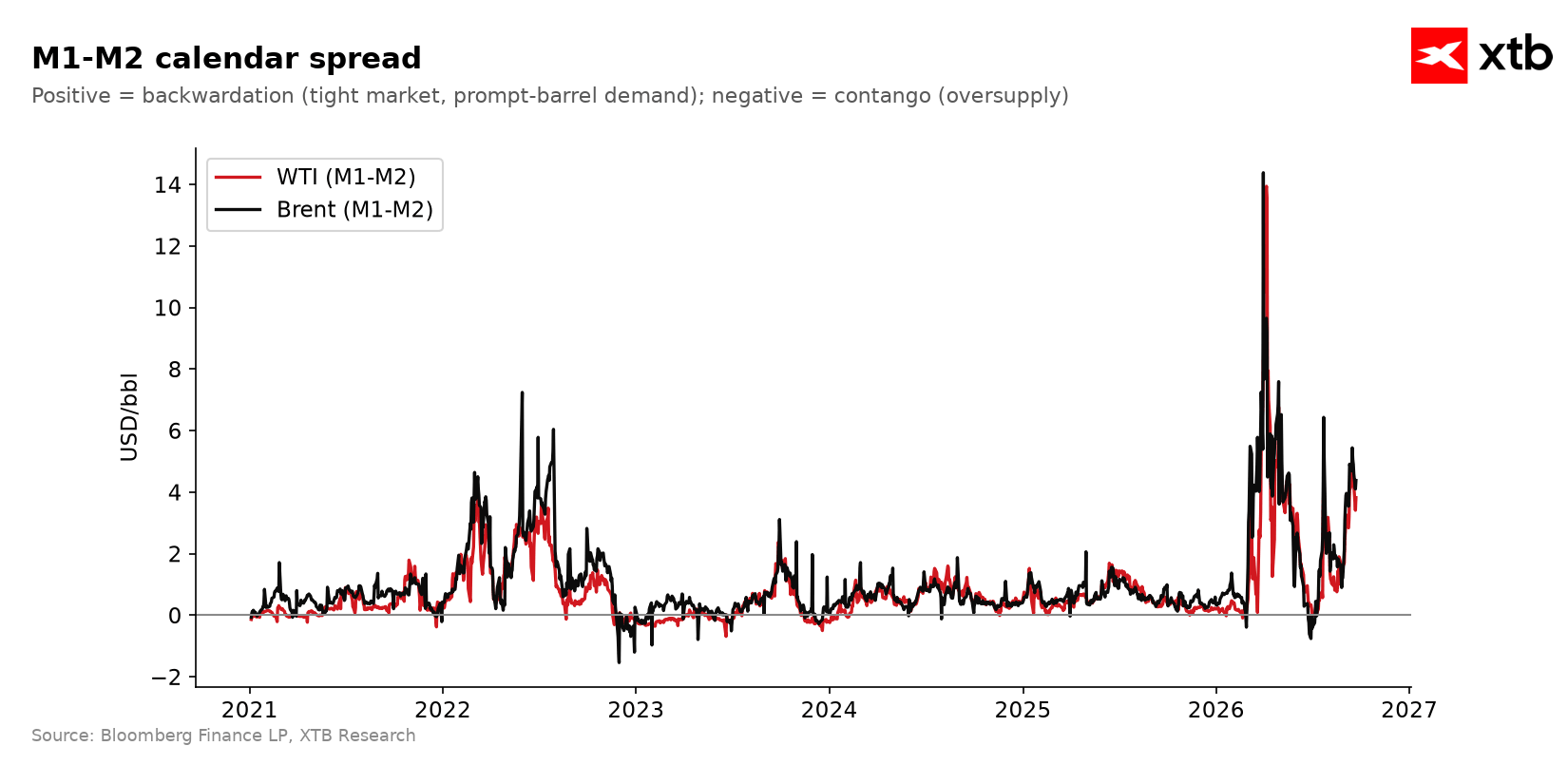
Calendar spreads in the oil market are pulling back from the $4–$5 per barrel range, signaling reduced pressure in the physical market. Source: Bloomberg Finance LP, XTB Diplomatic speculation and confusion surrounding the Strait of Hormuz An additional catalyst for falling prices came from media reports (including Kyodo and Reuters) citing Iranian diplomatic sources. According to these reports, Tehran reportedly offered to reopen the Strait of Hormuz within seven days in exchange for a reduction in military pressure and the lifting of the US blockade on Iranian ports. Although Iran’s state-run Fars News Agency quickly denied the reports, calling them inconsistent with Tehran’s official position, the market reacted to the denial with only a modest rebound. Investors continue to price in an increased probability of a diplomatic breakthrough during the UN General Assembly in New York, where an Iranian delegation is present.
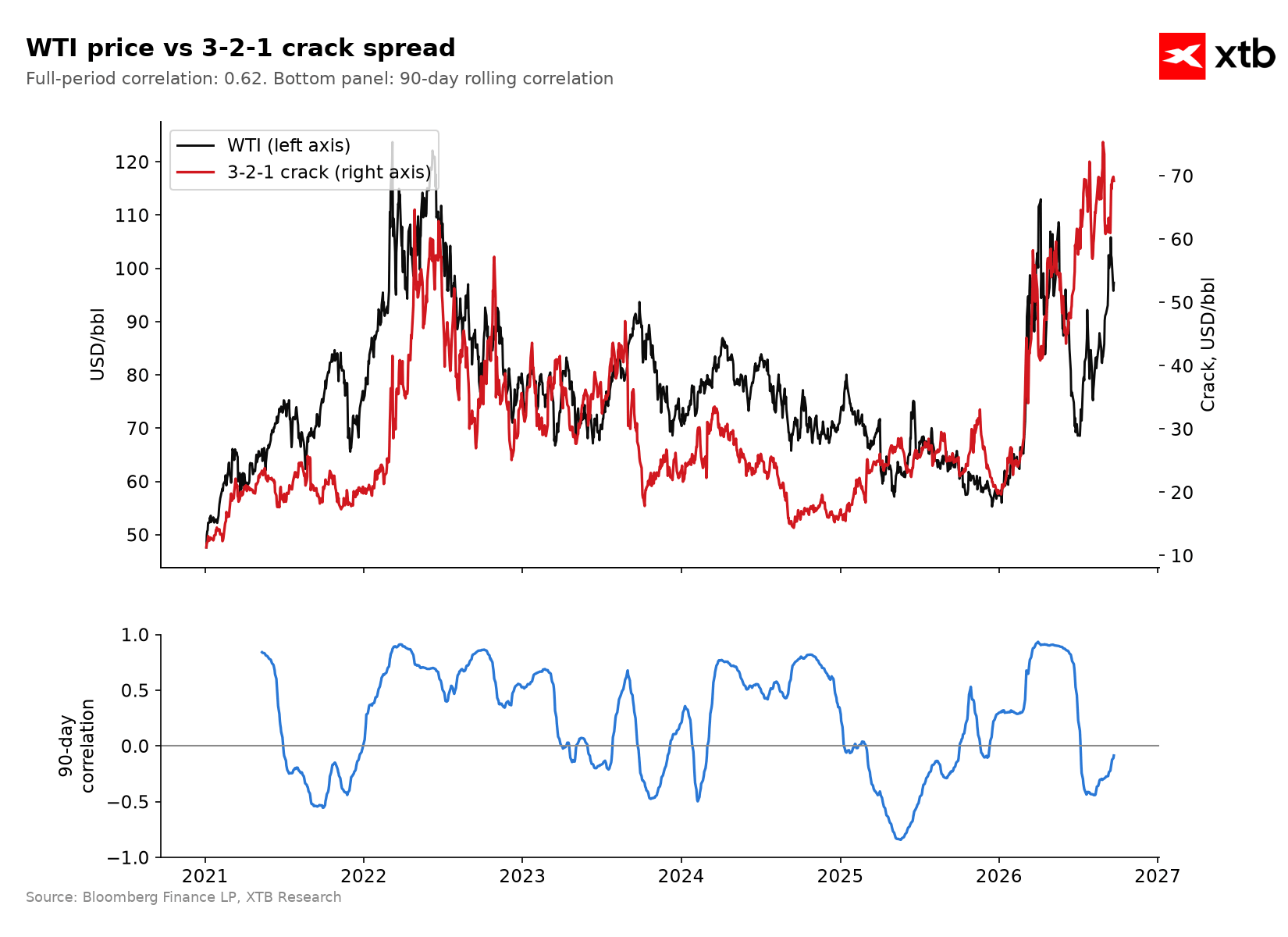
However, it is worth noting that the pullback in oil prices is not the whole story. Tensions in the fuel market remain strong, as reflected in the recent widening of crack spreads. Source: Bloomberg Finance LP, XTB Relief for markets The drop in oil prices brought immediate relief to the broader financial market, easing inflationary pressures. The yield on US 10-year Treasury bonds fell, while major stock indices remained stable. However, analysts point out that holding oil prices below $100 on a sustained basis will require solid evidence of permanently reopened shipping lanes and a formal diplomatic agreement. Technical view on WTI crude (D1)
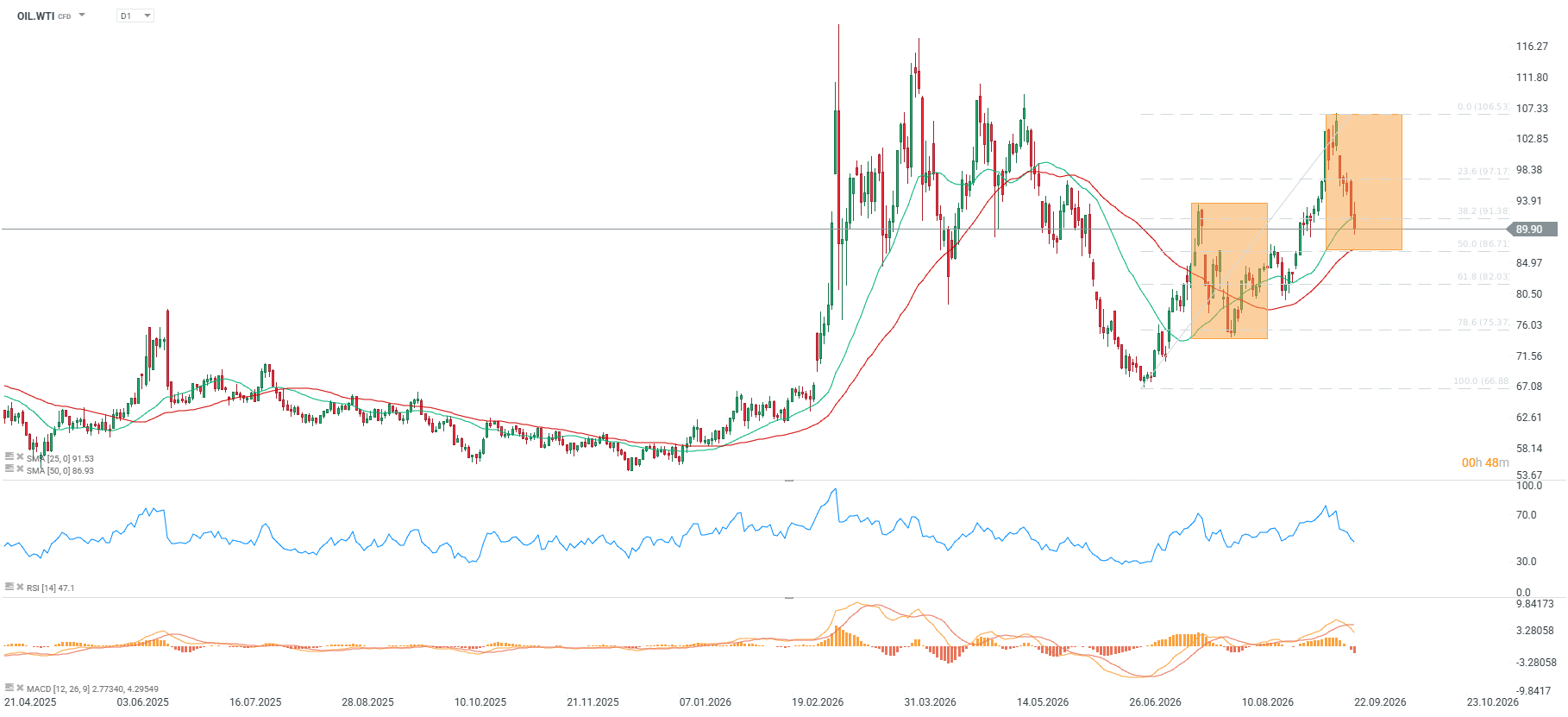
WTI crude is falling today below the 38.2 retracement level and, most importantly, below its 25-session moving average. Furthermore, the MACD indicates mounting downward pressure, which could extend the current correction toward the 50.0 retracement level of the latest upward wave. Source: XTB