S&P 500 — US Large Cap Index
 FTSE 100 — UK Blue Chips
 Euro Stoxx 50 — Eurozone Leaders
 DAX 40 — German Equities
 CAC 40 — French Market Index
 Nikkei 225 — Japan Benchmark
 Hang Seng — Hong Kong Index
 Shanghai Composite — China Mainland
 ASX 200 — Australian Market
 TSX Composite — Canada Index
 Nifty 50 — India Large Cap
 STI Index — Singapore Market
 KOSPI — South Korea Index
 Bovespa — Brazil Equities
 JSE Top 40 — South Africa Index
 IPC Index — Mexico Market
Cocoa Market Outlook: West African Weather Risks Offset Rising Inventories and Weak Chocolate Demand

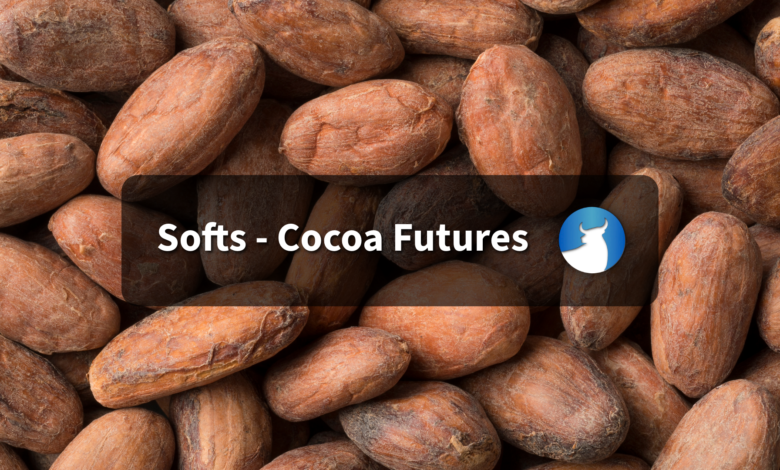
Cocoa futures are finding support from concerns over continued rainfall in Côte d’Ivoire, where wet conditions have disrupted transport infrastructure and slowed deliveries to export ports. December ICE New York cocoa futures gained 1.49% to settle higher, while December ICE London cocoa rose 1.41%, as weather-related supply risks offset pressure from rising exchange inventories and signs of weaker chocolate demand.
The cocoa market faces conflicting fundamentals. Current-season production and shipments from Côte d’Ivoire and Ghana have increased, while elevated inventories and weaker European processing figures suggest demand remains under pressure. Looking ahead, however, forecasts of a smaller 2026/27 West African crop, the potential effects of a strong El Niño and disease-related quality concerns could tighten global supply and provide medium-term price support.
Market Snapshot
| Indicator | Latest Market Context |
|---|---|
| December ICE New York cocoa | Closed up 83 points, or 1.49% |
| December ICE London cocoa | Closed up 59 points, or 1.41% |
| ICE cocoa inventories | 3,559,258 bags, a 2.25-year high |
| Côte d’Ivoire 2025/26 harvest | 2.06 MMT, up 30% year-on-year |
| Côte d’Ivoire shipments | 2.18 MMT, up 19.8% year-on-year |
| Côte d’Ivoire 2026/27 crop estimate | Around 1.8 MMT, down 18% |
| Ghana 2026/27 crop estimate | 650,000 MT, down 13% in the field-survey estimate |
| StoneX 2026/27 global surplus estimate | 25,000 MT |
| Transgraph Consulting 2026/27 surplus forecast | 80,000 MT |
| Main bullish factors | Excessive rainfall, El Niño risk, crop disease and lower West African production forecasts |
| Main bearish factors | Rising inventories, strong current-season shipments and uneven chocolate demand |
Price Action and Market Structure
December ICE New York cocoa futures advanced 83 points, equivalent to 1.49%, while December ICE London cocoa rose 59 points, or 1.41%. Both contracts recovered from early-session weakness as forecasts of continued rainfall in Côte d’Ivoire renewed concerns over the movement of cocoa beans to export ports.
The recovery reflects the market’s competing influences. Rising ICE inventories initially weighed on prices, while concerns over transport disruption and the outlook for the next West African crop provided support.
Cocoa has experienced pressure over the past month as evidence of stronger current-season production has emerged. However, attention is increasingly shifting toward the 2026/27 crop, with early field assessments pointing to weaker pod development and potentially lower output.
This creates a divided outlook: abundant supplies and demand concerns may limit near-term rallies, while deteriorating weather conditions and a smaller next-season harvest could underpin prices over a longer horizon.
Côte d’Ivoire Rainfall and Export Logistics
Côte d’Ivoire, the world’s largest cocoa producer, remains central to the market outlook. Continued rainfall has reportedly damaged bridges and cut off roads, slowing the movement of cocoa from growing regions to export ports.
These disruptions can affect the timing of deliveries and create short-term supply uncertainty, even when the underlying crop is relatively large. If transport problems persist, export flows could become less predictable and provide temporary support to futures prices.
However, rainfall has a two-sided effect. While excessive precipitation can disrupt logistics, persistent wet conditions can also increase the risk of black pod disease and damage crop quality. Limited sunshine and high moisture levels in Côte d’Ivoire and Ghana have raised concerns about disease spreading through West African cocoa-growing regions.
The impact on prices will depend on whether the rainfall primarily delays deliveries or results in lasting losses to crop volume and quality.
Rising ICE Inventories Weigh on Prices
ICE-monitored cocoa inventories have steadily increased since the beginning of the year, reaching 3,559,258 bags and a 2.25-year high.
Higher exchange inventories can ease concerns over immediately available supplies and reduce the urgency for buyers to secure additional cocoa. This has created a significant headwind for futures, particularly as the market assesses signs of softer chocolate demand.
Inventory growth does not necessarily mean that global cocoa production will remain abundant throughout the next season. Nevertheless, the current stock build provides a cushion against short-term delivery disruptions and may limit the impact of adverse weather unless production forecasts deteriorate further.
Traders will need to monitor whether inventories continue rising or begin to stabilise as the new marketing season progresses. A sustained reversal in stock levels could strengthen the argument that supply is tightening, while continued accumulation would reinforce the bearish near-term outlook.
Côte d’Ivoire Production and Shipment Outlook
Current-season output from Côte d’Ivoire has been strong.
The country’s cocoa regulator, Le Conseil du Café-Cacao, reported that the harvest reached 2.06 million metric tons between June 2025 and June 2026, up 30% from 1.58 MMT a year earlier.
Separately, cumulative shipments to ports reached 2.18 MMT between October 1, 2025, and September 27, 2026, representing a 19.8% increase from the comparable year-earlier period.
These figures indicate substantial availability from the current crop and help explain the pressure on cocoa prices over the past month.
There is an important marketing-year distinction: the shipment comparison follows the international cocoa marketing year beginning October 1, while Côte d’Ivoire has moved the start of its 2026/27 domestic marketing year forward to September 1. These figures therefore describe different reporting periods and should not be treated as directly interchangeable.
Looking ahead, early surveys point to a potentially smaller next crop. Poor cherelle formation and weak pod development have raised concerns about the main harvest that began this month. Current early estimates suggest production could fall to approximately 1.8 MMT in 2026/27, down 18% from around 2.2 MMT in 2025/26.
If this lower estimate proves accurate, the market could shift from current-season abundance toward a tighter supply balance later in the marketing year.
El Niño and West African Weather Risks
Medium-term cocoa prices have an additional source of support from the potential development of a strong El Niño weather pattern.
The US Climate Prediction Center has indicated that the El Niño pattern emerging across the equatorial Pacific could become one of the strongest in more than 75 years.
El Niño is typically associated with warmer and drier conditions in parts of West Africa. For cocoa, reduced soil moisture and heat stress can affect tree health, pod development and yields. The actual impact will depend on the timing, intensity and regional distribution of the weather pattern.
The risk is particularly significant because early assessments already suggest below-average cherelle formation in Côte d’Ivoire. If adverse weather compounds weak initial pod development, the next main crop could fall short of current expectations.
Nevertheless, the potential effects should not be treated as guaranteed production losses. Rainfall distribution, farm conditions and the timing of the weather pattern will determine the ultimate effect on cocoa output.
Ghana Production: A Potential Source of Supply Tightness
Ghana, the world’s second-largest cocoa producer, is another key factor in the supply outlook.
Ghana’s Cocoa Board reported that production for the 2025/26 season reached 750,000 MT, up 25.6% from 597,000 MT in 2024/25. This strong current-season output adds to evidence that supplies have improved across West Africa.
The outlook for 2026/27 is less favourable. A field survey of pod counts produced an estimate of 650,000 MT, down 13% from the 750,000 MT reported for 2025/26.
A separate projection from Ghana’s regulator, COCOBOD, was more cautious. On July 30, it indicated that production could fall to between 450,000 and 550,000 MT, compared with a projected 750,000 MT for 2025/26. The regulator cited swollen shoot disease, ageing cocoa farms and the potential impact of adverse El Niño weather.
These estimates differ considerably, reflecting uncertainty around the scale of the next crop. If production approaches the lower end of COCOBOD’s range, the reduction in Ghanaian supply could materially tighten the global market.
Global Cocoa Surplus Forecasts Narrow
Forecasts for the 2026/27 global cocoa balance have become more supportive of prices as analysts account for potential West African production risks.
StoneX reduced its estimate of the global cocoa surplus for 2026/27 to 25,000 MT from 149,000 MT in April, citing the risks to West African production associated with an expected El Niño.
Transgraph Consulting also projected a smaller surplus, forecasting 80,000 MT for 2026/27 compared with 415,000 MT in 2025/26. Its outlook assumes global production declines to 4.87 MMT from 5.11 MMT.
Although both forecasts point to a substantial reduction in the surplus, they do not yet indicate a global deficit. The extent of any tightening will depend on actual crop yields, disease pressure, weather conditions and demand recovery.
The difference between the estimates also illustrates the uncertainty surrounding the market. A small surplus would leave less room for production shortfalls, making cocoa prices more sensitive to adverse weather or export disruption.
Chocolate Demand and Processing Margins
Demand remains a significant bearish influence, particularly as high cocoa costs continue to affect manufacturers and consumers.
Cargill, the world’s second-largest cocoa processor, reported mark-to-market losses on cocoa for the quarter ended August 31. The losses suggest that the company faced difficulty passing higher cocoa costs through to customers, highlighting the pressure on processing margins.
Chocolate manufacturer Lindt & Sprüngli has also reduced chocolate prices for a second time this year and lowered its 2026 organic sales growth outlook to between 0% and 2%, from a previous range of 4% to 6%. The company cited subdued consumer sentiment.
These developments suggest that elevated cocoa prices have challenged the ability of manufacturers to maintain margins and sustain consumer demand. Price reductions may help stimulate sales, but they also underline the pressure on the chocolate industry’s profitability.
The market will be watching for evidence that lower retail prices improve consumption or whether demand remains constrained by household spending pressures.
Regional Cocoa Grindings: Mixed Demand Signals
Second-quarter cocoa processing data presented a mixed picture across major consuming regions.
- Europe: The European Cocoa Association reported that Q2 grindings fell 4.6% year-on-year to 316,366 MT. The decline was larger than the expected 1.5% decrease and marked the lowest second-quarter level in six years.
- North America: The National Confectioners Association reported that Q2 grindings rose 7.7% year-on-year to 109,659 MT, significantly outperforming expectations for a 1% decline.
- Asia: The Cocoa Association of Asia reported that Q2 grindings increased 25% year-on-year to 224,646 MT, well above expectations for growth of 9%.
The European figures reinforce concerns that high cocoa costs and weaker consumer sentiment are restraining demand. By contrast, stronger processing volumes in North America and Asia indicate that consumption trends are not uniformly negative.
The regional divergence is important. A sustained recovery in Asian and North American processing could absorb some of the additional supply available from the current crop. If European weakness spreads to other markets, however, demand could remain insufficient to offset rising inventories and production growth.
Bullish Scenario for Cocoa
Cocoa prices could strengthen if supply risks begin to outweigh the current inventory and demand pressures.
- Persistent rainfall disrupts exports: Continued damage to roads and bridges in Côte d’Ivoire could delay deliveries and reduce the availability of cocoa at ports.
- El Niño damages the next crop: Warmer, drier conditions could reduce soil moisture and impair pod development across West Africa.
- Disease reduces yields and quality: Black pod disease and swollen shoot disease could lower usable production in Côte d’Ivoire and Ghana.
- The 2026/27 crop disappoints: Production closer to the lower estimates for Côte d’Ivoire and Ghana would tighten the global balance.
- The global surplus narrows further: Any downward revisions to production or stronger-than-expected demand could reduce the projected surplus.
Under this scenario, the market could become increasingly sensitive to weather forecasts and crop reports, with supply concerns providing support even if current inventories remain elevated.
Bearish Scenario for Cocoa
Prices could remain under pressure if current-season abundance and weaker chocolate demand continue to dominate market sentiment.
- ICE inventories keep rising: Further stock accumulation would suggest that immediately available supply remains comfortable.
- Côte d’Ivoire shipments remain strong: Continued export flows could confirm the strength of the current crop.
- The next crop performs better than expected: More favourable weather or improved pod development could challenge the projected production decline.
- Chocolate demand remains subdued: Weak European grindings and pressure on manufacturers’ margins could constrain purchases.
- Regional demand growth fades: A slowdown in North American or Asian processing could reduce the support provided by stronger Q2 figures.
If these conditions persist, cocoa futures could struggle to sustain rallies, particularly while inventories are high and global production remains sufficient to cover demand.
Price Outlook
Cocoa’s near-term outlook remains mixed, with weather-related supply risks supporting prices while rising ICE inventories and demand concerns limit the recovery.
The key near-term issue is whether continued rainfall in Côte d’Ivoire causes prolonged export disruption or whether deliveries recover as transport conditions improve. Strong current-season shipments and the recent inventory build provide a cushion against temporary disruptions.
The medium-term outlook is more sensitive to the 2026/27 crop. Early estimates point to lower production in both Côte d’Ivoire and Ghana, while the potential effects of El Niño and crop disease add uncertainty to the supply outlook.
The reduction in projected global surpluses from StoneX and Transgraph Consulting suggests that the market could become more vulnerable to production shortfalls. However, a smaller surplus is not the same as a deficit, and the outlook will depend on how actual production compares with these estimates.
Demand will be equally important. If lower chocolate prices help revive consumption and regional processing remains firm, the market could absorb more supply. If European weakness spreads and manufacturers continue struggling to pass through costs, demand could remain a significant restraint.
Overall, cocoa is likely to remain sensitive to West African weather, export flows, exchange inventories and processing data. The market’s direction will depend on which of the competing forces becomes dominant.
Coming Sessions: What to Watch
- Côte d’Ivoire rainfall and transport conditions: Monitor whether flooding and damaged infrastructure continue to disrupt cocoa deliveries to ports.
- ICE inventory trends: Further increases could cap price recoveries, while stabilisation or a decline could signal tighter nearby availability.
- 2026/27 crop assessments: New estimates for Côte d’Ivoire and Ghana will help clarify whether early concerns about pod formation translate into lower output.
- El Niño forecasts: Changes in the expected strength and timing of the weather pattern could affect medium-term production expectations.
- Cocoa grindings: The next processing figures will indicate whether demand weakness in Europe is offset by North American and Asian consumption.
- Global surplus revisions: Any further cuts to production or surplus estimates could strengthen the market’s sensitivity to weather and supply disruptions.
- Chocolate manufacturer guidance: Updates on pricing, margins and sales volumes will provide clues about the industry’s ability to absorb high cocoa costs.
Louis Roche Analysis
Cocoa is currently being pulled in two directions. The supply picture for the season just completed is relatively comfortable, with Côte d’Ivoire’s harvest up 30% and shipments up almost 20% year-on-year. Rising ICE inventories reinforce the view that near-term availability is not especially tight.
At the same time, the outlook for the next West African crop is becoming more uncertain. Early indications of poor pod formation, disease pressure and the possibility of a strong El Niño raise legitimate concerns about production in Côte d’Ivoire and Ghana. The downward revisions to projected global surpluses suggest that the cushion between supply and demand could narrow considerably.
Demand remains the main counterweight to these risks. European grindings have weakened, and the experiences of Cargill and Lindt & Sprüngli illustrate the commercial difficulty of passing elevated cocoa costs on to consumers. Stronger North American and Asian processing figures are encouraging, but it remains unclear whether those gains can offset the weakness in Europe.
My assessment is that cocoa’s near-term direction will depend on inventories, export logistics and demand data, while the medium-term balance increasingly hinges on the next West African crop. A sustained price recovery would be more convincing if it coincided with evidence of tightening physical supply rather than weather concerns alone.
For the coming sessions, the most important distinction is between temporary delivery delays and genuine production losses. The former may create short-lived price support; the latter could materially change the global balance and make the market more vulnerable to further supply shocks.
Today Markets View
Cocoa futures have recovered as rainfall in Côte d’Ivoire raises concerns about export logistics, but the market continues to face pressure from rising inventories, strong current-season production and uneven chocolate demand.
The outlook for 2026/27 is more supportive, with early crop assessments suggesting lower production in Côte d’Ivoire and Ghana and analysts reducing their global surplus forecasts. El Niño and crop disease could intensify these risks, although the eventual impact remains uncertain.
The balance of risks is therefore divided: near-term fundamentals remain challenged by available supplies and demand sensitivity, while medium-term prospects depend on whether West African crop estimates deteriorate further. Weather developments, inventory movements and regional grindings will be crucial in determining the next sustained price direction.
Currency Hedger View
Currency Hedger monitors foreign exchange markets alongside broader commodity and macroeconomic conditions, helping businesses assess and manage their international currency exposure.
For cocoa traders, processors and chocolate manufacturers, currency movements can influence the cost of imported beans, international procurement contracts and revenue received across different markets. Businesses with cross-border exposure should assess foreign-exchange risk alongside commodity-price volatility when planning purchases and managing margins.
Open a Currency Hedger Account: Open a Currency Hedger Account
Visit Currency Hedger: Currency Hedger
Contributor: Louis Roche – Today Markets
Disclaimer: Market analysis prepared for Today Markets. For informational purposes only and not intended as investment, trading, financial or commodity advice.