S&P 500 — US Large Cap Index
 FTSE 100 — UK Blue Chips
 Euro Stoxx 50 — Eurozone Leaders
 DAX 40 — German Equities
 CAC 40 — French Market Index
 Nikkei 225 — Japan Benchmark
 Hang Seng — Hong Kong Index
 Shanghai Composite — China Mainland
 ASX 200 — Australian Market
 TSX Composite — Canada Index
 Nifty 50 — India Large Cap
 STI Index — Singapore Market
 KOSPI — South Korea Index
 Bovespa — Brazil Equities
 JSE Top 40 — South Africa Index
 IPC Index — Mexico Market
Coffee Futures Rebound as Dollar Falls but Record Global Supply and Brazil Crop Outlook Cap 2026 Coffee Prices

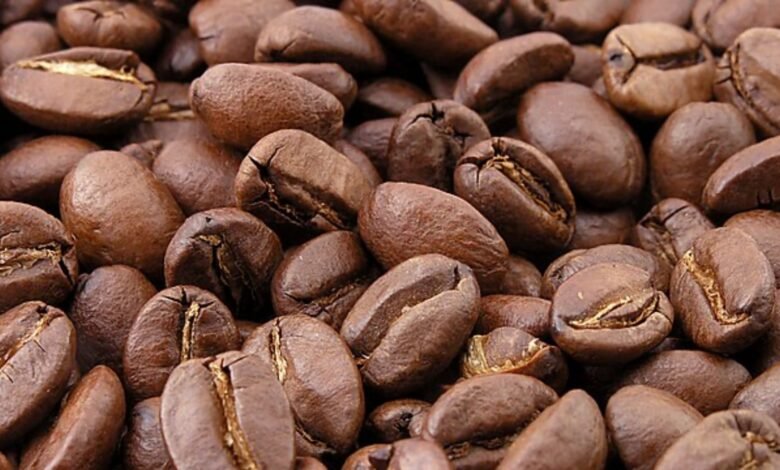
Coffee futures recovered from early losses on Friday as a weaker US dollar triggered short covering, but the broader coffee market remains under pressure from record global production forecasts, a projected 2025/26 surplus, strong Brazil and Vietnam exports, improving growing conditions and expectations for another large 2026/27 crop.
December ICE Arabica coffee closed 4 points higher at +1.45%, while November ICE Robusta coffee settled 5 points higher at +0.15%.
The rebound followed a sharp three-week decline in coffee prices, with Arabica reaching a 2.5-month low on Thursday and Robusta falling to a one-week low on Friday.
The immediate catalyst for Friday’s recovery was the US dollar.
The dollar index had climbed to a seven-week high before reversing lower, encouraging short covering in coffee futures because a weaker dollar can improve the purchasing power of international buyers and make dollar-denominated commodities more attractive.
However, the bigger fundamental picture remains challenging.
The International Coffee Organization is forecasting record 2025/26 global coffee production of 183.6 million bags, while consumption is expected to fall to 180.6 million bags. That leaves the global market with an estimated 3 million-bag surplus, the first surplus in five years.
At the same time, Brazil is exporting coffee at record rates, Vietnam is showing stronger supply potential and USDA forecasts point toward another record global crop in 2026/27.
The coffee market is therefore caught between short-term technical support from currency movements and tight Arabica inventories, and a much more bearish medium-term supply outlook.
Coffee Market Snapshot
| Coffee Market Factor | Latest Data | Market Impact |
|---|---|---|
| December ICE Arabica | +4 / +1.45% | Short-term bullish |
| November ICE Robusta | +5 / +0.15% | Slightly bullish |
| Arabica recent low | 2.5-month low | Bearish trend |
| Robusta recent low | 1-week low | Bearish |
| 2025/26 global production | 183.6M bags | Record supply |
| Global production growth | +4.4% YoY | Bearish |
| 2025/26 global consumption | 180.6M bags | Demand below supply |
| Global surplus | 3M bags | Bearish |
| Brazil August coffee exports | 4.155M bags | Record August |
| Brazil August exports growth | +31% YoY | Bearish |
| Brazil August Arabica exports | 2.87M bags | +26% YoY |
| Brazil August Robusta exports | 953,592 bags | +54% YoY |
| Vietnam Jan-Aug 2026 exports | 1.33M MT | +13.7% YoY |
| Vietnam 2025/26 production | 1.76M MT / 29.4M bags | 4-year high |
| ICE Arabica inventories | 258,415 bags | Recovered from 27-year low |
| ICE Robusta inventories | 5,043 lots | 9.5-month high |
| USDA 2026/27 global output | 189.7M bags | Record forecast |
| USDA 2026/27 output growth | +6.0% | Bearish |
| USDA 2026/27 ending stocks | 26.3M bags | +1.9M bags |
| USDA Brazil 2026/27 crop | 71.9M bags | Record / +14% |
Why Are Coffee Futures Recovering Today?
Friday’s recovery was primarily driven by the US dollar.
The dollar index had reached a seven-week high before reversing lower, prompting traders to cover short positions in coffee.
This is a familiar relationship in commodity markets.
Coffee is priced internationally in US dollars, so fluctuations in the dollar can influence the effective cost for buyers using other currencies.
A stronger dollar can place additional pressure on dollar-denominated commodities by making them more expensive for international buyers.
A weaker dollar can have the opposite effect.
Friday’s price action therefore represents an important reminder that coffee does not trade purely on physical supply and demand.
Currency markets can temporarily overpower fundamental signals.
However, the dollar reversal does not change the underlying production outlook.
The fundamental question remains whether the global coffee market is heading toward sustained oversupply.
Current forecasts suggest that it is.
ICO Forecasts the First Coffee Surplus in Five Years
One of the most important bearish developments for coffee prices is the International Coffee Organization’s latest global balance estimate.
The ICO expects 2025/26 global coffee production to rise 4.4% year-on-year to a record 183.6 million bags.
At the same time, global consumption is expected to decline 0.9% to 180.6 million bags.
That produces an estimated 3 million-bag surplus.
The significance of this number extends beyond the size of the surplus itself.
The ICO says this would represent the first global coffee surplus in five years.
After several seasons in which tight supplies supported elevated coffee prices, the return of surplus production changes the fundamental backdrop.
If production continues to exceed consumption, inventories can rebuild.
And if inventories rebuild, some of the scarcity premium previously embedded in coffee prices can disappear.
Brazil Coffee Exports Are Adding Significant Supply
Brazil is currently one of the biggest bearish forces in the coffee market.
The country’s harvest is approaching completion, allowing substantial volumes to reach international export markets.
Cecafé reported that Brazilian coffee exports increased 31% year-on-year in August to 4.155 million bags.
That was a record for the month of August.
Arabica exports increased 26% to 2.87 million bags, while Robusta exports jumped 54% to 953,592 bags.
Brazil’s Trade Ministry provided another indication of strong export activity.
It reported that August coffee exports rose 44.6% year-on-year to 206,618 metric tonnes, the highest monthly level in eight months.
The numbers demonstrate that Brazil is not simply producing more coffee.
It is also successfully moving that coffee into international markets.
That increases available supply for global buyers and creates additional pressure on futures prices.
Brazil Weather Is Turning Into a Bearish 2026/27 Signal
The next Brazilian crop is already becoming a major market focus.
The 2026/27 Arabica crop depends heavily on conditions during the flowering period.
Recent rainfall has been particularly strong in Minas Gerais, Brazil’s most important Arabica-growing region.
Somar Meteorologia reported 59.4 mm of rainfall during the week ending September 13, equivalent to approximately 1,212% of the historical average.
Under normal circumstances, improved soil moisture during the flowering period can be positive for the next crop.
For coffee futures, however, that creates a bearish supply implication.
If favourable weather improves flowering and fruit development, Brazil could produce another large crop in 2026/27.
That possibility is already reflected in USDA forecasts.
USDA Forecasts Record Global Coffee Production
The USDA’s latest biannual forecast is one of the clearest bearish signals facing coffee.
The USDA expects global coffee production in 2026/27 to increase 6.0%, or approximately 10.8 million bags, to a record 189.7 million bags.
Arabica production is expected to increase 12% year-on-year.
Robusta production is expected to decline slightly by 0.7%, but the overall global production increase remains substantial.
The USDA also expects world ending stocks to rise by 1.9 million bags to 26.3 million bags.
This is important because higher production combined with rising ending inventories creates a much more comfortable global supply position.
The market is therefore facing the possibility of two consecutive years of strong supply growth.
Brazil’s 2026/27 Crop Could Reach 71.9 Million Bags
Brazil is central to the USDA’s bullish production outlook.
The USDA Foreign Agricultural Service forecasts a record 71.9 million-bag Brazilian coffee crop for 2026/27, representing a 14% increase year-on-year.
If achieved, this would provide another substantial injection of coffee into the global market.
The combination of:
- Record Brazil production
- Strong Brazil exports
- Higher global output
- Rising ending stocks
- Improved Brazilian rainfall
creates a powerful bearish fundamental argument.
However, there is an important counterargument.
Weather forecasts are not production guarantees.
And that is where El Niño enters the picture.
El Niño Creates a Major Bullish Risk for Coffee
Despite the strong supply outlook, coffee bulls have one potentially powerful weapon: weather.
The emergence of El Niño could create significant weather volatility across coffee-growing regions.
Coffee trader Commercial has warned that El Niño could delay rainfall in Brazil during September and October, a critical period for tree flowering.
If rainfall becomes inadequate during flowering, Brazil’s 2026/27 crop could suffer.
The US Climate Prediction Center has also warned that the El Niño pattern could become one of the strongest in more than 75 years.
That creates the possibility of:
- Drought conditions
- Excessive rainfall
- Flooding
- Higher temperatures
- Delayed flowering
- Reduced yields
- Crop damage across Asia and South America
For coffee traders, this creates a major contradiction.
Current weather is supporting production.
Future weather could undermine it.
Vietnam Supply Is Also Increasing
Brazil is not the only major producer adding supply.
Vietnam, the world’s largest Robusta producer, is also showing signs of stronger production and exports.
Vietnamese coffee exports during January-August 2026 increased 13.7% year-on-year to 1.33 million tonnes.
That follows a 17.5% increase in 2025 exports to 1.58 million tonnes.
Production is also expected to rise.
Vietnam’s 2025/26 coffee production is projected at approximately 1.76 million tonnes, equivalent to around 29.4 million bags.
That would represent a 6% year-on-year increase and the country’s highest production in four years.
This is particularly important for Robusta coffee.
The market had already seen Robusta prices fall sharply on expectations of increased Vietnamese supply.
Vietnam Weather Is Supporting Cherry Development
Vietnam’s weather outlook is also becoming more favourable for production.
Forecaster Vaisala reported that abundant rainfall has improved soil moisture levels across Vietnam’s Central Highlands.
The region is the country’s most important coffee-growing area.
Improved soil moisture should support cherry development and could help maintain the stronger production outlook.
This creates another supply-side headwind for Robusta prices.
However, as with Brazil, weather remains a variable rather than a certainty.
Arabica Inventories Tell a Different Story
The biggest bullish argument against the oversupply narrative comes from ICE Arabica inventories.
ICE Arabica stocks fell to only 217,646 bags, a 27-year low, earlier in the week.
Although inventories subsequently recovered to approximately 258,415 bags, the absolute level remains historically low.
This matters because low exchange stocks indicate that immediately deliverable Arabica supplies remain relatively constrained.
The market can therefore have:
Record global production forecasts and tight exchange stocks at the same time.
These two facts are not mutually exclusive.
Production can be strong while inventories remain low because coffee is being consumed, exported and processed throughout the supply chain.
This is why the Arabica market has a stronger bullish foundation than the broader global production figures might initially suggest.
Robusta Inventories Are Sending a Bearish Signal
Robusta presents a very different inventory picture.
ICE Robusta inventories climbed to 5,043 lots, the highest level in approximately 9.5 months.
That is significant because rising exchange inventories suggest increasing availability of deliverable Robusta supplies.
The contrast is therefore striking:
Arabica inventories: historically tight.
Robusta inventories: rebuilding.
This helps explain why the two coffee contracts can behave differently even when both are affected by the same global production forecasts.
Bullish Sentiment
1. ICE Arabica Inventories Remain Extremely Low
The fall to 217,646 bags, a 27-year low, demonstrates that available Arabica stocks remain historically tight.
2. El Niño Could Damage Brazil’s Next Crop
If El Niño delays September and October rainfall during the flowering period, Brazil’s 2026/27 crop could fall below current expectations.
3. Weather Volatility Is Increasing
Potential droughts, floods and temperature extremes could affect coffee production in both South America and Asia.
4. Arabica Production Risks Remain Higher Than the Headline Global Number Suggests
USDA expects Arabica production to increase strongly, but that forecast depends heavily on favourable Brazilian growing conditions.
5. The Dollar Has Started to Reverse Lower
A weaker dollar can provide temporary support to dollar-denominated coffee prices and encourage short covering.
6. Strong Consumption Can Absorb Additional Production
Although the ICO expects a surplus, global coffee consumption remains enormous, meaning relatively small changes in production or demand can materially alter the balance.
Bearish Sentiment
1. Global Production Is Heading Toward Records
The ICO expects 183.6 million bags in 2025/26, while USDA expects 189.7 million bags in 2026/27.
2. The ICO Expects a 3 Million-Bag Surplus
The projected first surplus in five years represents a major change in the global coffee balance.
3. Brazil Is Exporting Coffee at Record Levels
August exports reached 4.155 million bags, up 31% year-on-year.
4. Vietnam Supply Is Increasing
Vietnamese exports and production are both rising, creating additional pressure on the Robusta market.
5. Brazilian Rainfall Is Currently Favourable
The extremely high rainfall recorded in Minas Gerais could support the next Arabica crop.
6. USDA Expects Higher Ending Stocks
Global ending stocks are forecast to increase by 1.9 million bags to 26.3 million bags.
7. Robusta Inventories Are Rising
ICE Robusta stocks at a 9.5-month high indicate improving availability for the Robusta market.
Coffee’s Supply Story Is Bullish and Bearish at the Same Time
The current coffee market is a classic example of why traders need to separate near-term physical availability from future crop risk.
The bearish argument is dominated by the global production outlook.
Brazil is exporting heavily.
Vietnamese supply is increasing.
The ICO sees a surplus.
USDA expects another record crop.
Ending stocks are forecast to rise.
That is an unusually strong collection of bearish fundamentals.
But Arabica has an important counterweight.
ICE inventories remain historically low, while weather risks could quickly undermine the Brazilian production outlook.
If El Niño causes a meaningful deterioration in Brazil’s flowering conditions, the current 2026/27 production estimates could prove too optimistic.
Why the Dollar Matters for Coffee Prices
Friday’s recovery demonstrates the importance of the currency market.
Coffee is traded internationally in US dollars, meaning movements in the dollar index can influence commodity pricing even when physical fundamentals have not changed.
The dollar’s reversal from a seven-week high triggered short covering in coffee futures.
This means traders should not look at coffee in isolation.
The relationship between:
US dollar → commodity purchasing power → global demand → producer economics → coffee futures
can create significant short-term volatility.
This is particularly relevant for international coffee businesses that have both commodity and currency exposure.
What Traders Are Watching Next
Brazil’s 2026/27 Flowering
The next several weeks will be crucial for determining whether rainfall remains beneficial or whether El Niño begins to interfere with the flowering cycle.
El Niño Forecasts
Any significant strengthening of El Niño expectations could quickly increase the weather premium in coffee futures.
Brazilian Exports
Continued record export volumes would reinforce the bearish supply argument.
Vietnamese Production
The size and quality of Vietnam’s crop will remain especially important for Robusta.
ICE Arabica Stocks
A sustained recovery in Arabica inventories would weaken one of the strongest bullish arguments.
A renewed decline toward the recent 27-year low would signal renewed physical tightness.
ICE Robusta Stocks
Further inventory increases would strengthen the bearish Robusta narrative.
US Dollar
A sustained dollar decline could provide technical support to coffee, while renewed dollar strength could put additional pressure on futures.
USDA and ICO Forecast Revisions
Any changes to global production, consumption or ending-stock estimates could rapidly alter market expectations.
Currency Hedger View
Coffee businesses face two markets simultaneously:
the coffee market and the currency market.
A coffee importer purchasing Arabica or Robusta in US dollars can face significant FX exposure even when the underlying commodity price is unchanged.
The same applies to exporters receiving foreign-currency revenues, international traders, processors and companies paying overseas suppliers.
A favourable coffee price does not necessarily mean a favourable commercial outcome if the currency moves against the business.
This is where Currency Hedger, part of Octalas Group, provides a broader managed-FX perspective.
Currency Hedger focuses on the complete FX environment surrounding international payments, considering factors including:
- Central-bank decisions
- Interest-rate expectations
- Inflation
- US dollar movements
- Commodity markets
- Energy prices
- Geopolitical developments
- Economic data
- Futures and forward pricing
- Market positioning
The objective is to help clients understand the currency environment and consider potential FX levels around their commercial requirements.
Managed FX for Business and Personal Clients
Whether you are an international coffee trader, importer, exporter, manufacturer, investor or individual with significant foreign-currency requirements, Currency Hedger provides access to a managed FX service designed around market awareness and international currency exposure.
Open a Currency Hedger Account
Open a Currency Hedger Business Account
Open a Currency Hedger Personal Account
Stay Connected to the FX Market
For more information about Currency Hedger’s managed FX services and market intelligence:
Currency Hedger is part of Octalas Group and operates through regulated payment infrastructure provided by its regulated partners. FX markets involve risk, and market information should not be interpreted as a guarantee of future exchange rates or future market outcomes.
Today Markets View
Coffee futures are showing a short-term recovery, but the broader fundamental backdrop remains heavily influenced by record production expectations and expanding global supply.
The ICO’s projected 3 million-bag surplus, record Brazil exports, stronger Vietnamese production and the USDA’s forecast for 189.7 million bags of global production in 2026/27 all point toward a much more comfortable supply environment than the coffee market experienced during previous tight-supply periods.
However, the bearish story is not complete.
Arabica inventories remain historically low, and the potential impact of El Niño on Brazil’s 2026/27 crop creates a significant upside risk.
The key question for the market is therefore whether record production expectations will be confirmed by actual harvests and shipments, or whether weather disruption will force another round of supply downgrades.
For now, the market appears to be giving greater weight to abundant supply.
But coffee remains highly weather-sensitive.
A significant deterioration in Brazil’s flowering conditions could rapidly change the balance.
“Coffee has moved from a scarcity-driven market toward a supply-driven market, with Brazil and Vietnam providing substantial additional availability. But historically low Arabica inventories and the potential impact of El Niño mean traders cannot ignore the weather risk surrounding the 2026/27 crop.”
Louis Roche, Analyst, Today Markets
Today Markets Analysis | Coffee Futures | Arabica Coffee | Robusta Coffee | Coffee Price Forecast | Coffee Market Outlook | 2026/27 Coffee Prices