S&P 500 — US Large Cap Index
 FTSE 100 — UK Blue Chips
 Euro Stoxx 50 — Eurozone Leaders
 DAX 40 — German Equities
 CAC 40 — French Market Index
 Nikkei 225 — Japan Benchmark
 Hang Seng — Hong Kong Index
 Shanghai Composite — China Mainland
 ASX 200 — Australian Market
 TSX Composite — Canada Index
 Nifty 50 — India Large Cap
 STI Index — Singapore Market
 KOSPI — South Korea Index
 Bovespa — Brazil Equities
 JSE Top 40 — South Africa Index
 IPC Index — Mexico Market
Oil:
- The Wall Street Journal reports that the United States is eager for a swift exit from the current conflict. Furthermore, Donald Trump has reportedly suggested a withdrawal even without securing the opening of the Strait of Hormuz.
- This scenario could lead to a prolongation of the current energy crisis, potentially resulting in record-high oil prices that remain elevated for an extended period. This would likely stifle the global economic recovery and reignite high inflation.
- Trump reportedly indicated that attempting to forcibly open the Strait of Hormuz could cause the planned invasion period to extend beyond the initial 4–6 week estimate.
- Military options are being considered to paralyze Iran and force the reopening of trade routes.
- The U.S. President also suggested the possibility of seizing control of Iranian oil fields and ports, which would require the occupation of Kharg Island.
- It is worth noting that Iran carried out a drone attack on a loaded Kuwaiti oil tanker near Dubai (UAE). The situation was contained, and no oil spill occurred. According to Bloomberg data, approximately 400 vessels of various types are currently stationed in the vicinity of the attacked tanker.
- Iran plans to restore partial ship traffic by charging high fees, signaling their full control over the Strait of Hormuz. Historically, such fees have only been applied to man-made canals.
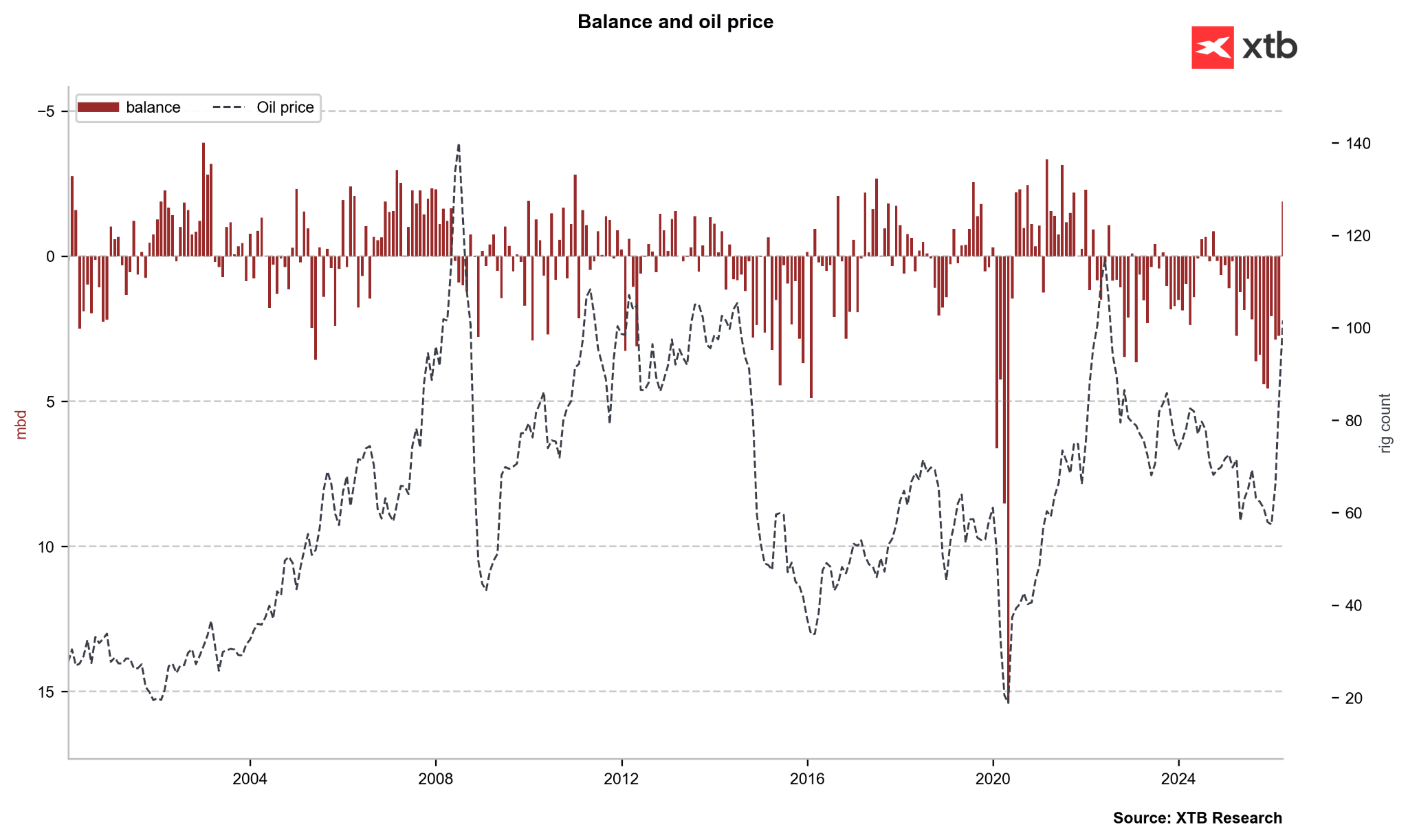 Initial estimates indicate that the deficit in March will average approximately 2 million barrels per day (mb/d). Theoretically, this figure could be 2–4 times higher in April, considering production shutdowns by Gulf countries and the continued suspension of flow through the Strait of Hormuz. Source: Bloomberg Finance LP, XTB.
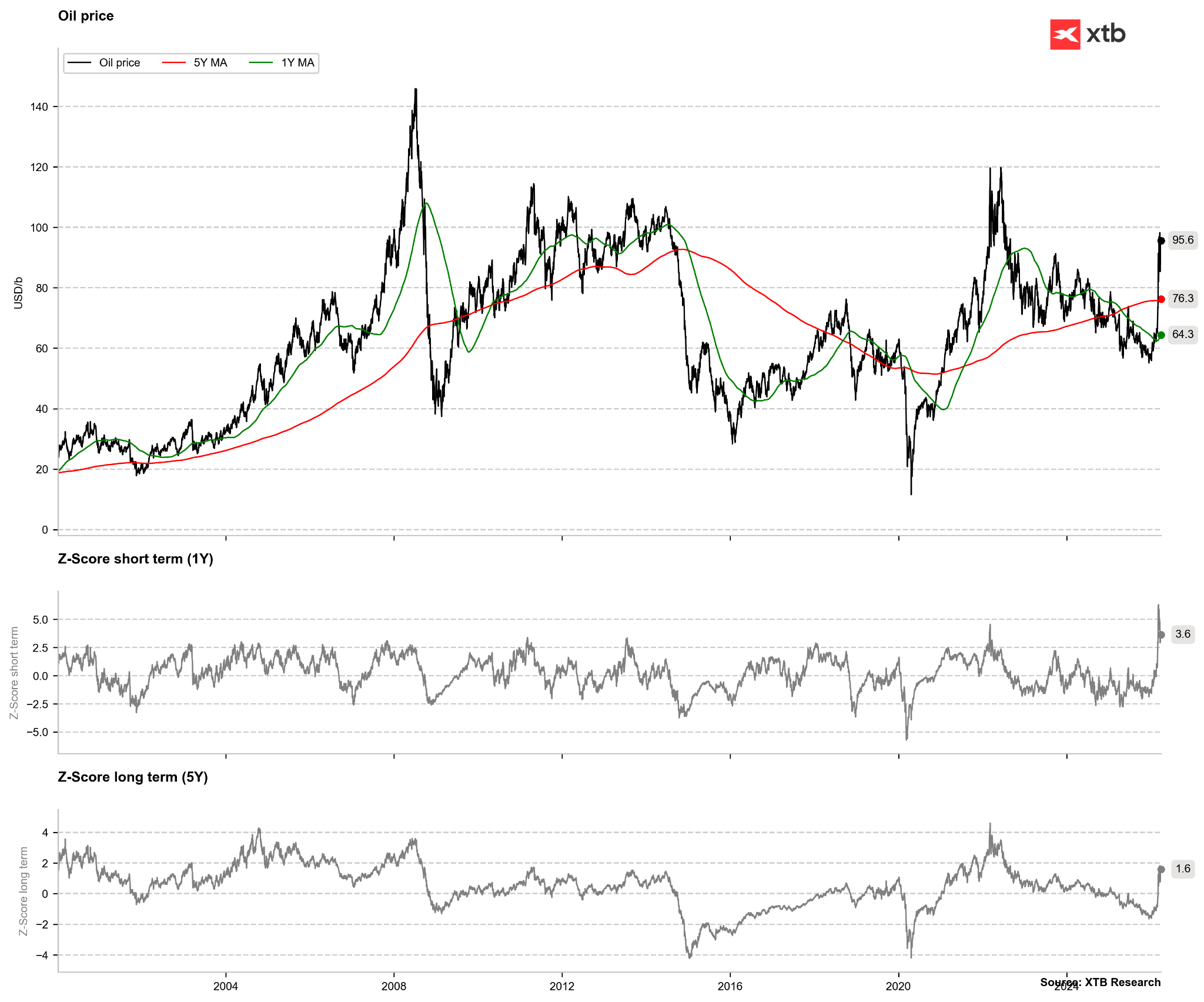 The price spike in WTI crude has led to significant overvaluation relative to the one-year average, though the price remains well below the extreme overvaluation seen relative to the 5-year average. A similar situation occurred in 2022, when the price deviated as much as fourfold from the average. Source: Bloomberg Finance LP, XTB.
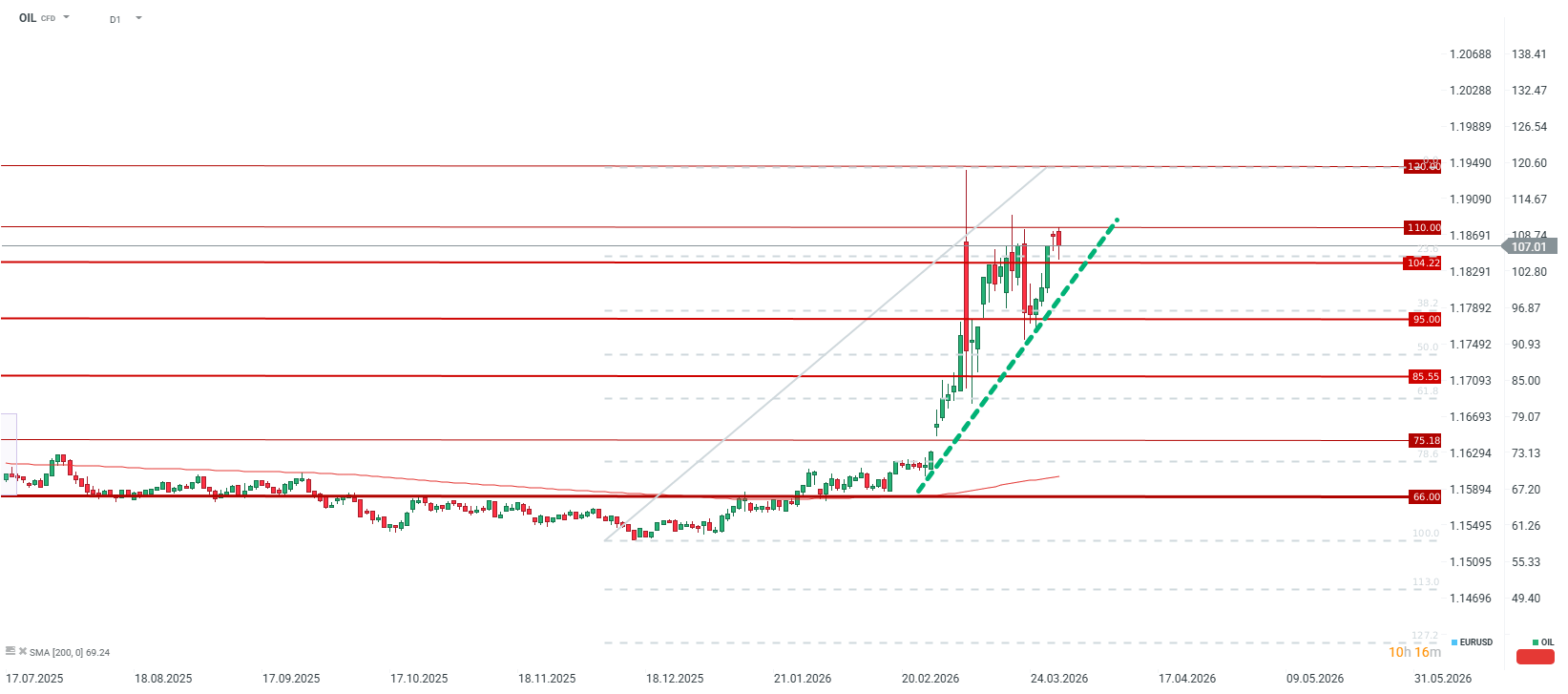 The price of Brent crude remains below 110 USD per barrel (June contract). It is evident that the price previously struggled with the 107–110 zone. A close above this level could push price action into a new range of 110–120 USD per barrel. Conversely, breaking below the upward trend line could lead to a test of support at 95 USD per barrel. Source: xStation5.
Gold:
- Gold prices reacted positively to reports of Trump’s desire for a quick resolution to the conflict.
- Jerome Powell (Fed) stated during his speech that it is difficult to assess the impact the current situation will have on the economy and long-term inflation. However, the Federal Reserve considers itself to be in a “good place.”
- The market is currently pricing in less than one full interest rate hike by the Fed, whereas 1–2 cuts were expected before the war began.
- The ideal scenario for the gold market would be an end to the conflict coupled with a global economic slowdown and rising uncertainty regarding global debt. In such a case, a return above 5000 USD would be the base-case scenario.
- Goldman Sachs maintains its forecast of 5400 USD per ounce this year, driven by continued central bank purchases and the potential for the Fed to return to rate-cut pricing.
- According to GS, Middle Eastern central banks will not sell gold; instead, any reserve reductions will come from selling U.S. Treasuries, which could potentially further weaken the dollar.
- BNP Paribas indicates that any form of agreement would likely trigger a strong bounce in gold prices, whereas a land invasion could lead to even more intense inflationary fears.
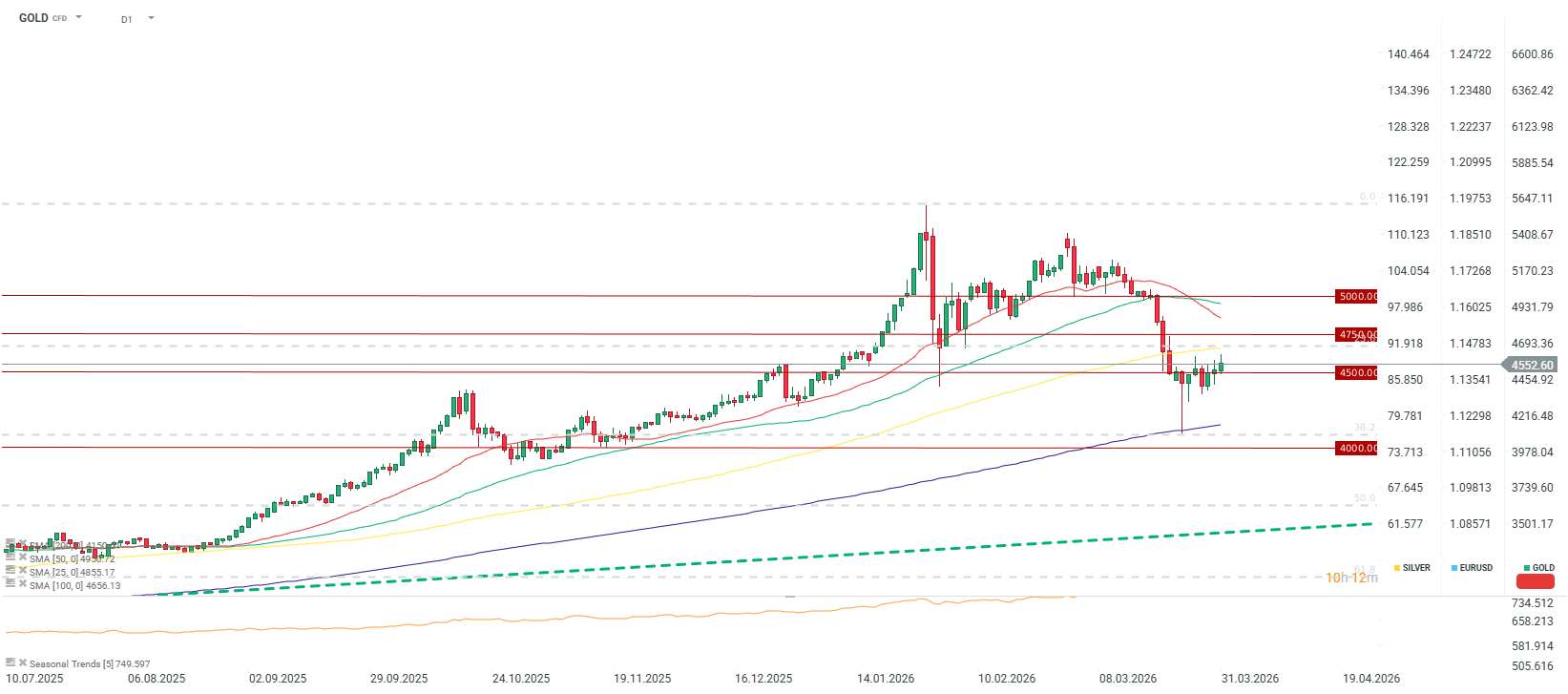 Gold prices are attempting to break above 4500 USD per ounce, but gains may be capped by the 100-period moving average. While an end to the conflict could quickly lead to a test of the 5000 USD area, the price remains vulnerable to a test of the 4200–4400 USD range if further signals of rebounding inflation emerge. Source: xStation5.
Wheat:
- Initial reports on crops indicate good growing conditions and high quality. However, extremely dry conditions in the Plains region are being noted, which could potentially limit yields.
- Prices for urea (a universal fertilizer) are rising sharply worldwide, echoing the situation in 2021 and 2022. The Middle East is a vital producer of this fertilizer; shortages could not only increase farming costs but also lead to lower harvests if fertilizer use is restricted.
- Fertilizer deliveries are currently critical in the Northern Hemisphere following the winter period, just ahead of the sowing of major crops.
- China and Russia are restricting their own fertilizer exports, while the United States is easing import restrictions. India is attempting to increase urea purchases from other regions outside the Persian Gulf. France and Greece are expanding support programs for farmers, while Ghana has announced a free fertilizer program.
- Wheat prices have returned above 600 cents per bushel. Net positions are rising to their highest levels since May and October 2024. At the same time, net positions among speculators remain negative. The last time net positions were positive was in 2022 during the supply crisis following the start of the war in Ukraine.
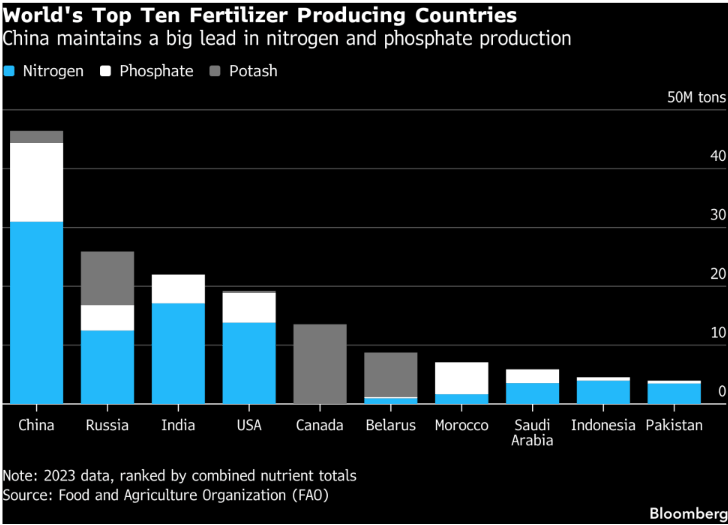 Top fertilizer-producing countries worldwide. Source: Bloomberg Finance LP.
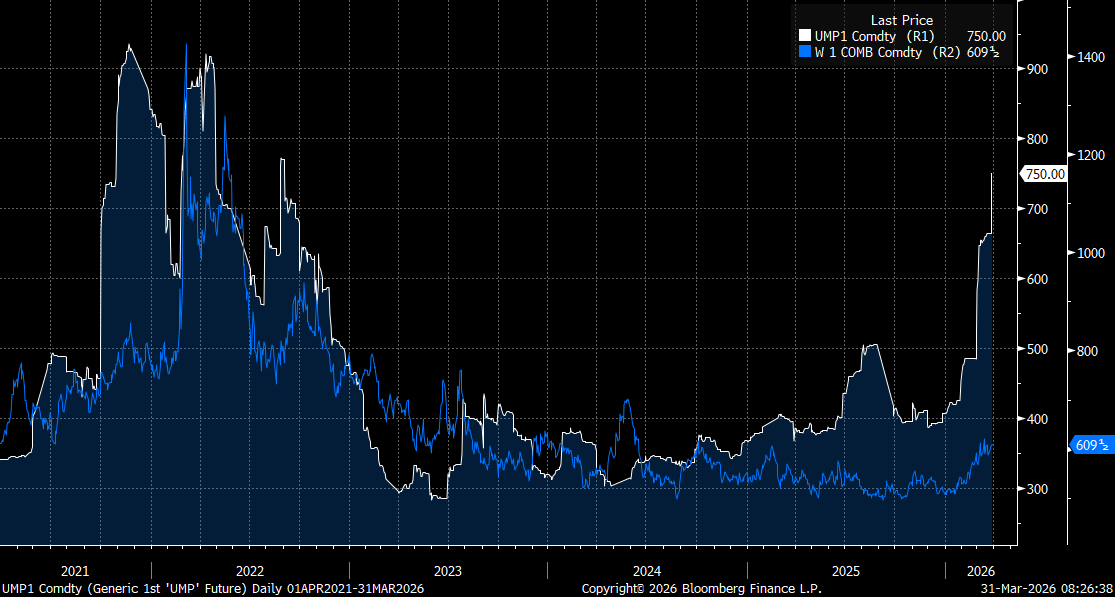 Urea prices are rising significantly, which may exert greater upward pressure on agricultural product prices. Source: Bloomberg Finance LP.
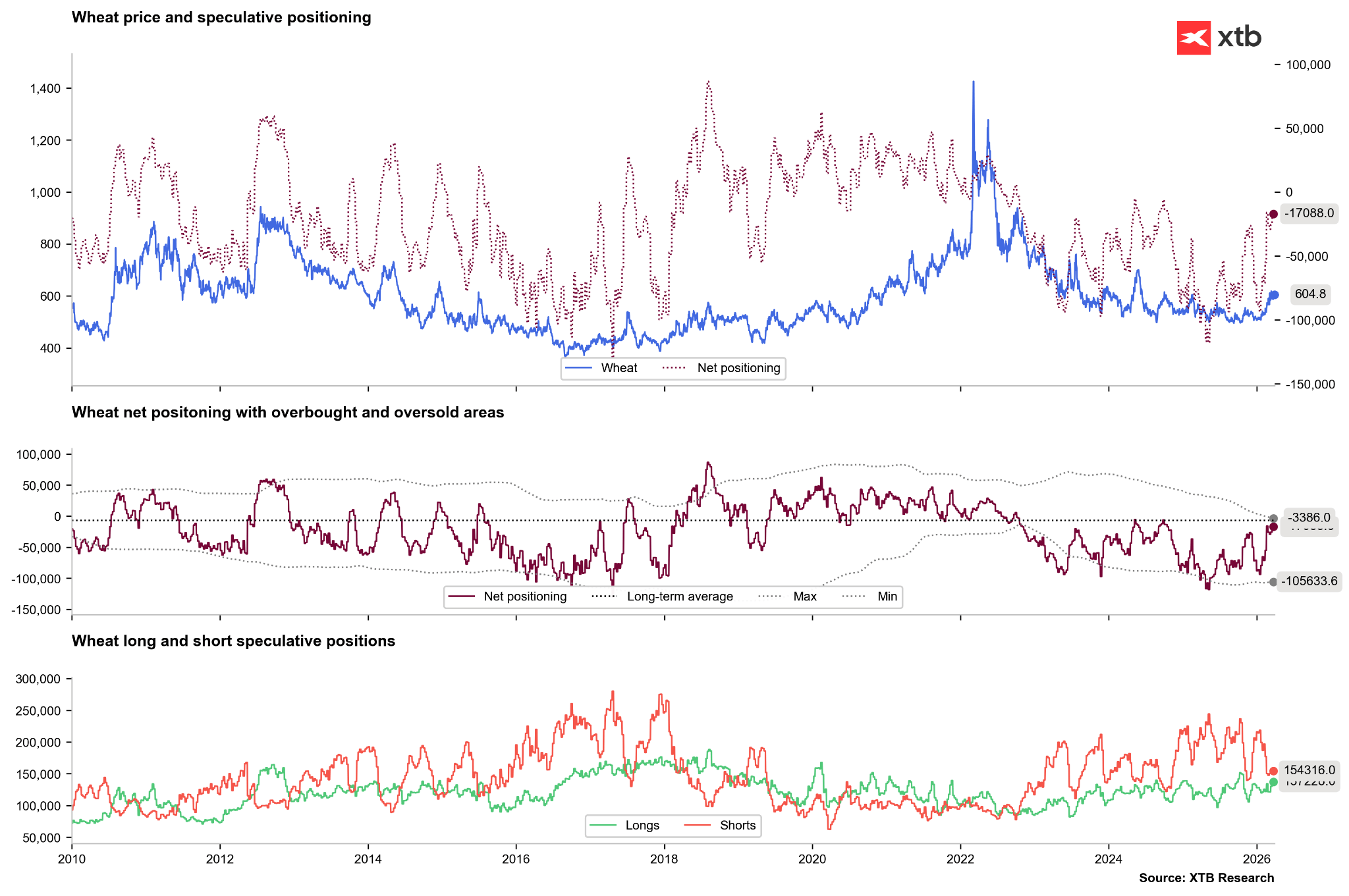 Short positions have been clearly reduced, while longs have seen a minimal bounce. The current positioning situation is beginning to resemble the 2016–2018 period, although prices were significantly lower back then. Source: Bloomberg Finance LP, XTB.
Cocoa:
- Cocoa prices are stabilizing above 3000 USD per ton at the end of Q1 2026.
- Latest demand data for Q1 2026 is expected in mid-April. Theoretically, the data should be slightly better than in Q4 2025, though the effect of processing much cheaper beans will not yet be visible.
- The price is seeing its strongest bounce since March 6th, despite reports of heavy rains in West Africa, which increase the chances of a good mid-crop season.
- Cocoa stocks have risen to their highest level in over 8 months.
- Ghana announced a 30% cut in the regulated price for the mid-crop season, while Ivory Coast intends to slash the regulated price by 57% to allow for the sale of large bean stockpiles accumulated in recent months.
- It is important to emphasize that the current oversupply could quickly shift back into production problems, similar to the post-2022 period. Sharply rising fertilizer prices and freight rates should drive a price recovery in the long term. Furthermore, a demand-side recovery is expected in the second half of this year.
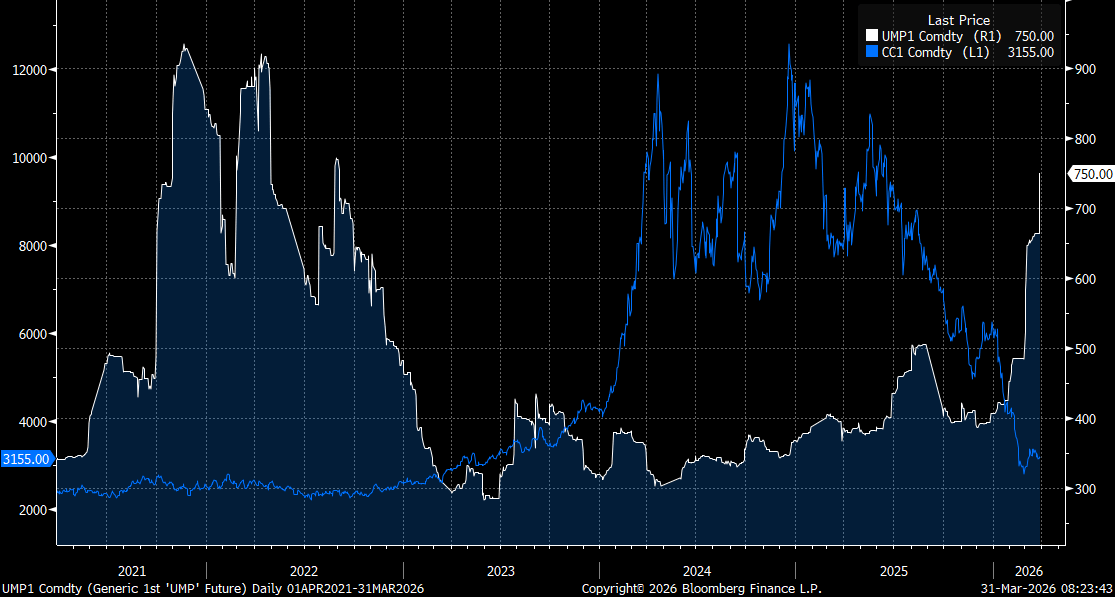 Urea prices from the Persian Gulf are rising toward 2022 levels. This could impact cocoa production in future seasons. Source: Bloomberg Finance LP.
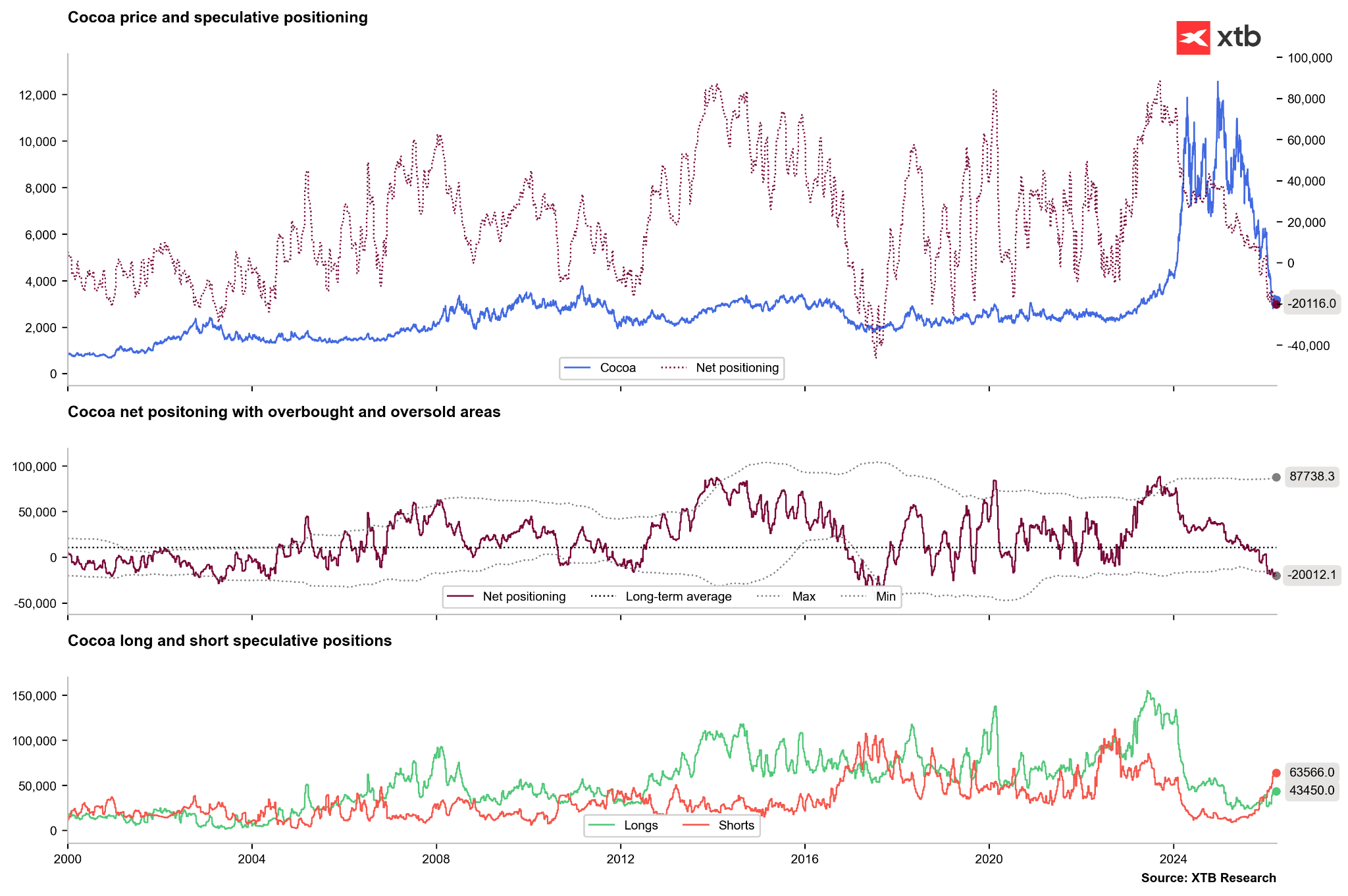 Speculative short positions on cocoa continue to grow, resembling 2016 and 2017, which suggests that downward price pressure may persist. Net positions are extremely low, though not as low as in 2017. Long positions remain at a relatively low level compared to the last decade. Source: Bloomberg Finance LP, XTB.
The material on this page does not constitute financial advice and does not take into account your level of understanding, investment objectives, financial situation or any other specific needs. All information provided, including opinions, market research, mathematical results and technical analyzes published on the Website or transmitted To you by other means, it is provided for information purposes only and should in no way be construed as an offer or solicitation for a transaction in any financial instrument, nor should the information provided be construed as advice of a legal or financial nature on which any investment decisions you make should be based exclusively To your level of understanding, investment objectives, financial situation, or other specific needs, any decision to act on the information published on the Website or sent to you by other means is entirely at your own risk if you In doubt or unsure about your understanding of a particular product, instrument, service or transaction, you should seek professional or legal advice before trading. Investing in CFDs carries a high level of risk, as they are leveraged products and have small movements Often the market can result in much larger movements in the value of your investment, and this can work against you or in your favor. Please ensure you fully understand the risks involved, taking into account investments objectives and level of experience, before trading and, if necessary, seek independent advice.