S&P 500 — US Large Cap Index
 FTSE 100 — UK Blue Chips
 Euro Stoxx 50 — Eurozone Leaders
 DAX 40 — German Equities
 CAC 40 — French Market Index
 Nikkei 225 — Japan Benchmark
 Hang Seng — Hong Kong Index
 Shanghai Composite — China Mainland
 ASX 200 — Australian Market
 TSX Composite — Canada Index
 Nifty 50 — India Large Cap
 STI Index — Singapore Market
 KOSPI — South Korea Index
 Bovespa — Brazil Equities
 JSE Top 40 — South Africa Index
 IPC Index — Mexico Market
Michael Burry Rebalances His Portfolio: Capitulation or Smarter Risk Management?


Today Markets Analysis: Michael Burry has once again adjusted his portfolio, reigniting debate over whether the investor is backing away from his bearish technology thesis or simply managing the risk of being early.
Burry’s latest portfolio update, published on September 9, shows reductions in several positions linked to his bearish view on technology and artificial intelligence.
The changes are significant, but interpreting them as outright capitulation would be premature. Instead, the latest positioning appears to highlight a more fundamental problem facing any investor betting against expensive growth stocks: being right about valuation is not enough if the timing is wrong.
Burry Reduces Some of His AI-Related Shorts
One of the clearest changes is a reduction in Burry’s bearish exposure to broadly defined technology companies, including stocks closely associated with the AI investment boom.
Burry explained on social media that part of the decision was related to the time decay of options.
That distinction matters.
A put option can eventually become profitable if the underlying stock falls, but the investor still faces the cost of waiting. As expiration approaches, the option loses time value, meaning a bearish investor can be correct about an overvalued company but still lose money if the expected decline arrives too late.
Burry nevertheless continues to hold long-dated put positions against Palantir and the QQQ ETF, with expirations extending into 2027.
The Bullish Side of Burry’s Portfolio Is Equally Interesting
Burry’s largest disclosed long positions remain concentrated in Lululemon, Molina Healthcare and MercadoLibre.
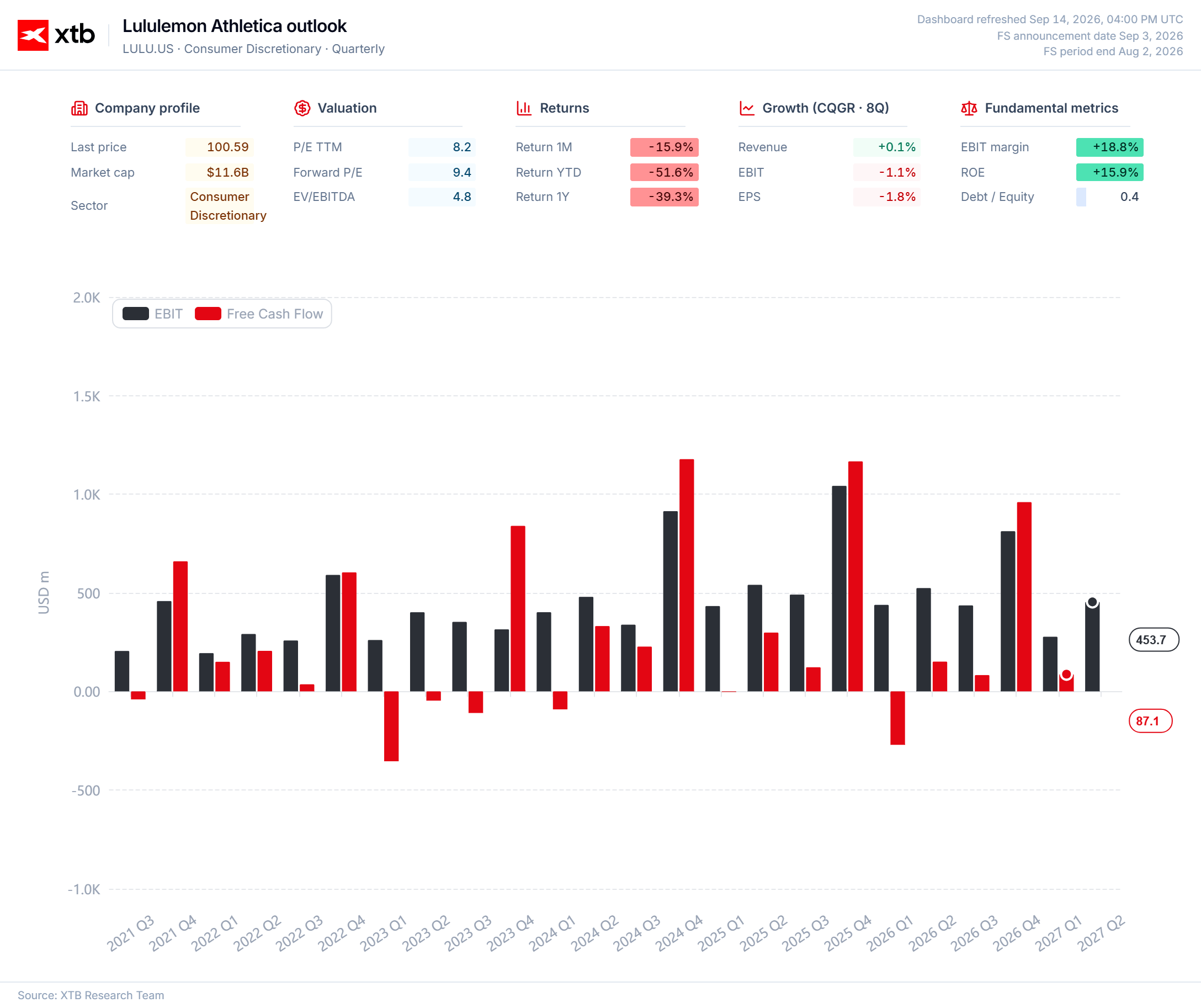
Lululemon is particularly interesting because Burry has been involved in the stock for some time, having built exposure while the shares were already substantially below their previous peak.
The investment demonstrates two uncomfortable realities of value investing:
- A stock can look cheap for a very good reason.
- A stock that looks cheap can become even cheaper.
Burry’s thesis is that Lululemon has the potential for a significant recovery, drawing comparisons with companies such as Abercrombie & Fitch and Ralph Lauren.
However, the market has yet to confirm that turnaround thesis. The company’s deteriorating performance and weak share-price trend remain important challenges for investors betting on a recovery.
Palantir and Nvidia Present a Different Challenge
The more controversial part of Burry’s portfolio concerns companies such as Palantir and Nvidia, where the fundamental debate is centred on valuation and the sustainability of exceptionally strong growth.
Both companies have demonstrated characteristics associated with so-called hyper-growth stocks, including rapid revenue expansion and strong margins.
The difficulty for a bearish investor is that extraordinary valuation does not automatically produce an immediate correction.
Burry’s earlier concerns around accounting practices also illustrate the danger of allowing a valuation thesis to become dependent on a specific fundamental accusation. If the anticipated accounting problem does not materialise, the bearish argument becomes much harder to sustain.
That does not necessarily invalidate concerns about valuation.
It does, however, demonstrate the difference between saying “this stock is expensive” and successfully identifying the catalyst that will cause the market to reprice it.
Oracle and Nebius: The Debt Argument
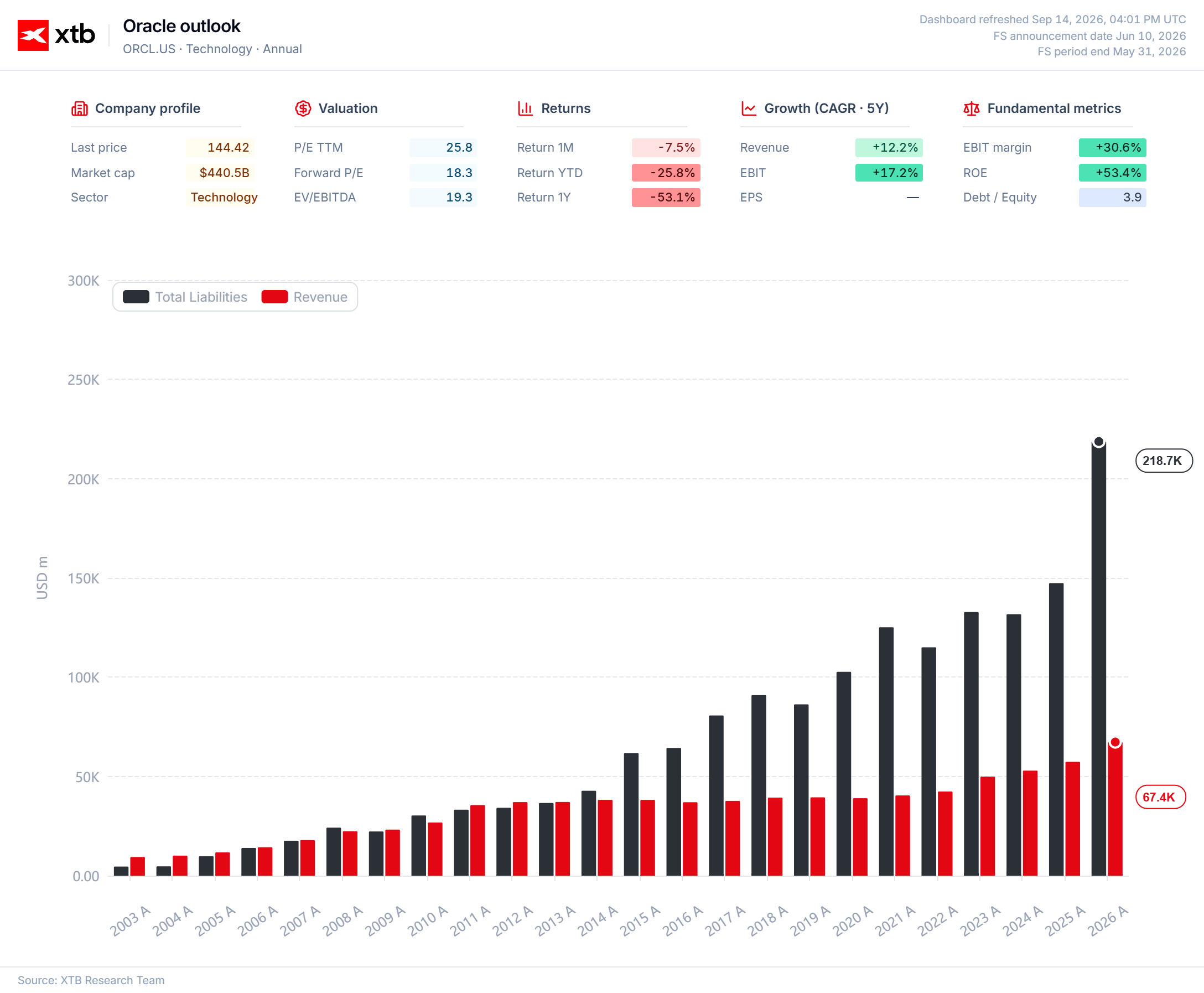
Burry’s bearish exposure to Oracle and Nebius offers another angle.
The concern centres partly on debt levels and the scale of depreciation and amortisation associated with major technology infrastructure investments.
This is particularly relevant during the current AI investment cycle, where companies are committing enormous amounts of capital to data centres, computing infrastructure and related technology.
The bearish argument is straightforward: if expected growth fails to justify the enormous investment required, companies could face pressure from financing costs, depreciation and lower returns on capital.
But again, the market needs a catalyst.
A company can carry significant financial risks while its shares continue rising if investors remain convinced that future earnings will justify today’s valuation.
The Real Lesson: Timing Can Matter More Than Valuation
Burry’s latest move may therefore be less about abandoning his thesis and more about controlling the cost of waiting for that thesis to work.
This is especially important when options are involved.
Imagine an investor correctly identifies a stock as significantly overvalued. If the stock remains elevated for another two years before finally falling, a put option expiring before that decline can still become worthless.
The investor was fundamentally correct — but financially wrong.
That is why reducing some short exposure while retaining longer-dated positions can be interpreted as an attempt to preserve flexibility.
Burry’s Portfolio Sends a Mixed Signal
| Position | Direction | Market Interpretation |
|---|---|---|
| Lululemon | Long | Contrarian recovery thesis |
| Molina Healthcare | Long | Defensive/growth exposure |
| MercadoLibre | Long | Long-term growth conviction |
| Palantir | Put | Continued AI/valuation concern |
| QQQ | Put | Broader technology bearishness |
| Oracle | Put | Debt and infrastructure concerns |
| Nebius | Put | AI infrastructure risk |
| Nvidia | Put | Valuation/growth concern |
The overall picture is therefore more nuanced than simply “Burry is bearish.”
He remains positioned for a technology correction, but appears less willing to absorb unlimited option decay while waiting for that correction to arrive.
Is This Capitulation?
Probably not — at least not yet.
Reducing bearish positions does not necessarily mean that Burry has abandoned his fundamental view.
It could mean that he recognises the market’s momentum remains firmly against him.
Technology valuations can remain elevated for longer than a short seller expects, particularly when earnings growth continues to provide investors with justification for paying high multiples.
At the same time, reducing portions of long positions can indicate that Burry is also becoming less comfortable with individual company-specific assumptions.
The result is a portfolio that looks increasingly designed around flexibility rather than conviction alone.
What Traders Are Watching Next
The most important signals will be whether Burry continues reducing his technology puts or instead uses future weakness to rebuild bearish exposure.
Markets will also be watching:
- AI earnings growth versus current valuations.
- Nvidia’s revenue and margin trajectory.
- Palantir’s valuation relative to future earnings growth.
- Oracle’s debt and capital-investment requirements.
- AI infrastructure spending and returns on capital.
- Lululemon’s ability to stabilise revenue and margins.
- The timing and size of any broader technology-sector correction.
The eventual performance of these positions will depend not only on whether Burry’s fundamental assumptions prove correct, but also on when the market begins to agree with him.
Currency Hedger View
From a broader market perspective, Burry’s repositioning highlights the importance of risk management when valuations become stretched.
For currency and global markets, a major repricing in US technology stocks could have wider consequences through equity flows, risk appetite, the US dollar and demand for defensive assets.
However, the current portfolio changes do not by themselves establish that a major technology correction is imminent.
They demonstrate something more practical: even sophisticated investors must manage the cost of maintaining a bearish position when markets refuse to move in the expected direction.
Market analysis contributed by Currency Hedger, an Octalas Group division specialising in foreign exchange, currency risk and hedging.
Today Markets View
Burry’s latest portfolio update should not be interpreted as proof that he has abandoned his long-running concerns about technology valuations.
The more interesting interpretation is that he is adjusting the way he expresses that view.
Reducing some short exposure while maintaining longer-dated puts gives Burry greater flexibility and reduces the damage caused by time decay if the anticipated correction takes longer to arrive.
That is arguably the most important lesson from the portfolio.
A valuation thesis can be completely correct and still produce a poor investment result if the catalyst arrives too late.
At the same time, the continued bearish exposure to areas of the AI trade shows that Burry has not simply turned bullish on technology.
The portfolio increasingly looks like a balance between conviction and patience — acknowledging that the market can remain expensive, irrational or simply early for considerably longer than a bearish investor expects.
Bottom Line
Michael Burry’s latest portfolio changes look less like outright capitulation and more like a tactical rebalance around timing and risk.
He remains positioned against parts of the technology and AI trade, while maintaining major long positions in companies where he sees significant recovery or growth potential.
The bigger question is no longer simply whether Burry is right about expensive technology stocks.
It is whether his timing will ultimately be right as well.
Analysis by Louis Roche, Analyst, Today Markets
With contribution from Currency Hedger — currencyhedger.com