S&P 500 — US Large Cap Index
 FTSE 100 — UK Blue Chips
 Euro Stoxx 50 — Eurozone Leaders
 DAX 40 — German Equities
 CAC 40 — French Market Index
 Nikkei 225 — Japan Benchmark
 Hang Seng — Hong Kong Index
 Shanghai Composite — China Mainland
 ASX 200 — Australian Market
 TSX Composite — Canada Index
 Nifty 50 — India Large Cap
 STI Index — Singapore Market
 KOSPI — South Korea Index
 Bovespa — Brazil Equities
 JSE Top 40 — South Africa Index
 IPC Index — Mexico Market
Nasdaq Surges – After Fed Rate Hike as Falling Oil and Treasury Yields Fuel US Tech Rebound


US technology stocks staged a powerful rebound Thursday despite the Federal Reserve delivering its first interest-rate increase since 2023, with the Nasdaq Composite jumping 1.7%, the S&P 500 rising 1.1% and the Dow Jones Industrial Average gaining 0.6%.
At first glance, the move appears counterintuitive.
The Federal Reserve raised its benchmark interest rate by 25 basis points to 3.75%-4.00%, while policymakers signaled that further tightening remains possible as inflation remains above target. The decision was unanimous, and the latest projections point to a median federal funds rate of 4.1% at the end of 2026.
Normally, higher interest rates and rising Treasury yields create pressure for technology stocks because higher discount rates reduce the present value investors assign to future earnings.
Yet the market’s reaction has been driven by something more immediate:
Oil prices fell sharply, Treasury yields retreated and concerns surrounding the post-Fed bond-market shock eased.
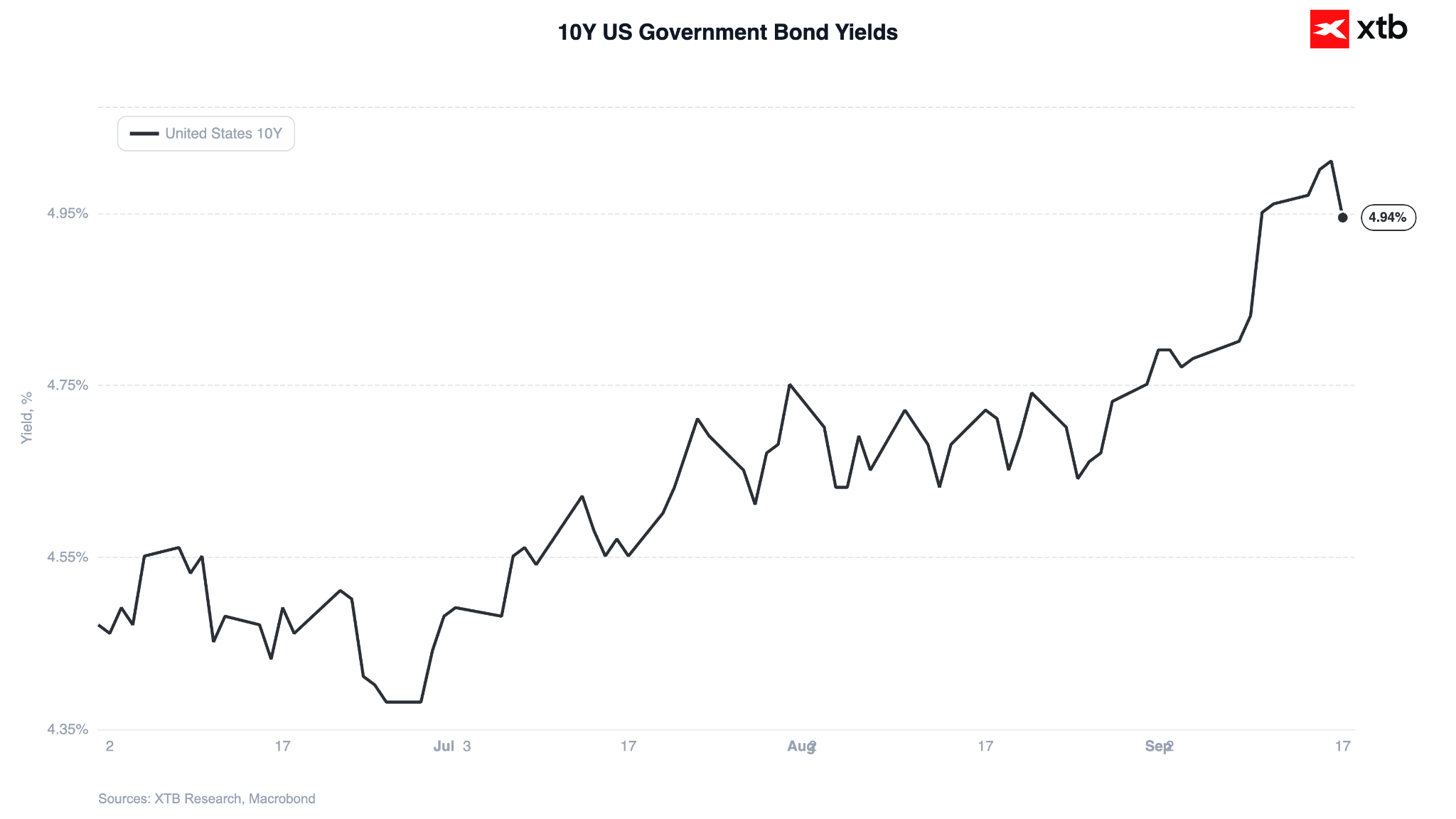
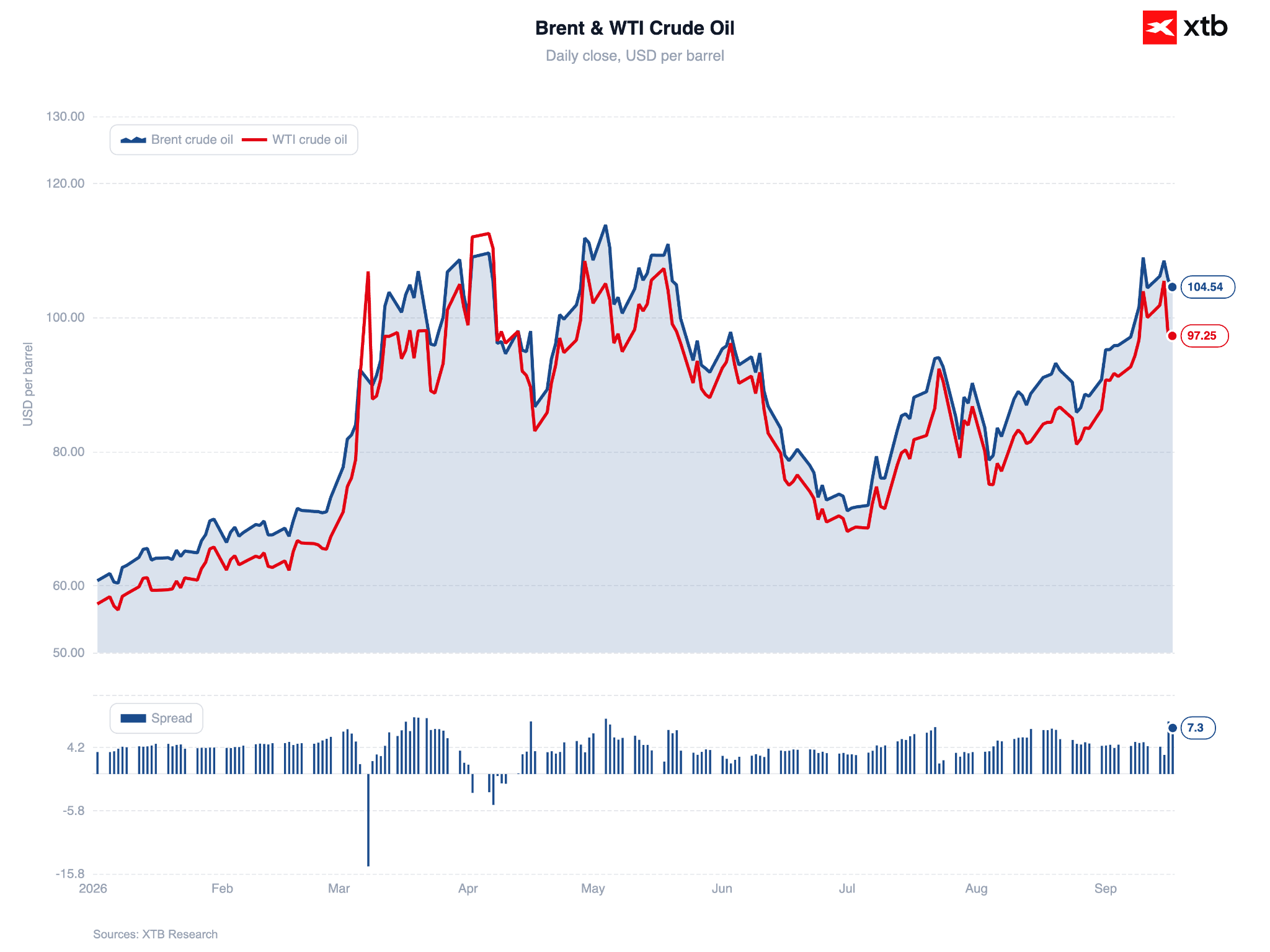
Brent crude moved toward $102 per barrel during Thursday’s session before recovering toward approximately $105, while the US 10-year Treasury yield fell after briefly moving sharply higher following Wednesday’s Fed decision.
The result was a significant relief rally across US equities.
The market is effectively demonstrating that, for now, the direction of oil and bond yields matters at least as much as the Fed rate decision itself.
Why Are US Tech Stocks Rising After a Fed Rate Hike?
The answer lies in the interaction between interest rates, Treasury yields and energy prices.
The Fed’s 25-basis-point increase was broadly anticipated.
That meant the rate hike itself was not necessarily a new shock for investors.
What mattered more was the guidance surrounding the decision and how financial markets interpreted the consequences.
The initial reaction was negative.
Treasury yields increased and equities came under pressure as investors absorbed the prospect of further tightening.
But on Thursday, the direction changed.
Oil prices declined sharply, long-term Treasury yields eased and investors began reversing some of the previous day’s defensive positioning.
That combination is particularly supportive for growth-oriented technology stocks.
The Nasdaq therefore rebounded strongly, gaining 1.7%.
The Fed Raised Rates to 3.75%-4.00%
The Federal Reserve raised its target range by 25 basis points to 3.75%-4.00%, marking its first rate increase since July 2023.
Fed Chair Kevin Warsh and policymakers emphasized persistent inflation concerns and the strength of the US economy.
Reuters reported that the Fed’s decision effectively acknowledged that inflation remains a problem and that further tightening could be required.
The latest projections are particularly important.
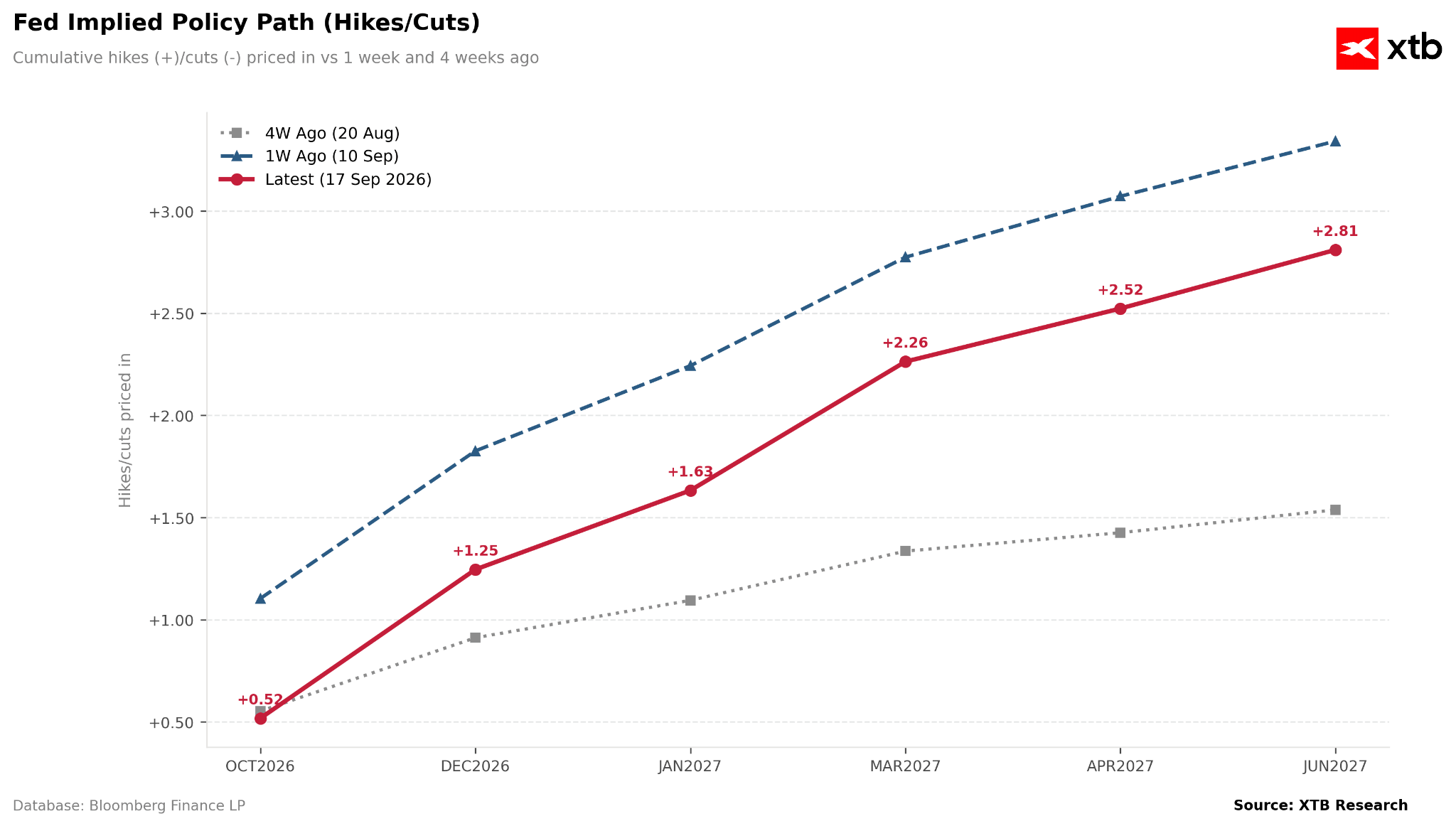
The median Fed forecast places the federal funds rate at 4.1% at the end of 2026, while the latest market interpretation continues to allow for additional increases. Sixteen of the 18 Fed policymakers reportedly see at least one further rate increase by the end of this year.
So the equity rally does not mean the Fed has suddenly turned dovish.
The opposite is closer to the truth.
The rally reflects the fact that other market variables moved in a more supportive direction.
Treasury Yields Are Becoming More Important Than the Fed Rate
For technology investors, the 10-year Treasury yield can be more important than the headline federal funds rate.
The Fed directly controls the short-term policy rate.
The 10-year Treasury yield is determined by the market and reflects expectations surrounding inflation, economic growth, future monetary policy and demand for government debt.
When the 10-year yield rises sharply, the valuation pressure on long-duration technology stocks can become significant.
That is exactly what happened following Wednesday’s Fed decision.
But Thursday brought a reversal.
The 10-year yield fell as the bond market recovered, helping remove one of the biggest immediate pressures on the Nasdaq.
This is why the equity market was able to rally even though the Fed had just raised rates.
Oil Prices Have Become a Major Driver of US Interest-Rate Expectations
The other major piece of the puzzle is crude oil.
The Middle East conflict has pushed energy prices significantly higher, creating a direct inflation risk for the US economy.
Higher oil prices can feed into gasoline, transportation, production and other consumer costs.
That can make the Fed’s job substantially harder.
But Thursday brought relief.
Brent crude fell toward $102 per barrel, although prices subsequently recovered toward approximately $105.
The decline in crude prices reduced some of the immediate inflation pressure being priced into the bond market.
That helped Treasury yields decline.
And when Treasury yields decline, high-growth technology stocks can receive a significant valuation boost.
The relationship can therefore be summarized as:
Lower oil → lower inflation expectations → lower Treasury yields → less valuation pressure on technology stocks.
This is one of the key explanations for Thursday’s Nasdaq rebound.
The Nasdaq Is Particularly Sensitive to Bond Yields
Technology stocks are often valued using expectations for earnings and cash flows that extend far into the future.
When Treasury yields rise, those future cash flows are discounted at a higher rate.
That can put pressure on the valuations of high-growth companies.
Conversely, when long-term yields decline, some of that valuation pressure can ease.
This explains why the Nasdaq’s 1.7% gain was significantly stronger than the Dow’s 0.6% rise on Thursday.
The market was not simply celebrating higher rates.
It was responding to a change in the rate-and-oil environment surrounding the Fed decision.
Figure 1: 10-Year US Government Bond Yields (06.2026 – 09.2026)
The Market Is Reassessing the Inflation Shock
The most important question now is whether the recent oil decline can continue.
If crude prices remain elevated because of Middle East supply disruptions, inflation expectations could remain under pressure.
That would make the Fed’s projected tightening path more important for equity valuations.
But if oil prices continue to retreat as Saudi supply routes recover and additional barrels reach the market, some of the inflation premium could disappear.
That could allow Treasury yields to stabilize or decline even while the Fed maintains a relatively restrictive policy.
This distinction is critical.
The stock market does not necessarily need the Fed to cut rates immediately. It needs the bond market to stop repricing rates sharply higher.
US Economy Remains Resilient
The Fed has another reason for maintaining a relatively firm policy stance: the US economy remains resilient.
The latest Fed assessment cited solid economic activity, strong productivity and robust investment, including continued investment associated with artificial intelligence.
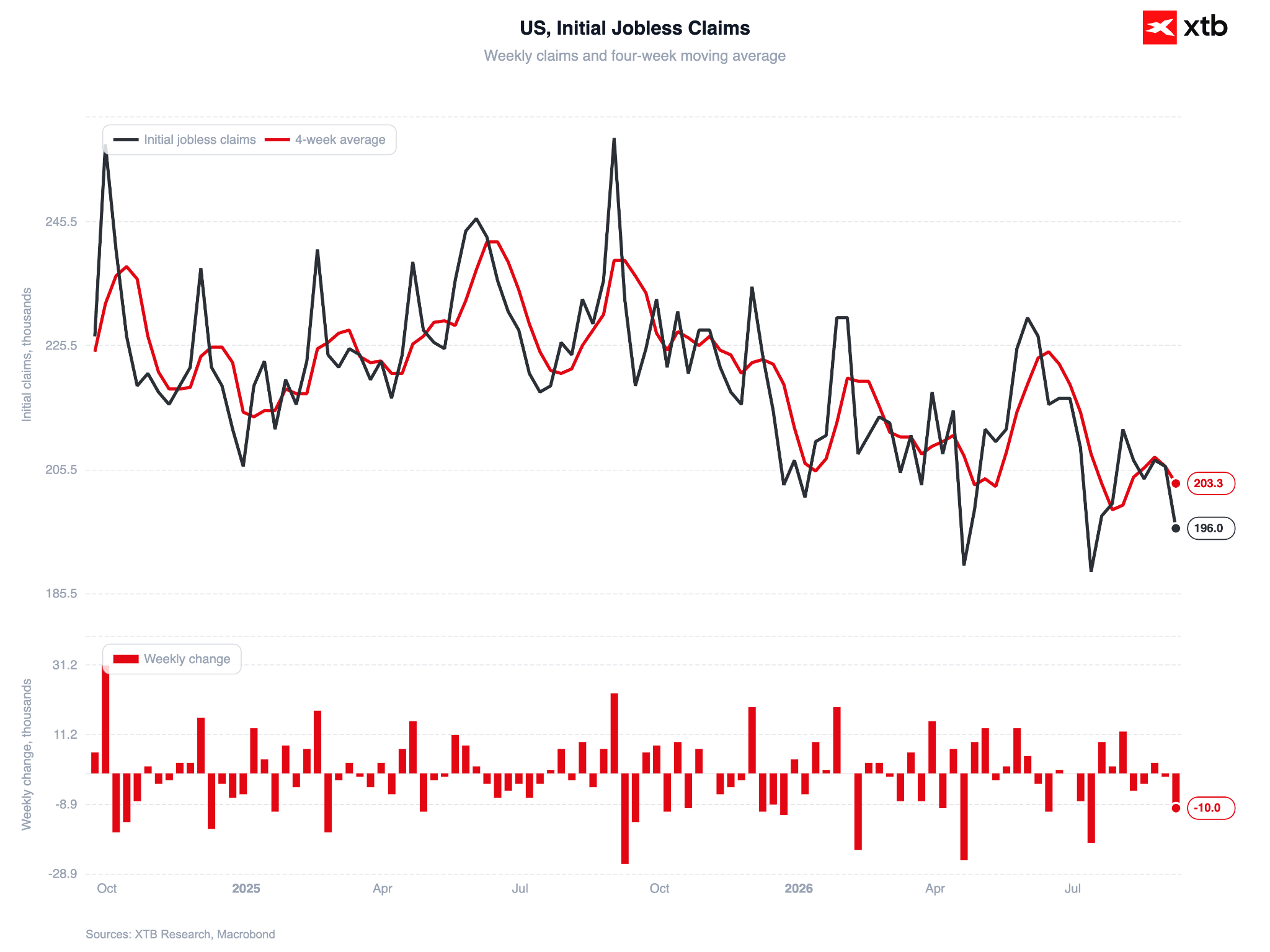
The labour market has also avoided the type of sharp deterioration that would normally force the central bank toward rapid easing.
That creates a potentially important environment for equities.
If economic growth remains strong enough to support corporate earnings while inflation gradually moderates, stocks could theoretically absorb higher rates more easily than if monetary tightening were occurring alongside a severe economic contraction.
However, this remains dependent on the inflation path.
Figure 3: Market-Implied Fed Interest Rate Path (2026 – 2027)
AI Investment Remains a Major Nasdaq Driver
The technology sector also has a structural catalyst that is independent of short-term monetary policy: artificial-intelligence investment.
The Fed has specifically highlighted strong capital investment and AI-related spending as part of the current economic backdrop.
That creates an unusual environment.
The same AI investment boom that supports technology-sector earnings expectations can also contribute to strong economic activity and therefore complicate the inflation outlook.
For investors, this produces two competing effects:
Bullish: AI investment supports revenue, capital expenditure and future earnings expectations.
Bearish: Strong investment and demand can make it harder for inflation to fall quickly enough to allow rapid monetary easing.
The Nasdaq’s response will therefore depend on which effect dominates.
Trump’s Rate-Cut Demands Add Another Market Variable
President Donald Trump has continued to call for substantially lower US interest rates.
Following Wednesday’s Fed decision, Trump said rates should be 1% or lower and called for them to be reduced quickly.
At the same time, Trump said he continued to have confidence in Fed Chair Kevin Warsh despite disagreeing with the decision.
The disagreement between the White House and the Federal Reserve is relevant to markets because investors care about the credibility and independence of monetary policy.
The Fed’s unanimous decision and Warsh’s defense of the rate increase provided a clear indication that the central bank is currently prioritizing inflation control despite political pressure for lower rates.
For markets, the important issue is not the political disagreement itself but whether investors continue to view the Fed as able to set policy based on its economic mandate.
Figure 4: US Initial Jobless Claims (2025 – 2027)
US Tech Market Snapshot
| Market Factor | Latest Development | Impact on US Tech |
|---|---|---|
| Nasdaq Composite | +1.7% | Bullish |
| S&P 500 | +1.1% | Bullish |
| Dow Jones | +0.6% | Bullish |
| Fed Rate | 3.75%-4.00% | Bearish |
| Fed September Hike | +25 bps | Bearish |
| Fed Median 2026 Rate | 4.1% | Bearish |
| Brent Crude | Fell toward $102, later ~$105 | Bullish for equities |
| 10-Year Treasury Yield | Fell after initial post-Fed rise | Bullish for tech |
| US Inflation | Still elevated | Bearish |
| US Economy | Resilient | Bullish |
| AI Investment | Strong | Bullish |
| Further Fed Hikes | Still possible | Bearish |
| Middle East Energy Risk | Elevated | Bearish |
Bullish Sentiment
1. Treasury Yields Have Reversed Lower
The sharp easing in Treasury yields following the initial post-Fed reaction reduces immediate valuation pressure on growth and technology stocks.
2. Oil Prices Have Fallen From Recent Extremes
Brent’s move toward $102 temporarily reduced concerns about an additional energy-driven inflation shock.
3. US Economic Growth Remains Resilient
A strong economy can support corporate revenues and earnings even when interest rates are relatively high.
4. AI Investment Remains Strong
Continued investment in artificial intelligence and related infrastructure provides a structural growth catalyst for major technology companies.
5. The Fed Decision Was Absorbed Without a Continued Equity Sell-Off
After the initial post-decision weakness, investors returned to equities aggressively, producing a 1.7% Nasdaq gain.
Bearish Sentiment
1. The Fed Has Begun Tightening Again
The move to 3.75%-4.00% represents a clear reversal from the easing expectations that had dominated earlier in the year.
2. Further Rate Increases Remain Possible
The Fed’s projections indicate that monetary tightening may not be finished, with 16 of 18 policymakers seeing at least one further hike this year.
3. Inflation Remains Too High
Warsh has emphasized that inflation remains elevated, providing the central bank with a reason to maintain restrictive policy.
4. Oil Could Reverse Higher Again
The recent decline in crude prices may prove temporary if Middle East supply disruptions intensify again.
A renewed oil rally could push inflation expectations and Treasury yields higher.
Figure 2: Brent and WTI Crude Oil (2026)
5. Technology Valuations Remain Sensitive to Long-Term Yields
Any renewed rise in the 10-year Treasury yield could quickly recreate pressure on long-duration technology stocks.
The Critical Relationship: Oil, Bonds and Technology Stocks
The current market is increasingly defined by a three-way relationship:
Oil → Inflation → Treasury yields → Technology valuations
If oil rises sharply, inflation expectations can increase.
If inflation expectations rise, Treasury yields can move higher.
If Treasury yields rise rapidly, technology valuations can come under pressure.
The opposite relationship is also possible.
A sustained decline in oil could reduce inflation concerns, allowing Treasury yields to stabilize or fall and providing support to technology stocks.
This is why the direction of crude oil may currently be almost as important to Nasdaq traders as the next Fed meeting.
Middle East Risks Remain the Biggest External Threat
The geopolitical situation remains critical.
The oil market has already demonstrated how quickly Middle Eastern disruptions can affect energy prices, inflation expectations and Treasury yields.
A renewed surge in Brent could therefore create a second-order impact on equities.
The concern is not simply that expensive oil increases costs.
It could also change expectations for the Fed’s policy path.
If energy prices remain elevated for an extended period, markets could price a more restrictive monetary-policy environment.
Conversely, improving supply conditions could remove some of that pressure.
That makes the Middle East an increasingly important macroeconomic variable for Wall Street.
What Traders Are Watching Next
US equity traders will be monitoring:
- Brent crude, particularly the $102-$105 area and whether the recent decline continues.
- US 10-year Treasury yields and whether the post-Fed decline holds.
- Future Fed rate decisions and evidence of additional tightening.
- US inflation data and whether energy prices begin feeding through more strongly.
- Employment data and signs of acceleration or deterioration.
- AI-related capital expenditure and technology-sector earnings.
- Middle East energy supply developments.
- USD movements, particularly as interest-rate expectations change.
- Nasdaq reaction to Treasury yields, which remains a critical valuation relationship.
The immediate question is whether Thursday’s rebound represents the beginning of a more durable stabilization or simply a relief rally following the initial Fed shock.
Currency Hedger View
The interaction between US rates, oil and the dollar is particularly important for international businesses.
A higher US interest-rate path can support the dollar by increasing relative US yields, while falling oil prices can reduce inflation pressure and alter expectations for future Fed policy.
For companies with USD revenues, USD costs or international technology and energy exposure, this can create significant currency variability even when the underlying business remains unchanged.
Currency Hedger, the FX and hedging division of Octalas Group, focuses on helping businesses manage currency exposure associated with international payments, receipts and commercial transactions.
The current environment demonstrates why companies exposed to US markets need to consider both interest-rate risk and FX risk, rather than looking at either variable in isolation.
Today Markets View
The US technology market has delivered a striking response to the Federal Reserve’s first rate hike since 2023.
The Fed raised rates by 25 basis points to 3.75%-4.00% and signaled that additional tightening remains possible. Yet the Nasdaq subsequently surged 1.7%, while the S&P 500 gained 1.1%.
The explanation is not that higher interest rates suddenly became bullish for technology stocks.
Instead, the market has shifted its focus toward what happens to oil prices and long-term Treasury yields next.
Brent’s decline toward $102 and the subsequent retreat in Treasury yields relieved some of the inflation and discount-rate pressure that had hit equities immediately after the Fed announcement.
The market is therefore sending a very specific signal.
The Fed remains hawkish, but falling oil and lower bond yields are currently overpowering the negative impact of higher policy rates on US technology stocks.
That creates a delicate setup.
If oil continues lower and the 10-year Treasury yield remains contained, the Nasdaq could continue finding support despite a restrictive Fed.
If Middle East tensions push crude sharply higher again, however, the relationship could reverse quickly: higher oil → higher inflation expectations → higher Treasury yields → renewed pressure on technology valuations.
For now, traders should therefore watch Brent crude and the US 10-year Treasury yield alongside the Nasdaq, rather than interpreting the equity rally as a simple reaction to the Fed decision.
Louis Roche, Analyst, Today Markets