S&P 500 — US Large Cap Index
 FTSE 100 — UK Blue Chips
 Euro Stoxx 50 — Eurozone Leaders
 DAX 40 — German Equities
 CAC 40 — French Market Index
 Nikkei 225 — Japan Benchmark
 Hang Seng — Hong Kong Index
 Shanghai Composite — China Mainland
 ASX 200 — Australian Market
 TSX Composite — Canada Index
 Nifty 50 — India Large Cap
 STI Index — Singapore Market
 KOSPI — South Korea Index
 Bovespa — Brazil Equities
 JSE Top 40 — South Africa Index
 IPC Index — Mexico Market

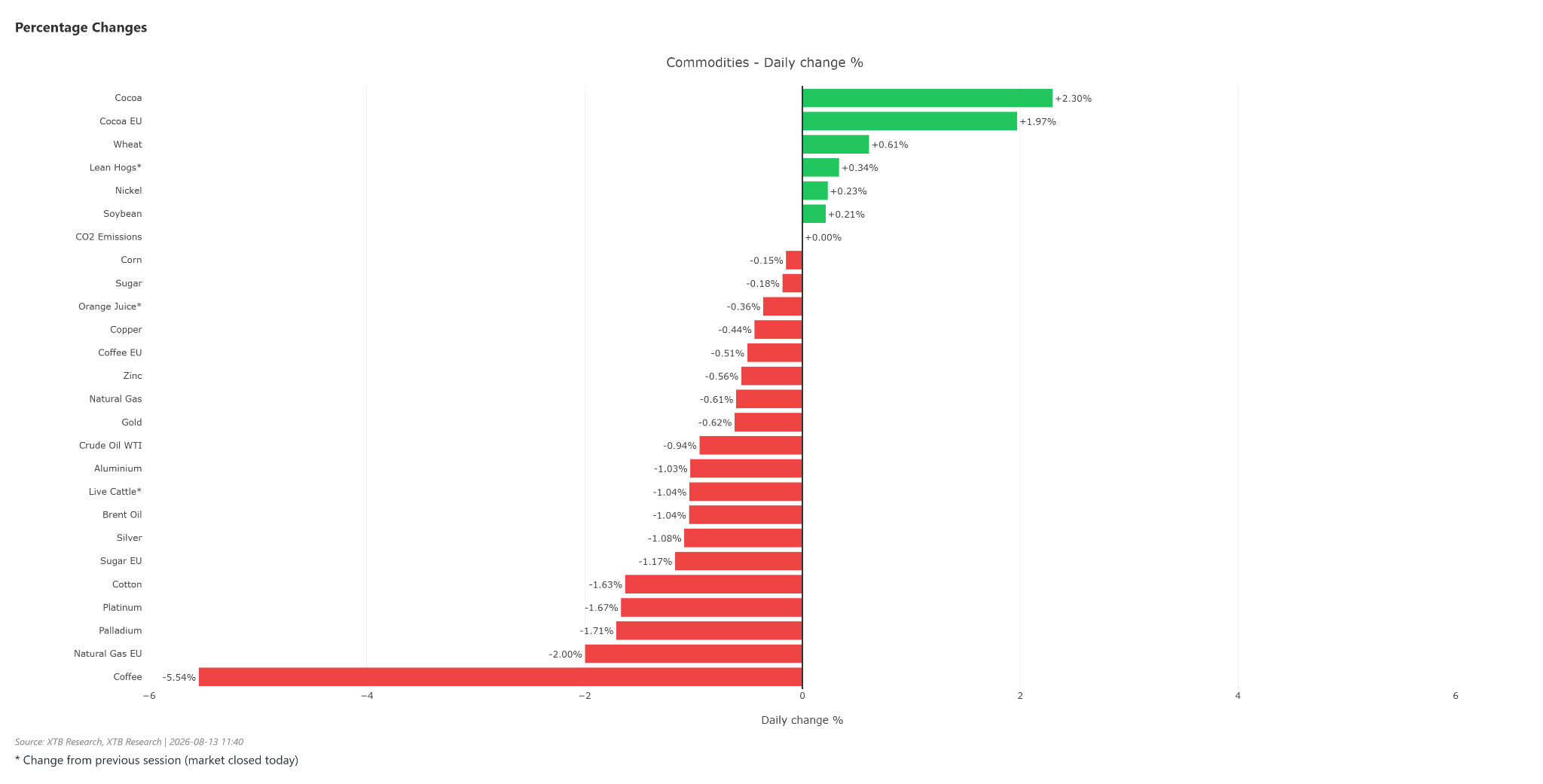
Brent Crude loses over 1% due to long-term forecasts and an unexpected increase in US commercial inventories Oil prices are undergoing clear declines during Thursday’s session, continuing yesterday’s movement, due to factors including a massive increase in US inventories, theoretically progressing peace talks regarding the Strait of Hormuz, and fears of a slowdown in global demand. The reduction in the geopolitical risk premium, combined with a decline in long positions on contracts and a strong dollar, has pushed oil prices below $88 per barrel for Brent and below $82 per barrel for WTI crude.
Apart from the DOE report on inventory status, we have recently seen several important publications from institutions related to the oil market.
Oil production in OPEC and OPEC+
The cartel’s July report indicates a partial recovery in Middle East output as regional tensions ease:
- OPEC+ Results: The countries covered by the agreement increased production in July by 1.37 million b/d (to 28.92 million b/d). Despite the increase, the group remains as much as 6.91 million b/d below the designated quotas. In the entire DoC group, which the OPEC report still includes the UAE, production rose to 37.655 million b/d, representing an increase of 1.42 million b/d.
- Main Producers: The increase was driven by Saudi Arabia (+590 thousand b/d to 7.35 million b/d), Iraq (+665 thousand b/d to 2.62 million b/d), and Kuwait (+393 thousand b/d to 1.85 million b/d).
- Iran’s Situation: Iran produced 2.478 million b/d in July (+26 thousand b/d m/m). Although this is the second consecutive month of increase, production remains about 700 thousand b/d below the pre-war level (~3.2 million b/d). Although production remains stable, July data shows a clear increase in exports to nearly 1 million b/d.
- UAE Status: After leaving the alliance in May, the United Arab Emirates maintained production at around 3.78–3.8 million b/d, reaching volumes about 400 thousand b/d higher than at the beginning of the conflict.
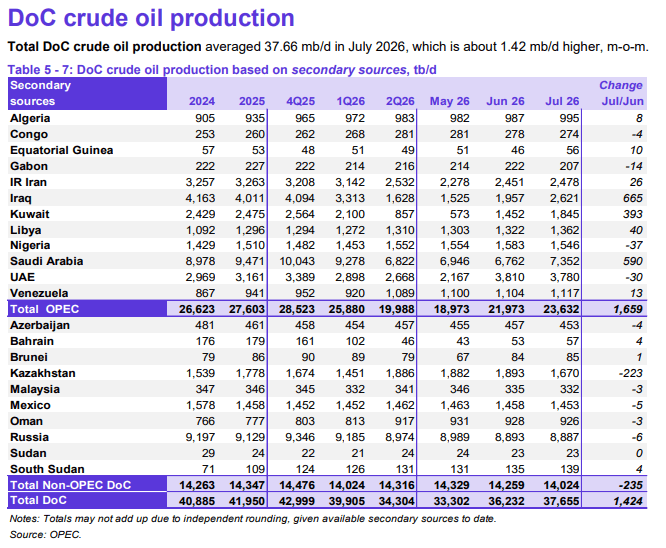
Looking from the perspective of the last quarter of 2025, current production is about 5-6 million b/d lower, which, combined with demand destruction already exceeding 3 million b/d, means the global deficit remains low. However, it is worth remembering that the deficit is heavily constrained by the coordinated release of inventories and reserves onto the market. Source: OPEC
Monthly IEA and EIA reports
Energy agencies present diversified perspectives on the demand and supply balance for the coming quarters:
- International Energy Agency (IEA): Deepened estimates for the drop in global oil demand in 2026 to 1.6 million b/d (previously -1.0 million b/d) due to high fuel prices and logistical disruptions. Despite this, the IEA forecasts a market deficit in the third quarter of 1.8 million b/d due to the blockade of the Strait of Hormuz. The report anticipates a strong rebound in 2027, where demand is expected to increase by 2.4 million b/d and supply by 8.3 million b/d.
- EIA Forecasts (STEO Report): The U.S. Energy Information Administration assumes an average Brent oil price in 2026 of $87/bbl (compared to $69/bbl in 2025 and 2027), with stable US output at 13.8 million b/d.
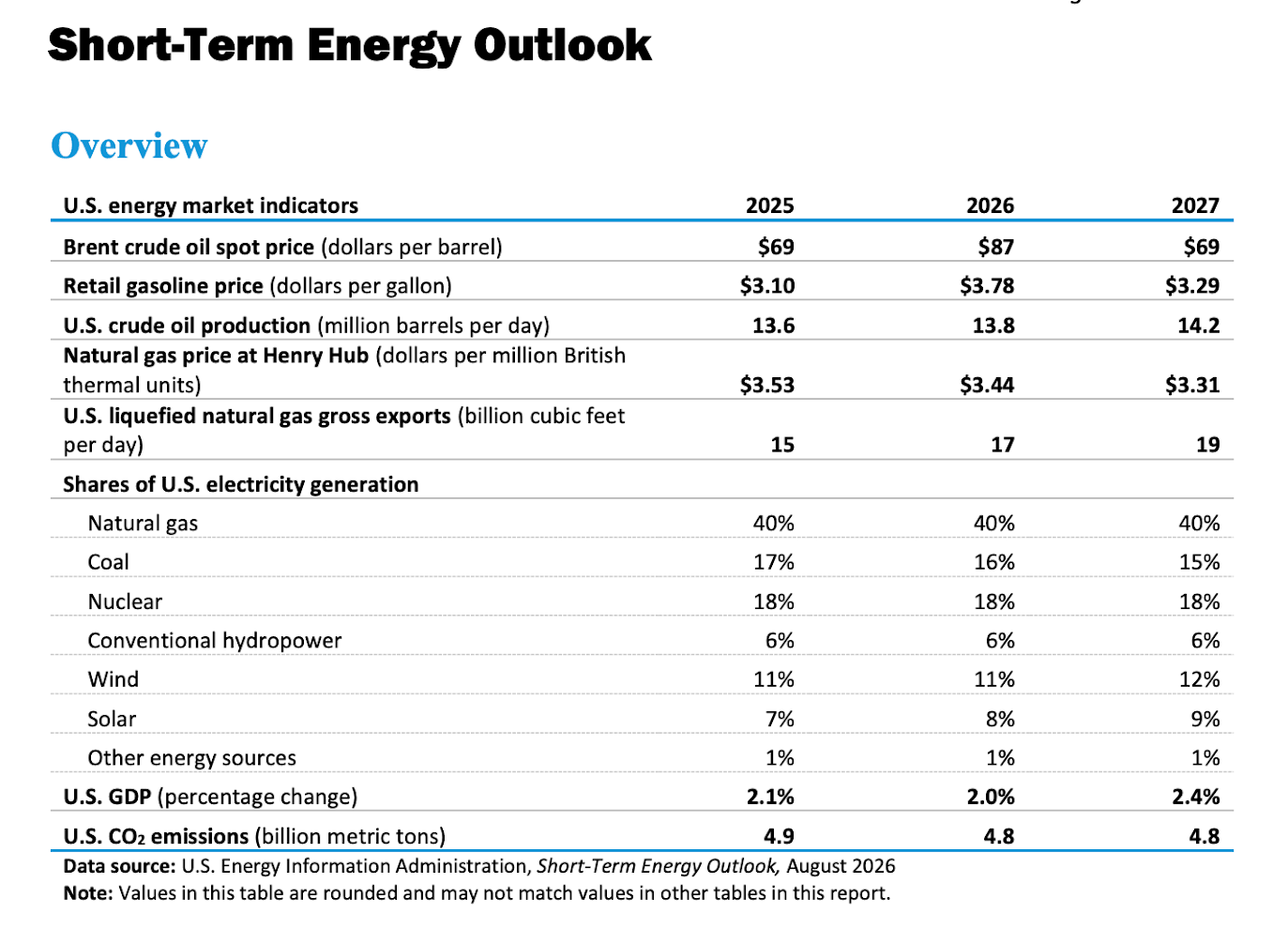
Average Brent crude oil prices this year are expected to reach $87 per barrel, roughly around current levels. A significant drop is expected next year. Source: EIA
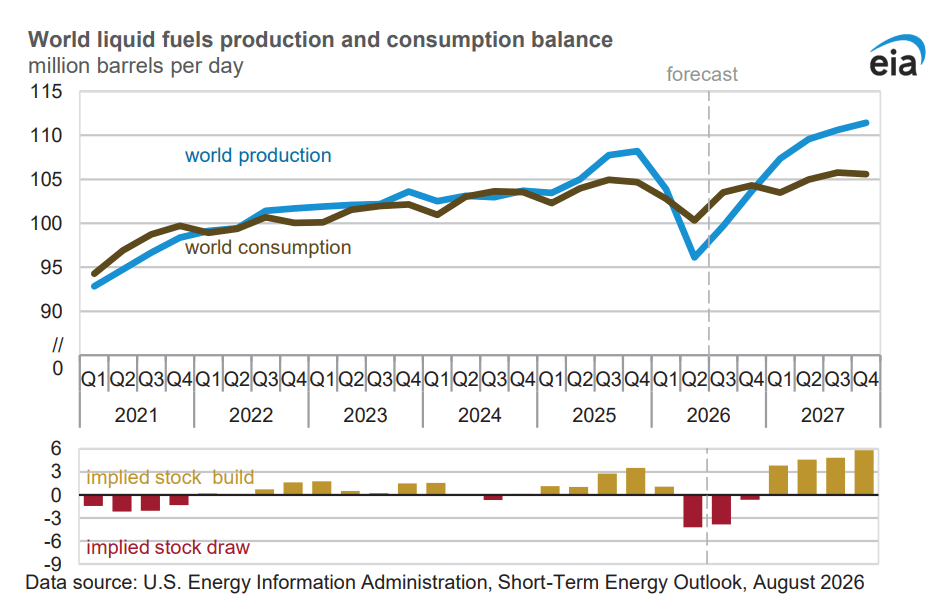
EIA expects the oil market deficit to persist in the fourth quarter, but this, of course, assumes at least a partial opening of the Strait of Hormuz. Source: EIA
DOE inventory report: Massive jump in US inventories
Weekly data from the U.S. Department of Energy showed the largest jump in commercial crude inventories since January 2023, which may be a significant surprise given the current state of the market. This is related to an import-export mismatch:
- Commercial Crude Inventories: Increased by 17.42 million barrels, sharply missing market expectations for a decline of approx. 1.4 million barrels.
- Import Spike and Export Decline: US oil imports rose by over 1 million b/d (highest since November 2024) due to the return of Saudi oil, Canadian deliveries, and an increase in imports from Venezuela to the highest level in 9 years. At the same time, US crude exports fell sharply.
- Refined Product Inventories: Gasoline inventories fell by 0.97 million barrels, less than the expected 1.6 million barrels. Distillate inventories fell minimally by just 10 thousand barrels.
- Coast Concentration: As much as 14.7 million barrels of the total increase occurred in the Gulf Coast region.
- Strategic Petroleum Reserve (SPR): Another 6.1 million barrels were released from reserves, bringing the total level of US strategic reserves below the 300 million barrel threshold for the first time since the 1980s.
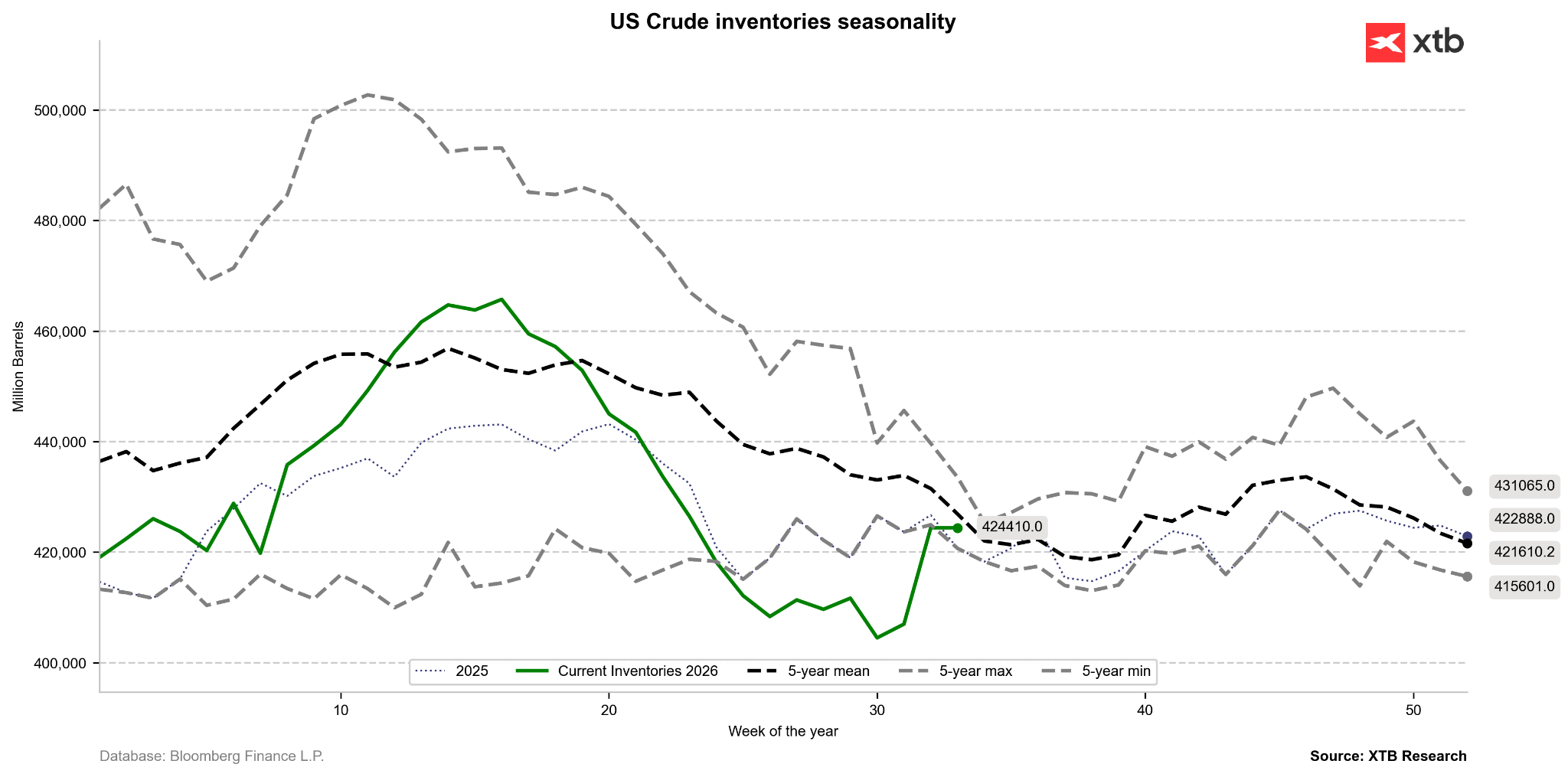
US commercial inventories have increased significantly to 5-year average levels. If this state of affairs continues in the coming weeks, concerns regarding inventory levels will clearly diminish. Source: Bloomberg Finance LP, XTB
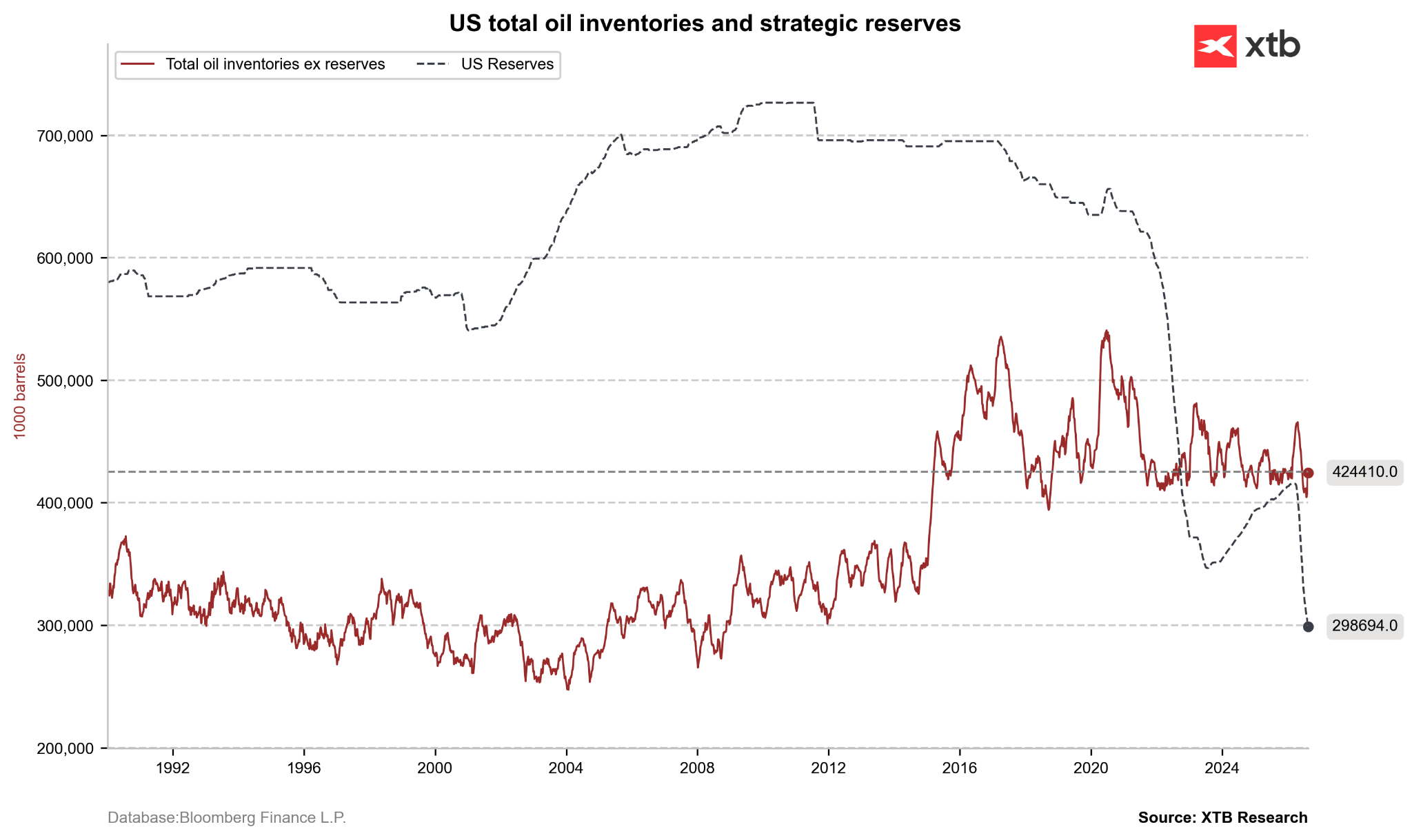
The coordinated release of strategic reserves globally has led to US reserves falling below 300 million barrels for the first time since the 1980s. Theoretically, reserves will drop to around 240 million barrels. At the current rate of decline, this would give us about 10-12 weeks of further oil market stabilization, at least in the United States. The IEA has expressed readiness for another global release of inventories onto the market. Source: Bloomberg Finance LP
Price Situation
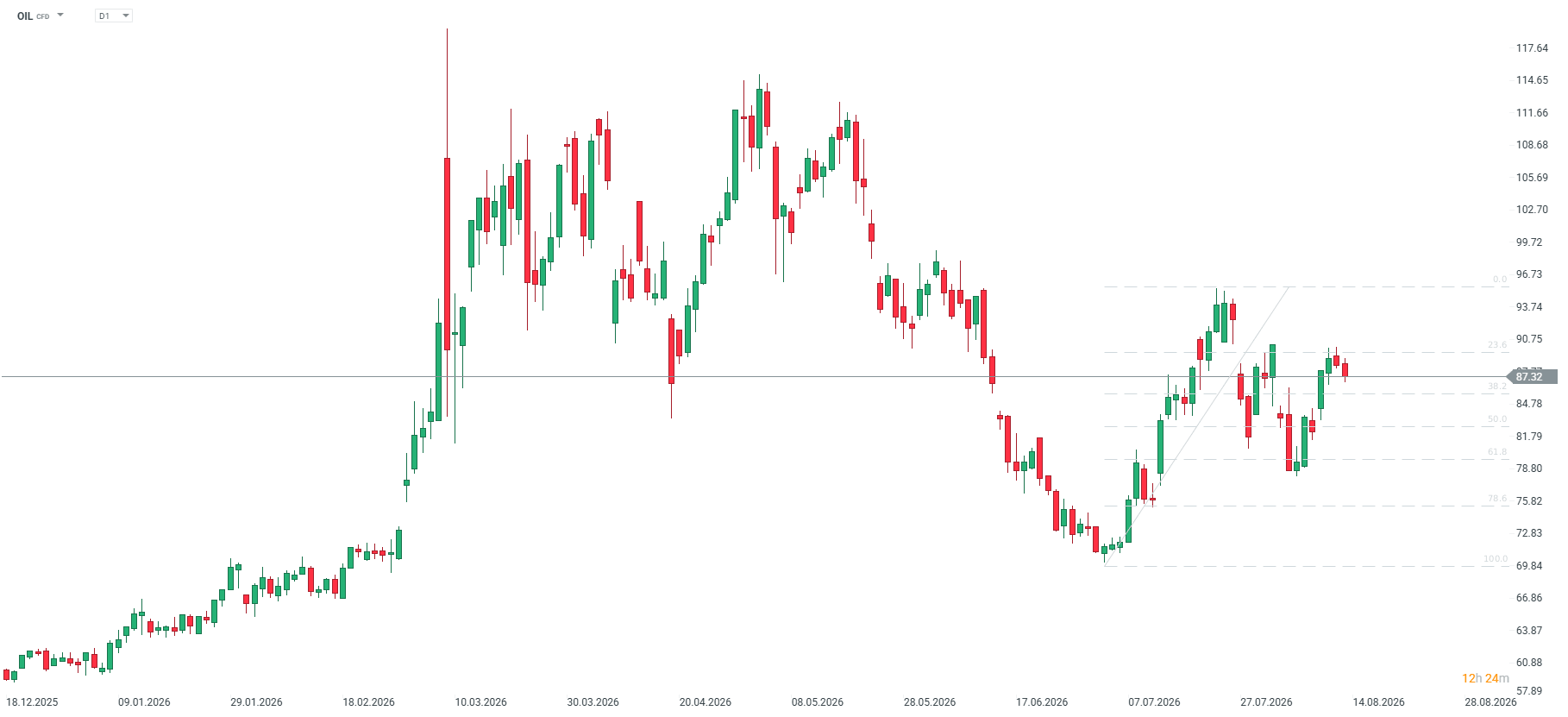
The price continues yesterday’s declines, although the movements are not as dynamic. The level of $90 per barrel remains a very strong resistance, slightly above the 23.6 retracement. A lack of escalation in the global situation could lead to an attempt to test $85 per barrel. On the other hand, a breakout of the falling trend line could first lead to a test of the $92-95 zone, and then to the $98-100 level.