S&P 500 — US Large Cap Index
 FTSE 100 — UK Blue Chips
 Euro Stoxx 50 — Eurozone Leaders
 DAX 40 — German Equities
 CAC 40 — French Market Index
 Nikkei 225 — Japan Benchmark
 Hang Seng — Hong Kong Index
 Shanghai Composite — China Mainland
 ASX 200 — Australian Market
 TSX Composite — Canada Index
 Nifty 50 — India Large Cap
 STI Index — Singapore Market
 KOSPI — South Korea Index
 Bovespa — Brazil Equities
 JSE Top 40 — South Africa Index
 IPC Index — Mexico Market
South Korean Won Strengthens Toward 1,351 as Falling Oil and Semiconductor Exports Boost Currency Outlook

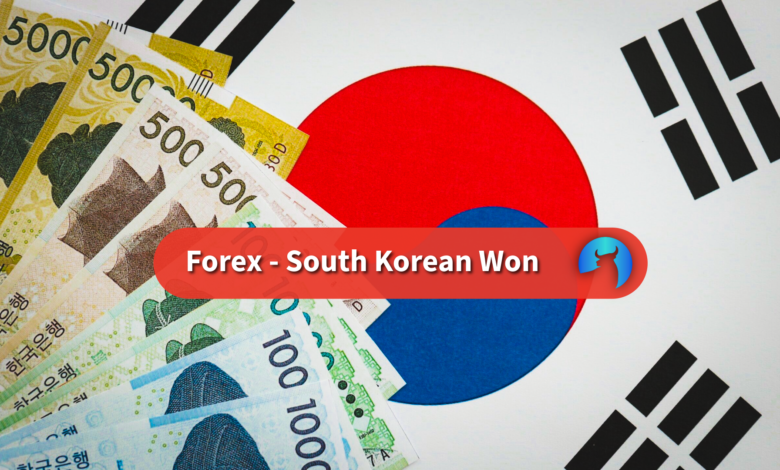
The South Korean won is currently trading around 1,351 per US dollar, extending a sharp recovery as falling oil prices, powerful export growth and improving expectations for South Korea’s economic performance provide support for the currency.
The won is benefiting from two important domestic and external developments. Lower crude oil prices are reducing inflation and energy-cost concerns, while South Korea’s export performance is generating substantial foreign-currency inflows. Semiconductor exports are playing a particularly important role as demand linked to artificial intelligence continues to strengthen the technology cycle.
However, the US dollar remains relatively firm because Federal Reserve officials continue to signal caution on inflation and interest rates. Markets are still pricing roughly a 54% probability of another US rate hike in October, limiting the extent of the won’s recovery.
South Korean Won Market Snapshot
| Factor | Current Market Situation |
|---|---|
| USD/KRW | Around 1,351 |
| Won Trend | Strong recovery |
| Oil Prices | Falling for a sixth consecutive session |
| South Korean Exports | +78% year-on-year in first 20 days of September |
| Semiconductor Exports | +259% year-on-year |
| 2026 Growth Forecast | 3.2% |
| Previous Growth Forecast | 2.6% |
| US Dollar | Relatively firm |
| October Fed Hike Pricing | About 54% |
| Key Bullish Driver | Export and semiconductor strength |
| Key Bearish Driver | Hawkish US monetary policy |
Won Price Outlook: 1,351 Becomes an Important Reference Level
The move toward 1,351 per dollar represents a significant improvement in the won’s recent performance.
The currency is benefiting from stronger external conditions, particularly the sharp increase in export revenues. A stronger export sector generates additional dollar inflows into South Korea, which can reduce upward pressure on USD/KRW.
The decline in oil prices is also important. South Korea is heavily dependent on imported energy, meaning lower crude prices can reduce import costs and improve the country’s external balance.
The key question for the coming sessions is whether these domestic fundamentals can continue to outweigh the interest-rate advantage still supporting the US dollar.
South Korean Exports Provide Powerful Currency Support
South Korea’s export performance is currently one of the strongest arguments supporting the won.
Exports surged 78% year-on-year during the first 20 days of September, creating substantial foreign-currency inflows into the economy.
The most striking component is semiconductor exports, which increased by 259% year-on-year.
This reflects the continuing strength of the global technology and AI investment cycle.
Semiconductors are particularly important for South Korea because they represent a major component of the country’s export economy. Stronger semiconductor shipments therefore have implications beyond corporate earnings, potentially improving trade flows and supporting demand for the won.
AI Boom Strengthens South Korea’s Growth Outlook
The semiconductor surge is also contributing to a more positive economic outlook.
The Asian Development Bank has raised its 2026 growth forecast for South Korea to 3.2% from 2.6%, citing strong exports and corporate earnings associated with the AI boom.
The revision provides additional support for the won because stronger expected economic growth can improve investor confidence and increase expectations for capital inflows.
The sustainability of the technology cycle will therefore remain an important consideration for the currency.
If global AI investment continues to support semiconductor demand, South Korea’s external earnings could remain strong.
Falling Oil Prices Reduce Pressure on the Won
Crude oil has now declined for a sixth consecutive session, with hopes for a diplomatic breakthrough between the United States and Iran reducing geopolitical risk premiums.
For South Korea, lower oil prices can have a particularly important impact because the country is a major energy importer.
Cheaper crude reduces the cost of imports and can improve the trade balance.
Lower energy prices can also reduce domestic inflation pressure, potentially giving policymakers greater flexibility.
This combination creates a favorable environment for the won because it simultaneously supports the external balance and reduces inflation-related pressure.
Federal Reserve Policy Remains the Main External Risk
Despite the improving South Korean fundamentals, the US dollar remains relatively firm.
Hawkish Federal Reserve commentary has kept markets focused on the possibility of another rate increase in October, with approximately 54% of the market pricing pointing toward another hike.
Higher US interest rates can support the dollar by maintaining a yield advantage over other currencies.
This limits the extent to which the won can strengthen, particularly if US Treasury yields remain elevated.
The USD/KRW outlook therefore remains highly sensitive to changes in US monetary-policy expectations.
Bullish Sentiment
- South Korean exports surged 78% year-on-year, creating strong foreign-currency inflows.
- Semiconductor exports increased 259%, reinforcing the strength of the technology-led export cycle.
- Falling oil prices reduce South Korea’s energy-import costs.
- The 2026 growth forecast has been raised to 3.2%, reflecting stronger exports and corporate earnings.
- The global AI investment cycle continues to support South Korea’s strategically important semiconductor industry.
- Lower energy prices can reduce inflation pressure, improving the domestic macroeconomic environment.
Bearish Sentiment
- The US dollar remains relatively firm because of expectations for restrictive Federal Reserve policy.
- Markets are pricing roughly a 54% chance of another October rate hike, maintaining a US yield advantage.
- Any renewed rise in oil prices could increase South Korea’s import costs.
- A slowdown in global semiconductor demand would weaken one of the most important sources of export growth.
- A stronger dollar globally could limit further won appreciation even if South Korean exports remain strong.
- Geopolitical developments in the Middle East could reverse the recent decline in oil prices.
Won Forecast: What Traders Are Watching
The 1,351 area is an important reference point as traders assess whether the won’s recovery can continue.
Further won strength would be supported by continued export growth, strong semiconductor shipments and lower energy prices.
However, the currency needs to overcome the external support provided to the dollar by Federal Reserve policy.
A sustained improvement in the won would therefore require either continued strength in South Korea’s trade flows, a further decline in oil prices, a weaker US dollar or some combination of these factors.
The next major catalyst is likely to come from changes in US rate expectations and evidence that South Korea’s semiconductor-led export boom remains sustainable.
South Korean Dollar Supply Outlook
The supply of US dollars into South Korea is currently being supported by exceptionally strong export receipts.
The 78% year-on-year increase in exports during the first 20 days of September indicates that exporters are generating significantly greater foreign-currency revenues.
The 259% increase in semiconductor exports is particularly important because continued strength in this sector could sustain dollar inflows over the coming months.
Lower oil prices provide an additional benefit by reducing the amount of dollars South Korea needs to spend on imported energy.
Together, these factors create a more favorable balance between dollar supply and demand.
South Korean Dollar Demand Outlook
Demand for dollars remains supported by global monetary conditions.
If the Federal Reserve continues to signal that another rate hike is possible, US assets can remain attractive relative to other markets, maintaining demand for the dollar.
However, South Korea’s improving trade position can offset some of this pressure.
The key balance will therefore be between strong export-generated dollar inflows and global investment demand for US dollars.
Market Outlook for the Coming Sessions
The won is entering a period where its domestic fundamentals are becoming increasingly supportive.
Export growth is exceptionally strong, semiconductor shipments are surging and the AI investment cycle is improving expectations for South Korea’s corporate and economic performance.
At the same time, lower oil prices are reducing one of the country’s most important external vulnerabilities.
The main obstacle remains US monetary policy.
For the coming sessions, traders are likely to monitor:
- USD/KRW around 1,351
- South Korean export data
- Semiconductor export growth
- Global AI and technology demand
- Brent crude prices
- US Federal Reserve commentary
- October US rate-hike expectations
- US Treasury yields
- South Korean economic-growth expectations
- Global dollar sentiment
The central question is whether South Korea’s improving trade fundamentals can continue to outweigh the US dollar’s interest-rate advantage.
Currency Hedger View
Currency Hedger sees the won as increasingly influenced by the interaction between South Korea’s export cycle and US monetary policy.
The semiconductor sector is particularly important. A sustained AI-led technology investment cycle can generate significant foreign-currency revenues for South Korean exporters, supporting the won through stronger trade flows.
Lower oil prices provide another potential advantage because reduced energy-import costs can improve the country’s external balance.
For companies exposed to USD/KRW, however, Federal Reserve policy remains a critical variable. A renewed increase in US rate expectations could strengthen the dollar even if South Korean exports remain robust.
Businesses with significant dollar receivables or won-denominated costs should therefore monitor both the export cycle and the direction of US interest-rate expectations when assessing future currency exposure.
Analysis Louis Roche – Today Markets
The South Korean won is currently being supported by a powerful combination of improving domestic fundamentals and falling energy costs.
The most important development is the strength of exports. A 78% year-on-year increase during the first 20 days of September, combined with a 259% surge in semiconductor exports, demonstrates the scale of the current technology-driven trade improvement.
The AI boom is particularly important because semiconductors are central to South Korea’s export economy. The upgrade in the 2026 growth forecast to 3.2% provides further evidence of how strongly the export cycle is influencing expectations for the wider economy.
Falling oil prices are providing another source of support by reducing energy-import costs and easing inflationary pressure.
However, the US dollar remains a significant counterweight. With markets still pricing roughly a 54% probability of another Federal Reserve rate hike in October, the yield advantage of US assets remains relevant to USD/KRW.
The next phase of the won’s recovery will therefore depend on whether exceptionally strong exports and lower oil prices can continue to offset the dollar’s support from US monetary policy.
For now, the combination of a powerful semiconductor cycle, stronger growth expectations and reduced energy costs is creating a significantly different fundamental environment for the won, while 1,351 remains an important reference level as traders assess whether the currency can extend its recovery further.