Global Markets
S&P 500 — US Large Cap Index
NASDAQ 100 — Tech Growth Index
Dow Jones — Industrial Average
FTSE 100 — UK Blue Chips
Euro Stoxx 50 — Eurozone Leaders
DAX 40 — German Equities
CAC 40 — French Market Index
Nikkei 225 — Japan Benchmark
Hang Seng — Hong Kong Index
Shanghai Composite — China Mainland
ASX 200 — Australian Market
TSX Composite — Canada Index
Nifty 50 — India Large Cap
STI Index — Singapore Market
KOSPI — South Korea Index
Bovespa — Brazil Equities
JSE Top 40 — South Africa Index
IPC Index — Mexico Market
S&P 500 — US Large Cap Index
NASDAQ 100 — Tech Growth Index
Dow Jones — Industrial Average
FTSE 100 — UK Blue Chips
Euro Stoxx 50 — Eurozone Leaders
DAX 40 — German Equities
CAC 40 — French Market Index
Nikkei 225 — Japan Benchmark
Hang Seng — Hong Kong Index
Shanghai Composite — China Mainland
ASX 200 — Australian Market
TSX Composite — Canada Index
Nifty 50 — India Large Cap
STI Index — Singapore Market
KOSPI — South Korea Index
Bovespa — Brazil Equities
JSE Top 40 — South Africa Index
IPC Index — Mexico Market
AED • EUR • GBP • USD IBANs   |   CROSS BORDER FX   |   LOCAL CURRENCIES   |   GLOBAL COVERAGE
MarketsStocks

Asian stock markets face bloodbath as Iran threatens indefinite Hormuz closure

  • Asian stock markets bleed at the start of the week amid escalating Middle East conflicts.
  • Iran vows indefinite Hormuz closure and attacks on regional infrastructure in response to Trump’s ultimatum.
  •  Saudi Aramco cuts crude supply to Asian buyers for a second month ‌in April.

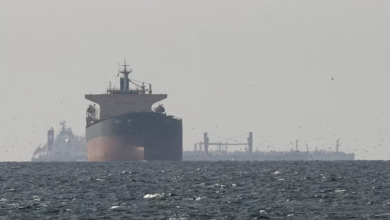
Stock markets in the Asian region have fallen like a house of cards at the start of the week as escalating conflicts in the Middle East, following United States (US) President Donald Trump’s ultimatum to Iran for reopening the Strait of Hormuz has further prompted energy supply concerns.

As of writing, Japan’s Nikkei 225 nosedives 3.75% to near 51,360, Shanghai plummets 2.23% to near 3,870, and Hang Seng plummets 3.3% at around 24,440. Meanwhile, Gift Nifty futures show that Nifty 50 will open over 350 points down to near 22,770.

Over the weekend, US President Trump warned complete destruction of Iranian energy facilities, starting with the biggest one, through a post on Truth.Social if it doesn’t fully reopen the Strait of Hormuz in 48 hours.

In response, Iran has vowed indefinite closure of the Hormuz and has threatened to target all infrastructure of energy, information technology (IT), and desalination facilities” in the region belonging to the US and Israel, The Politico reported.

Meanwhile, the response from the United Kingdom (UK) Prime Minister Keir Starmer during a call with US President Trump on Sunday, in which Starmer agreed that reopening the Strait of Hormuz is “essential to resume global shipping”, has increased hopes that the British economy could support America’s military activities soon.

Escalating Middle East conflicts have further squeezed the energy supply to the Asian region. Saudi Aramco, the world’s top oil exporter, cut crude supply to Asian buyers for a second month ‌in April after the US-Israeli war with Iran disrupted trade via the Strait of Hormuz. This could elevate the burden on households’ spending by prompting input costs for companies.

Given that Asian economies are heavily reliant on oil imports to meet their energy needs. Higher energy prices are vulnerable to their economic prospects.

Register a Revolut Business Account
```

Market Analysis & Disclaimer

The market information, analysis, commentary, forecasts and opinions contained in this publication are provided by Octalas Group Ltd on behalf of Today Markets and Currency Hedger using information and data obtained from sources believed to be reliable. However, Octalas Group Ltd, Today Markets and Currency Hedger do not warrant or guarantee the accuracy, completeness or timeliness of the information presented and accept no responsibility for any loss or damage arising from reliance upon information contained herein, to the extent permitted by applicable law.

Market forecasts, expectations and opinions are based on analysis of available information and a number of assumptions regarding economic, financial, political and market conditions. Such assumptions may prove to be incorrect, and actual market developments may differ materially from those described or anticipated.

Nothing contained in this publication constitutes investment advice, financial advice, a personal recommendation, an offer, solicitation or invitation to buy, sell or otherwise transact in any financial instrument or investment product. The information is provided for general informational and educational purposes only and does not take into account the investment objectives, financial situation, experience or particular circumstances of any individual reader.

Past performance is not indicative of future results. Financial markets, including foreign exchange, commodities, equities, derivatives and other financial instruments, involve risk and prices can move rapidly. Readers should conduct their own independent research and, where appropriate, obtain advice from an appropriately authorised financial professional before making any investment or trading decision.

Where this publication refers to Today Markets, it represents market news, research, analysis and commentary published for informational purposes. Where Currency Hedger is referenced, it represents commentary concerning foreign exchange, currency exposure, international payments and hedging-related topics. References to particular financial instruments, markets, companies, currencies or commodities should not be interpreted as a recommendation to transact in them.

Octalas Group Ltd, Today Markets and Currency Hedger may have commercial interests or relationships with businesses, financial-service providers, technology providers or other market participants mentioned in their publications. Where relevant, such relationships or interests may create potential conflicts of interest. Appropriate measures are intended to be taken to ensure that published analysis and commentary are presented objectively and that commercial considerations do not determine the substance of market analysis.

The views expressed in this publication are those of the author or contributors at the time of publication and may change without notice as market conditions develop. Readers should not assume that any information contained herein has been updated following publication.

Related Articles

Leave a Reply

Your email address will not be published. Required fields are marked *

Back to top button