S&P 500 — US Large Cap Index
 FTSE 100 — UK Blue Chips
 Euro Stoxx 50 — Eurozone Leaders
 DAX 40 — German Equities
 CAC 40 — French Market Index
 Nikkei 225 — Japan Benchmark
 Hang Seng — Hong Kong Index
 Shanghai Composite — China Mainland
 ASX 200 — Australian Market
 TSX Composite — Canada Index
 Nifty 50 — India Large Cap
 STI Index — Singapore Market
 KOSPI — South Korea Index
 Bovespa — Brazil Equities
 JSE Top 40 — South Africa Index
 IPC Index — Mexico Market
Breakthrough in the Middle East or Washington’s Image Capitulation?

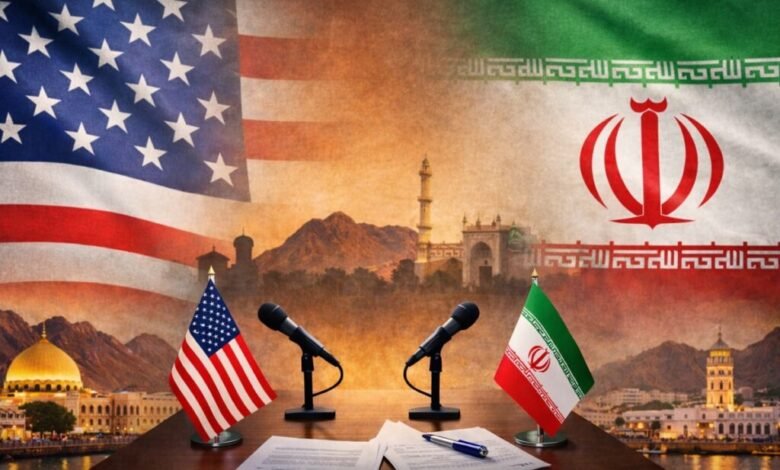
The signed memorandum between Donald Trump and Masoud Pezeshkian officially, and at least for the moment, ends the war, opens the Strait of Hormuz, and brings the desired de-escalation. However, initial analyses of the signed memorandum are scathing towards the US. The analysis of the document suggests that Tehran brought the White House to its knees, obtaining massive financial and political concessions in exchange for promises it had made years ago. For the United States, it is essentially a return to pre-war conditions, but simultaneously with many self-imposed concessions. Below we present the details of this asymmetric pact and a forecast of how this geopolitical earthquake will affect the prices of oil, gold, the dollar, and American indices.
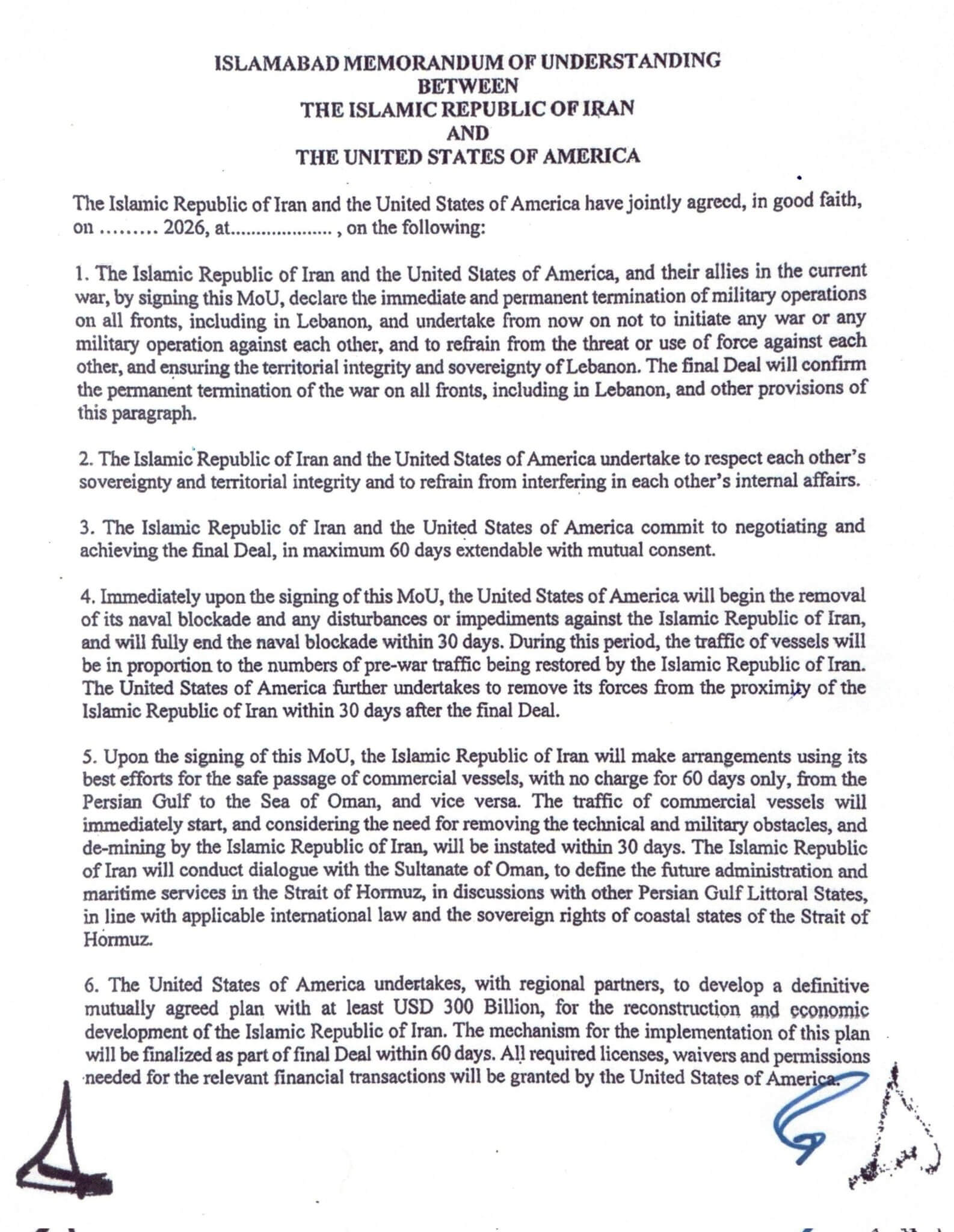
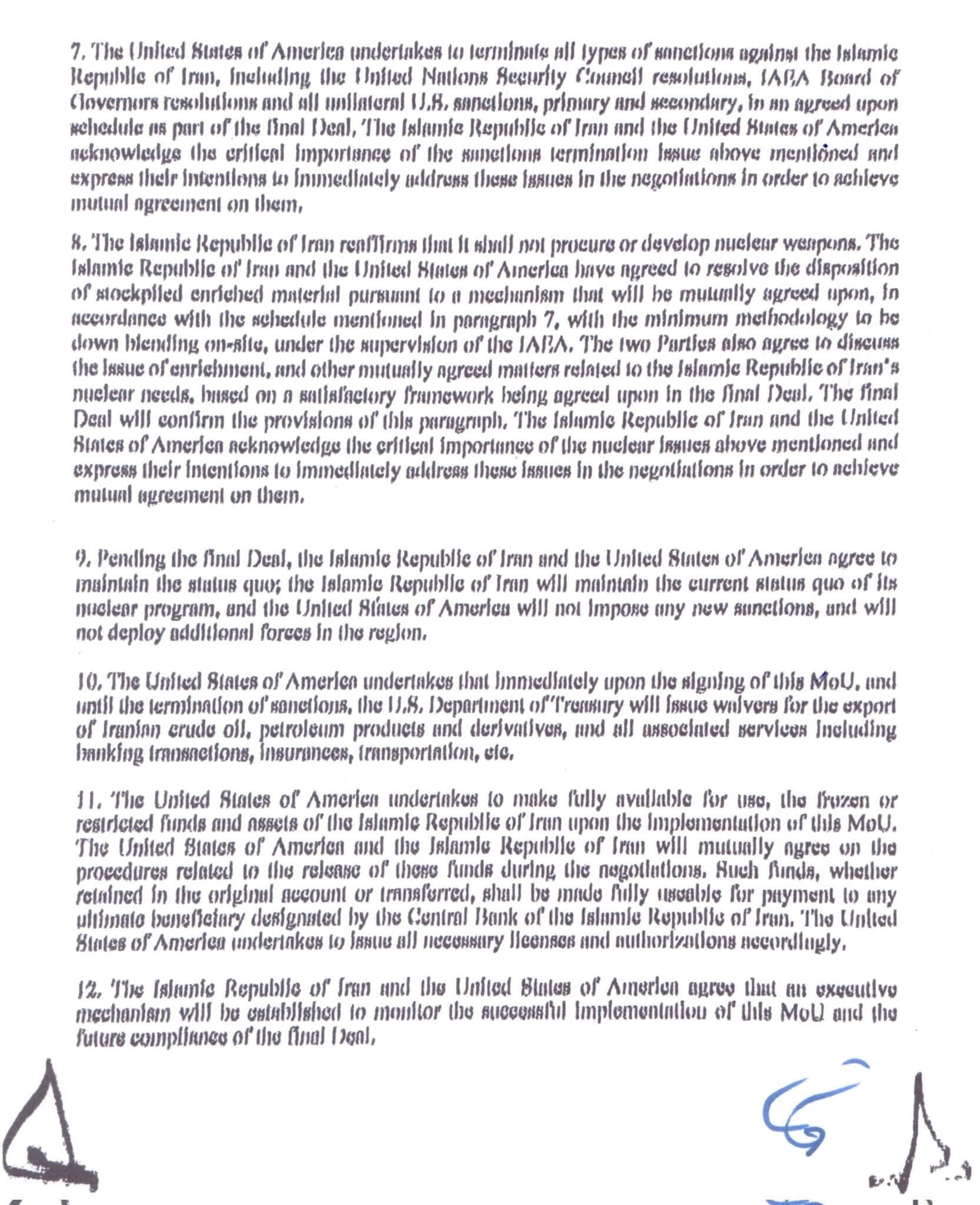
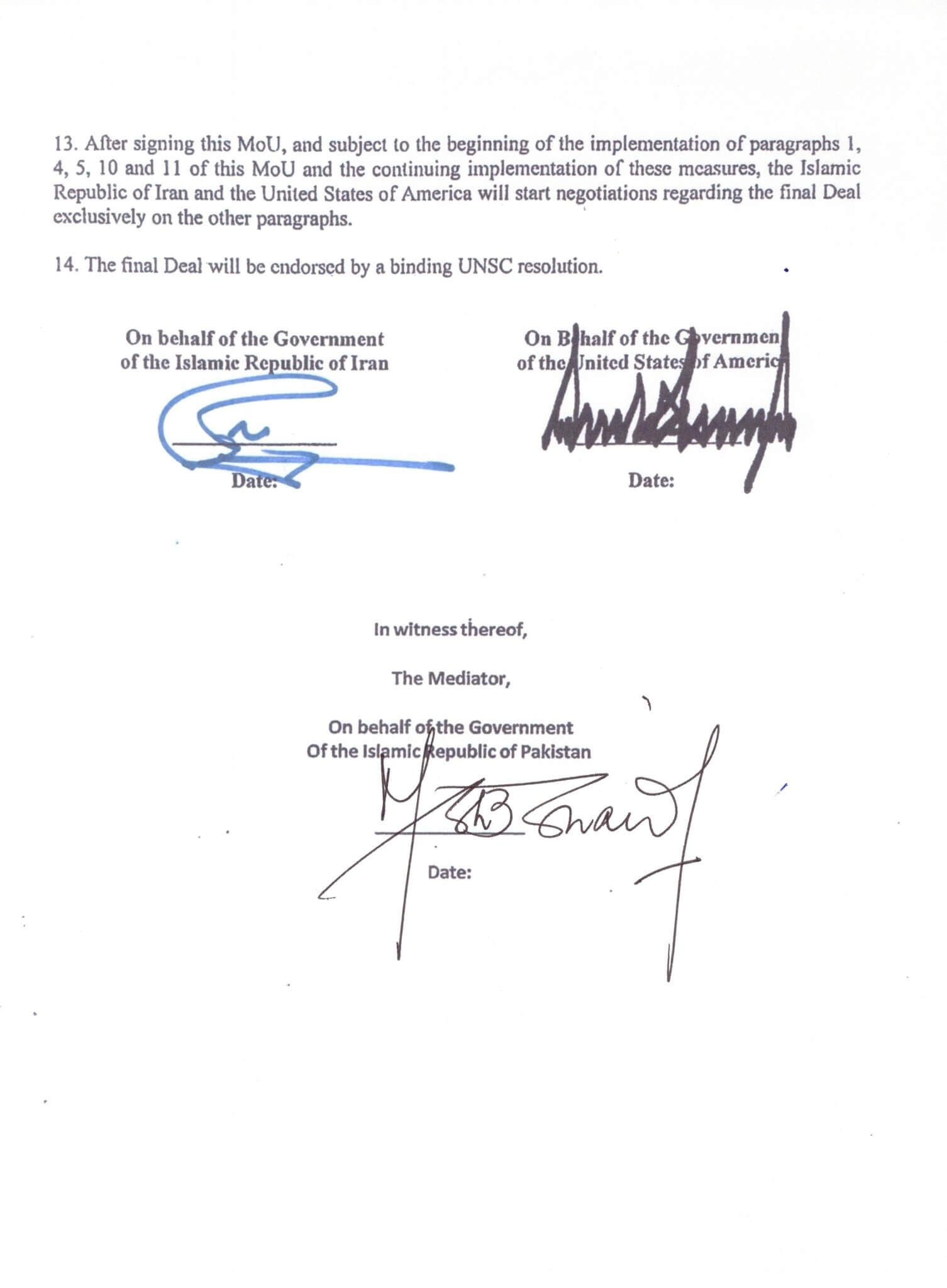
Text of the memorandum published by the President of Iran on platform X
Provisions of the Memorandum (MoU) in points:
- End of War: Immediate and permanent cessation of hostilities on all fronts, including in Lebanon (although Israel is not a party to this agreement, the United States is to be the guarantor for its ally, Israel).
- Lifting of Blockade and Sanctions: The USA will end the maritime blockade of Iran within 30 days. Waivers allowing the export of Iranian oil and oil products will be issued immediately. Ultimately, the US commits to lifting all sanction programs against Iran. These 30 days may be puzzling, but it could be a desire to leave open the possibility of reinstating the blockade if something goes wrong.
- Strait of Hormuz: Iran will open the strait for safe transit of commercial vessels without charging fees, but for now only for a period of 60 days. Iran will begin demining it within 30 days.
- Funds and Reconstruction: The USA will unfreeze blocked Iranian assets. Furthermore, the United States, along with its allies, will create a fund worth at least 300 billion USD for the reconstruction and economic development of Iran. Previously, for example, Qatar had spoken about investment opportunities.
- Nuclear Program and Troops: Iran confirms that it will not build nuclear weapons and will maintain the current status quo of its program. The USA commits not to impose new sanctions, not to deploy additional forces in the region, and to withdraw troops from near Iran after the final agreement.
- Schedule: The parties have a maximum of 60 days to negotiate a final agreement, which is to be supported by a binding resolution of the UN Security Council.
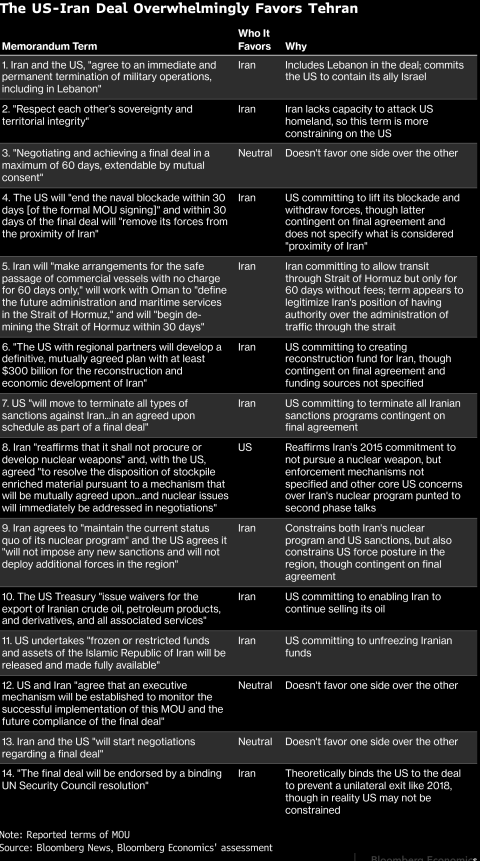
All 14 points along with commentary from Bloomberg. It appears that Iran is leading in 10 points, 3 are neutral, and the United States benefits on only one. Source: Bloomberg Economics
Who Won and Who Lost?
According to analysts, the agreement is drastically asymmetrical and Iran is the clear winner. Out of the 14 points of the memorandum, as many as 10 favor Tehran, 3 are neutral, and only 1 works in favor of the USA. Moreover, the current conditions rather indicate an extension of the current ceasefire, as the road to a full agreement is still very long. Of course, in the event of an extremely positive scenario of opening full exports and Iran entering the market, the whole world gains due to the potential drop in oil prices.
- What did Iran gain? Survival of the political system and preservation of conventional military capabilities, simultaneously with a gigantic capital injection. Tehran gained entirely new concessions: the possibility of legal oil sales, access to frozen billions, and the promise of a reconstruction fund (300 billion USD). Furthermore, the provisions de facto legitimize Iran’s position as the manager of the Strait of Hormuz, opening the way for it to impose transit fees after 60 days.
- What did the USA gain (and what did it lose)? The Donald Trump administration did not achieve its war goals. Washington merely recovers benefits that existed before the war: a temporarily opened strait and a return to the nuclear promises from 2015. The USA must swallow an image defeat, withdraw forces from the region, restrain its ally Israel, and bear massive financial costs. Although oil prices may ultimately fall significantly, which will benefit American society, in recent months it was primarily the US oil sector that benefited from high prices.
Outlook for Key Markets after the “Deal”:
The end of such a huge geopolitical conflict should trigger a strong risk appetite. On the other hand, markets have largely stopped worrying about the situation in the Middle East for a long time. Nevertheless, if energy prices continue to fall, it will be a positive aspect of the entire agreement. On the other hand, the market will no longer live on hope, but on fear of a return. How to look at the markets now?
- Crude Oil (Perspective: Strongly Bearish): The opening of the Strait of Hormuz should restore liquidity to global supply chains, removing the huge war risk premium from oil valuations. Additionally, the return of Iranian oil to the market (due to the lifting of sanctions and the blockade) means a sudden jump in global supply. This will be a powerful blow to Brent and WTI oil quotes. On the other hand, producers will need a premium to rebuild lost profits and infrastructure, and insurance may also remain high. Although in the long term prices may reach levels even of 60 USD per barrel, in the short term the price is vulnerable to temporary jumps.
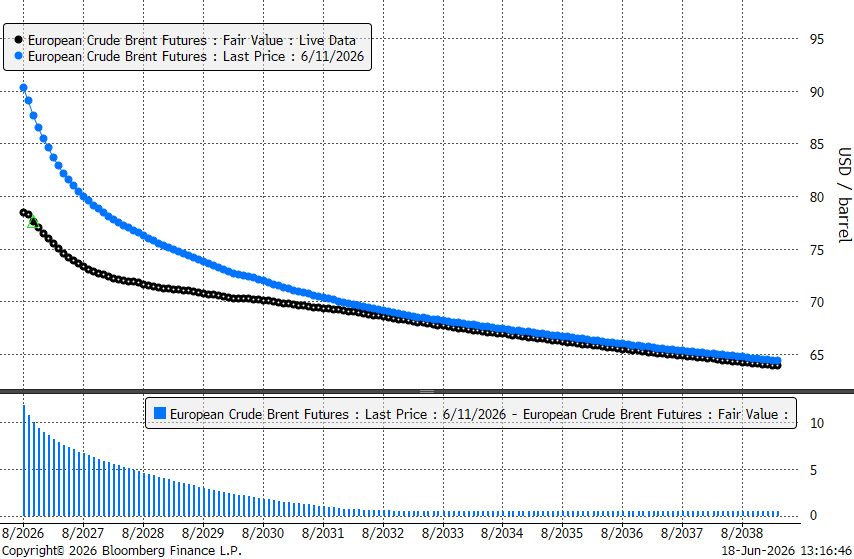
The forward curve has clearly dropped, although at the same time a slightly elevated short end of the curve is visible until August 2027. Source: Bloomberg Finance LP
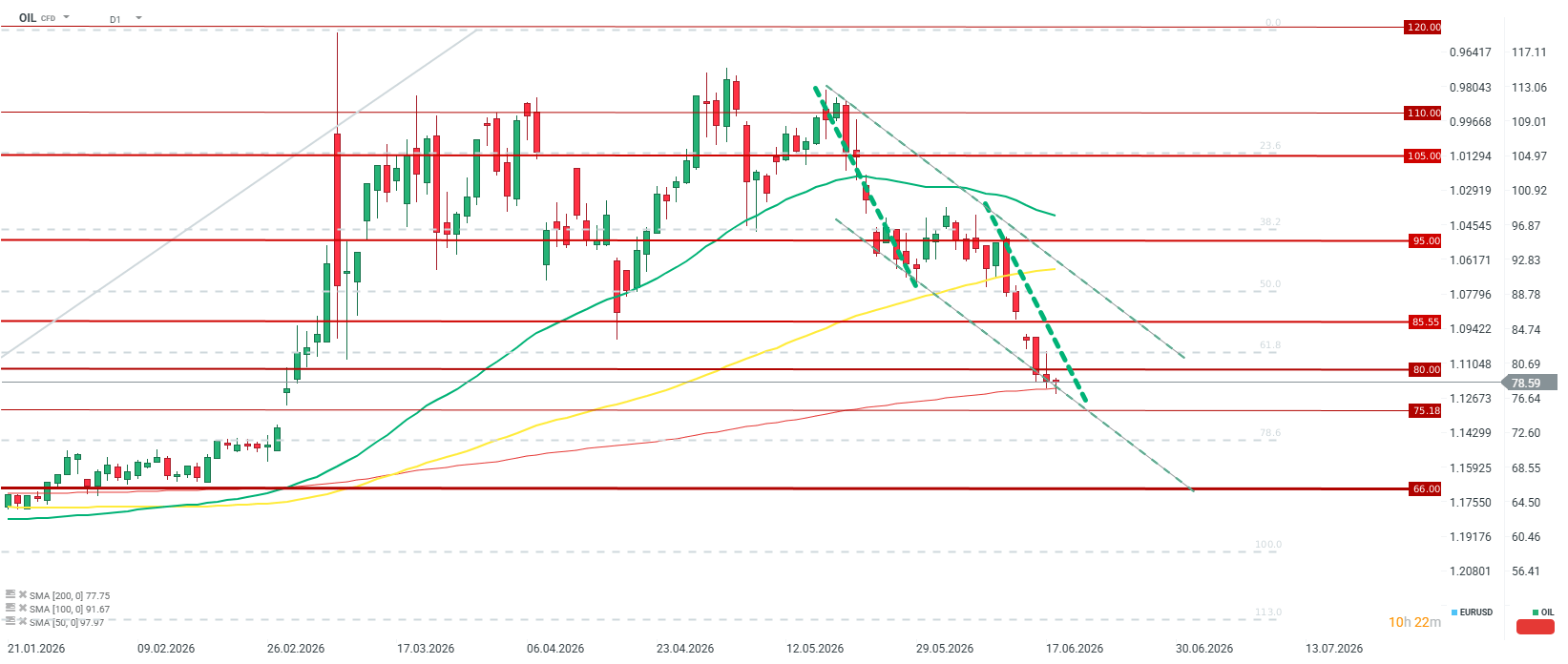
Brent crude oil dropped to around 78 USD, meaning it remains a few percent above late February levels. Signs of demand are visible around the 200 SMA and the lower boundary of the downward trend channel. The key demand zone is 73-75 USD per barrel. Source: xStation5
- Gold (Perspective: Potentially Bullish): Gold behaved completely opposite during the entire tension situation of recent months. Typically, with such geopolitical risk, we should have high prices, but gold reacted to rising inflation expectations, as we previously had a bubble. Currently, with the end of the risk, gold should normally lose, but a drop in inflation risk should work in favor of gold.
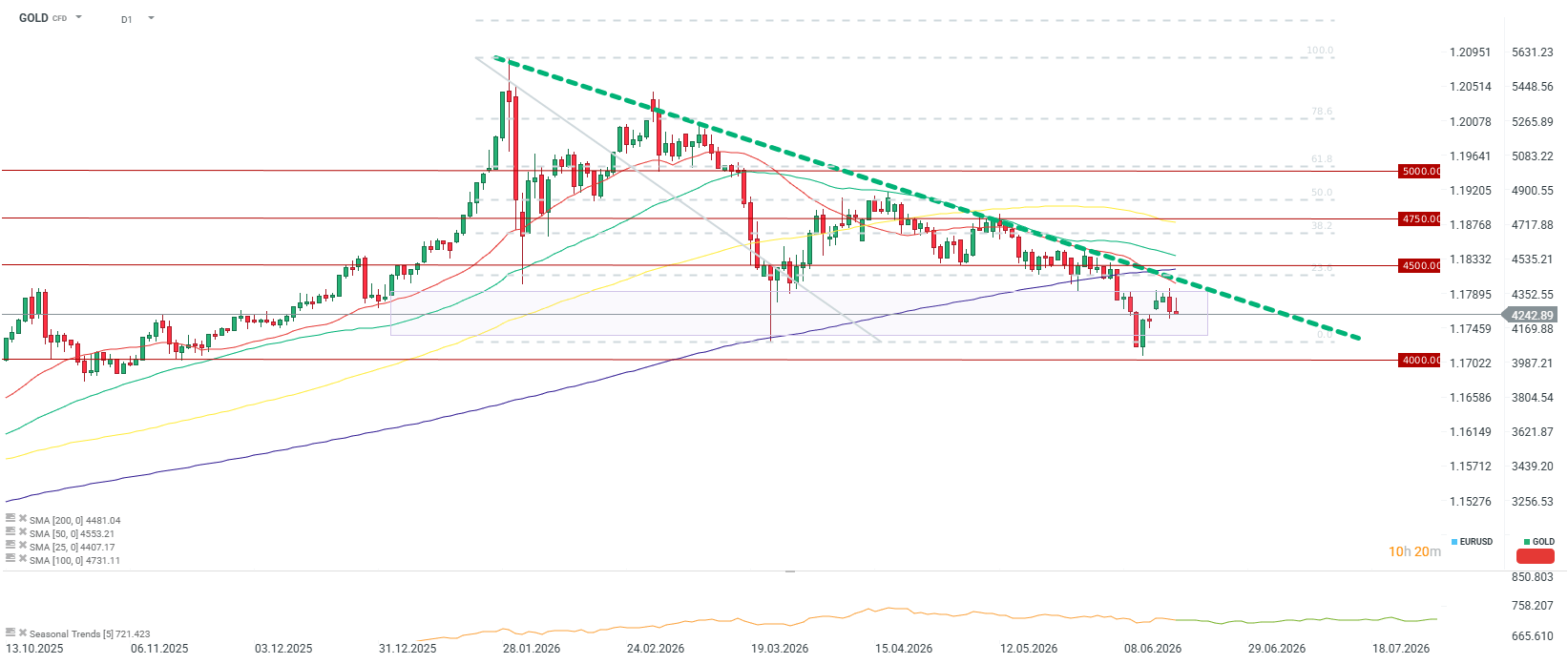
Gold is currently under pressure, but mainly after the hawkish tone of Fed forecasts. When the market stops worrying about the Fed, it may positively reconsider aspects related to the attributes of gold, which is an alternative to the dollar in the context of foreign exchange reserves. Source: xStation5
- US Dollar (Perspective: Moderately Bearish): It was the dollar that was the biggest winner of the safe-haven status. The end of the war will weaken demand for the dollar, although hawkish expectations are rising in the US. Additionally, markets may begin to price in the negative impact of the promise to allocate 300 billion dollars for Iran’s reconstruction on the US budget deficit. A drop in inflation (resulting from cheaper oil) may also encourage investors to take a milder view on US interest rate prospects. After all, the last June dot-plot showed that only half of FOMC members see a rate hike this year.
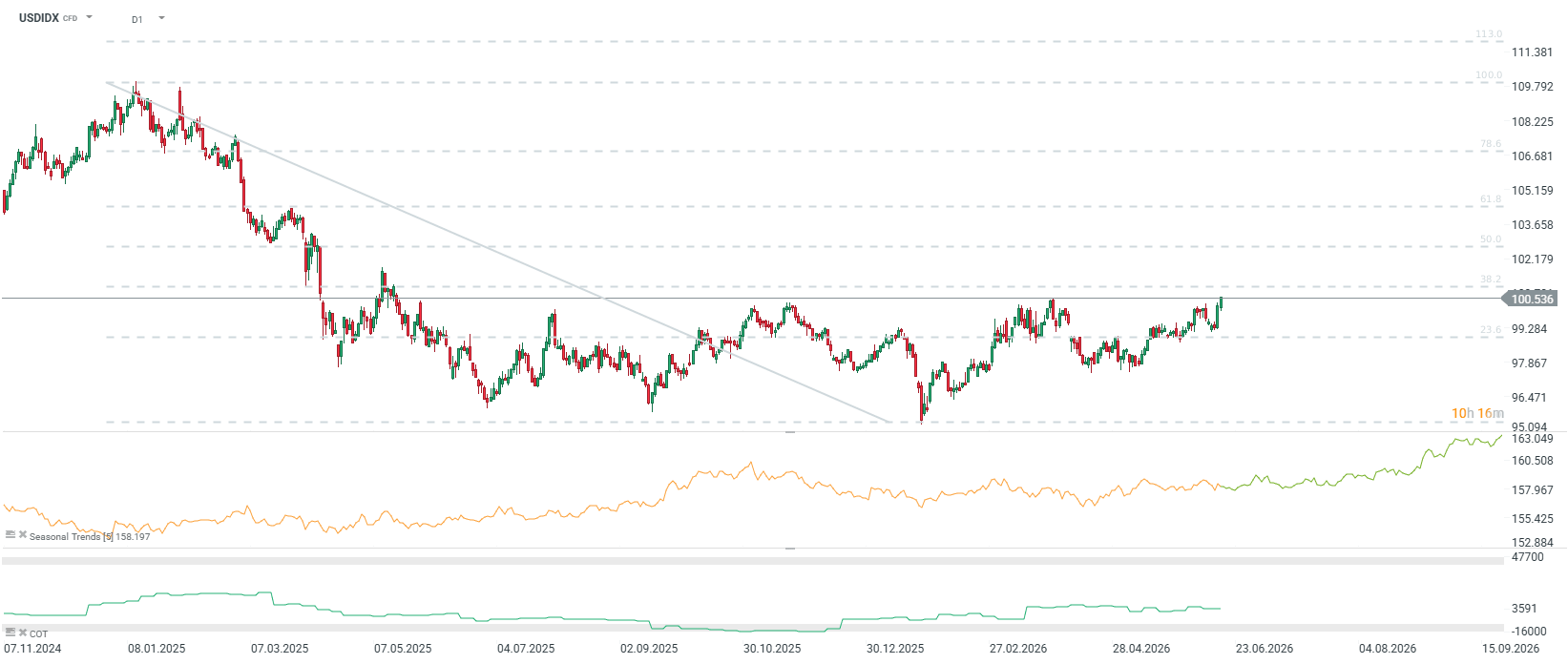
Despite the end of the war, the dollar looks best on the broader market since May 2025. What’s more, seasonality indicates that the dollar should gain in the coming months. On the other hand, the breakout of the 100 resistance may be temporary. Only a move above the 38.2 retracement would indicate a possible new trend. At the same time, potential can be seen in the iH&S structure. Source: xStation5
- US Indices – S&P 500, Nasdaq (Perspective: Strongly Bullish): For equity markets, this is theoretically the ideal scenario. The end of the war removes the “black swan” from the horizon, but also removes the hopes that motivated the indices to rise to historical highs. The drastic drop in oil prices will act as a natural tax cut for American consumers and businesses, stifling inflationary pressure. The technology sector, airlines, maritime transport, and consumer companies should experience strong upward rallies (although index gains will be slightly constrained by the falling valuations of the powerful US oil and gas sector).
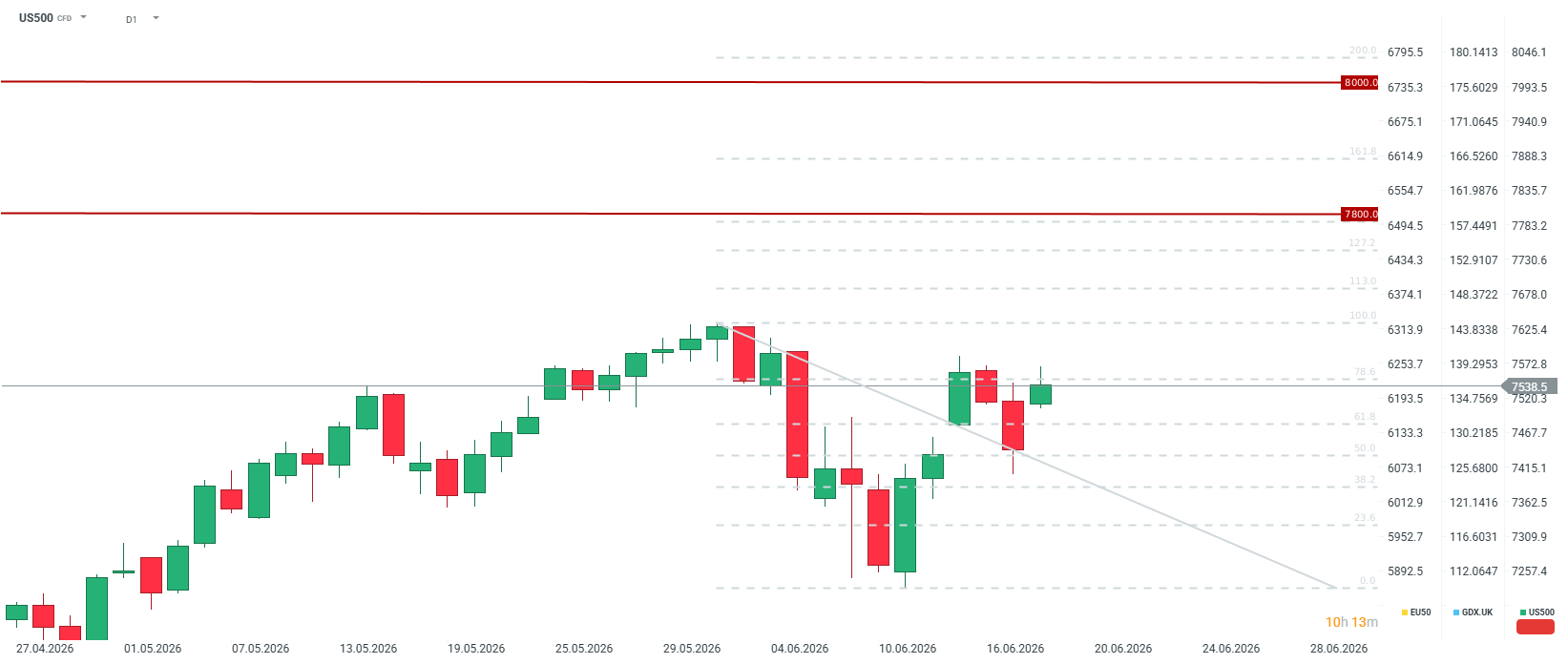
If the Fed stops being hawkish and AI does not turn out to be a bubble, then the path to 7800 and even 8000 points seems open. Source: xStation5