S&P 500 — US Large Cap Index
 FTSE 100 — UK Blue Chips
 Euro Stoxx 50 — Eurozone Leaders
 DAX 40 — German Equities
 CAC 40 — French Market Index
 Nikkei 225 — Japan Benchmark
 Hang Seng — Hong Kong Index
 Shanghai Composite — China Mainland
 ASX 200 — Australian Market
 TSX Composite — Canada Index
 Nifty 50 — India Large Cap
 STI Index — Singapore Market
 KOSPI — South Korea Index
 Bovespa — Brazil Equities
 JSE Top 40 — South Africa Index
 IPC Index — Mexico Market

The headlines are strong. Chinese company YMTC has risen to third place worldwide in NAND memory shipments, overtaking Japan’s Kioxia. Comments have already emerged suggesting that Korean dominance of the memory market is under threat and that the future of NAND could belong to China. However, there is still a significant gap between ranking third in shipment volumes and posing a real threat to Samsung or SK hynix. YMTC has indeed made significant progress. In the second quarter, the Chinese company accounted for 14% of global NAND shipments, compared with 25% for Samsung and 22% for SK hynix and Solidigm combined. YMTC overtook Kioxia in terms of shipment volume, but in terms of revenue it still ranked only fifth, behind Micron and Kioxia. This is an important distinction because it shows that the Chinese company is currently selling a large volume of memory, but has yet to establish a comparable position in the most valuable segments of the market. It is also important not to look at the memory market as if all chips were equal. The largest manufacturers have long been shifting part of their production capacity toward more advanced and more profitable solutions. DRAM and HBM memory, used in data centers and artificial intelligence infrastructure, are particularly important here. Demand for these products is currently enormous, and their contribution to the financial performance of the biggest manufacturers continues to grow. NAND remains a very important market, of course. These types of memory are used in smartphones, computers, SSDs, and many other devices. This is the segment where YMTC has considerably more room for further growth, particularly if it manages to increase its international sales. Apple could be a very important customer here, as the company is testing Chinese memory products and looking for ways to diversify its supply chain. If YMTC does gain access to a larger share of Apple’s supply chain, it could significantly accelerate the company’s growth. That does not change the fact that the memory industry requires enormous investment. Building fabrication plants costs billions of dollars, developing each new generation of technology requires continuous spending, and increasing production does not guarantee that high margins can be maintained. YMTC may therefore be able to rapidly increase its share of the NAND market, but translating that growth into a position comparable to Samsung or SK hynix will be much more difficult. YMTC’s current position therefore does not yet represent a threat to the dominance of Samsung and SK hynix. It does, however, demonstrate something equally important: China is capable of entering the global NAND elite, rapidly expanding production, and gradually taking market share from companies that have controlled this segment for years. That alone is a major development. YMTC wants to go even further and, according to reports, plans to challenge for the number one position worldwide by the end of 2027. Its planned public offering is expected to raise around $5 billion to fund production expansion and research. It is also worth looking at the bigger picture. China is no longer simply trying to copy Western technologies. It is building its own companies, its own factories, and its own technological ecosystem. YMTC is one of the best examples of this process. China may still be several years behind the global leaders in some of the most advanced technologies, but that gap no longer looks like a barrier that Beijing is incapable of overcoming. And that is precisely why YMTC’s rise to third place is more significant than the 14% figure alone might suggest. It does not yet signal the end of Samsung’s or SK hynix’s dominance. What it does show is that China’s semiconductor industry is capable of steadily increasing its scale, capturing additional market segments, and leveraging the enormous resources Beijing is directing toward the development of domestic technology. For Samsung, SK hynix, and Micron, this is not yet a reason to panic. It is, however, another signal that cannot be ignored. If YMTC maintains its current pace, today’s battle for third place could be only the beginning of a much larger struggle for control of the memory market.
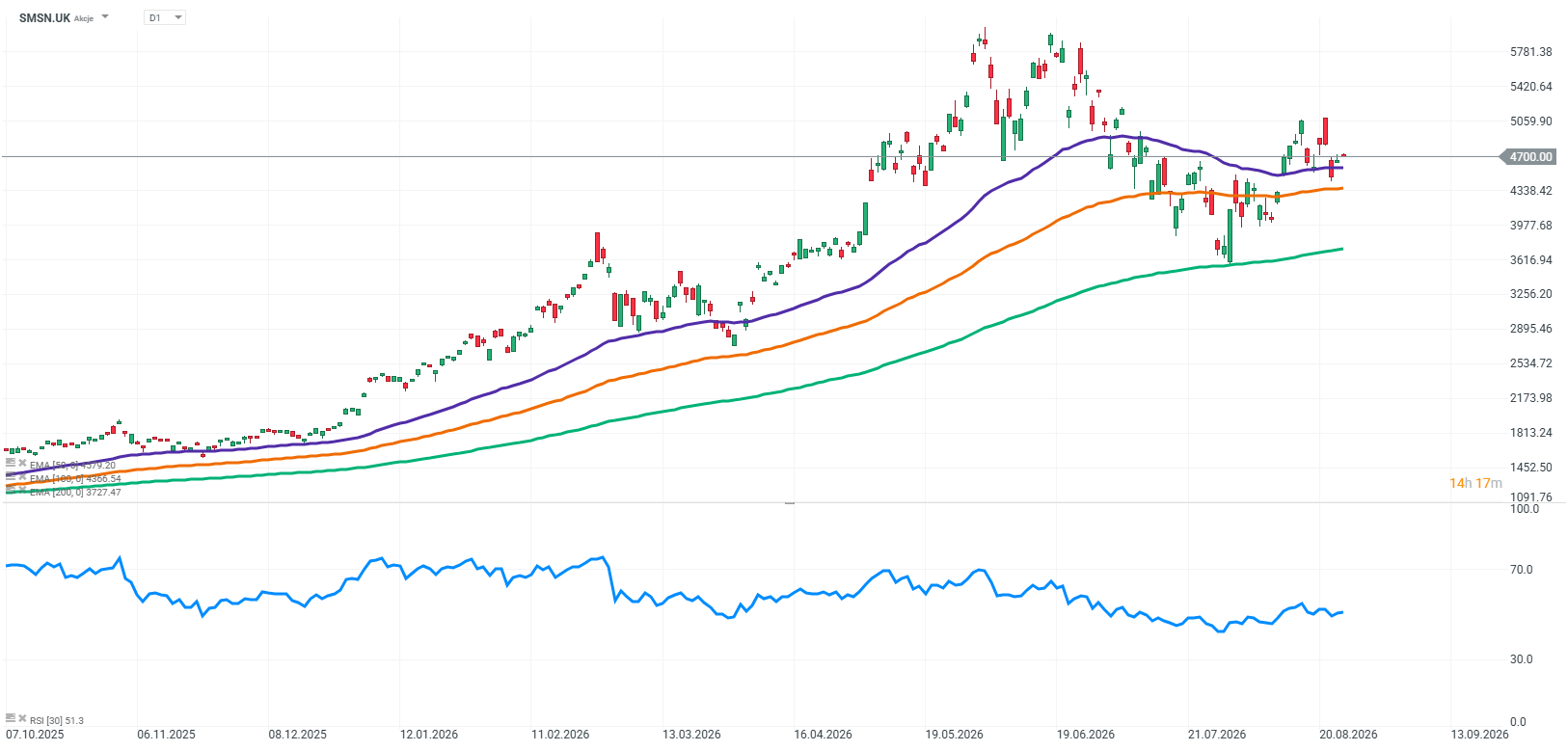
Source: xStation5