S&P 500 — US Large Cap Index
 FTSE 100 — UK Blue Chips
 Euro Stoxx 50 — Eurozone Leaders
 DAX 40 — German Equities
 CAC 40 — French Market Index
 Nikkei 225 — Japan Benchmark
 Hang Seng — Hong Kong Index
 Shanghai Composite — China Mainland
 ASX 200 — Australian Market
 TSX Composite — Canada Index
 Nifty 50 — India Large Cap
 STI Index — Singapore Market
 KOSPI — South Korea Index
 Bovespa — Brazil Equities
 JSE Top 40 — South Africa Index
 IPC Index — Mexico Market
Economic Calendar: Time for an interest rate hike?


Wednesday will be dominated by the US Fed’s evening decision (7:00 PM) – the most anticipated central bank meeting of the year. The market has almost fully priced in a 25 bps rate hike, the first since July 2023. Figure 1: Change in Market-Implied Probability of the Fed’s September Rate Hike (2025 – 2026)
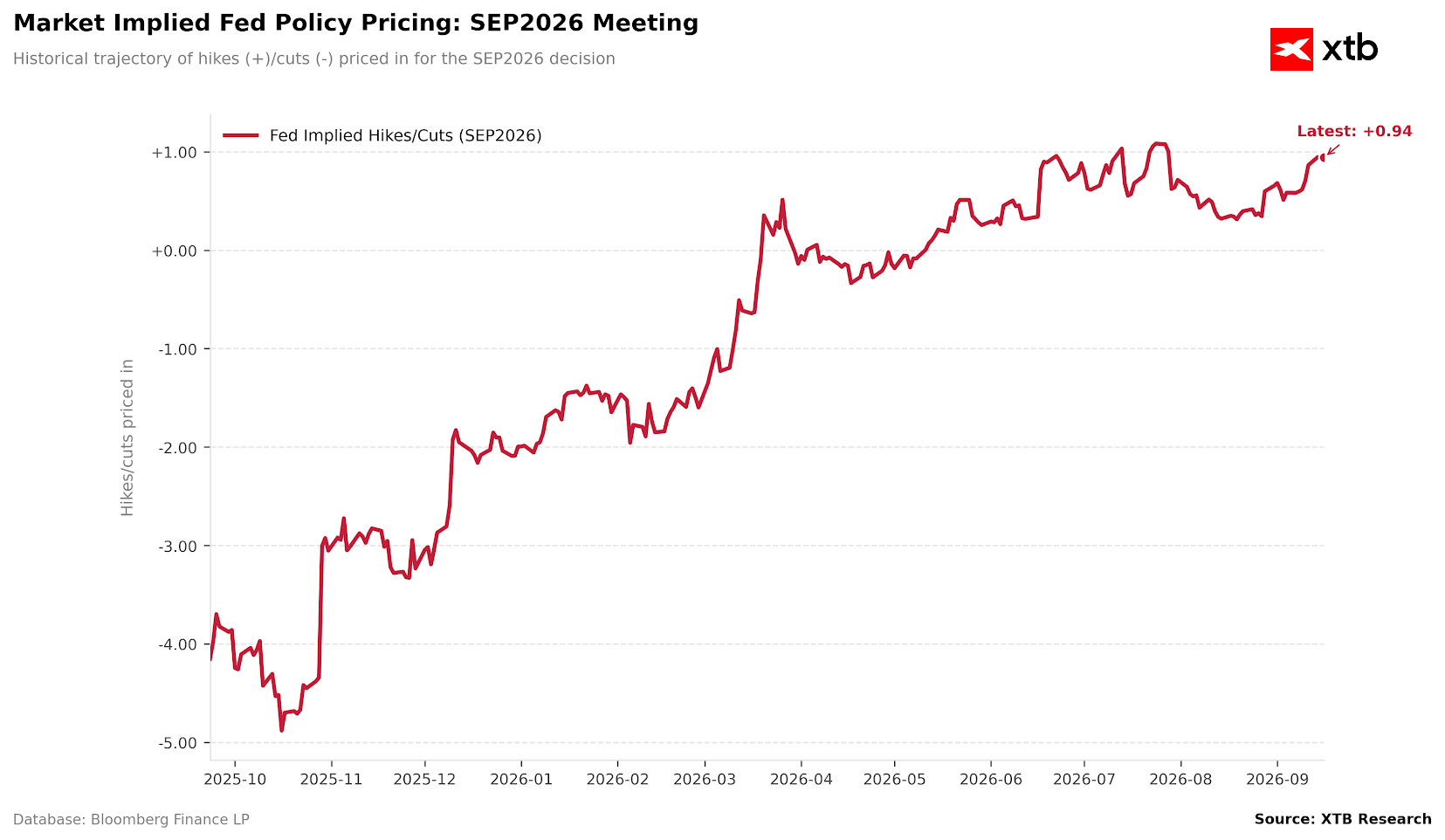
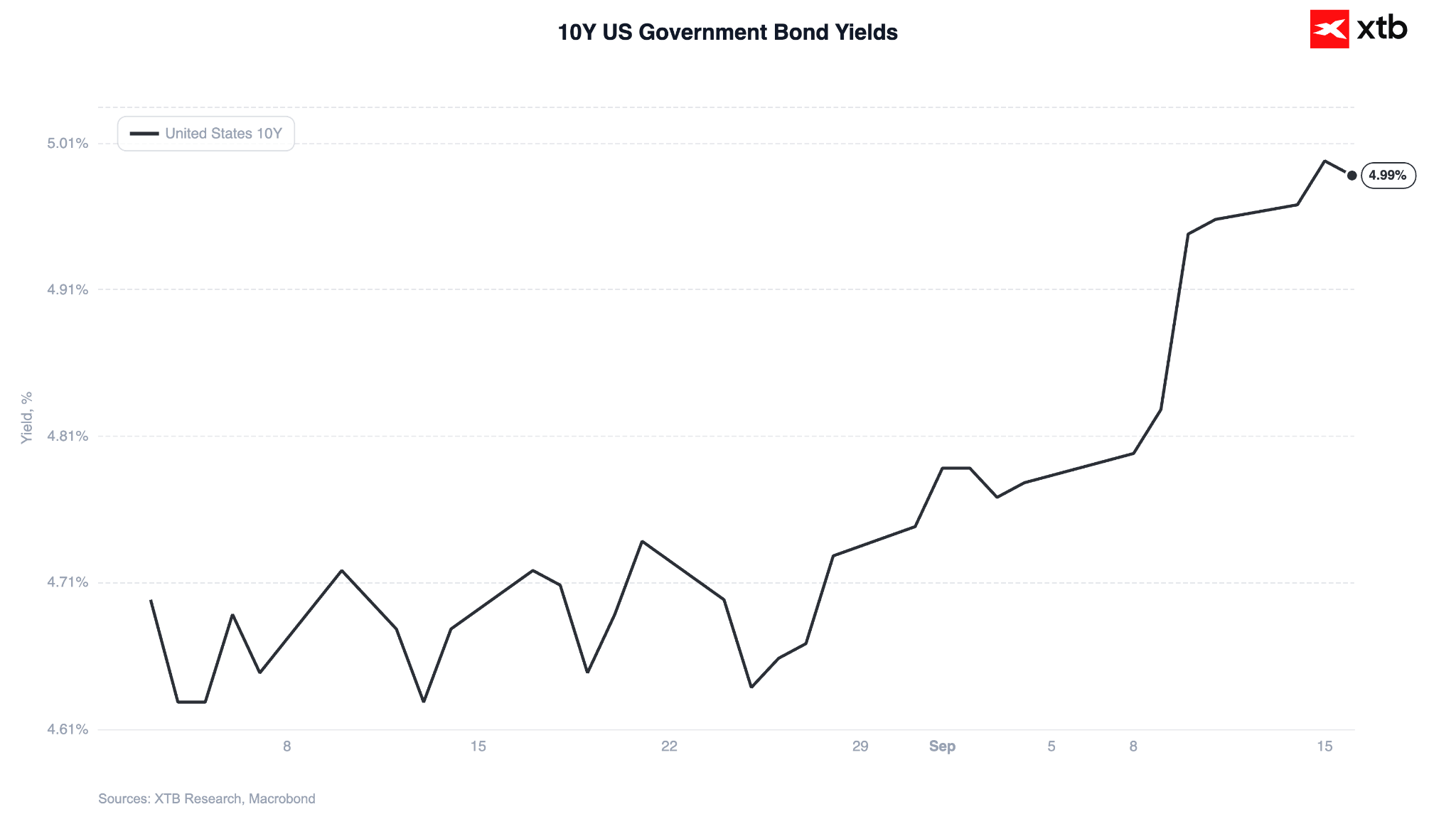
Source: XTB Research, 16.09.2026 Markets could interpret a pause as the Fed caving to pressure from Donald Trump (meaning a lack of independence for the global financial market’s most vital institution). This would result in a further rise in long-term bond yields (noting that 10-year yields reached their highest level since 2007 today) and a return of the debasement trade, a strategy involving a move away from traditional fiat currencies towards hard assets with limited supply, including precious metals and Bitcoin. Figure 2: 10Y US Government Bond Yields (08.2026 – 09.2026)
Source: XTB Research, 16.09.2026 However, a rate hike does not necessarily mean appreciation for the US currency. Since such a move is almost fully priced in, a relatively hawkish and, most importantly, credible narrative is also needed. If Warsh, as in July, fails to convince markets, bets on further hikes could fall, putting pressure on the US currency. Figure 3: Market-Implied Fed Policy Rate Path (2026 – 2027)
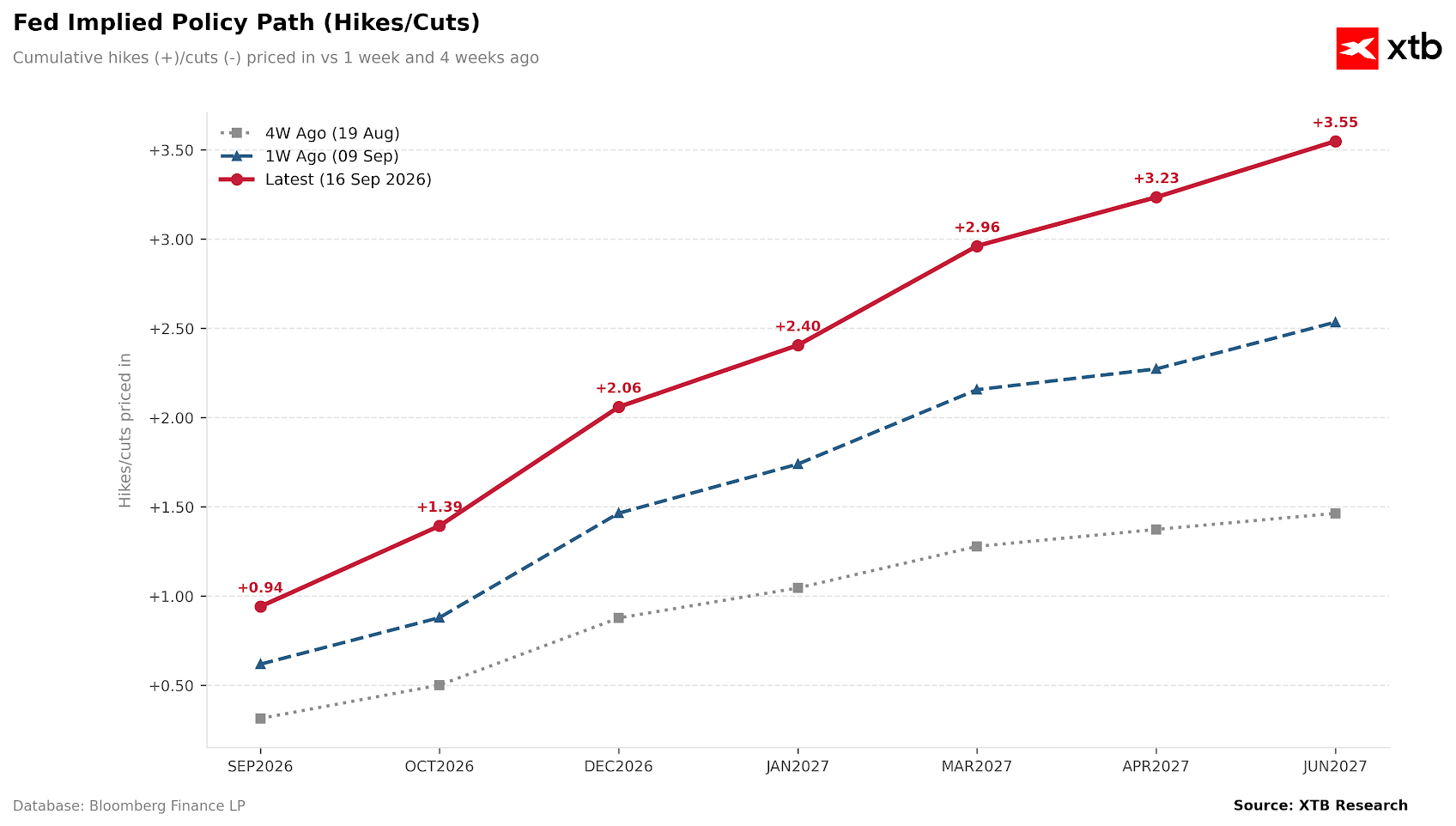
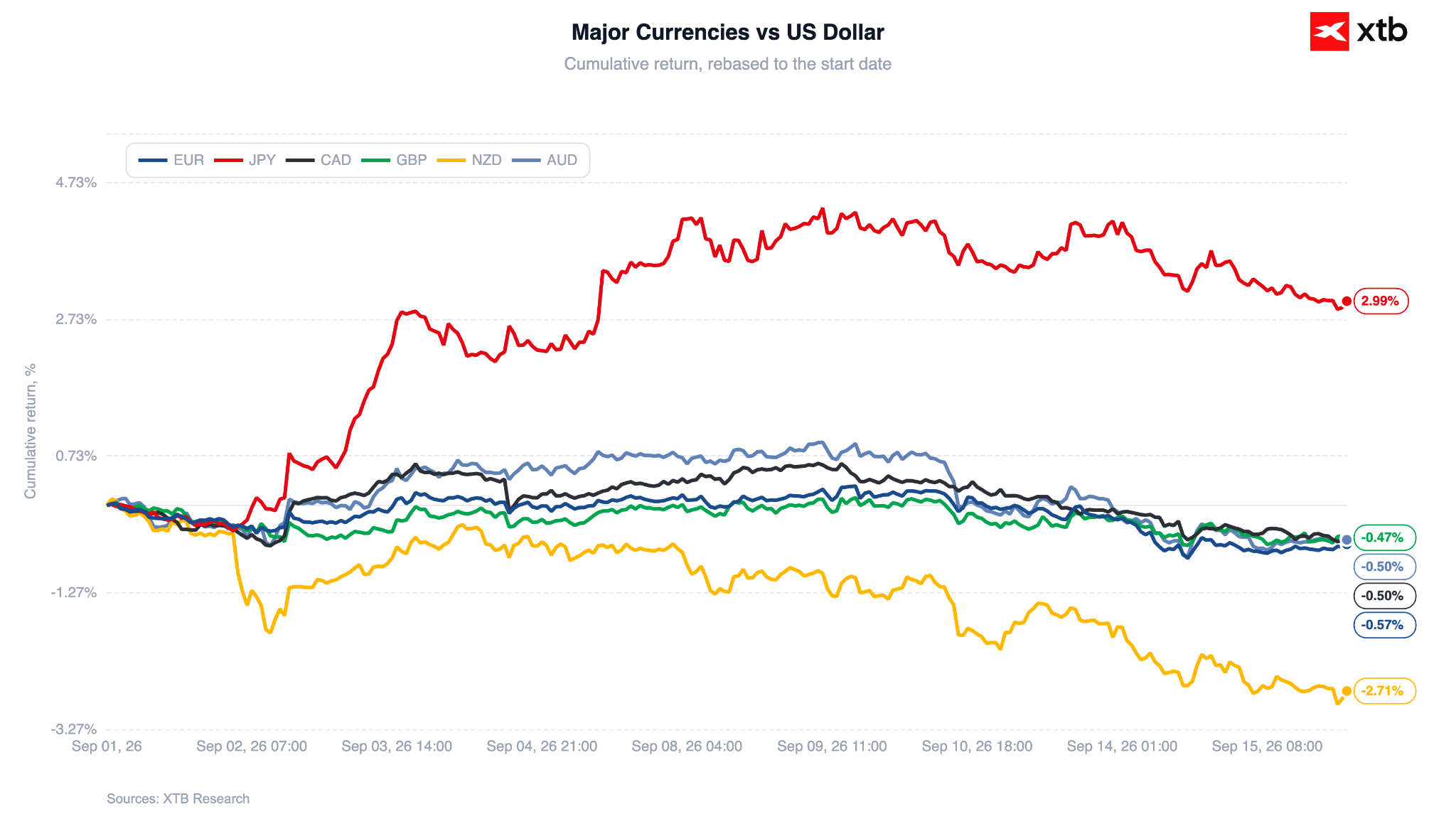
Source: XTB Research, 16.09.2026 Indeed, this seems relatively likely. The hawkish repricing observed recently was, in our view, overly aggressive. We do not expect the market baseline scenario, namely four hikes from the Fed before the end of the first half of 2027, to actually materialise. Unwinding some of the rate-hike bets would naturally not be good news for the dollar. Figure 4: Major Currencies vs US Dollar (09.2026)
Source: XTB Research, 16.09.2026
🌏 Key Macroeconomic Publications
Tuesday
Germany
- Germany’s ZEW Indicator of Economic Sentiment rose in September to 34.7 pts (slightly below consensus).
- However, the assessment of the current economic situation improved noticeably, with the Current Situation sub-index rising to -47.1 from -61.1 in August, beating forecasts.
Wednesday
United Kingdom
- UK CPI inflation accelerated in August to 3.1% y/y, above July’s 2.9%, confirming the trend of rising price pressure linked to the Middle East conflict.
- The main driver of the increase, unsurprisingly, was surging oil and fuel prices.
- Higher airfares, particularly on long-haul routes (which were also largely boosted by the aforementioned fuel prices), further contributed to the rise.
- Despite the acceleration in inflation, the market does not expect a rate hike at tomorrow’s Bank of England meeting. We also do not anticipate such a move.
Sweden
- Sweden’s unemployment rate rose in August to 8.5%, significantly above the 8.2% consensus and noticeably higher than July’s 7.8%, which was the lowest level since November 2024.
- It is worth noting, however, that the August spike should be read in the context of highly volatile readings in recent months; unemployment reached 9.9% in June and 9.4% in May.
📆 Macroeconomic Calendar
Wednesday
- Eurozone: Wage growth in Q2Time: 10:00 AMPrevious reading: 3.4%
- Time: 10:00 AM
- Previous reading: 3.4%
- Poland: Core inflation in AugustTime: 1:00 PMConsensus: 3.2%Previous reading: 3.1%
- Time: 1:00 PM
- Consensus: 3.2%
- Previous reading: 3.1%
- US: Retail sales in AugustTime: 1:30 PMPrevious reading: 5%
- Time: 1:30 PM
- Previous reading: 5%
- US: GDPNow for Q3Time: 4:30 PMConsensus: 4.4%Previous reading: 4.4%
- Time: 4:30 PM
- Consensus: 4.4%
- Previous reading: 4.4%
- US: Interest rate decisionTime: 7:00 PMConsensus: 4%Previous reading: 3.75%
- Time: 7:00 PM
- Consensus: 4%
- Previous reading: 3.75%
- US: Kevin Warsh’s press conferenceTime: 7:30 PM
- Time: 7:30 PM
- Brazil: Interest rate decisionTime: 10:30 PMConsensus: 13.75%Previous reading: 14%
- Time: 10:30 PM
- Consensus: 13.75%
- Previous reading: 14%
Thursday
- New Zealand: GDP growth in Q2Time: 11:45 PMConsensus: 2.3%Previous reading: 1.5%
- Time: 11:45 PM
- Consensus: 2.3%
- Previous reading: 1.5%
- Eurozone: Speech by Philip LaneTime: 8:00 AM
- Time: 8:00 AM
🗂️ Earnings Releases
- Zena Tech ($ZENA.US) – before market open (BMO)
3 Markets to Watch
- USDIDX: A rate hike does not necessarily mean appreciation for the US currency. Since such a move is almost fully priced in, a relatively hawkish and, most importantly, credible narrative is also needed. If Warsh, as in July, fails to convince markets, bets on further hikes could fall, putting pressure on the US currency.
- GOLD: Markets could interpret a potential pause as the Fed caving to pressure from Donald Trump (meaning a lack of independence for the global financial market’s most vital institution). This could result in a return of the debasement trade, a strategy involving a move away from traditional fiat currencies towards hard assets with limited supply, including precious metals and Bitcoin.
- OIL: The oil market remains torn between physical supply constraints (pipeline downtime, risk of further attacks) and profit-taking following a dynamic rally.