S&P 500 — US Large Cap Index
 FTSE 100 — UK Blue Chips
 Euro Stoxx 50 — Eurozone Leaders
 DAX 40 — German Equities
 CAC 40 — French Market Index
 Nikkei 225 — Japan Benchmark
 Hang Seng — Hong Kong Index
 Shanghai Composite — China Mainland
 ASX 200 — Australian Market
 TSX Composite — Canada Index
 Nifty 50 — India Large Cap
 STI Index — Singapore Market
 KOSPI — South Korea Index
 Bovespa — Brazil Equities
 JSE Top 40 — South Africa Index
 IPC Index — Mexico Market
Is Another DeepSeek Moment Coming? Moonshot AI Increases Pressure on AI Giants


China’s artificial intelligence sector has once again moved into the spotlight of global markets. This time, the attention is focused on Moonshot AI and the launch of its Kimi K3 model, which according to the company is designed to compete with some of the most advanced AI solutions currently available. The launch of another Chinese AI model alone would not necessarily be a market-moving event, but the context in which it is happening makes it far more significant. Following the earlier success of DeepSeek, markets have once again started questioning whether the development of artificial intelligence truly requires unlimited growth in spending on infrastructure, data centers, and the most advanced computing chips.
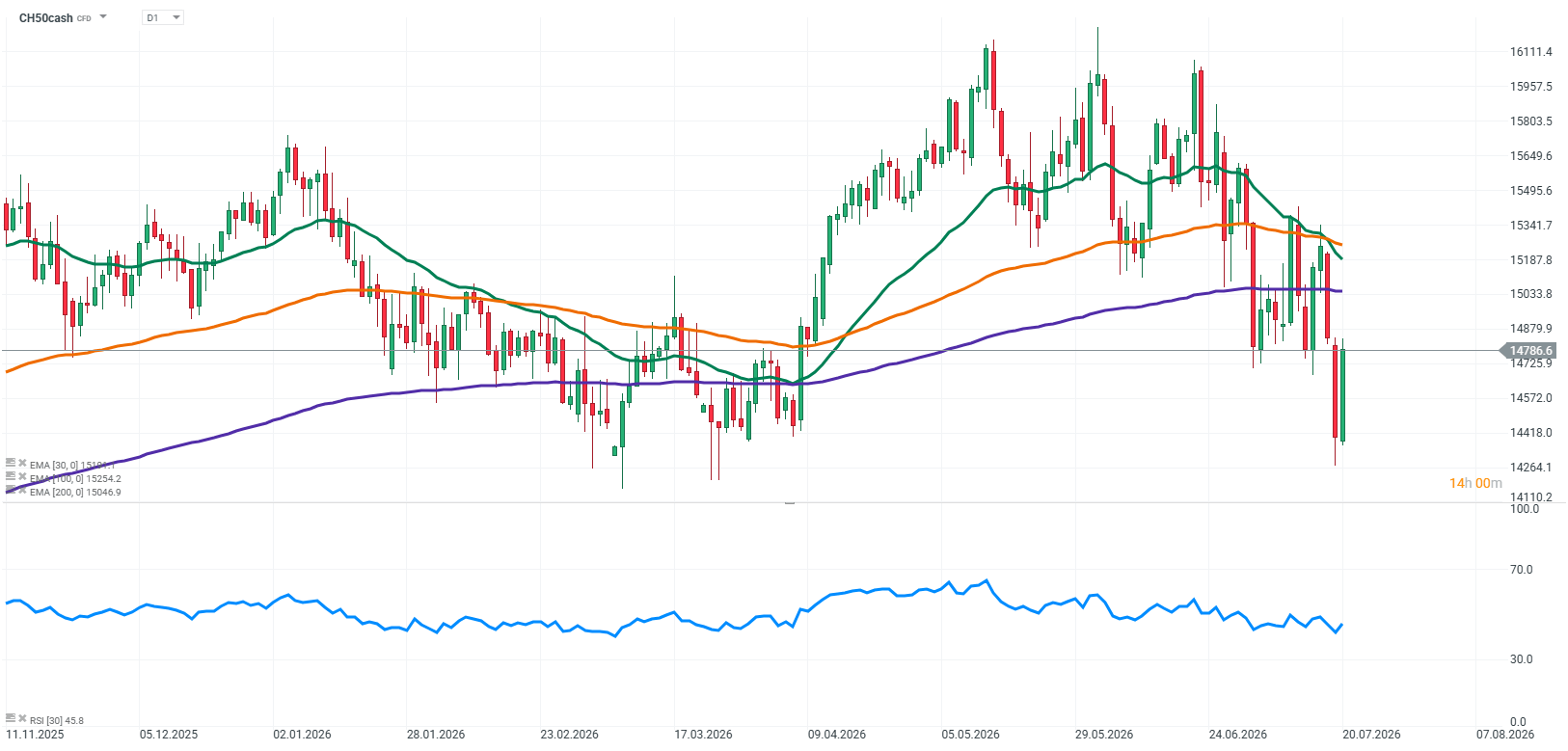
DeepSeek was the first major signal that efficiency could become just as important as the scale of investment itself. Moonshot AI fits into a similar narrative, showing that Chinese companies are not simply trying to close the technology gap but are increasingly attempting to compete directly with global AI leaders. The market reaction was immediate. Asian companies linked to semiconductors and AI infrastructure came under pressure, as investors began reassessing some of the assumptions behind current technology valuations.
If more companies are able to develop competitive AI models at lower costs and with lower computing requirements, it could influence future demand dynamics for the most advanced AI chips. This is the most important aspect of the entire story. For a long time, the dominant narrative around artificial intelligence was built around the idea that the winners would be companies with the largest computing capacity and access to the most advanced chips. The success of Chinese AI models suggests that the efficiency of using this infrastructure may become just as important as the infrastructure itself.
This does not mean that the position of US technology giants is suddenly under threat. Nvidia still maintains a significant technological advantage, and its ecosystem, including GPU chips, CUDA software, and data center solutions, remains one of the key foundations of the current AI boom. The most advanced AI models still require enormous computing resources, which Chinese companies cannot easily replace. However, the way markets view the future of the sector is changing. The key question is no longer only who will build the largest AI infrastructure, but also who will be able to use it most efficiently and convert it into real revenue. Economic efficiency could become one of the most important factors shaping the next stage of the industry’s development. China’s situation is particularly interesting.
Technology restrictions imposed by the United States were designed to limit Beijing’s access to the most advanced solutions, but they have also accelerated the development of China’s domestic ecosystem. Companies such as DeepSeek and Moonshot AI are receiving significant capital and political support, as their success has implications not only for business but also for national technological strategy. For Beijing, artificial intelligence is one of the key areas of technological competition with the United States. China aims to reduce its dependence on foreign suppliers and build its own ecosystem covering AI models, infrastructure, and hardware solutions.
Moonshot AI is another example of a company that could play a role in achieving this goal. At the same time, Chinese AI companies still face significant challenges. Creating a competitive model is only the first step. The next challenges include scaling the technology, securing sufficient infrastructure, achieving commercial adoption, and building a global user base. In these areas, US companies still maintain a considerable advantage. For Nvidia, developments surrounding Moonshot AI serve as another reminder that the AI market will not develop according to a single scenario. Growing competition could eventually put pressure on pricing and margins across the semiconductor sector, particularly if companies increasingly look for ways to achieve more with fewer computing resources.
At the same time, stronger competition could also benefit the entire industry. The rivalry between the United States and China is accelerating technological development, increasing the pace of innovation, and forcing companies to search for more efficient solutions. The developments around Moonshot AI show that the race for the future of artificial intelligence is becoming less about competition between individual companies and more about a broader battle between two technological ecosystems. The advantage will not only belong to the side with the best hardware, but also to the one that can translate technology into real economic value faster.
DeepSeek was the first major warning signal for markets that Chinese companies could narrow the gap faster than expected. Moonshot AI suggests that this was not a one-off event, but rather part of a broader trend. For financial markets, this means a need for greater selectivity. The artificial intelligence boom remains one of the most important technological trends, but future winners will be determined not only by the speed of development, but also by the cost of building models, infrastructure efficiency, and the ability to generate sustainable profits.
Source: xStation5