S&P 500 — US Large Cap Index
 FTSE 100 — UK Blue Chips
 Euro Stoxx 50 — Eurozone Leaders
 DAX 40 — German Equities
 CAC 40 — French Market Index
 Nikkei 225 — Japan Benchmark
 Hang Seng — Hong Kong Index
 Shanghai Composite — China Mainland
 ASX 200 — Australian Market
 TSX Composite — Canada Index
 Nifty 50 — India Large Cap
 STI Index — Singapore Market
 KOSPI — South Korea Index
 Bovespa — Brazil Equities
 JSE Top 40 — South Africa Index
 IPC Index — Mexico Market
SAP earninigs: The cloud shows strong demand, margins remain under pressure


SAP is one of the leaders in the SaaS sector, but despite growth in operations and profits, it has also been among the biggest decliners over the last few quarters.
SAP (D1)
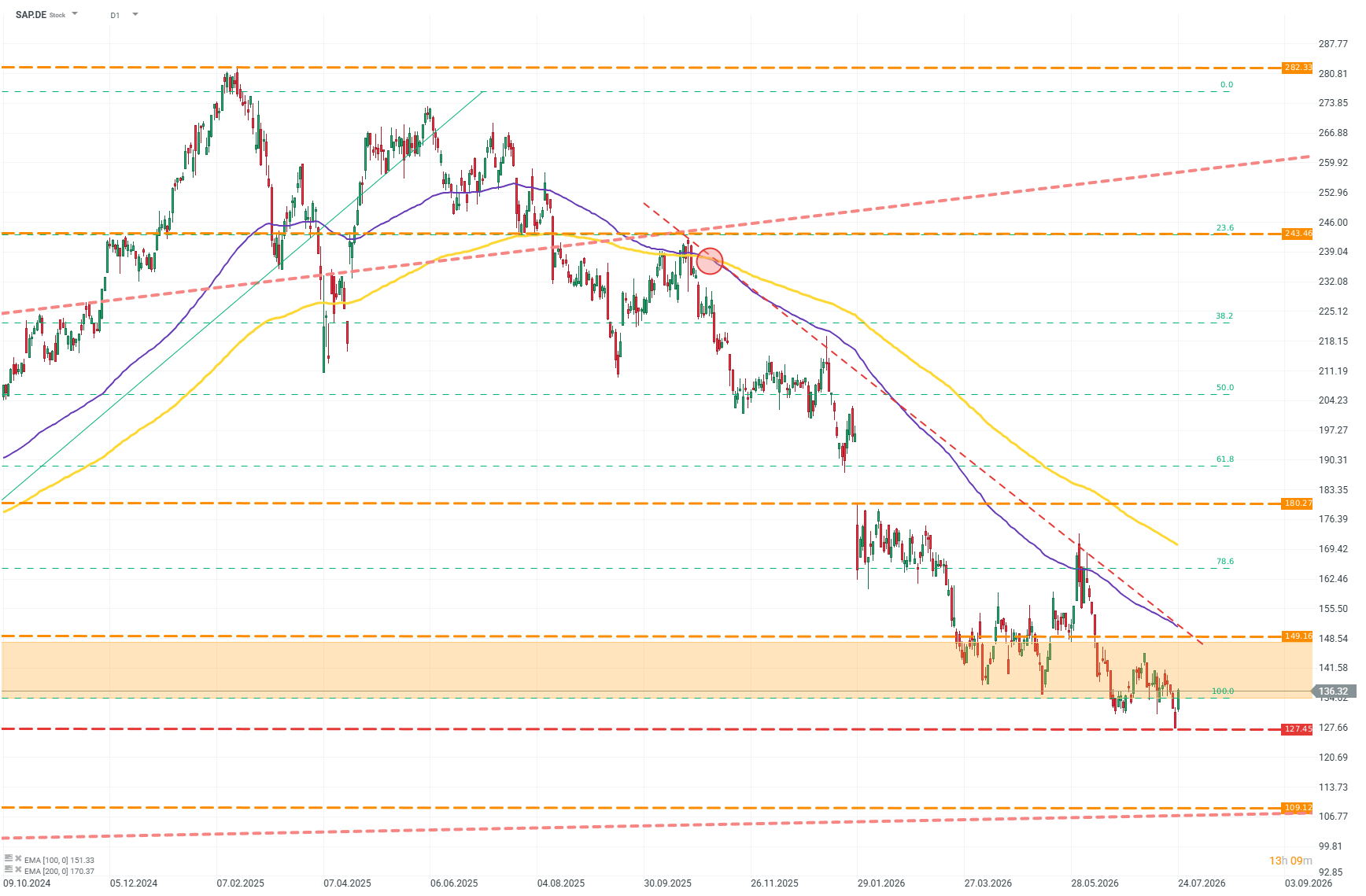
Source: xStation5 It is not alone, as this is a phenomenon seen across the entire SaaS industry, where the market still seems unwilling to believe it will not disappear overnight under pressure from AI. Even good results do not help. How did it look this time? As with ServiceNow, for example, revenue and EPS matter, but they are secondary indicators.
- Revenue: EUR 9.88bn (expected around EUR 9.85bn)
- EPS: EUR 1.59 (expected around EUR 1.75)
- Operating profit: EUR 2.74bn (expected EUR 2.9bn)
For a company with such negative market sentiment, missing expectations would usually result in a steep selloff. What convinced the market to push the stock higher?
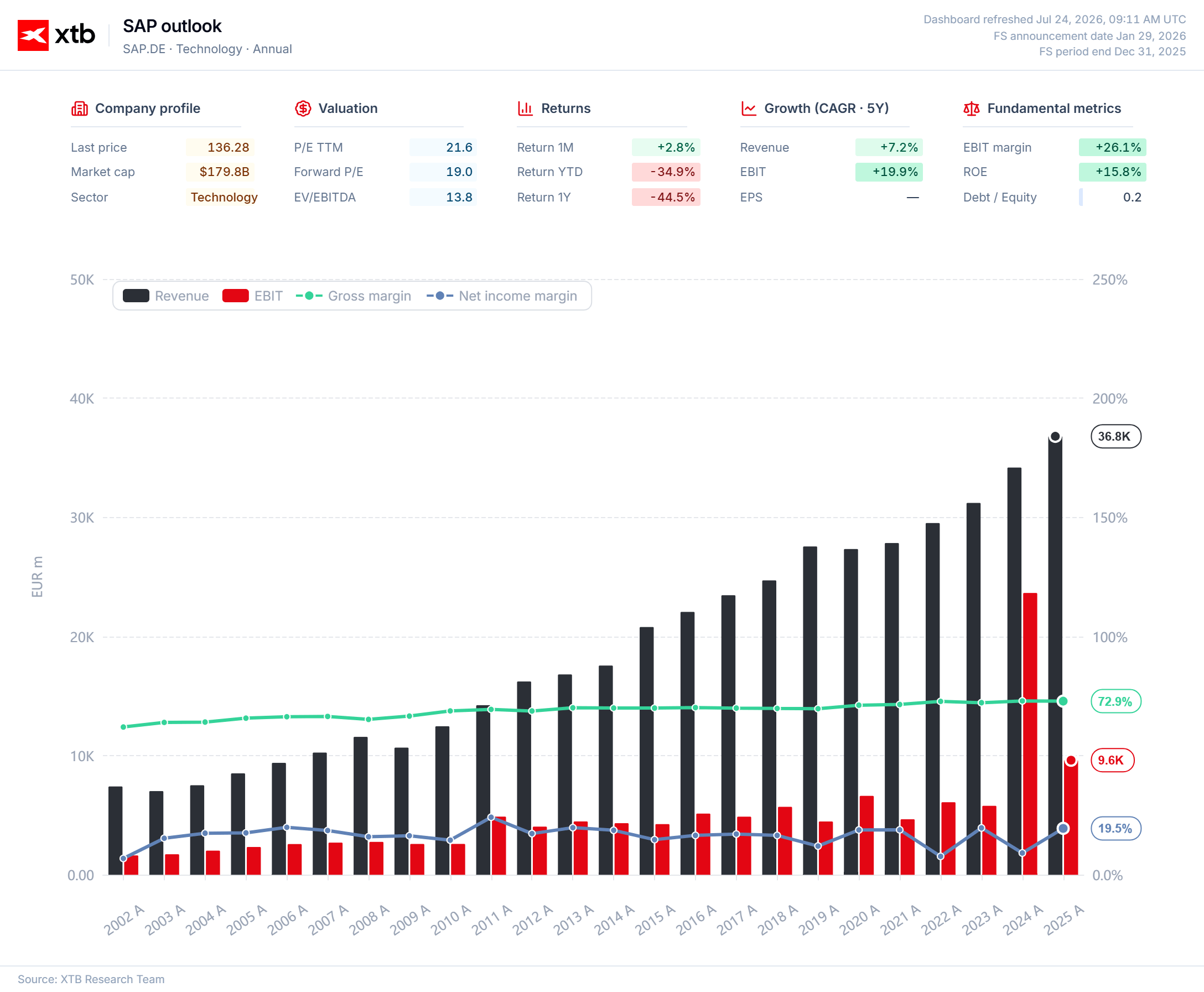
The key segment in the current market context is the company’s cloud segment, which is intended to become the company’s main profit engine. Here, investors got what they wanted most. The company not only maintained the pace of order growth, but clearly accelerated it: 26% versus expectations of 24%. This is a straightforward signal that the company’s most promising segment is performing very well.
Outlook
The results and valuation metrics increasingly show that the market clearly overestimated the pressure AI would put on the company, but may have underestimated the costs of transformation and adaptation to the new environment. What position does this put the company in?
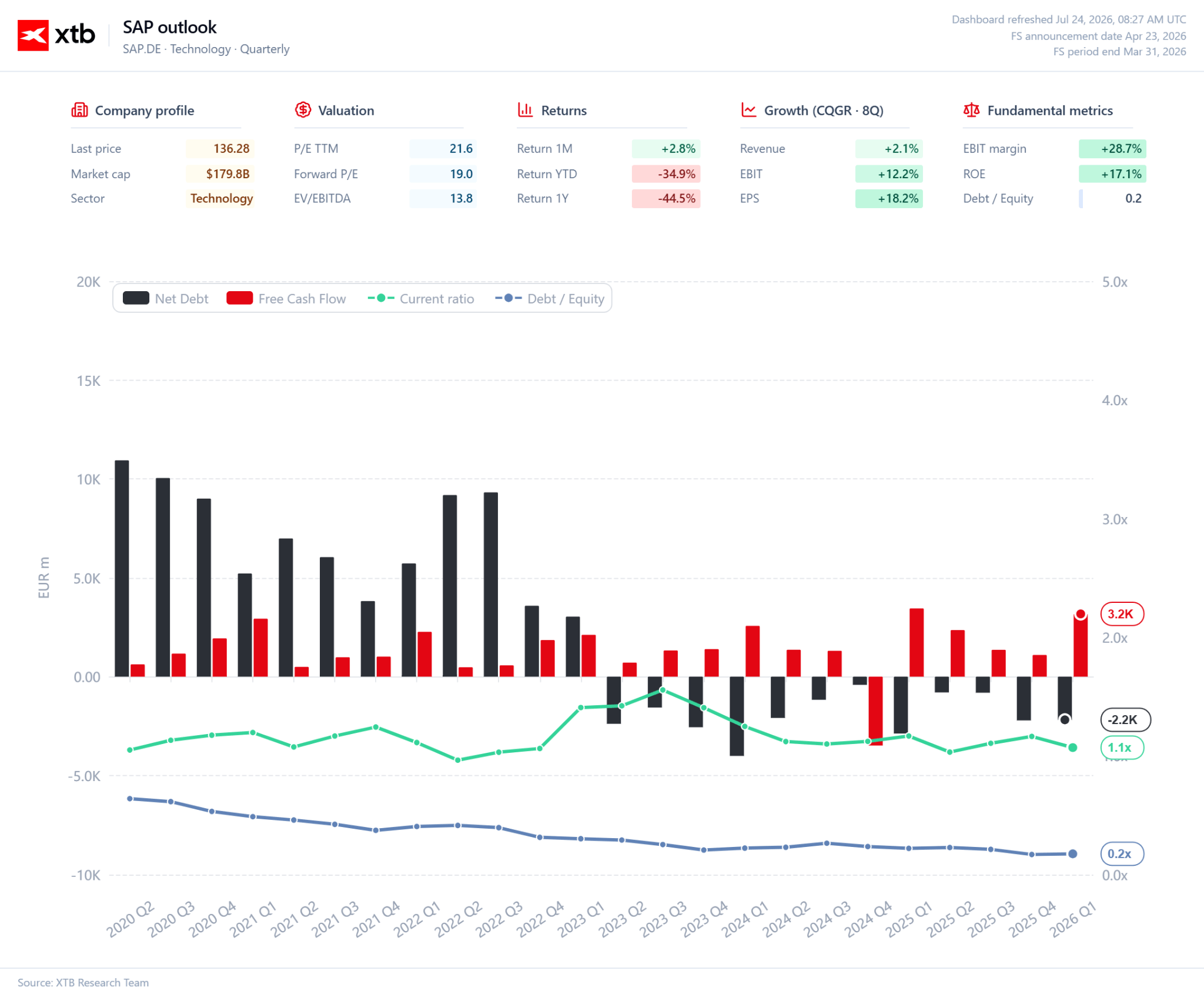
- The company moved from high net debt to a net cash position, which is currently around EUR 2.2bn, significantly increasing its financial flexibility. The debt to equity ratio fell to just 0.2.
- Free cash flow remains high and reached around EUR 3.2bn in the last quarter.
- From a fundamental perspective, SAP now has one of the strongest balance sheets in the European technology sector, giving the company significant freedom to finance growth, acquisitions, and shareholder returns, while maintaining a large scale of investment.
- Costs are eating into margins, but the company appears very well prepared for the challenges. Many signs suggest it is better positioned than the market currently prices in.