S&P 500 — US Large Cap Index
 FTSE 100 — UK Blue Chips
 Euro Stoxx 50 — Eurozone Leaders
 DAX 40 — German Equities
 CAC 40 — French Market Index
 Nikkei 225 — Japan Benchmark
 Hang Seng — Hong Kong Index
 Shanghai Composite — China Mainland
 ASX 200 — Australian Market
 TSX Composite — Canada Index
 Nifty 50 — India Large Cap
 STI Index — Singapore Market
 KOSPI — South Korea Index
 Bovespa — Brazil Equities
 JSE Top 40 — South Africa Index
 IPC Index — Mexico Market

Key takeaways
- Political change in Europe is the euro’s biggest long term problem
- What an upside payrolls surprise means for markets this month
- CPI data to determine the September FOMC rate decision
- President Trump complicates picture for Fed
- Fed independence on the line
- The market outlook
- Can JPY strength last?
- 3 events to watch
The Week Ahead: US CPI to determine whether the Fed pulls the trigger this month Markets are quiet at the start of a new week. The euro is mostly stable, even though the AfD, a far right party in Germany, won the state elections in Saxony-Anhalt on Sunday. This is the first time a far right party has held power at state level since the Second World War. Political change in Europe is the euro’s biggest long term problem FX traders may be focused on JPY intervention, but the AfD has said that one of its policies would be to quit the euro and restore ties with Russia. While the AfD are still some distance from holding power in Berlin, this development is dangerous for the longer term stability of the single currency. In France, the far-right candidate for next year’s Presidential elections, Marine Le Pen, is in the lead in the polls. In the past she has been critical of the euro and has championed a return to a national currency.
The next few years could see waves of political change in Europe and a shift to the right in the two largest economies. This may not be a problem for FX traders today, but it is a problem for tomorrow, and it could explain why the euro is the one of the weakest currencies compared to its peers so far in 2026. What an upside payrolls surprise means for markets this month It’s a holiday-shortened week in the US, with US markets closed on Monday. This could lead to a delayed reaction to Friday’s upside surprise in US Payrolls. The bounce back in job creation in the US, the economy created 162,000 jobs, well above the 53k expected, was consistent with the view at the Federal Reserve that the US labour market is stable. The unemployment rate remained steady at 4.1%. Job creation was plentiful last month and the labour force participation rate rose. This means that the Fed is right to focus on inflation, and it adds extra significance to this week’s CPI reading. CPI data to determine the September FOMC rate decision The CPI report for August is released on Friday, and the outcome of this report will determine expectations for the next FOMC meeting on 16th September. There will be a clear bias for a rate hike if the data on prices does not show progress on disinflation.
The reaction to the payrolls report was sharp. Stocks and bonds fell, and US Treasury yields jumped once more. Investors also increased bets that the Federal Reserve will hike rates this month. The probability of a rate hike rose to 60%, up from 50% before the report. President Trump complicates picture for Fed Complicating the picture for US interest rates is President Trump. After slowing down his attacks on Iran, the President has turned his attention to US interest rates, which is bad news for Treasuries. The President posted on social media about the great jobs report, but he said that the Fed should cut rates and not hike them. He also said that because the US economy is growing so much, the US should have the lowest rates in the world. The President is espousing unorthodox monetary policy that is reminiscent of Turkey’s President Erdogan, who called for lower interest rates to bring down high inflation in 2021, which sent the Turkish lira to a record low.
Usually a strong economy and hot inflation is a reason to do the opposite of what President Trump wants. Fed independence is on the line This is the first time that the President has actively called for rate cuts since Kevin Warsh took over as chairman of the Federal Reserve. The Fed meeting on 16th September, will be a big test of its independence. We think that there is a very low chance that Warsh will acquiesce to the President, but if he does then this could seriously damage Fed credibility. The President is not the only member of the White House that is commenting on Fed rate policy. The Vice President and the Treasury Secretary have all recently urged the Fed not to raise interest rates, which is an unusual amount of pressure for government officials to put on the Fed ahead of a rate decision.
Due to the pressure from the White House, could some Fed members feel it is their duty to vote for a rate hike to reaffirm their independence? If there is any sign that the Fed is under pressure from the White House, then we could see Treasuries face a steep sell off and yields surge, which would be hard for the Fed to manage. Added to this, a rate hike to counter the effects of comments from President Trump could hurt the economy down the line. Fed enters quiet period The President also threatened to stop trading with countries that have a trade surplus with the US if the Fed does not cut rates. This is a particularly unusual intervention from the President since the Federal Reserve has no control over global trade. Now that the Fed is in its quiet period ahead of the meeting later this month, we will need to wait to see how Kevin Warsh responds to the President’s comments. Warsh is likely to be asked about these comments at his next press conference, and may chose to ignore them, also, the President may backtrack on his comments. This highlights the confusing backdrop as we lead up to the next FOMC decision. The market outlook US stocks were surprisingly resilient to rising fed rate hike bets, higher energy prices and rising bond yields last week. US stock indices including the Nasdaq and the S&P 500 eked out a gain even though Brent crude oil rose by 7% last week and closed the week above $96 per barrel. This is a reminder for markets that the war in Iran is not over, and geopolitics can continue to be a source of surprise. The aftermath of the payrolls report means that the market needs to adjust to a rate hiking bias, which could knock stocks as we move towards Q4.
Treasury yields were also higher, theUS 10-year yield rose 7bps to just below 4.8%, and the 30-year Treasury yield closed the week just below 5.25%. With a $40 trillion debt load, these yields are extremely uncomfortable for the US Treasury. In the past month, yields have risen sharply at the long end and the short end of the Treasury curve. The UK, Europe and Japan have also seen large increases in their bond yields, so investors need to watch where sovereign yields go next. If we get another month of large increases in yields, stocks and other markets could come under pressure. Gold fell sharply last Friday and was down 0.5% for the week overall. The yellow metal closed below $4,500, which is a psychologically important level. Gold is extending losses on Monday and is down a further 0.5%. Where gold goes next will depend on the CPI report later this week. Higher inflation and a rising probability of a Fed rate hike could trigger further declines in the gold price in the coming days. Chart 1: Gold
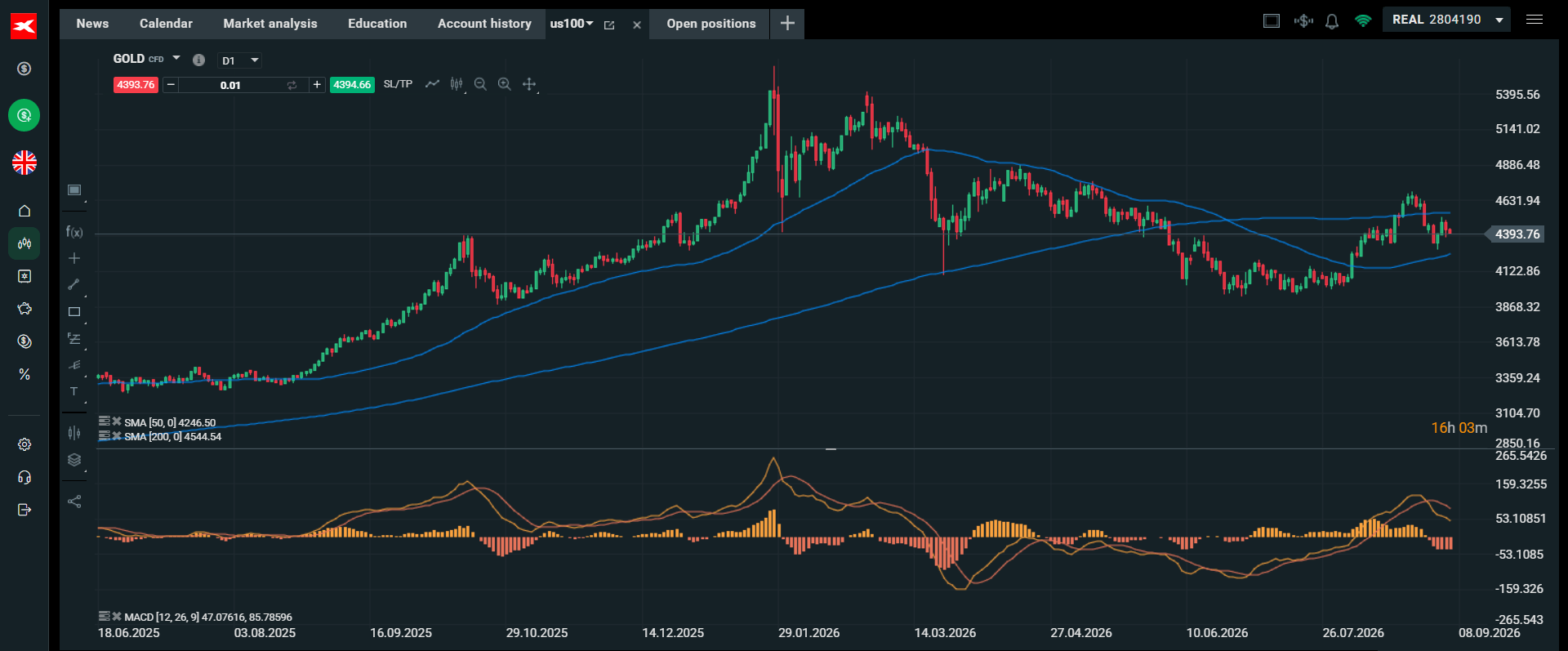
Source: XTB Can JPY strength last? The yen will remain in focus this week, after rumoured intervention last week pushed the yen up by more than 2% on a broad basis. USD/JPY slumped after the US Treasury Secretary called on the Bank of Japan to hike interest rates in an effort to stabilize their currency. The yen had its best week in a month, as the market takes a potential monetary regime shift seriously at the BOJ. The BOJ is also expected to hike rates later this month, the question now is, will they hike by 25bps or 50bps, and will they signal that more tightening is likely? This is not usually the BOJ’s style, but if they want to get real about controlling inflation, a succession of rate hikes will be necessary. USD/JPY is down a touch today and remains below 156. After a strong earnings season, the drivers of financial markets are changing as we leave the summer behind. September is traditionally a tough month for stocks, for now, volatility is rising but it remains at low levels. Semiconductor stocks roared back to life on Friday, suggesting that the AI trade isn’t over yet. Instead, volatility is centred on bonds, commodities and FX. Shrewd investors will be wondering when stocks will follow suit.
Below, we look at key event risks for the week ahead. Macro Watch 1, US CPI The last CPI report before the Fed’s September rate decision will be released this Friday. The market is expecting a pick up in price growth for August compared to July, with a 0.3-0.4% monthly gain, vs a 0.1% rise in headline and a 0.2% rise in core inflation for July. The war in Iran has kept commodity prices elevated in recent weeks, retail gas prices are high, and diesel costs in the US recently reached a record, which will add upward pressure to the CPI index. Food prices, especially beef, have also been running hot in recent weeks, which is fuelling fears that the Fed will need to hike interest rates to combat the effect of rising costs. A strong reading, especially in core inflation, will add to hawkish bets that the Fed will hike rates on the 16th September. In contrast, a softer reading would give the doves a chance to state their case at the FOMC. Since we know that energy prices are likely to rise, it is worth watching shelter prices closely. These are an important component of core inflation, and if they continue to recede, as they have done recently, then they may counter some of the effect of higher energy prices. Shelter costs could keep core inflation stable, even if headline prices rise strongly. If you are looking to this report for guidance on what the Fed does next, watch shelter costs. 2, The ECB The ECB meets this Thursday and is expected to hike interest rates by 25bps, taking the main deposit rate to 2.5%. In July, the ECB remained on hold, however this was framed as an explicit pause, which is why a rate hiking cycle is still expected. The driver for higher rates is the Middle East energy price shock. ECB rates are lower than elsewhere, so they have room to hike rates without too much economic disruption. The ECB also has less political pressure compared to the US. From the euro’s perspective, President Lagarde’s press conference will be watched closely for the tone of any forward guidance. If the ECB hikes rates this Thursday and Lagarde strikes a cautious tone, then future rate hike expectations could be scaled back and the euro may fall. However, if a rate hike is paired with hawkish forward guidance, then there is scope for euro upside. The euro rose slightly vs the USD last week, $1.1670 is short term resistance to watch for ahead of this meeting. Chart 2: EUR/USD remains range bound as we wait for the ECB
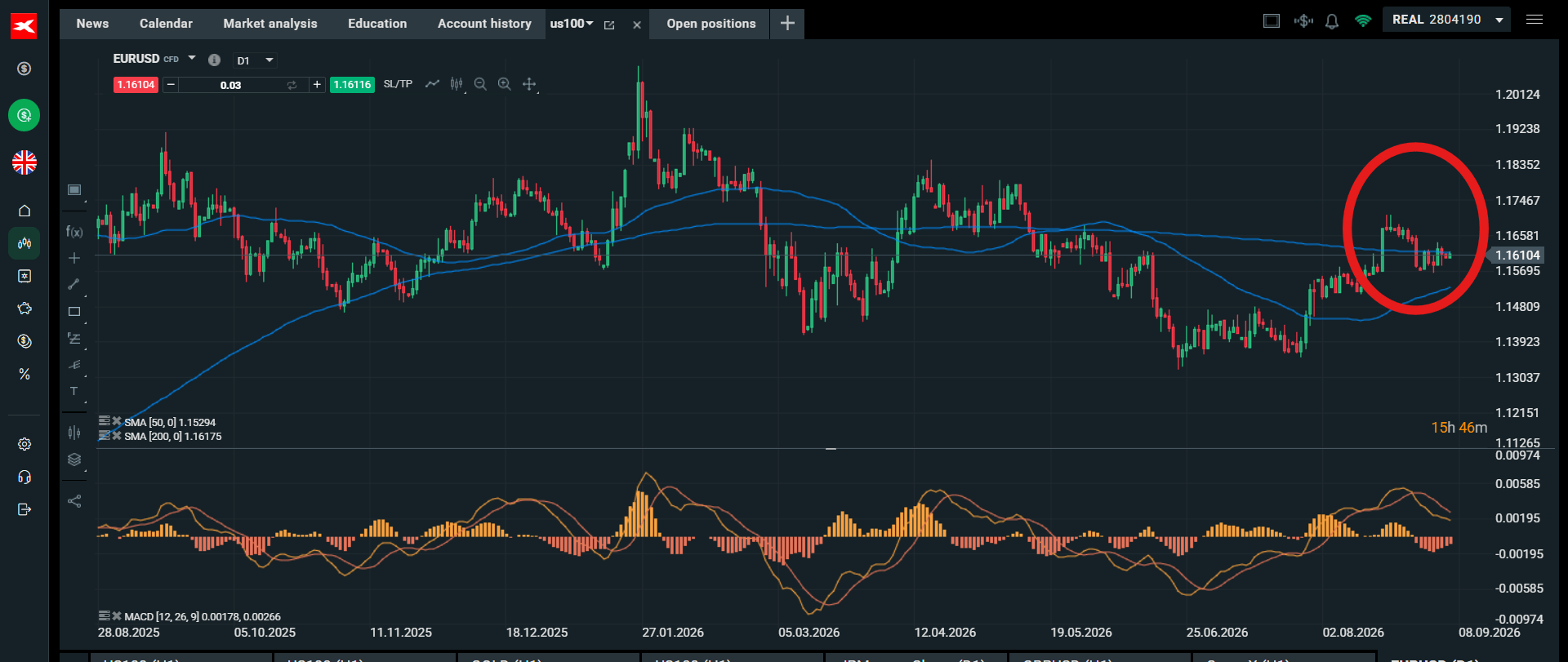
Source: XTB 3, UK GDP The monthly July GDP report is released for the UK this Friday. The market is expecting a weak report, and the economy may have contracted in July. Signs suggest that the UK consumer is pulling back ahead of the ‘tough budget’ touted by the chancellor at the weekend. UK retail sales slumped 0.5% YoY in July, which adds to concerns about retail spending in the UK. Growth is expected to slow from the 0.3% rate in June, and the Bank of England is expecting a flat reading for GDP for Q3. Because consensus is skewed towards a negative print for UK GDP, watch out for an upside surprise. If the market is right, and growth comes in at -0.1% or lower, it will reinforce the dilemma facing the BOE: energy price shocks vs a weakening economy. We think that a negative growth print may reduce expectations for a BOE rate hike next week, and instead we think it will bolster expectations that the Bank could remain on hold for the rest of the year.