S&P 500 — US Large Cap Index
 FTSE 100 — UK Blue Chips
 Euro Stoxx 50 — Eurozone Leaders
 DAX 40 — German Equities
 CAC 40 — French Market Index
 Nikkei 225 — Japan Benchmark
 Hang Seng — Hong Kong Index
 Shanghai Composite — China Mainland
 ASX 200 — Australian Market
 TSX Composite — Canada Index
 Nifty 50 — India Large Cap
 STI Index — Singapore Market
 KOSPI — South Korea Index
 Bovespa — Brazil Equities
 JSE Top 40 — South Africa Index
 IPC Index — Mexico Market
Natural gas prices in Europe are reacting with a strong increase to the ongoing impasse in the Strait of Hormuz European natural gas futures (TTF) are recording significant gains today, rising over 6% and reaching a level of nearly 58 EUR/MWh. Along with European gas prices, we are also observing an increase in gas prices in the US, which is linked to a change in weather outlooks. Nevertheless, it is worth remembering that the market in the United States is heavily oversupplied, while in Europe, problems with replenishing stocks persist. What specifically is behind the rise in gas prices in Europe? Do we have reasons for concern ahead of the winter period?
- Unresolved crisis in the Strait of Hormuz: Talks between Iran and Oman have failed to convince investors of a rapid resumption of global LNG supplies. Although the Iranian foreign minister stated over the weekend that an agreement is “very close,” he simultaneously warned that it would not open the waterway immediately. Additionally, the agreement itself between Iran and Oman would mean the start of charging giant fees from passing ships, which is unacceptable to the United States and most carriers.
- Critically low gas stocks: With less than three months before the start of the heating season, European gas storage facilities are filled to just under 59%. These are the lowest levels since 2009, sitting drastically below the 5-year seasonal average for this time of year, which is 76%. This puts Europe in the face of fierce competition with Asia for LNG cargoes.
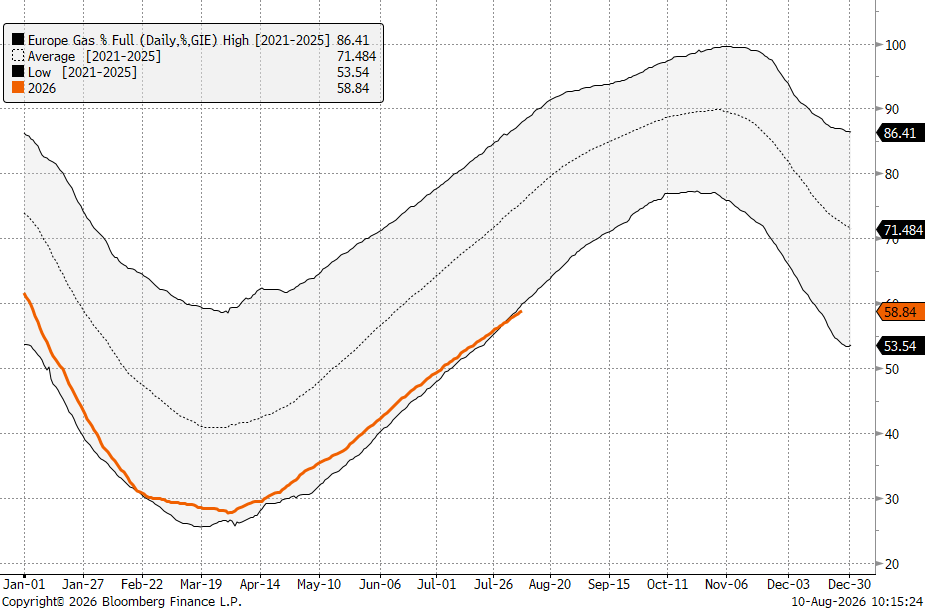
Stock replenishment is already the slowest in over 5 years. Source: Bloomberg Finance LP, XTB
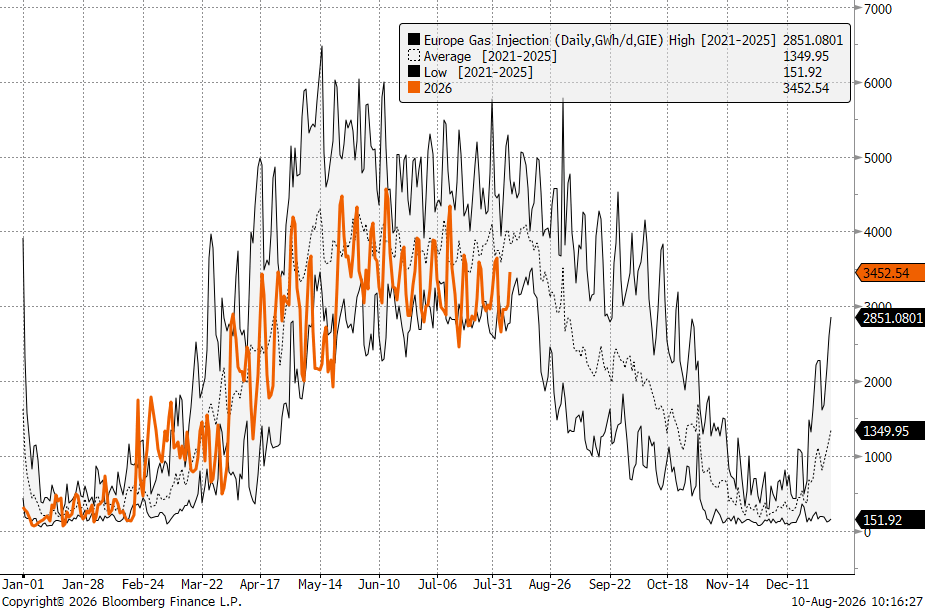
Gas delivery to storage facilities in Europe is running significantly below the 5-year average, and the gas infrastructure maintenance season is about to begin, which will reduce the rate of stock replenishment. Source: Bloomberg Finance LP, XTB
- Approaching heatwaves (surge in demand): A strong heatwave is expected in Western Europe (UK, France, western Germany) in the second half of the week. Temperatures are expected to reach 33°C in London and Frankfurt and even 35-36°C in Paris, which will significantly boost electricity demand for air conditioning. Additionally, high temperatures may cause difficulties in power plant operations in cases of low river water levels.
- Outages and infrastructural constraints: Additional outages are complicating the supply situation. Norwegian operator Gassco reported the unavailability of the Dvalin gas field (loss of 5.9 million cubic meters per day since August 10). Furthermore, French energy giant EDF was forced to sharply cut capacity at the Gravelines and St Alban nuclear reactors, which will force the burden of power production onto gas-fired power plants.
The lack of prospects for a quick return of LNG supplies from the Middle East (Qatar planned to resume supplies to Europe in September, but this is already in question), combined with the dramatically slow pace of filling European storage (visible on the charts) and growing demand caused by heatwaves, creates an ideal environment for maintaining high prices or further increases in European benchmark TTF quotes.
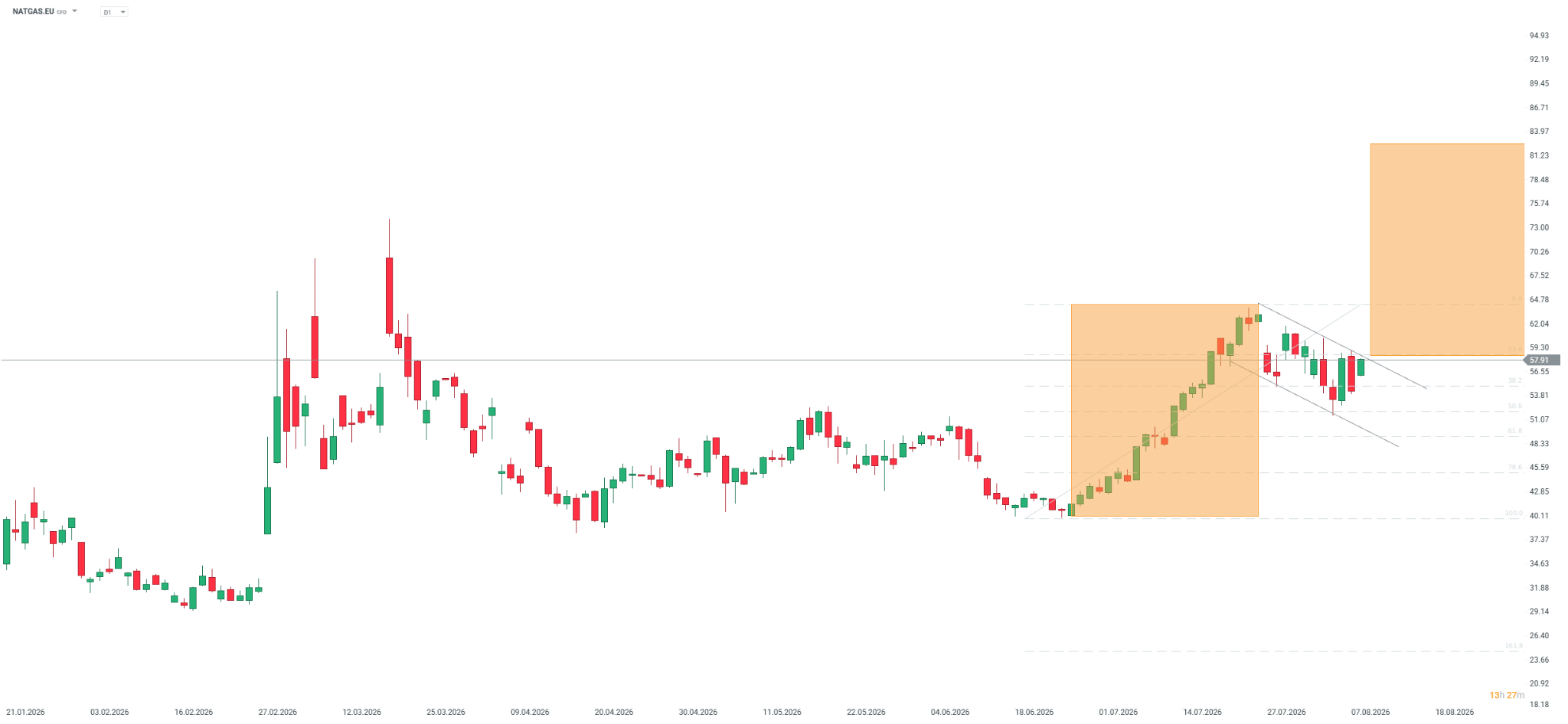
Although the gas market in Europe is significantly more diversified than 4 years ago, it cannot be ruled out that we will witness a clear increase before the start of the winter season. The curve in the European gas market remains flat in the short term and then shifts into strong backwardation. Source: xStation5