S&P 500 — US Large Cap Index
 FTSE 100 — UK Blue Chips
 Euro Stoxx 50 — Eurozone Leaders
 DAX 40 — German Equities
 CAC 40 — French Market Index
 Nikkei 225 — Japan Benchmark
 Hang Seng — Hong Kong Index
 Shanghai Composite — China Mainland
 ASX 200 — Australian Market
 TSX Composite — Canada Index
 Nifty 50 — India Large Cap
 STI Index — Singapore Market
 KOSPI — South Korea Index
 Bovespa — Brazil Equities
 JSE Top 40 — South Africa Index
 IPC Index — Mexico Market
“AI” Layoffs: Is it a fiction?


Headlines about successive layoffs, carried out or planned, mostly in the US and mostly in technology-related sectors, have become a kind of folklore, omnipresent across most media focused on the economy or business. Public sentiment toward the labor market, especially among young people and recent graduates, is becoming increasingly grim. This view is only partially confirmed by the underlying data for 2025. Looking at individual industries, employment in many sectors, particularly those key for “white-collar” workers and young people, has clearly declined. The overall picture, however, still shows a distinct net increase.
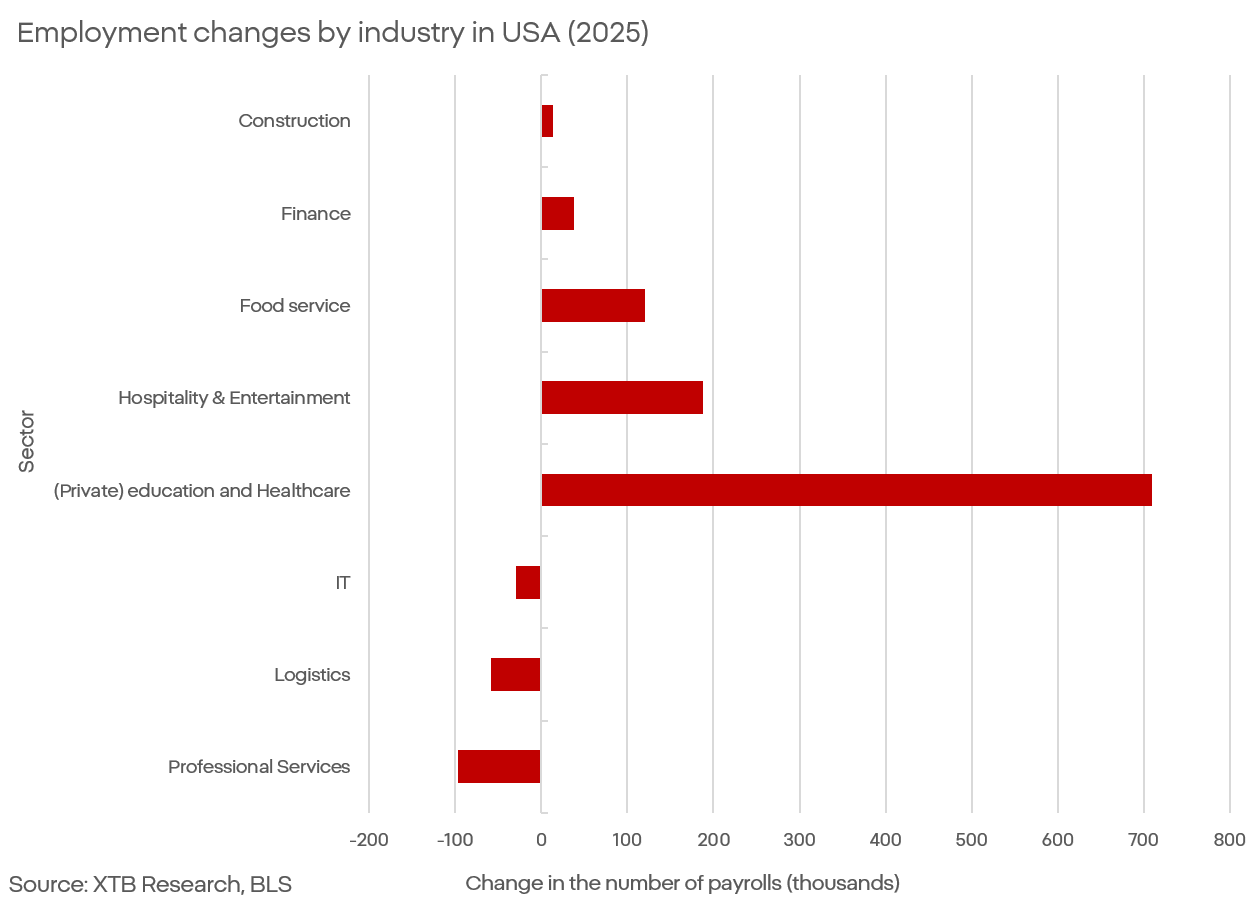
What requires particular attention is that employment growth is very heavily concentrated in healthcare and education. Yet the question that should be asked more loudly in the context of the labor market is not whether it is actually deteriorating, but to what extent current trends are truly being driven by AI. Aggregating official communications from US companies about layoffs, the outlook appears very bleak and pessimistic for people considering changing jobs or finding employment, especially in the technology sector. And perhaps it is, but the data show something different. Financial statements or earnings calls rarely, if ever, focus on headcount. US companies do, however, have a regulatory obligation to report the number of employees in their 10‑K filings, and these paint a picture dramatically different from public declarations.
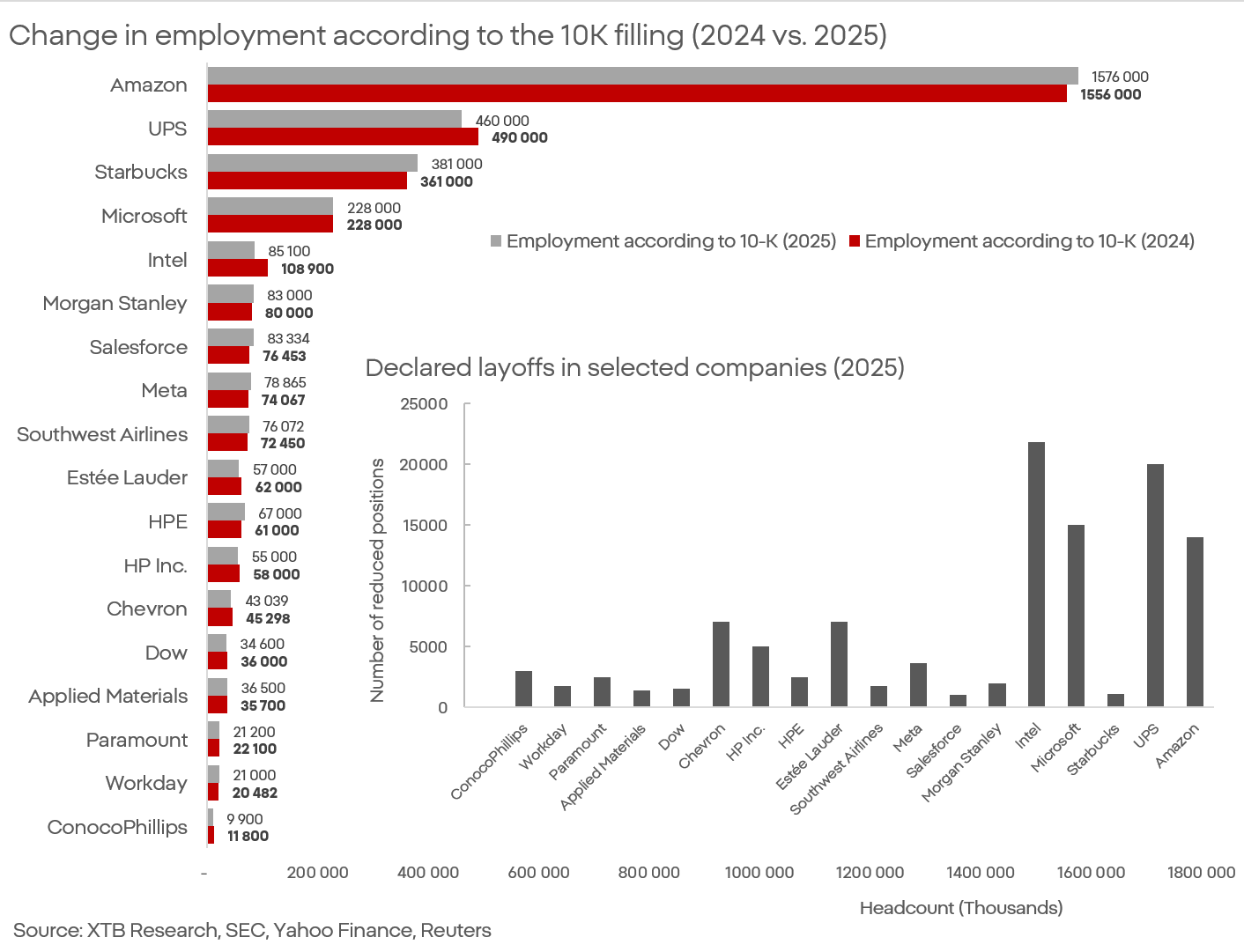
Only a small share of market leaders boasting about workforce reductions actually reported a decline in headcount. Aside from Intel, most decreases are symbolic; increases dominate. Importantly, when comparing these data with trends in financial statements, especially labor costs, you can see a short-term increase that eventually does fall. That indicates cost reductions without changes in headcount, which is characteristic of offshoring. Why is this dangerous for valuations? A large part of the stock market gains observed over the last few quarters has been based on the assumption that AI will make companies more efficient. One measure of this efficiency is, among other things, the amount of staff needed. Efficiency has often indeed increased, but the problem is that it rose not because of AI, but because of a mix of offshoring, outsourcing, and changes in hiring practices. Oracle is an example here. A major story was Oracle laying off as many as 30,000 people; what received less media attention is that the company very quickly hired back 8,000 of the people it had laid off, but through an intermediary and at a lower rate. We should ask when and by how much valuations would need to be adjusted if we take into account that changes in companies’ employment are not the result of AI implementation. These companies still clearly need employees; only their practices and corporate policy are changing. This is more of a sidestep than a revolution.