S&P 500 — US Large Cap Index
 FTSE 100 — UK Blue Chips
 Euro Stoxx 50 — Eurozone Leaders
 DAX 40 — German Equities
 CAC 40 — French Market Index
 Nikkei 225 — Japan Benchmark
 Hang Seng — Hong Kong Index
 Shanghai Composite — China Mainland
 ASX 200 — Australian Market
 TSX Composite — Canada Index
 Nifty 50 — India Large Cap
 STI Index — Singapore Market
 KOSPI — South Korea Index
 Bovespa — Brazil Equities
 JSE Top 40 — South Africa Index
 IPC Index — Mexico Market
European Natural Gas Prices Slide as Hormuz Risk and Winter Storage Keep the Market Tight

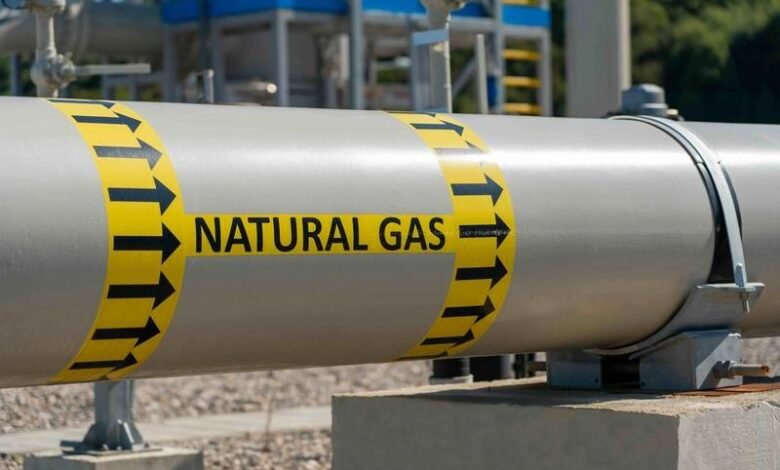
European natural gas prices are trading around €74.4 per megawatt-hour, giving back part of the recent rebound as reports of US-Iran discussions over a possible phased agreement raise hopes that the Strait of Hormuz could eventually reopen.
The diplomatic developments are easing some of the immediate risk premium in European gas, but they have not removed the underlying supply problem. LNG flows from the Persian Gulf remain severely disrupted, forcing Europe and Asia to compete for limited alternative cargoes at a time when European buyers are trying to rebuild inventories before winter.
European storage is now just above 70% full, leaving inventories below both seasonal norms and the region’s target. At the same time, maintenance activity in Norway is restricting pipeline deliveries, adding another source of near-term tightness to the European market.
Market Snapshot
| Factor | Current Market Signal |
|---|---|
| European Natural Gas | €74.4/MWh |
| Weekly Price Change | Down approximately 0.6% |
| European Storage | Just above 70% full |
| Winter Preparation | Inventories remain below seasonal expectations and target levels |
| Persian Gulf LNG | Severely disrupted |
| Strait of Hormuz | Still a major supply-risk point |
| Norwegian Gas | Maintenance is reducing pipeline flows |
| Key Market Conflict | Diplomatic de-escalation vs. tight winter supply |
Current European Natural Gas Price Action
European gas prices are retreating toward €74/MWh after recent gains, with the latest weakness reflecting reduced immediate fears surrounding the Strait of Hormuz.
Reports of US-Iran discussions over a phased agreement have introduced the possibility of a reopening of the strategic waterway. If that process develops into a durable agreement, some of the geopolitical premium embedded in European gas could unwind.
However, the market is not yet operating under normal supply conditions. Persian Gulf LNG flows remain severely disrupted, while European storage levels are still below the level required to provide a comfortable buffer for the winter heating season.
The result is a market where short-term diplomatic headlines can produce sharp price movements, but underlying supply fundamentals remain tight.
Strait of Hormuz Remains the Critical Supply Variable
The Strait of Hormuz remains central to the European gas outlook because of its importance to LNG transportation from the Persian Gulf.
Any sustained reopening would potentially improve access to LNG cargoes and reduce competition between European and Asian buyers.
Until that occurs, however, the market must continue to account for severely restricted Persian Gulf flows. A prolonged disruption would force European buyers to compete more aggressively for LNG from alternative suppliers, potentially increasing spot-market volatility.
The uncertainty surrounding the waterway therefore remains one of the most important upside risks for European natural gas.
European Gas Storage Remains Below Comfortable Levels
European storage is just over 70% full.
Although this represents a substantial inventory base, it remains below both seasonal norms and the region’s target as Europe approaches the winter heating period.
The timing is particularly important. Storage must continue to build before temperatures begin increasing withdrawals. Any disruption to injections, combined with stronger-than-expected winter demand, could rapidly reduce the market’s available buffer.
If LNG supply remains constrained, European buyers may need to maintain elevated prices to attract replacement cargoes and compete with Asian demand.
Norwegian Maintenance Tightens Pipeline Supply
Norway remains one of Europe’s most important sources of pipeline gas, making maintenance activity a significant near-term market variable.
Current maintenance is reducing Norwegian deliveries into Europe at a time when LNG availability is already constrained.
This creates an additional layer of supply pressure. If Norwegian flows recover while geopolitical risks ease, European gas prices could remain under pressure. Conversely, extended maintenance combined with continued LNG disruption would make the storage rebuild more difficult.
Europe and Asia Compete for Limited LNG
The disruption to Persian Gulf LNG is increasing competition between European and Asian buyers.
With fewer readily available cargoes, European importers must compete for alternative LNG supplies from other producing regions. Asian buyers face the same constraint, meaning that any increase in demand in either region can have a disproportionate effect on global spot prices.
This creates a more interconnected gas market in which developments in the Middle East can quickly affect European benchmark pricing.
Bullish Sentiment
- Storage remains below target: European inventories above 70% are still below seasonal expectations, limiting the winter supply buffer.
- Hormuz remains disrupted: Persian Gulf LNG flows have not returned to normal, keeping a major source of global supply constrained.
- Norwegian maintenance: Reduced pipeline deliveries are tightening the European balance at a sensitive point in the seasonal storage cycle.
- Europe-Asia LNG competition: Limited global spot availability increases the risk of stronger prices if either region accelerates purchases.
- Winter demand risk: A colder-than-expected winter could increase withdrawals rapidly and expose the relatively limited storage cushion.
- Geopolitical uncertainty: Diplomatic discussions have not yet translated into a confirmed and durable reopening of the Strait of Hormuz.
Bearish Sentiment
- US-Iran discussions: Progress toward a phased agreement could reduce the geopolitical risk premium currently embedded in European gas prices.
- Potential Hormuz reopening: A sustained reopening could restore Persian Gulf LNG flows and improve global supply availability.
- Current price decline: European gas has already fallen approximately 0.6% over the week, indicating some easing of immediate supply concerns.
- Storage is still substantial: Inventories above 70% provide a meaningful starting point for the winter season, particularly if injections continue.
- Norwegian flows can recover: Once maintenance is completed, increased pipeline availability could provide additional support to European storage injections.
- Alternative LNG supply: Continued access to LNG from outside the Persian Gulf could limit the impact of regional disruptions if European buyers can secure sufficient cargoes.
Price Forecast: What Traders Are Watching
The next major move in European natural gas is likely to depend on whether geopolitical developments produce a genuine improvement in physical LNG availability.
A credible reopening of the Strait of Hormuz would reduce competition for alternative cargoes and could remove a significant portion of the current risk premium. Conversely, continued disruption would leave Europe competing aggressively with Asia for limited LNG supplies while simultaneously attempting to rebuild storage.
The €74/MWh area is therefore being shaped by two opposing forces: potential diplomatic de-escalation versus an unresolved winter supply deficit risk.
Traders will be watching the direction of Persian Gulf LNG flows, the pace of European storage injections, Norwegian pipeline availability and weather forecasts as the winter heating season approaches.
Supply Outlook
European supply remains vulnerable to disruption.
Norwegian maintenance is currently reducing pipeline flows, while Persian Gulf LNG exports remain severely affected by the situation around the Strait of Hormuz.
A diplomatic breakthrough could materially improve the supply outlook by restoring LNG flows and reducing Europe’s need to compete for alternative cargoes. Without such an improvement, European buyers remain exposed to tighter global LNG availability.
Demand Outlook
European gas demand is likely to become increasingly weather-sensitive as the winter heating season approaches.
Industrial consumption remains an important component of the European demand profile, but residential and commercial heating demand can increase rapidly when temperatures fall.
The relatively low storage position means that colder weather could have a disproportionately large effect on the market by accelerating withdrawals before inventories have reached a more comfortable level.
Market Outlook for the Coming Sessions
European natural gas is likely to remain highly sensitive to geopolitical headlines while the Strait of Hormuz remains unresolved.
A credible path toward reopening the waterway could encourage further profit-taking and reduce the premium associated with LNG supply disruption. However, if negotiations stall or regional tensions intensify, the market could quickly refocus on limited Persian Gulf flows, European storage deficits and winter demand risk.
The most important combination to watch is therefore storage progress plus physical LNG availability. Rising inventories and recovering LNG flows would improve the supply outlook, while continued disruption and weak storage growth would leave European gas exposed to renewed upside volatility.
Currency Hedger View
European natural gas prices are closely linked to currency movements because energy procurement and LNG transactions are heavily influenced by the US dollar, while European consumers and businesses ultimately face costs in euros and other local currencies.
A stronger US dollar can increase the effective cost of dollar-denominated energy imports for European buyers, while euro weakness can compound the impact of higher gas prices on corporate energy budgets.
For European businesses with significant energy consumption, the combination of gas-price volatility and EUR/USD movements can create a double layer of cost uncertainty. Managing the currency exposure separately from the underlying commodity exposure can provide greater visibility over future cash flows.
For international FX, payment and currency-management solutions, visit Currency Hedger.
Analysis Louis Roche – Today Markets
European natural gas is currently caught between improving diplomatic expectations and a still-fragile physical supply balance.
The retreat toward €74/MWh reflects reduced immediate fears surrounding the Strait of Hormuz, but the underlying market has not yet returned to normal. Persian Gulf LNG flows remain severely disrupted, Norwegian maintenance is restricting pipeline supply, and European storage is only slightly above 70% as the region prepares for winter.
That combination leaves the market particularly sensitive to new information.
A sustained reopening of the Strait of Hormuz would be an important bearish development because it could restore LNG availability and reduce competition between Europe and Asia. Until that happens, however, the market remains exposed to renewed upside pressure if negotiations fail, supply disruptions persist or winter demand proves stronger than expected.
For the coming sessions, traders should focus less on the headline price move and more on whether physical supply improves quickly enough to allow European storage to reach a comfortable winter position.
Louis Roche – Today Markets