S&P 500 — US Large Cap Index
 FTSE 100 — UK Blue Chips
 Euro Stoxx 50 — Eurozone Leaders
 DAX 40 — German Equities
 CAC 40 — French Market Index
 Nikkei 225 — Japan Benchmark
 Hang Seng — Hong Kong Index
 Shanghai Composite — China Mainland
 ASX 200 — Australian Market
 TSX Composite — Canada Index
 Nifty 50 — India Large Cap
 STI Index — Singapore Market
 KOSPI — South Korea Index
 Bovespa — Brazil Equities
 JSE Top 40 — South Africa Index
 IPC Index — Mexico Market
Houthi Attack on Riyadh Airport Escalates Gulf Tensions and Raises Energy Market Risks

Contributor: Currency Hedger | Geopolitical Analysis: Louis Roche, Today Markets
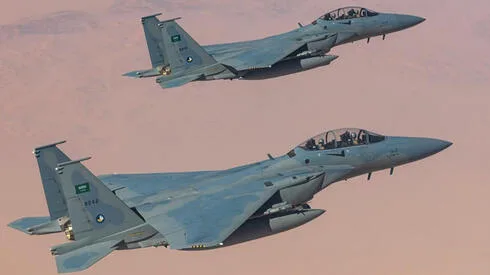
The deadly attack on Riyadh’s King Khalid International Airport has intensified security concerns across the Gulf, raising fresh questions about the risk of further military escalation, disruption to commercial aviation and the security of critical energy infrastructure. The strike comes amid renewed fighting in Yemen and growing tensions involving Saudi Arabia and the Iran-aligned Houthi movement.
Saudi authorities reported that 12 people were killed and 309 injured in the attack on 10 October. Airport operations were temporarily suspended while officials assessed the damage. The incident followed other attacks targeting Saudi airports during the same week, increasing concerns about the potential for further disruption to regional travel and commerce. <Cite refs={[“turn874016news25″,”turn874016news26”]}/>
For financial markets, the consequences extend beyond aviation. Any widening of the conflict could influence oil prices, shipping costs, insurance premiums, investor sentiment and demand for traditional safe-haven assets. The direction of these markets will depend on whether the latest incident remains a contained escalation or develops into a broader confrontation.
What Happened at Riyadh Airport?
King Khalid International Airport, a major gateway for Saudi Arabia’s capital, was struck on Saturday, 10 October, in an attack that Saudi authorities attributed to the Houthi movement. The reported casualties included Saudi nationals and foreign citizens, with some of the injured described as being in critical condition.
The attack followed earlier incidents involving Riyadh airport, including strikes reported on 8 October that damaged a Saudia Airlines aircraft. Several airlines had already suspended or adjusted services to the Saudi capital amid the deteriorating security situation. <Cite refs={[“turn874016news29″,”turn874016search23”]}/>
The repeated targeting of aviation infrastructure raises concerns for airlines, passengers, airport operators and international businesses. Even when an airport is able to resume operations, uncertainty over airspace security can lead to cancellations, diversions, higher operating costs and reduced travel confidence.
The Houthis have warned commercial airlines against using Saudi airspace, describing it as an area of military operations. Such warnings add another layer of uncertainty for carriers assessing flight routes and operational risks.
Why the Attack Matters for Regional Security
The latest strike forms part of a wider deterioration in the Yemen conflict. The Houthis have increased attacks on Saudi targets, while Saudi-backed Yemeni forces have pursued military operations against Houthi-held territory.
The breakdown of the previous period of relative calm has increased the risk that the conflict could extend further across the region. Saudi Arabia has been involved in Yemen’s war for years, but attacks on civilian aviation infrastructure in the kingdom raise the potential cost of continued hostilities.
The response from Riyadh and its partners will be an important factor in determining what happens next. A larger retaliatory campaign could trigger additional Houthi attacks, creating a cycle of escalation that increases risks for transport networks, energy facilities and maritime routes.
The United States has condemned the attacks, and President Donald Trump said Washington was considering whether to join Saudi strikes against the Houthis. Any decision to expand military involvement could materially alter the regional risk outlook.
At this stage, the scale and duration of any further escalation remain uncertain. Market participants will be watching for official announcements, further attacks, changes in military activity and developments affecting international shipping.
Oil Prices: The Risk of a Wider Supply Disruption
Energy markets are particularly sensitive to developments in the Gulf because the region is central to global oil production and exports. The immediate market impact of an airport attack may be limited if oil production and export infrastructure remain unaffected. The risk changes, however, if hostilities spread to energy facilities, tankers or key maritime corridors.
The Strait of Hormuz is a critical route for international oil and liquefied natural gas shipments. Any threat to safe passage through the strait could increase shipping costs, insurance premiums and the risk premium embedded in energy prices.
The Bab el-Mandeb strait and Red Sea shipping routes are also important to international trade. Continued conflict around these routes could force some vessels to take longer journeys, increasing fuel consumption, freight costs and delivery times.
Three broad outcomes are possible for energy markets:
- Contained escalation: If the attacks do not spread to oil production or shipping, any increase in geopolitical risk premiums could prove temporary.
- Sustained regional tension: Continued threats to infrastructure and maritime transport could keep oil prices volatile and increase shipping and insurance costs.
- Wider disruption: Direct damage to energy assets or a significant interruption to major shipping routes could create a more persistent supply-risk premium.
The key distinction is between a rise in perceived risk and an actual loss of supply. Oil prices can react to the possibility of disruption before physical flows are affected, but a sustained rally would be more likely to persist if supply or transport capacity were materially constrained.
Gold and the US Dollar: Safe-Haven Demand in Focus
Gold could attract renewed interest if the attack leads to a broader deterioration in regional security. During periods of geopolitical uncertainty, investors may increase exposure to assets perceived as stores of value or portfolio diversifiers.
However, gold’s response is not guaranteed to be positive. The US dollar can also attract safe-haven demand, while higher oil prices could reinforce inflation concerns and expectations that interest rates will remain elevated. Higher bond yields can weigh on gold because the metal does not generate interest income.
The resulting market reaction will depend on the balance between geopolitical demand, dollar movements and changes in monetary-policy expectations.
The US dollar may benefit from defensive positioning during periods of heightened uncertainty, although its direction will also depend on US economic data, Treasury yields and expectations for Federal Reserve policy.
For investors, the important question is whether the attack triggers a short-lived defensive move or a sustained reassessment of regional risk.
Airlines, Tourism and Business Confidence
The impact on aviation could extend beyond the immediate closure or suspension of airport operations. Airlines may need to reroute flights, revise schedules, reposition aircraft and reassess crew safety arrangements. These measures can increase costs even where flights eventually resume.
Saudi Arabia is also an important destination for business travel, religious travel and international events. Prolonged uncertainty around airspace security could affect travel decisions, event logistics and corporate mobility.
International companies operating in the kingdom may need to review contingency arrangements, including staff travel, cargo routes, supplier communications and business continuity plans.
The economic impact will depend on the duration of the disruption and whether other airports or transport routes can absorb affected traffic. A rapid return to stable operations would limit the broader effect; repeated incidents could have a more lasting influence on confidence and costs.
Bullish and Bearish Market Scenarios
Scenario 1: Further escalation
If additional attacks occur or military operations expand, markets could see renewed demand for gold and other defensive assets. Oil prices could rise if traders begin to price in a greater probability of disruption to production or shipping.
Airlines, freight operators and businesses with regional exposure could face higher costs. The US dollar may also strengthen if investors move towards liquid defensive assets, potentially complicating the outlook for gold and emerging-market currencies.
Scenario 2: Containment and stabilisation
If Saudi Arabia and its partners avoid a broader escalation and airport operations return to normal, the initial geopolitical risk premium could diminish. Oil prices may refocus on underlying supply-and-demand conditions, while gold could surrender some of its risk-driven gains.
Airlines and businesses could gradually restore normal schedules, although additional security measures may remain in place.
Scenario 3: Prolonged uncertainty without major supply disruption
A third possibility is an extended period of elevated tension without a major interruption to oil flows. In this case, markets could remain volatile as investors respond to each new development, while energy prices retain a degree of geopolitical premium.
This scenario could be particularly challenging for businesses because uncertainty may persist even without a clear, sustained market trend.
What Markets Should Watch Next
The next phase of the crisis will depend on developments across several areas:
- Saudi Arabia’s response: Whether Riyadh announces further military action and how extensive any response becomes.
- Additional attacks: Whether airports, energy facilities or other civilian infrastructure face further threats.
- Airspace and airline operations: Whether carriers resume normal schedules or extend suspensions and diversions.
- Oil and shipping infrastructure: Any confirmed damage or disruption affecting production, exports or major maritime routes.
- US involvement: Whether Washington provides additional military support or joins offensive operations.
- Safe-haven flows: How gold, the US dollar and government bond yields respond as the situation develops.
Confirmed changes in physical supply and transport routes will be especially important for determining whether the crisis has a lasting economic impact or primarily creates short-term market volatility.
Outlook: Geopolitical Risk Could Keep Markets Volatile
The attack on Riyadh airport represents a serious deterioration in regional security and highlights the exposure of civilian transport infrastructure to the widening Yemen conflict. The immediate humanitarian consequences are severe, while the potential economic effects depend on whether the violence spreads further.
For energy markets, the greatest concern is not the airport incident alone but the possibility of further attacks affecting oil facilities, tankers or strategic shipping corridors. For gold and currencies, the principal drivers will be the duration of the crisis, demand for defensive assets, oil-price movements and the resulting implications for inflation and interest rates.
A contained response could limit the market impact. Further military escalation or confirmed disruption to energy and shipping infrastructure could produce a more persistent period of volatility.
Overall outlook: Regional risk remains elevated, but the direction of oil, gold and currency markets will depend on the scale of any further escalation and whether critical supply routes are affected. Investors and businesses should distinguish confirmed disruptions from speculative scenarios and monitor official developments closely.
Analysis — Louis Roche, Today Markets
The attack on Riyadh airport puts the relationship between regional security and global markets back into focus. Saudi Arabia is central to the Gulf’s economic and energy landscape, meaning that a prolonged deterioration in security could affect more than travel and aviation.
Oil is likely to be particularly sensitive to any credible threat to production or maritime transport. Gold could receive support from safe-haven demand, but higher energy prices could also influence inflation expectations, bond yields and the US dollar. These competing forces mean that the reaction across asset classes may not be uniform.
For businesses, the most immediate concern is operational uncertainty. Air travel, cargo schedules, insurance costs and currency exposure can all be affected when geopolitical developments change rapidly. Companies with regional suppliers, customers or payments should assess their contingency plans rather than relying on a single market forecast.
The critical issue in the coming days is whether the attack remains an isolated escalation within the broader conflict or becomes part of a sustained campaign against regional infrastructure. That distinction will help determine whether markets price a temporary risk premium or a more durable change in the economic outlook.
Currency Hedger View
Geopolitical events can create rapid movements in foreign exchange and commodity markets, particularly when they affect energy supply, trade routes or investor confidence. Businesses operating across borders may face simultaneous changes in currency conversion costs, freight charges, supplier pricing and expected cash flows.
Companies with exposure to the Gulf or international energy markets should review upcoming currency payments, foreign-currency receipts and potential changes to operating costs. Scenario planning can help businesses understand how different exchange-rate movements would affect budgets and margins.
Currency Hedger monitors foreign exchange markets alongside broader commodity and macroeconomic conditions, helping businesses assess and manage their international currency exposure.
Open a Currency Hedger Account: https://currencyhedger.numito.com/onboarding?utm_source=chatgpt.com
Explore Currency Hedger at https://currencyhedger.com/
Disclaimer
This article is for informational and educational purposes only and does not constitute investment advice or a recommendation to buy or sell any financial instrument. Geopolitical developments are uncertain, and market scenarios are not guaranteed outcomes. Readers should verify breaking news through reliable sources and consider their own circumstances before making financial decisions.