S&P 500 — US Large Cap Index
 FTSE 100 — UK Blue Chips
 Euro Stoxx 50 — Eurozone Leaders
 DAX 40 — German Equities
 CAC 40 — French Market Index
 Nikkei 225 — Japan Benchmark
 Hang Seng — Hong Kong Index
 Shanghai Composite — China Mainland
 ASX 200 — Australian Market
 TSX Composite — Canada Index
 Nifty 50 — India Large Cap
 STI Index — Singapore Market
 KOSPI — South Korea Index
 Bovespa — Brazil Equities
 JSE Top 40 — South Africa Index
 IPC Index — Mexico Market
Who Could Surprise the Market During the Q3 2026 Earnings Season?


Contributor: Currency Hedger | Market Analysis: Louis Roche, Today Markets
The third-quarter 2026 earnings season is moving into focus as investors assess whether corporate results can justify current valuations amid uncertainty surrounding interest rates, energy prices and the future direction of the artificial intelligence industry.
While major banks and semiconductor companies are expected to attract significant attention, some of the most meaningful share-price movements may come from companies operating outside the market’s main investment themes. Earnings surprises occur when reported results or forward guidance materially differ from expectations, forcing investors to reassess a company’s future profitability.
Four companies stand out for different reasons: UnitedHealth Group, Charles Schwab, LVMH and Travelers. Their outlooks span healthcare costs, interest income, discretionary consumer spending and insurance underwriting, offering a broader view of the economic pressures shaping corporate America and European markets.
The central question is not simply which companies will beat earnings estimates. It is where consensus expectations may underestimate either the potential for improvement or the risks to future profitability.
Market Snapshot
| Company | Ticker | Key earnings driver | Principal risk |
|---|---|---|---|
| UnitedHealth Group | UNH | Medical cost management and operating margins | Healthcare utilisation and Medicare economics |
| Charles Schwab | SCHW | Net interest income and trading activity | Deposit costs and interest-rate changes |
| LVMH | MC | Fashion and leather goods profitability | Weak luxury demand and consumer pressure |
| Travelers | TRV | Underwriting performance and investment income | Catastrophe losses and competitive pricing |
1. UnitedHealth Group (UNH): Can Margin Recovery Exceed Expectations?
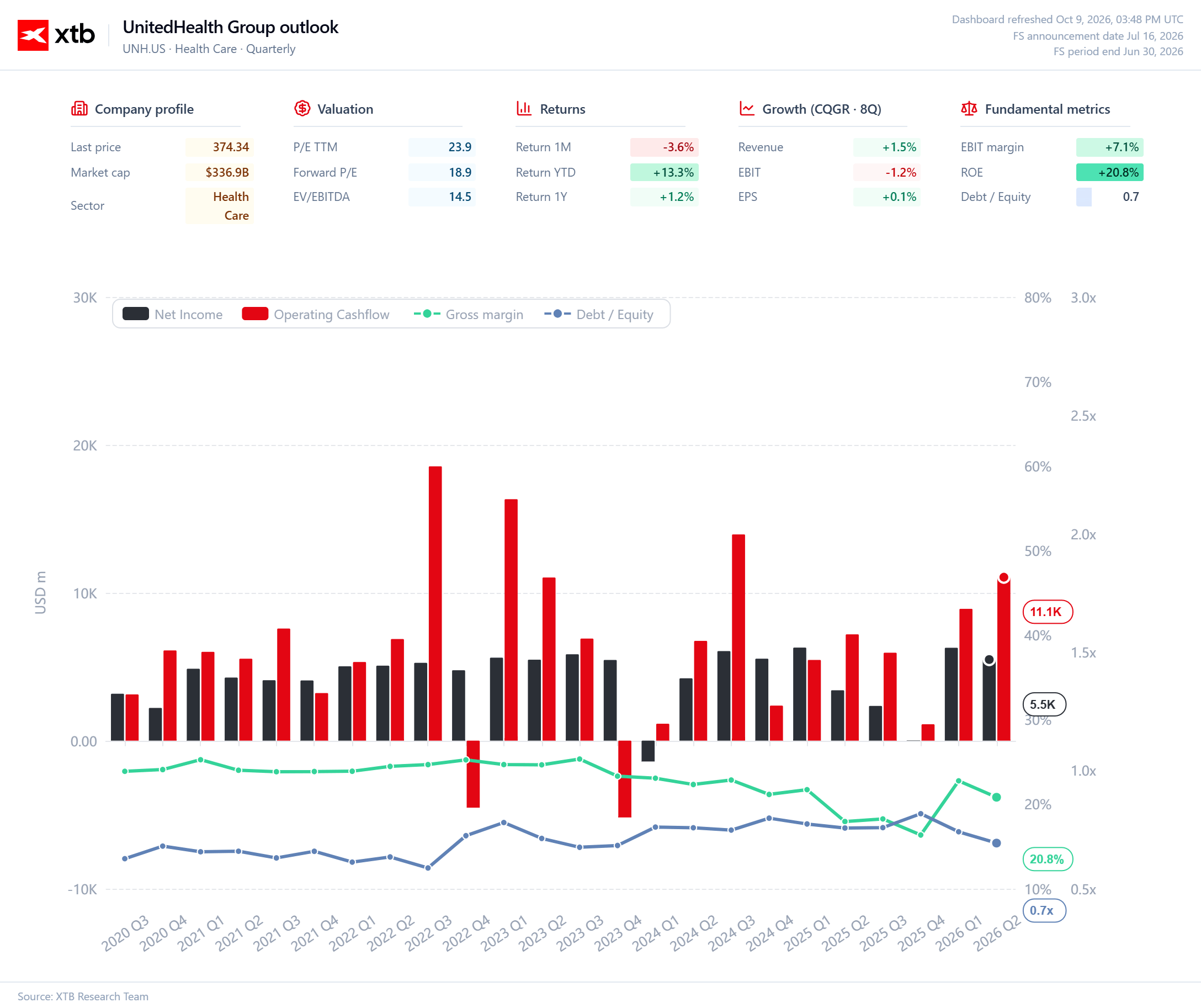
UnitedHealth Group has recovered from the lows recorded during the second half of 2025 and early 2026, although its valuation remains below previous peaks. The company continues to face operational and reputational challenges, but efforts to restructure its business, adjust pricing and improve profitability have become central to its recovery narrative.
The investment case increasingly depends on whether UnitedHealth can improve margins even as membership in certain government-supported healthcare programmes declines.
Market expectations point to a reduction of approximately 10% year over year in Medicare Advantage and Medicaid membership, while consensus forecasts suggest UnitedHealthcare operating profit could increase by around 27%. If achieved, this would indicate that profitability improvements, rather than customer growth, are driving the recovery.
Medical Care Ratio: The Critical Indicator
The Medical Care Ratio (MCR), which measures medical costs as a proportion of healthcare premiums, will be one of the most important figures to monitor.
The supplied market outlook identifies approximately 90% as the expected MCR, compared with 86.7% in the second quarter of 2026. Comparisons require care because previous-period results can be affected by adjustments to earlier cost estimates.
A higher MCR generally indicates that more premium revenue is being consumed by medical claims, leaving less available to cover administration and generate operating profit.
UnitedHealth therefore needs to demonstrate that pricing adjustments, benefit redesign and tighter management of less attractive business lines are sufficient to offset medical cost inflation.
Bullish scenario
A better-than-expected MCR, alongside evidence of effective cost control, could support confidence that management’s restructuring measures are gaining traction. If operating profit improves despite lower membership, investors may become more comfortable with the company’s ability to restore sustainable profitability.
The potential surprise lies in execution: the market may be focused on declining membership and elevated medical costs while underestimating the benefits of operational changes.
Bearish scenario
Higher-than-expected claims, weaker pricing discipline or difficulties managing government healthcare programmes could undermine the recovery. Changes in Medicare Advantage plan ratings also introduce uncertainty around competitiveness and future quality-related payments.
The latest ratings and their financial consequences need to be assessed alongside enrolment trends, benefit design and the timing of applicable quality bonuses.
UnitedHealth outlook
The earnings reaction will likely depend less on headline revenue than on the relationship between medical costs, operating margins and management guidance.
A credible improvement in the cost ratio could strengthen the recovery narrative. Conversely, evidence that medical cost pressure is persisting faster than pricing can compensate would challenge expectations for a significant rebound in profitability.
2. Charles Schwab (SCHW): Net Interest Income Holds the Key
Charles Schwab enters the reporting period with relatively optimistic earnings expectations. The supplied consensus estimates point to approximately 26% year-over-year growth in adjusted earnings per share and around 17% growth in net revenue.
Trading activity is another important factor, with market expectations anticipating substantial year-over-year growth. Higher market volatility can encourage client activity, although the effect on revenue depends on the mix of products traded, customer behaviour and the company’s ability to monetise activity.
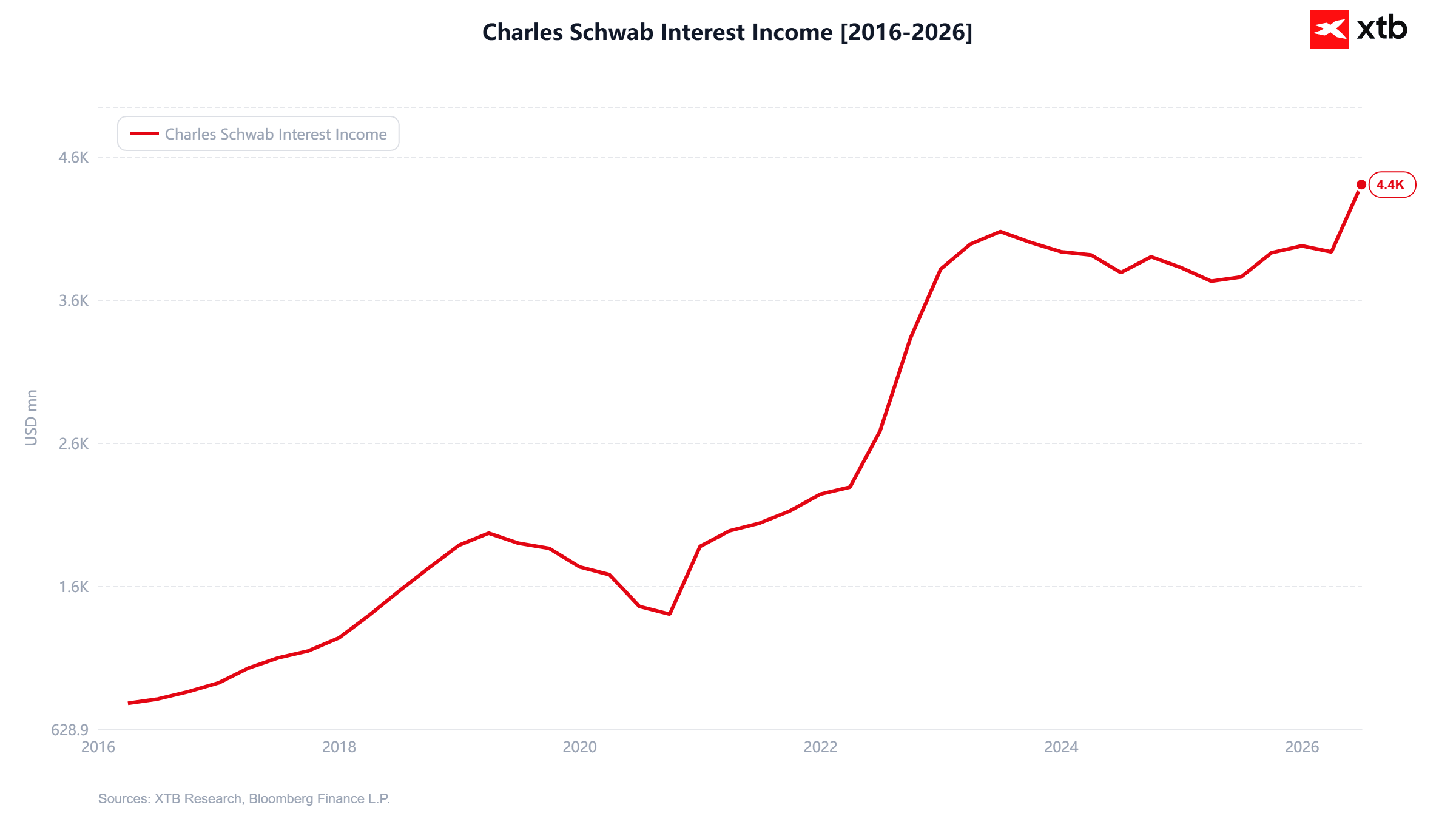
However, net interest income may prove more important than trading revenue in determining whether Schwab delivers a meaningful positive surprise.
The Net Interest Income Opportunity
Schwab’s business model is influenced by the relationship between customer assets, interest earned on investments and loans, and the cost of funding those assets.
As customer assets increase, the company may have greater opportunities to generate interest income. Yet the outcome depends on the composition of client balances, deposit flows, funding costs and prevailing interest rates.
The supplied market outlook identifies improving net interest economics as a central earnings driver, with a year-end net interest margin expectation of approximately 3.25% at the lower end of management’s guidance range.
That creates a potential gap between what investors currently anticipate and what the company may be able to deliver if asset deployment and funding conditions develop favourably.
Bullish scenario
A stronger-than-expected contribution from net interest income, combined with resilient client assets and trading activity, could support an earnings beat.
If management provides a more confident outlook for margins and funding costs, investors may revise their expectations for future profitability upwards.
Bearish scenario
Deposit competition, higher funding costs or an unfavourable shift in interest rates could limit the recovery in net interest income.
Trading revenue could also disappoint if customer activity slows or market volatility fails to translate into stronger monetisation. Even a headline earnings beat may have limited impact if forward guidance falls short of expectations.
Charles Schwab outlook
The key issue is whether improvements in interest income are sustainable rather than simply the result of favourable short-term market conditions.
Investors should pay close attention to net interest income, net interest margin, customer asset trends, deposit balances and management’s guidance. These indicators will help determine whether the company’s earnings trajectory is stronger than the market currently assumes.
3. LVMH (MC): Luxury Demand Faces a Structural Test
LVMH remains exposed to a challenging environment for global luxury goods. Weakness in China, pressure on consumer spending and uncertainty across key international markets have weighed on the sector’s outlook.
The most important earnings indicator is likely to be the organic performance of the Fashion and Leather Goods division, which includes some of the group’s most prominent luxury brands.
The issue extends beyond short-term sales fluctuations. Luxury demand is influenced by consumer confidence, household wealth, access to credit, employment conditions and the willingness of customers to make discretionary purchases.
The Changing Luxury Consumer
A key consideration is that luxury demand is not uniform across income groups. Established brands serve customers with very different levels of purchasing power, and aspirational consumers can be more sensitive to higher living costs, borrowing expenses and economic uncertainty.
During earlier periods of economic disruption, accumulated household savings and strong demand for premium goods supported the resilience of parts of the luxury market. A different environment may emerge when savings decline, credit becomes more expensive and employment confidence weakens.
These pressures can affect both sales volumes and product mix, potentially forcing companies to rely more heavily on pricing, brand positioning and cost management to protect profitability.
Weakness in China and the Middle East may further limit the potential for growth to offset softer demand elsewhere.
Bullish scenario
LVMH could surprise positively if demand proves more resilient than feared, particularly in Fashion and Leather Goods. Stabilisation in key markets, improving consumer confidence or stronger-than-expected margins could encourage investors to reassess the earnings outlook.
A more favourable result would be particularly significant if it demonstrated that the group can maintain pricing power without relying excessively on higher prices or cost reductions.
Bearish scenario
Further deterioration in luxury spending could weaken organic revenue growth and place pressure on operating margins.
If demand falls across multiple customer segments and major geographic markets, cost controls may not be sufficient to protect profitability. A disappointing outlook could also challenge valuations if investors have already assumed that the worst of the slowdown has passed.
LVMH outlook
The next results will help determine whether the sector is approaching a period of stabilisation or facing a more prolonged adjustment in demand.
Investors should focus on organic sales growth, the performance of Fashion and Leather Goods, regional trends and operating margins. Evidence of stabilisation would support the recovery case, while broader weakness across key markets would suggest that earnings expectations remain vulnerable.
4. Travelers (TRV): Can Strong Underwriting Conditions Last?
Travelers is a US property and casualty insurance group, rather than a travel company. Its earnings depend on underwriting performance, insurance pricing, claims experience and returns on invested premiums.
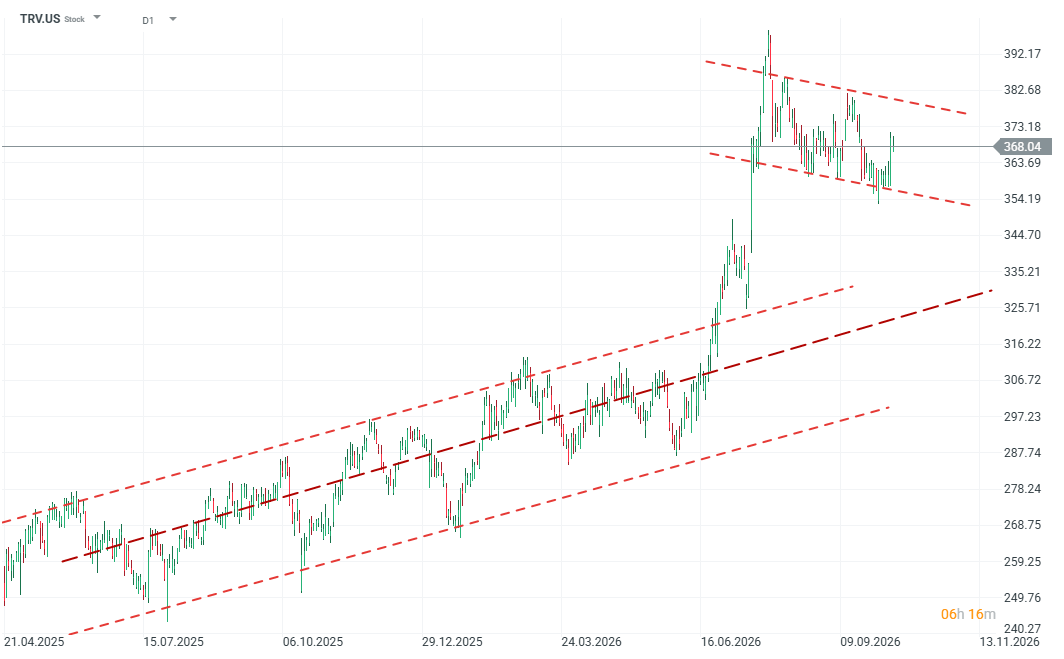
The supplied market commentary highlights the absence of Atlantic hurricanes through 8 October as a potentially favourable factor for insurers. A quieter catastrophe season can reduce insured losses, but the impact varies by company, geographic exposure, policy structure and other weather-related events.
For Travelers, the important question is how favourable claims experience interacts with premium growth, investment income and the competitive insurance market.
The Benefits of Lower Catastrophe Losses
When major insured events do not occur, insurers may retain a greater share of premiums that would otherwise be used to cover claims. Higher bond yields can also support investment income as insurers reinvest funds over time.
These factors may create a favourable earnings environment, although quarterly results depend on the actual timing of claims, reserve adjustments and investment performance.
The absence of a major hurricane does not eliminate other sources of catastrophe risk, nor does it guarantee an unusually strong result for every insurer.
Bullish scenario
Lower catastrophe losses, disciplined underwriting and resilient investment income could support a positive earnings surprise.
If premium rates remain firm while claims costs are manageable, Travelers may be able to deliver stronger underwriting profitability without sacrificing pricing discipline.
Bearish scenario
Favourable weather conditions can encourage competitors to lower premiums in pursuit of market share. If pricing becomes more aggressive, the industry may experience margin pressure even as claims remain relatively low.
Insurance demand and customer retention may also change as policyholders reassess coverage and costs. In addition, investors may already have incorporated much of the benefit from favourable catastrophe experience into share prices.
Travelers outlook
The earnings report should be assessed through underwriting margins, premium growth, catastrophe losses, reserve development and investment income.
A strong quarter may support the share price, but the durability of that performance will depend on pricing discipline and the balance between risk selection and growth. The absence of major losses in one period should not be treated as a reliable predictor of future catastrophe claims.
Which Company Has the Greatest Potential to Surprise?
The four companies offer different types of earnings uncertainty.
- UnitedHealth Group: The greatest potential for a positive reassessment lies in evidence that cost-control measures can restore margins despite weaker membership.
- Charles Schwab: The key upside opportunity is stronger net interest income and a better-than-expected margin outlook.
- LVMH: The principal question is whether luxury demand is stabilising or whether current expectations underestimate the pressure on sales and profitability.
- Travelers: The focus is on the quality of underwriting results and whether favourable claims conditions can translate into sustainable returns.
An earnings surprise does not necessarily mean that reported profits exceed consensus. A company can beat headline estimates but fall sharply if guidance disappoints, margins deteriorate or management signals that favourable conditions are unlikely to continue.
Conversely, a company may deliver an apparently weak quarter but gain investor support if the result is better than feared and the outlook improves.
The most useful distinction is between the reported numbers, the expectations already reflected in the share price and the implications for future earnings.
The Wider Market Context: Interest Rates, Oil and AI
The earnings season is unfolding against a backdrop of uncertainty about monetary policy, energy prices and the sustainability of investment in AI infrastructure.
Interest rates affect businesses through financing costs, consumer demand, investment returns and equity valuations. Healthcare companies must manage medical cost inflation, financial institutions are sensitive to the relationship between asset yields and funding costs, luxury brands depend on discretionary spending, and insurers balance investment income against claims and underwriting risks.
Oil prices add another layer of uncertainty by influencing transport costs, inflation expectations and consumer purchasing power. Meanwhile, continued investment in AI may support parts of the economy while raising questions about capital allocation, valuations and the eventual returns on technology spending.
These crosscurrents make company-specific guidance especially important. Investors will be looking for evidence that businesses can protect profitability even if economic conditions remain uneven.
Analysis — Louis Roche, Today Markets
The strongest earnings opportunities often emerge when investor expectations and underlying business conditions diverge. In the current environment, that divergence may be more important than whether a company simply reports growth or a decline in profits.
UnitedHealth needs to demonstrate that operational improvements can offset healthcare cost pressure. Charles Schwab must show that its interest-income recovery is durable. LVMH faces a more difficult test of consumer demand and pricing power, while Travelers must demonstrate that favourable underwriting conditions are translating into quality earnings rather than temporary benefits.
The market reaction will depend on both the numbers and the forward outlook. A positive surprise can be short-lived if management guidance exposes new risks, while cautious expectations can create room for a stronger response when a company delivers credible evidence of improvement.
Investors should therefore look beyond headline earnings per share and assess margins, cash flow, customer trends, balance-sheet resilience and management commentary. In an unsettled market, these factors will help distinguish temporary improvements from sustainable changes in corporate performance.
Disclaimer
This article is for informational and market commentary purposes only. It does not constitute investment advice or a recommendation to buy or sell any financial instrument. Earnings estimates and market expectations may change, and actual results can differ materially from forecasts. Investing involves risk, including the possible loss of capital. Readers should conduct their own research and consider their individual circumstances before making investment decisions.