S&P 500 — US Large Cap Index
 FTSE 100 — UK Blue Chips
 Euro Stoxx 50 — Eurozone Leaders
 DAX 40 — German Equities
 CAC 40 — French Market Index
 Nikkei 225 — Japan Benchmark
 Hang Seng — Hong Kong Index
 Shanghai Composite — China Mainland
 ASX 200 — Australian Market
 TSX Composite — Canada Index
 Nifty 50 — India Large Cap
 STI Index — Singapore Market
 KOSPI — South Korea Index
 Bovespa — Brazil Equities
 JSE Top 40 — South Africa Index
 IPC Index — Mexico Market

Lumber Price Forecast: Futures Fall 1.02% to 531.04 as Housing Weakness Weighs on Market Outlook

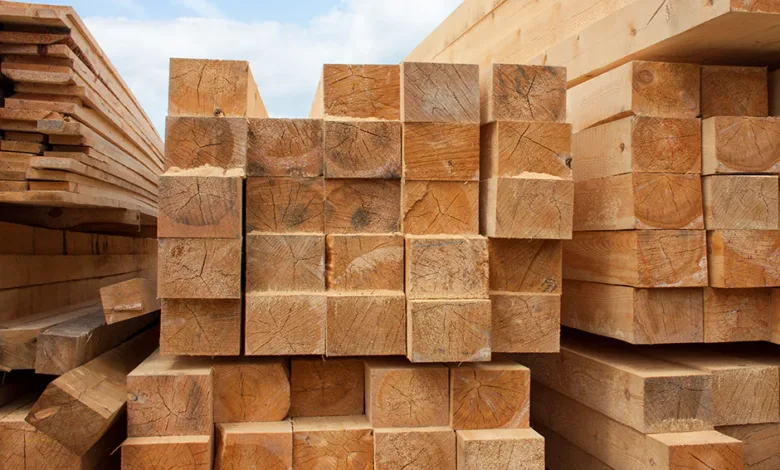
Lumber futures are trading at 531.04 after falling 1.02% in the latest session, extending a period of weakness that has left prices down 3.18% over the month and 16.01% over the past year. The decline highlights continued pressure on the lumber market, where demand is closely linked to residential construction, renovation activity, mortgage affordability and broader economic conditions.
The fourth-quarter forecast stands at 524.56, below the current price, indicating further potential downside if weak demand and cautious purchasing continue to weigh on the market. However, lumber prices can respond quickly to changes in construction activity, sawmill production, inventories and seasonal demand.
The near-term outlook remains bearish, with traders assessing whether prices will move towards the Q4 forecast or find support following the latest decline.
Market Snapshot
| Market Indicator | Latest Figure |
|---|---|
| Current lumber futures price | 531.04 |
| Daily change | -5.458 (-1.02%) |
| Monthly change | -3.18% |
| Yearly change | -16.01% |
| Q4 forecast | 524.56 |
| Potential downside to Q4 forecast | Approximately 1.22% |
| Market trend | Negative daily, monthly and annual performance |
| Near-term outlook | Bearish, with housing demand central |
Note: The price unit and specific futures contract were not specified in the supplied figures. Prices are presented as reported.
Current Price Action: Lumber Extends Its Decline
Lumber futures have fallen 1.02% to 531.04, reinforcing the market’s negative short-term momentum. The monthly decline of 3.18% and annual loss of 16.01% indicate that selling pressure extends beyond the latest session.
Lumber is particularly sensitive to the health of the US housing market because it is widely used in residential construction, structural framing and renovation projects. When mortgage costs remain restrictive or homebuilding activity slows, demand for construction materials can weaken.
The latest price figures do not identify a specific catalyst for the daily decline. However, the continued negative performance suggests that the market has yet to establish a sustained recovery.
Traders will be watching for evidence that lower prices are encouraging buyers to return or whether weak construction demand continues to limit purchasing activity.
Lumber Price Forecast: Q4 Target of 524.56
The supplied fourth-quarter forecast of 524.56 is below the current price of 531.04.
This implies a potential decline of approximately 1.22% from the latest reported level.
The forecast suggests that prices could remain under pressure into the fourth quarter, although it should be treated as an estimate rather than a guaranteed target. The eventual outcome will depend on construction activity, mortgage affordability, sawmill production, inventories and seasonal demand.
Bearish scenario: Lumber could move towards the Q4 forecast if homebuilding remains subdued, buyers delay purchases and available supply exceeds near-term demand.
Bullish scenario: Prices could stabilise or recover if construction activity improves, inventories tighten, production is reduced or lower prices encourage restocking by distributors.
Base case: The negative daily, monthly and annual trends favour a cautious outlook. A sustained recovery would require stronger evidence of improved demand or tighter supply.
Housing Market: Construction Demand Remains Critical
The housing market is one of the most important drivers of lumber demand. Residential construction, housing starts, building permits and renovation activity all influence the volume of timber required by builders and contractors.
Higher mortgage rates can reduce affordability, discouraging prospective buyers and limiting new housing projects. When builders become less confident about future sales, they may postpone developments or reduce material purchases.
Conversely, improving affordability and stronger housing demand can encourage construction activity, increasing the need for lumber.
The market’s outlook will therefore depend partly on whether financing conditions and housing demand improve sufficiently to support a recovery in construction-material consumption.
Supply Outlook: Sawmill Production and Inventories Matter
Lumber prices are also influenced by sawmill production, timber availability, transportation costs and inventories held by producers and distributors.
If producers maintain high output while construction demand weakens, inventories can accumulate and put downward pressure on prices. In response, sawmills may reduce production or adjust operating schedules, potentially helping the market rebalance.
However, production reductions do not immediately guarantee higher prices. Their effect depends on the scale of the cuts, existing inventories and the pace of demand recovery.
The supplied price figures do not establish whether lumber inventories are currently excessive or whether production has been reduced. Traders should monitor production announcements, inventory data and construction demand to determine whether the market is moving towards a tighter balance.
Bullish Sentiment: Five Factors That Could Support Lumber
- Lower prices attract buyers: The recent decline may encourage builders, distributors and other purchasers to replenish inventories at more favourable prices.
- Improving housing affordability: Lower mortgage costs, if sustained, could support housing demand and increase construction activity.
- Production adjustments: Reduced sawmill output could help limit oversupply if demand remains weak.
- Renovation demand: Repair and remodelling activity can provide an additional source of lumber consumption beyond new homebuilding.
- Seasonal restocking: Buyers may increase purchases ahead of anticipated construction requirements, although the timing and scale of seasonal demand can vary.
Bearish Sentiment: Five Risks That Could Extend the Decline
- Weak housing activity: Slower residential construction could continue to reduce demand for lumber.
- High borrowing costs: Mortgage affordability pressures may discourage home purchases and delay new building projects.
- Persistent inventory pressure: If supply remains above consumption, producers and distributors may need to discount prices to clear stock.
- Economic uncertainty: Weaker consumer confidence or reduced investment could constrain homebuilding and renovation expenditure.
- Negative price momentum: Lumber’s 16.01% annual decline may discourage buyers from building inventories ahead of a clearer demand recovery.
Demand Outlook: Homebuilding and Renovation in Focus
The demand outlook for lumber depends heavily on the relationship between new construction, renovation activity and the cost of financing.
If housing starts and building permits improve, lumber demand could strengthen as builders commit to new projects. A recovery in home sales could also support construction activity by encouraging developers to replenish housing supply.
However, persistent affordability constraints could delay that recovery. Builders may remain cautious if buyers face high financing costs or if unsold housing inventory limits the need for new developments.
Renovation demand provides some diversification, but it is also sensitive to household finances, consumer confidence and borrowing costs.
For the coming months, housing data and builder purchasing behaviour will be important indicators of whether lumber consumption is beginning to recover.
Market Outlook for the Coming Sessions
Lumber futures remain under pressure, with negative performance across daily, monthly and annual periods. The Q4 forecast of 524.56 suggests modest additional downside, although the market could stabilise if supply adjusts or demand improves.
The main developments to monitor are:
- Housing starts and building permits: Whether new construction activity is strengthening or weakening.
- Mortgage rates: Whether financing conditions improve sufficiently to support home purchases and construction.
- Sawmill production: Whether producers reduce output in response to softer demand.
- Inventories: Whether available lumber stocks accumulate or begin to tighten.
- Renovation activity: Whether repair and remodelling demand provides support.
- Price momentum: Whether the market continues to fall or establishes a sustained recovery.
The near-term bias remains bearish while the broader trend is negative. A recovery would become more convincing if stronger housing demand coincided with reduced supply or falling inventories.
Currency Hedger View: Lumber Prices and Construction Cost Exposure
Lumber price volatility can affect housebuilders, timber importers, distributors, furniture manufacturers and construction companies. For businesses purchasing timber internationally, commodity-price movements may combine with exchange-rate changes to alter procurement costs and operating margins.
A decline in lumber prices may reduce material costs, but currency depreciation can offset some of that benefit when purchases are denominated in a foreign currency. Exporters may also experience changes in the value of overseas receipts as exchange rates move between invoicing and settlement.
Businesses should assess their commodity exposure and foreign-exchange risk separately, while considering the effect of both on budgets, cash flow and project profitability.
Currency Hedger provides deliverable foreign exchange services, multi-currency solutions and currency risk management support for eligible businesses with international payment requirements.
Manage your currency exposure:
Today Markets Analysis
Lumber futures are trading at 531.04 after falling 1.02% in the latest session. Prices are down 3.18% over the month and 16.01% over the year, indicating that the market remains under pressure across multiple timeframes.
The fourth-quarter forecast of 524.56 points to approximately 1.22% additional downside from the current level. However, the outlook will depend on whether construction demand weakens further or supply adjustments begin to stabilise the market.
For now, housing activity, mortgage affordability, sawmill production and inventory levels remain central to the outlook. Continued weakness in construction demand would reinforce the bearish case, while a recovery in homebuilding or meaningful production cuts could help prices find a floor.
Market analysis by Today Markets, with Currency Hedger contributing insight into the implications of commodity-price and foreign-exchange movements for businesses operating across borders.
Disclaimer: This article is for informational and educational purposes only and does not constitute investment advice, financial advice or a recommendation to trade. Lumber prices can be affected by housing activity, interest rates, construction demand, production, inventories and economic conditions. Forecasts are estimates and may not materialise. Trading leveraged products involves significant risk, and readers should assess their financial circumstances and risk tolerance before making investment decisions.