S&P 500 — US Large Cap Index
 FTSE 100 — UK Blue Chips
 Euro Stoxx 50 — Eurozone Leaders
 DAX 40 — German Equities
 CAC 40 — French Market Index
 Nikkei 225 — Japan Benchmark
 Hang Seng — Hong Kong Index
 Shanghai Composite — China Mainland
 ASX 200 — Australian Market
 TSX Composite — Canada Index
 Nifty 50 — India Large Cap
 STI Index — Singapore Market
 KOSPI — South Korea Index
 Bovespa — Brazil Equities
 JSE Top 40 — South Africa Index
 IPC Index — Mexico Market
Nvidia Goes to Space. SpaceX Is Building Satellites Powered by Its Chips


Imagine a moment when a data center is no longer a building somewhere in Texas, but a satellite orbiting hundreds of kilometers above our heads. Sounds like science fiction? Elon Musk apparently believes it can become a business. SpaceX is accelerating its plans to build orbital AI infrastructure. The first satellites are expected to be launched into orbit by late 2027, with the project set to scale up significantly the following year. What is particularly interesting for investors is that Nvidia’s technology is expected to sit at the heart of this system. For investors, the key point is not simply that Nvidia is going into space, but that this is another sign of the market for its technology continuing to expand. Nvidia is increasingly moving beyond the traditional model of primarily selling GPUs for data centers. Vera is expected to become part of a broader infrastructure designed to support AI agents, systems that do more than simply generate responses and can execute entire sequences of tasks. SpaceX is another major customer using this architecture, alongside companies such as OpenAI and Anthropic. This reinforces the view that Nvidia is trying to capture as much of the infrastructure spending associated with the next phase of AI development as possible, rather than competing only in the market for individual chips.
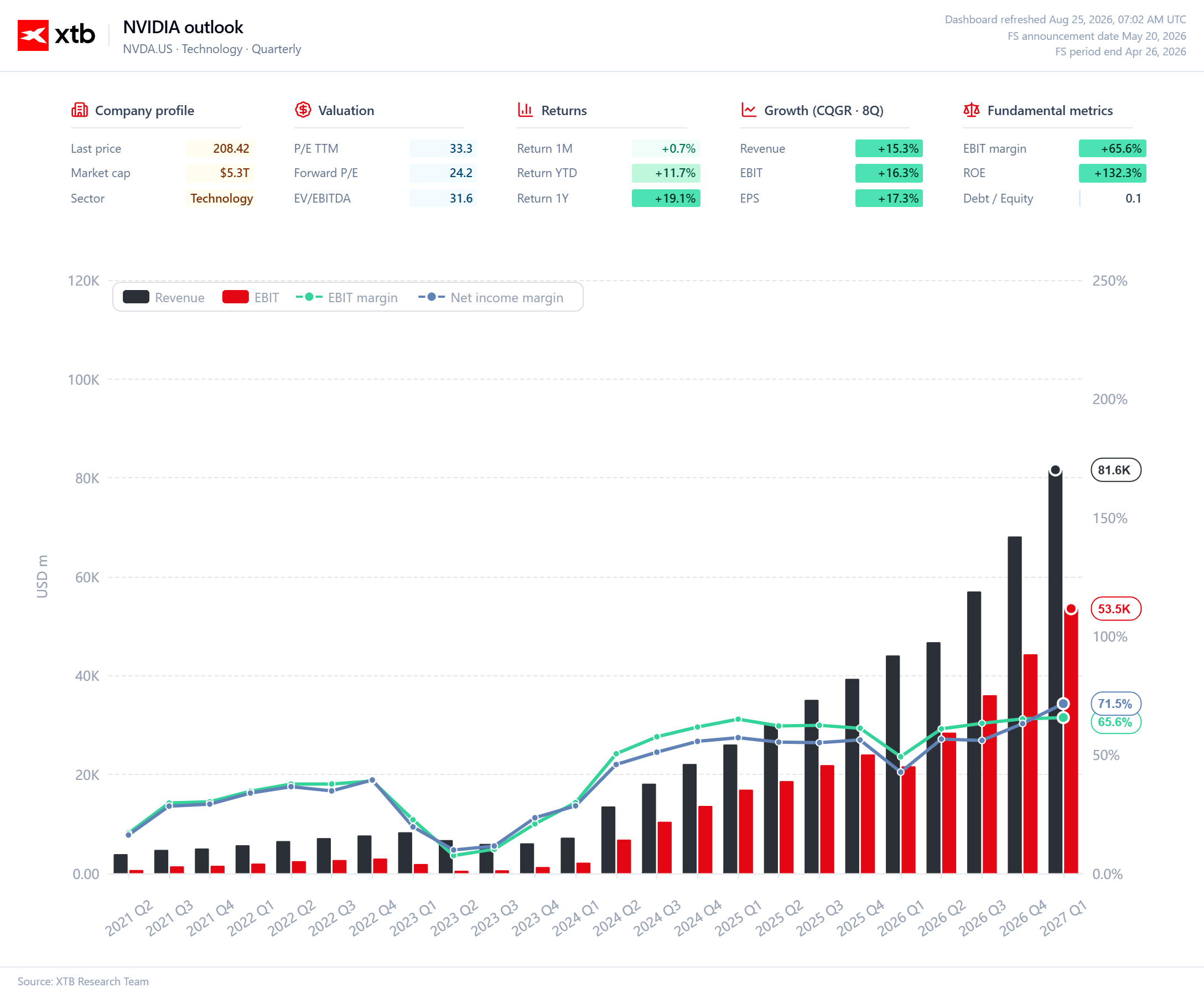
The satellite project itself, however, needs to be viewed with some caution. At this stage, it is not a development that should change Nvidia’s financial model. The first launch is still ahead of us, while the economics of putting data centers into orbit remain a major question mark. The cost of launching equipment, servicing it, dealing with power and thermal constraints, as well as communication bandwidth, all raise doubts about whether space based data centers can compete with infrastructure built on Earth. For NVDA investors, what matters far more today is the demand for Vera and AI infrastructure as a whole than the potential billions of dollars that orbital data centers could generate several years from now. From a stock market perspective, however, there is one very strong takeaway. If SpaceX actually scales up its demand for computing power, Nvidia is on the right side of that trend. The company does not need to own the satellites to benefit from their development. It simply needs to provide the critical computing infrastructure. That is why this news should primarily be viewed as another signal confirming the breadth of demand for Nvidia’s technology. It does not fundamentally change the company’s valuation, but it strengthens the picture of Nvidia as a supplier of the infrastructure needed to power the entire AI ecosystem, from traditional data centers and AI agents to potential orbital applications in the future. More importantly, this story shows why the market is paying such close attention to Nvidia’s next moves. Investors are no longer looking only at how many chips the company will sell next quarter. Increasingly, the question is how many new applications for AI infrastructure can emerge over the coming years and how much of that spending will flow to Nvidia. If SpaceX continues to scale the project, it will be another example of AI development generating demand for computing power in an entirely new segment. At this stage, it is difficult to talk about any meaningful impact on Nvidia’s revenue, but from a long term perspective, it is another piece of the puzzle. For Nvidia shareholders, this primarily means another strong long term catalyst remains in place. The obvious risks are still the company’s valuation and the question of how long spending on AI infrastructure can continue growing at its current pace. Today’s SpaceX news does not answer those questions, but it does highlight something important: the market for AI applications is still expanding, and Nvidia continues to position its products across new segments. And that, rather than the simple fact that its chips may be sent into space, is the most important takeaway for investors.
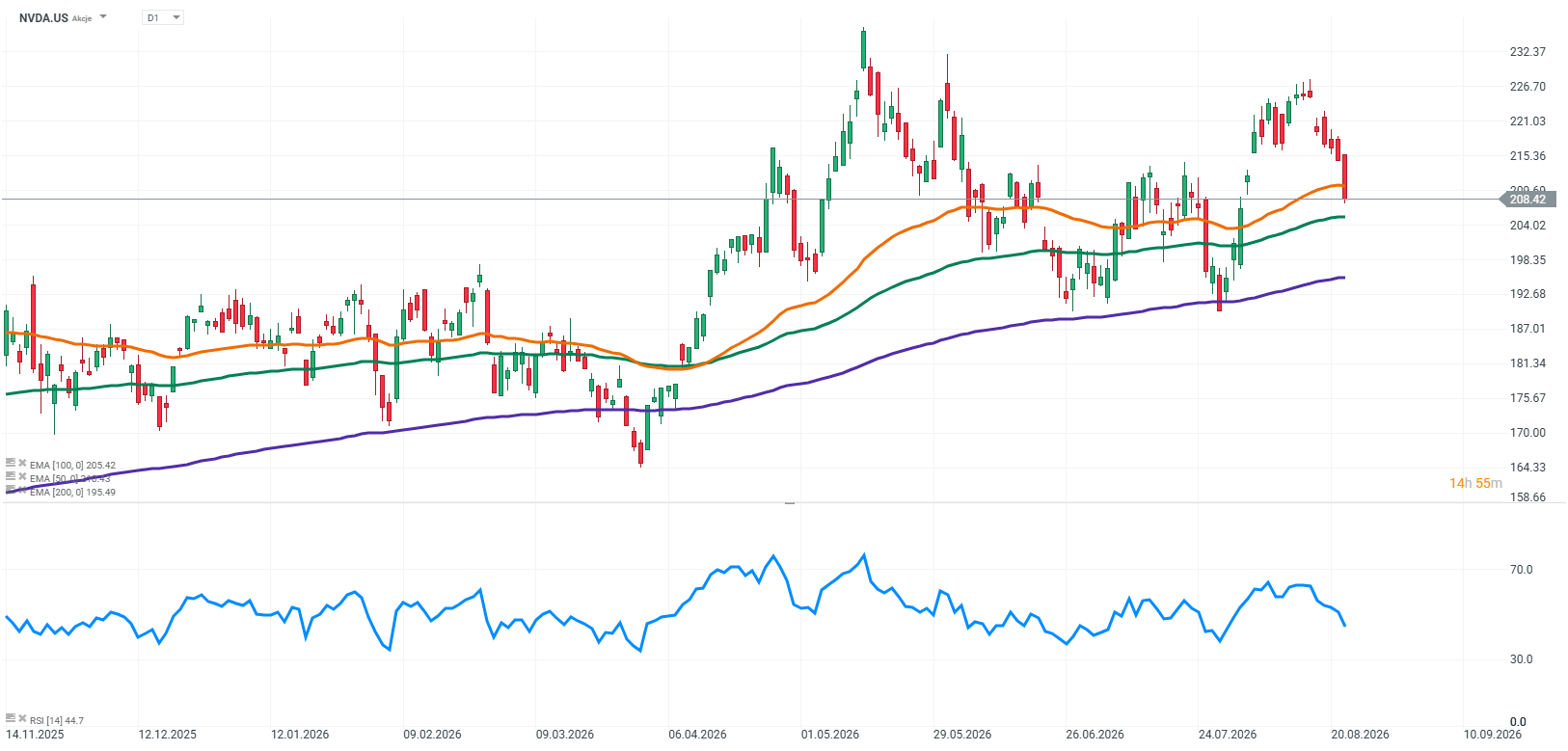
Source: xStation5