S&P 500 — US Large Cap Index
 FTSE 100 — UK Blue Chips
 Euro Stoxx 50 — Eurozone Leaders
 DAX 40 — German Equities
 CAC 40 — French Market Index
 Nikkei 225 — Japan Benchmark
 Hang Seng — Hong Kong Index
 Shanghai Composite — China Mainland
 ASX 200 — Australian Market
 TSX Composite — Canada Index
 Nifty 50 — India Large Cap
 STI Index — Singapore Market
 KOSPI — South Korea Index
 Bovespa — Brazil Equities
 JSE Top 40 — South Africa Index
 IPC Index — Mexico Market

Super Micro’s Revenue Explodes, Nearly Quadrupling on AI Demand


Super Micro ended the first quarter of fiscal 2027 with revenue of $19.95 billion, compared with $5.02 billion a year earlier. That represents an almost fourfold increase in sales, with the company delivering results well ahead of analyst expectations. Earnings were equally strong. The scale of this growth highlights just how much demand is flowing toward companies supplying the infrastructure behind data centers and artificial intelligence systems.
Super Micro’s key financial results:
- Revenue: $19.95 billion, compared with $5.02 billion a year earlier (+297% YoY).
- Revenue vs. consensus: $19.95 billion, compared with expectations of approximately $17.5 billion.
- Adjusted EPS: $1.81, versus the forecast of $1.23.
- Net income: Nearly $1.6 billion, compared with $168 million a year earlier.
- Gross margin: 12.7%, compared with 17.5% in the previous quarter and 9.3% a year earlier.
- Operating cash flow: Negative $434 million.
- Next-quarter revenue guidance: 19.5–21.5 billion, versus analyst expectations of approximately $18.1 billion.
- Next-quarter adjusted EPS guidance: 1.66–1.90, compared with consensus expectations of approximately $1.14.
- FY2027 revenue guidance: Raised from 65–72 billion to 72–82 billion.
Super Micro expects to maintain its exceptionally high sales levels in the coming quarter. Revenue is projected to reach 19.5–21.5 billion, comfortably above market expectations. The same applies to earnings per share. The company forecasts adjusted EPS of 1.66–1.90, while analysts had expected approximately $1.14. The company has also revised its full-year outlook. Its previous revenue forecast of 65–72 billion has been replaced with a new range of 72–82 billion. This means management now expects the business to reach an even greater scale than previously anticipated.
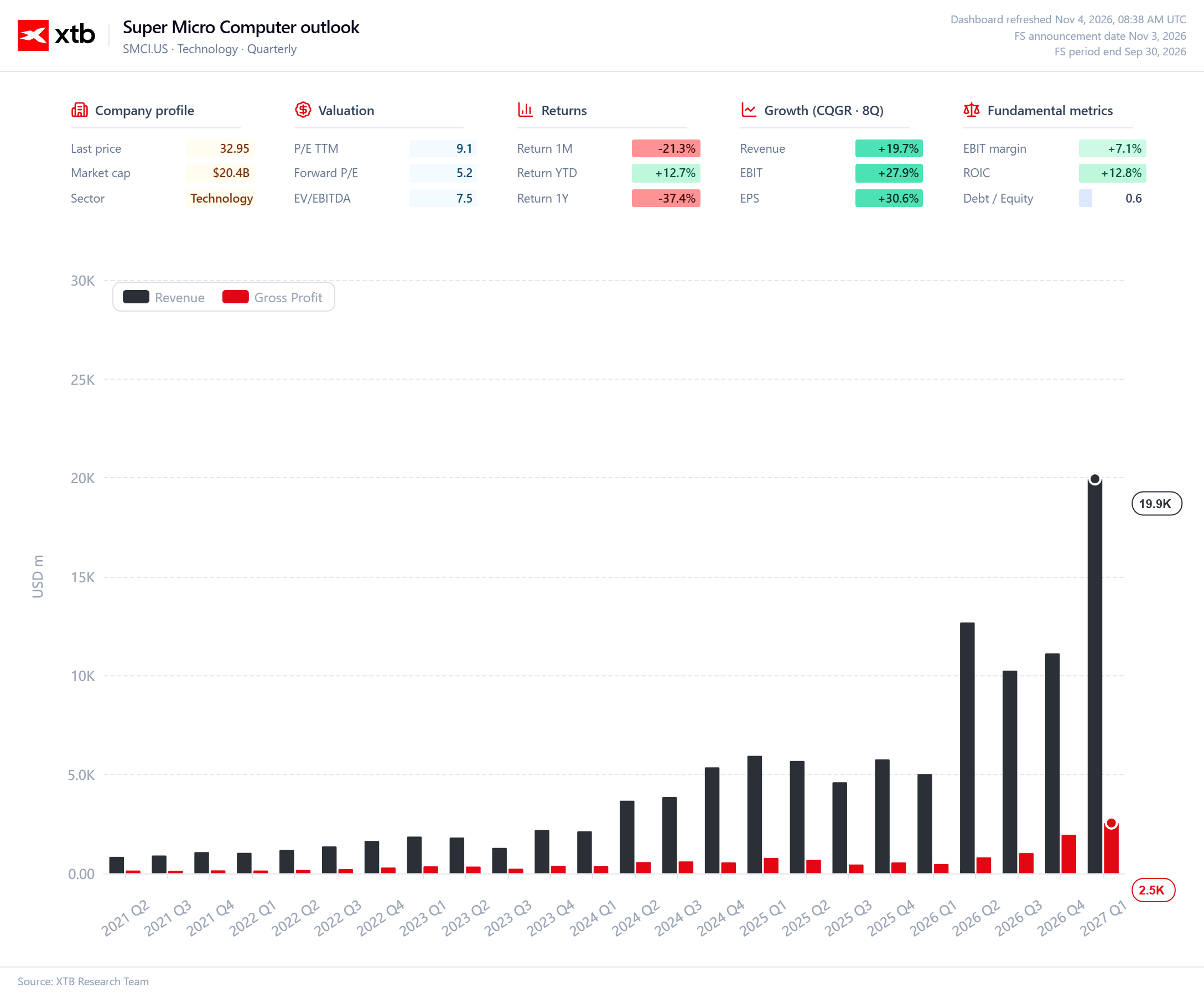
Super Micro benefits from AI investment in a different way than NVIDIA or AMD. Demand for computing chips is only one part of the market. Companies also need servers, complete rack-scale systems, power infrastructure and cooling solutions capable of supporting increasingly demanding AI models. This is precisely the type of equipment Super Micro supplies. In September, the company announced that it had begun shipping NVIDIA Vera Rubin NVL72 racks equipped with liquid-cooling technology. Its strategy is clear: Super Micro wants to provide customers with increasingly complete data center solutions rather than just individual components. As spending on AI infrastructure continues to grow, this could become an important driver of further revenue growth. There is, however, one aspect of the report that deserves attention. Gross margin came in at 12.7%, down from 17.5% in the previous quarter. Compared with the same period last year, it improved from 9.3%, but the latest decline shows that rapidly growing sales do not automatically translate into steadily improving profitability. When revenue reaches tens of billions of dollars, even a few percentage points in gross margin can make a substantial difference. Cash flow is another issue. During the first quarter, operating activities generated negative cash flow of $434 million. Such rapid expansion requires significant funding for inventory, production and order fulfillment. In upcoming reports, investors will therefore need to watch whether rising sales also begin translating into stronger cash generation.
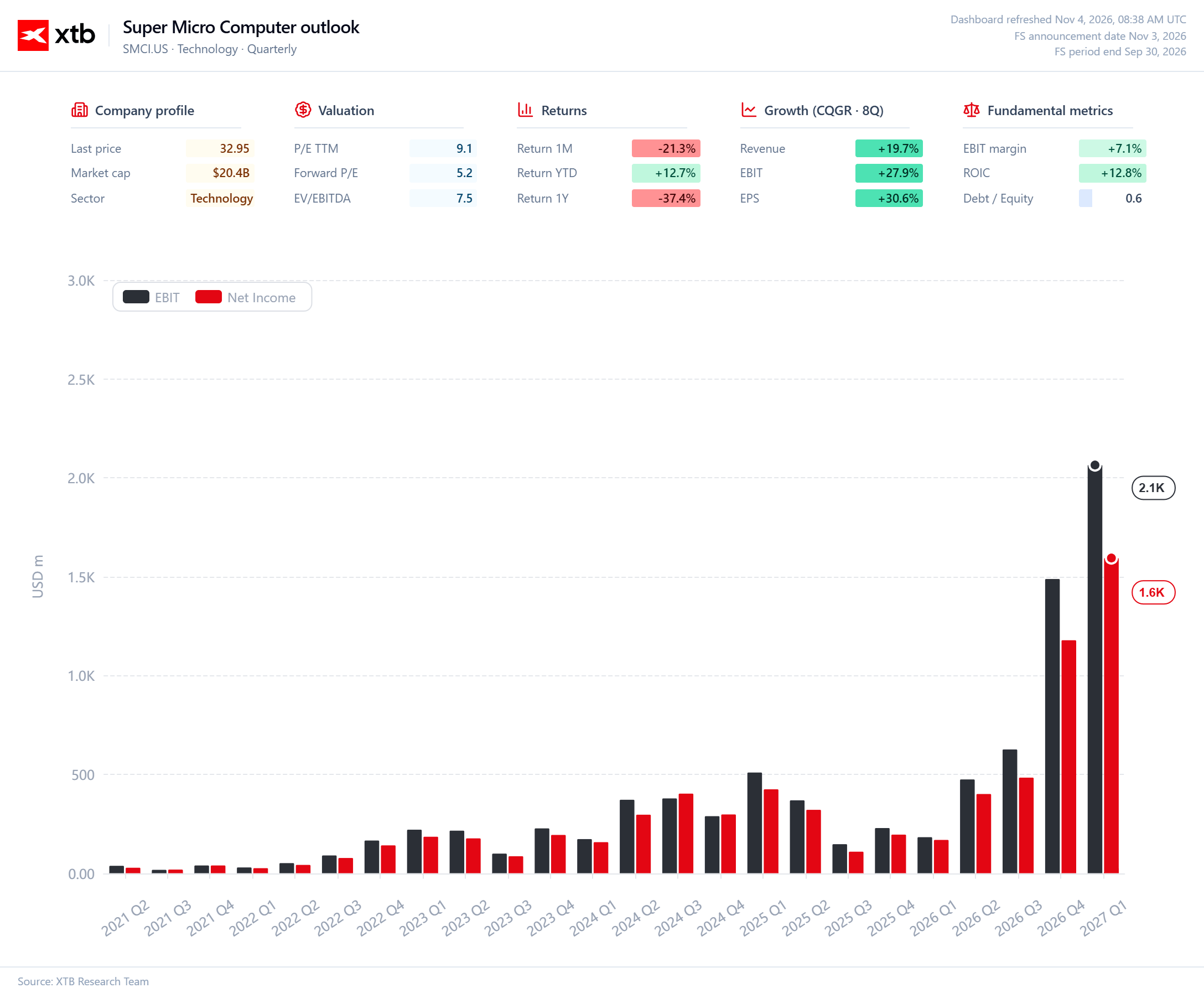
Super Micro’s results demonstrate how far AI investment has expanded beyond the chipmakers themselves. NVIDIA supplies the computing chips, but putting them to work requires an entire infrastructure: servers, power systems, cooling solutions and complete systems installed in data centers. Super Micro is one of the suppliers in this market and is currently benefiting from a substantial volume of orders related to the expansion of computing capacity. Nearly quadrupled revenue and an increased full-year forecast illustrate the scale of this trend. For investors, however, one important question remains: can the company maintain its current growth rate while rebuilding margins and improving cash flow?