S&P 500 — US Large Cap Index
 FTSE 100 — UK Blue Chips
 Euro Stoxx 50 — Eurozone Leaders
 DAX 40 — German Equities
 CAC 40 — French Market Index
 Nikkei 225 — Japan Benchmark
 Hang Seng — Hong Kong Index
 Shanghai Composite — China Mainland
 ASX 200 — Australian Market
 TSX Composite — Canada Index
 Nifty 50 — India Large Cap
 STI Index — Singapore Market
 KOSPI — South Korea Index
 Bovespa — Brazil Equities
 JSE Top 40 — South Africa Index
 IPC Index — Mexico Market

US Natural Gas Price Forecast: Futures Fall 4% to $3.26 as Strong Storage Levels Offset Colder Weather

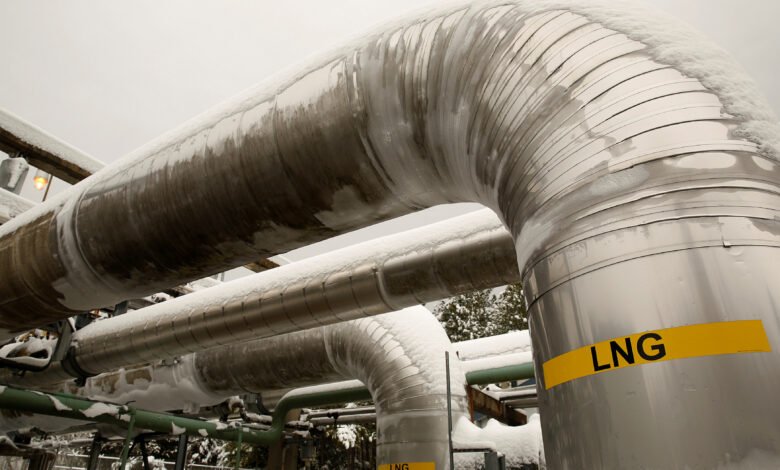
US natural gas prices fell more than 4% on Monday, retreating towards $3.26 per million British thermal units (MMBtu) as traders took profits following last Friday’s rally to a more than nine-month high.
The recent advance had been supported by forecasts of colder weather across the Midwest and Northeast, raising expectations of stronger heating demand. However, ample domestic supplies and comfortable storage levels have limited the market’s ability to sustain its gains.
The latest US Energy Information Administration (EIA) figures showed a storage increase of 20 billion cubic feet (Bcf) for the week ended November 13, exceeding the five-year average build of 15 Bcf. Inventories also remained 2.1% above the seasonal average, reinforcing the view that the US market has sufficient supplies heading into the colder months.
Meanwhile, federal approval for Cheniere Energy to expand its Sabine Pass LNG export facility could provide longer-term support by increasing demand for domestic natural gas.
Market Snapshot
| Indicator | Latest Position |
|---|---|
| US natural gas price | Around $3.26/MMBtu |
| Daily movement | More than 4% lower |
| Recent high | More than nine-month high on Friday |
| EIA weekly storage build | 20 Bcf |
| Five-year average storage build | 15 Bcf |
| Storage versus seasonal average | 2.1% above |
| Reporting period | Week ended November 13 |
| Weather outlook | Colder Midwest and Northeast |
| LNG development | Sabine Pass expansion approved |
| Expansion capacity | 20 million tonnes per annum |
Profit-Taking Drives Natural Gas Prices Lower
The latest decline appears to reflect profit-taking after natural gas prices advanced to their highest level in more than nine months on Friday.
The previous rally was supported by expectations of colder weather, which could increase heating consumption across major US demand regions. However, after the strong advance, traders began locking in gains as the market reassessed the balance between weather-related demand and available supplies.
The fall of more than 4% towards $3.26/MMBtu highlights the market’s sensitivity to short-term positioning, particularly when prices have experienced a rapid rally.
Colder Weather Forecasts Support Heating Demand
Weather remains an important influence on the near-term natural gas outlook.
Forecasts indicate colder conditions across the Midwest and Northeast during the current week, potentially increasing residential and commercial heating demand.
Lower temperatures generally encourage greater consumption of natural gas for heating, which can accelerate withdrawals from storage facilities.
The colder outlook therefore provided the foundation for last week’s rally. However, the extent to which it supports prices will depend on how long the colder conditions persist and whether actual consumption increases sufficiently to tighten the domestic supply balance.
EIA Storage Build Exceeds Five-Year Average
The latest EIA storage report provided a bearish counterweight to weather-related demand expectations.
US natural gas inventories increased by 20 Bcf during the week ended November 13, exceeding the five-year average build of 15 Bcf.
The figures also showed that inventories remained 2.1% above the seasonal average, indicating that domestic storage levels are relatively comfortable heading into the winter heating period.
The larger-than-average injection suggests that available supplies remain sufficient to meet current demand, reducing immediate concerns about a shortage.
For traders, the relationship between weekly storage changes and historical averages will remain an important indicator of whether the market is moving towards a tighter or more comfortable supply position.
Cheniere Energy LNG Expansion Offers Longer-Term Demand Support
A significant longer-term development came from federal regulators approving Cheniere Energy’s application to expand its Sabine Pass LNG export facility in Louisiana.
The approved expansion will add 20 million tonnes per annum of capacity, potentially increasing demand for US natural gas as additional feedgas is required to supply LNG export operations.
Greater LNG export capacity could strengthen the connection between domestic US natural gas prices and international demand, particularly as overseas buyers compete for available cargoes.
However, the impact is expected to be more relevant to the longer-term demand outlook than the immediate price movement. For now, domestic storage levels and weather forecasts remain the more immediate market drivers.
Bullish Sentiment
- Colder weather forecasts: Lower temperatures across the Midwest and Northeast could increase heating demand and support consumption.
- Profit-taking after the rally: Monday’s decline follows a strong advance, meaning some of the selling pressure may reflect position adjustments rather than a deterioration in underlying demand.
- LNG export expansion: The approved Sabine Pass expansion could increase domestic feedgas demand over the longer term.
- Winter heating requirements: A sustained period of colder weather could accelerate storage withdrawals and gradually tighten the supply balance.
Bearish Sentiment
- Above-average inventories: US natural gas stocks remain 2.1% above the seasonal average, providing a comfortable supply buffer.
- Larger-than-average storage build: The latest 20 Bcf injection exceeded the five-year average of 15 Bcf.
- Profit-taking: The retreat follows prices reaching a more than nine-month high, suggesting traders are securing gains after the recent advance.
- Weather uncertainty: If colder conditions are less persistent than forecast, heating demand may fail to provide sufficient support for prices.
US Natural Gas Price Forecast: What Traders Are Watching
US natural gas futures are trading around $3.26/MMBtu following Monday’s decline of more than 4%. The immediate outlook will depend on whether colder weather translates into stronger heating consumption and faster storage withdrawals.
The next EIA storage reports will be particularly important. If weekly withdrawals accelerate and inventories begin moving closer to or below seasonal averages, the market could receive renewed support.
Conversely, continued above-average inventory levels and larger-than-normal storage builds could limit recovery attempts.
The approval of the Sabine Pass expansion provides a positive longer-term demand consideration, but traders will need to assess how additional LNG export capacity translates into actual feedgas consumption over time.
Market Outlook for the Coming Sessions
The near-term outlook for US natural gas remains mixed, with colder weather forecasts providing demand support while comfortable storage levels continue to limit upward momentum.
Monday’s decline towards $3.26/MMBtu suggests that the market is consolidating following its recent advance to a more than nine-month high. The latest EIA figures reinforce the view that domestic supplies remain relatively comfortable, despite expectations of increased heating consumption.
For the coming sessions, attention will centre on temperature forecasts, weekly storage changes and the pace of withdrawals as the heating season develops.
A sustained period of colder weather combined with stronger storage withdrawals could help natural gas recover. However, inventories remaining above seasonal averages may continue to restrict gains.
The longer-term outlook receives some support from the approved Sabine Pass expansion, which could increase domestic feedgas demand as LNG export capacity grows. For now, however, weather and storage fundamentals remain the dominant influences on US natural gas prices.
Currency Hedger – Manage Your Currency Exposure
Businesses exposed to international energy markets may face changing procurement costs and foreign exchange requirements as commodity prices fluctuate. Currency hedging can help manage exchange-rate exposure and improve visibility over future payment obligations.
Disclaimer: This article is for informational and educational purposes only and does not constitute investment advice, financial advice or a recommendation to buy or sell any financial instrument. Energy commodities and derivatives involve significant risk and may not be suitable for all investors. Market conditions and forecasts can change rapidly. Readers should conduct their own research and seek independent professional advice before making financial decisions.