S&P 500 — US Large Cap Index
 FTSE 100 — UK Blue Chips
 Euro Stoxx 50 — Eurozone Leaders
 DAX 40 — German Equities
 CAC 40 — French Market Index
 Nikkei 225 — Japan Benchmark
 Hang Seng — Hong Kong Index
 Shanghai Composite — China Mainland
 ASX 200 — Australian Market
 TSX Composite — Canada Index
 Nifty 50 — India Large Cap
 STI Index — Singapore Market
 KOSPI — South Korea Index
 Bovespa — Brazil Equities
 JSE Top 40 — South Africa Index
 IPC Index — Mexico Market
Cocoa Prices Rebound as West African Weather Risks Threaten the 2026/27 Crop Outlook

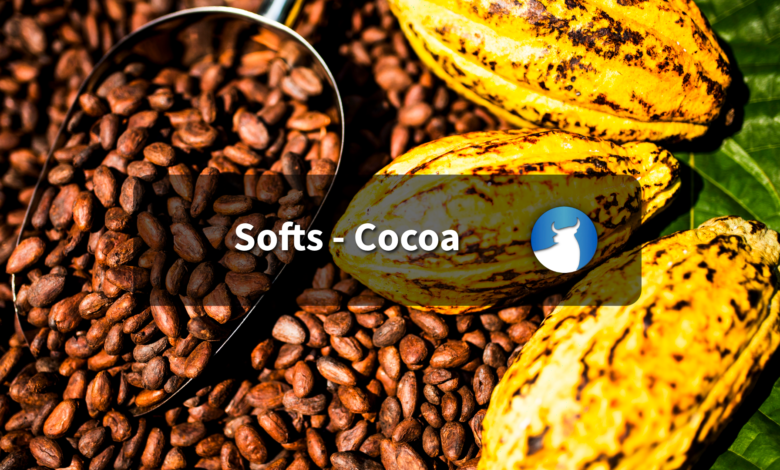
Cocoa prices are showing renewed strength as weather concerns across West Africa return to the forefront of the market. New York December cocoa has moved higher alongside a stronger recovery in London cocoa, with below-normal rainfall forecasts for Ivory Coast raising concerns about crop development and potential production losses during the 2026/27 season.
The recovery comes after cocoa prices recently fell to multi-week lows as evidence of strong Ivory Coast production and rising exchange inventories weighed on the market. The latest move therefore reflects a renewed battle between strong current-season supply and growing concerns about the next crop.
The market is now increasingly focused on West African weather, early pod development, disease pressure, exchange inventories and the trajectory of global cocoa demand.
Market Snapshot
| Factor | Current Situation |
|---|---|
| December 2026 NY Cocoa | Higher by 126 points (+2.33%) |
| December 2026 London Cocoa | Higher by 130 points (+3.25%) |
| Ivory Coast 2025/26 Harvest | 2.06 MMT, +30% YoY |
| Ivory Coast Port Shipments | 2.14 MMT, +18% YoY |
| ICE Cocoa Inventories | 3,437,710 bags |
| Ivory Coast 2026/27 Early Crop Estimate | ~1.8 MMT |
| Ghana 2026/27 Estimate | 650,000 MT |
| StoneX 2026/27 Global Surplus | 25,000 MT |
| Transgraph 2026/27 Global Surplus | 80,000 MT |
| European Q2 Grindings | 316,366 MT, -4.6% YoY |
| North American Q2 Grindings | 109,659 MT, +7.7% YoY |
| Asian Q2 Grindings | 224,646 MT, +25% YoY |
Current Cocoa Price Action
December New York cocoa is currently recovering after falling to a 1.75-month low, while London cocoa has also rebounded strongly.
The move higher is being driven primarily by renewed concern over West African weather. Forecasts for below-normal rainfall in Ivory Coast over the coming week could place additional stress on cocoa trees and raise questions about the development of the 2026/27 main crop.
The recovery is particularly notable because the market had been under pressure for several weeks as traders responded to strong production data and rising exchange inventories.
This creates an important distinction between the current physical supply situation, which remains relatively well supplied, and the forward crop outlook, where weather and disease risks are becoming increasingly important.
Ivory Coast Production Remains Strong
Ivory Coast remains the central focus of the global cocoa market.
The country’s cocoa regulator reported that 2.06 MMT of cocoa was harvested between June 2025 and June 2026, an increase of approximately 30% from 1.58 MMT a year earlier.
Cumulative shipments to ports during the international cocoa marketing year reached approximately 2.14 MMT, up 18% from the comparable period.
These figures demonstrate that current-season production has been considerably stronger than the previous season.
However, there is an important timing distinction.
Ivory Coast has moved its own marketing year forward to September 1, while international statistics continue to use an October 1 start date. Reuters data based on the new Ivory Coast marketing year showed deliveries of only 26,000 MT during September 1–13, down 45.8% from the comparable previous-season period.
This difference in reporting periods needs to be considered when interpreting shipment data.
2026/27 Ivory Coast Crop Faces Weather Risk
The next crop is now becoming the more important fundamental story.
Early surveys indicate below-average cherelle formation, poor pod development and a weaker initial outlook for the 2026/27 crop.
Current early estimates place Ivory Coast production at approximately 1.8 MMT, around 18% below the estimated 2.2 MMT produced during 2025/26.
The latest rainfall forecasts add another layer of uncertainty.
Below-normal rainfall over the coming week could increase stress on cocoa trees at an important stage of crop development. If dry conditions persist, concerns over yields could intensify.
The market will therefore be highly sensitive to changes in West African weather forecasts.
Ghana Production Outlook Weakens
Ghana provides another important source of medium-term supply risk.
The Cocoa Board estimates that the 2026/27 crop could reach approximately 650,000 MT, down 13% from 750,000 MT during 2025/26.
COCOBOD has also indicated that production could potentially fall into a much wider range of 450,000 to 550,000 MT, citing swollen shoot disease, ageing cocoa farms and the potential impact of adverse El Niño-related weather.
The contrast with the current season is significant.
Ghana harvested approximately 750,000 MT during 2025/26, up 25.6% from 597,000 MT in 2024/25.
The market therefore has to balance a very strong current crop against a potentially much weaker next season.
ICE Cocoa Inventories Rise to Multi-Year High
One of the clearest bearish signals is the level of exchange inventories.
ICE cocoa inventories have risen to approximately 3.44 million bags, the highest level in around 2.25 years.
Higher inventories suggest that immediate physical availability is considerably more comfortable than it was during the period when cocoa prices were reaching extreme highs.
Barry Callebaut has also indicated that the global cocoa market is currently well supplied and better positioned to absorb weather-related risks than during the 2023/24 El Niño period.
This remains an important counterweight to the developing 2026/27 crop concerns.
El Niño Remains a Medium-Term Weather Risk
Weather remains one of the most significant variables for the next production cycle.
The US Climate Prediction Center has indicated that the El Niño pattern could become one of the strongest in more than 75 years.
A stronger El Niño can produce warmer and drier conditions across parts of West Africa, potentially reducing soil moisture and placing additional stress on cocoa trees.
If those conditions persist into key stages of crop development, production estimates could be revised lower.
For now, however, the market still needs confirmation that the weather pattern is translating into meaningful production losses.
Global Cocoa Balance Tightens
The projected global balance for 2026/27 has become significantly tighter than earlier forecasts suggested.
StoneX has reduced its projected global surplus to just 25,000 MT, down from 149,000 MT in its previous estimate.
Transgraph Consulting is forecasting an 80,000 MT surplus, down from 415,000 MT in 2025/26, while also expecting global production to decline from 5.11 MMT to 4.87 MMT.
The common theme is that the global balance is moving toward a much smaller surplus.
If West African production deteriorates further, the market could potentially move from a small surplus into deficit.
Bullish Sentiment
- Below-normal Ivory Coast rainfall – Drier conditions could stress cocoa trees and reduce 2026/27 production potential.
- Weak early crop development – Below-average cherelle formation and poor pod development point to production risks in Ivory Coast.
- Lower Ghana crop expectations – Ghana’s 2026/27 production is expected to decline significantly from the previous season.
- Tightening global balance – StoneX now sees only a 25,000 MT surplus for 2026/27.
- El Niño risk – A strong El Niño could produce warmer and drier conditions across major West African growing regions.
- Asian demand remains strong – Q2 Asian grindings increased 25% year-on-year, significantly exceeding expectations.
- North American demand improved – North American Q2 grindings increased 7.7%, contradicting some expectations for weakening demand.
Bearish Sentiment
- High ICE inventories – Exchange stocks have risen to approximately 3.44 million bags, a 2.25-year high.
- Strong Ivory Coast current production – The latest harvest increased approximately 30% year-on-year.
- Higher Ivory Coast shipments – Shipments under the international marketing-year calculation are up approximately 18%.
- Global market currently well supplied – Barry Callebaut has described the global cocoa market as well supplied.
- European demand remains weak – European Q2 grindings declined 4.6% to their lowest Q2 level in six years.
- Small global surplus remains possible – Even after downward revisions, major forecasts still generally point to a small surplus rather than an immediate global deficit.
Price Forecast: What Traders Are Watching
The key question for cocoa is whether the current rebound develops into a sustained recovery or remains a short-term reaction to weather forecasts.
The market has already demonstrated that it can move sharply when West African weather expectations change.
A sustained bullish move would require increasing evidence that below-normal rainfall, poor pod development, disease and El Niño conditions are translating into materially lower 2026/27 production.
Conversely, continued strong current-season shipments, high ICE inventories and subdued European demand could limit the upside.
The next major catalyst is likely to be the evolution of Ivory Coast rainfall and crop-development data.
If weather forecasts deteriorate further, traders could begin pricing a larger 2026/27 production deficit. If rainfall improves and crop conditions stabilise, the market may refocus on the substantial inventories currently available.
Supply Outlook
The supply outlook is increasingly divided between two different periods.
Current-season supply remains relatively strong, particularly in Ivory Coast and Ghana. This is reflected in higher harvest figures, strong shipments and elevated exchange inventories.
The 2026/27 outlook is considerably less comfortable.
Early crop surveys indicate weaker pod development in Ivory Coast, while Ghana faces disease, ageing farms and potential weather disruptions.
The most important question is whether these risks translate into actual production losses.
The market is likely to react aggressively to any revisions to Ivory Coast and Ghana production estimates.
Demand Outlook
Global cocoa demand remains mixed by region.
European grindings declined 4.6% in Q2, falling to the lowest Q2 level in six years. This points to continuing pressure on European processors and chocolate demand.
North American grindings, however, increased 7.7%, while Asian grindings surged 25%.
The regional divergence means global demand cannot be described simply as either strong or weak.
The coming quarters will be important because sustained demand growth outside Europe could help absorb higher prices, while continued weakness in European processing could limit the market’s ability to sustain a major rally.
Market Outlook for the Coming Sessions
Cocoa is moving into a more weather-sensitive phase.
The market has already demonstrated strong downside sensitivity to rising inventories and strong Ivory Coast production, but it is now responding to concerns about the next crop.
The immediate focus should remain on Ivory Coast rainfall, crop development, Ghana production expectations and ICE inventories.
A sustained deterioration in West African weather could rapidly tighten the 2026/27 balance and shift attention away from current inventories.
However, if weather conditions improve while current-season shipments remain strong, the large inventory base could continue to limit the upside.
Demand will provide the additional confirmation. Stronger Asian and North American grinding data could help absorb tighter supply, while continued weakness in Europe would remain a counterweight.
Currency Hedger View
Cocoa is globally priced in US dollars and London cocoa is also particularly sensitive to movements in sterling.
The recent decline in the British pound has provided an additional boost to London cocoa because the commodity becomes relatively more attractive when priced in a weaker sterling environment.
For cocoa producers, processors and international buyers, currency movements can therefore have a direct impact on the effective cost of physical cocoa.
Businesses purchasing or selling cocoa across currencies should monitor both the underlying commodity price and the associated FX exposure.
Currency Hedger provides businesses with tools and solutions for managing foreign-exchange exposure around international commodity transactions and cross-border payments.
Visit www.currencyhedger.com for more information.
Analysis Louis Roche – Today Markets
Cocoa is entering a critical period in which the market must reconcile strong current-season supply with a potentially much tighter 2026/27 crop.
The latest Ivory Coast harvest and shipment figures remain bearish, while ICE inventories at a 2.25-year high demonstrate that immediate physical availability is considerably more comfortable than during the previous cocoa supply crisis.
The forward outlook is different. Below-average cherelle formation, weaker Ghana production expectations, disease pressure and the potential impact of El Niño are creating legitimate risks for the next crop. The latest weather forecasts therefore have the potential to become increasingly important to price discovery.
For the coming sessions, the critical indicators will be West African rainfall, crop development, Ivory Coast and Ghana production estimates, ICE inventories and regional cocoa grindings.
If weather conditions deteriorate and production estimates continue to fall, the market could begin pricing a much tighter 2026/27 balance. If current supply remains abundant and demand remains uneven, the recent recovery could face renewed resistance.
Louis Roche – Today Markets