S&P 500 — US Large Cap Index
 FTSE 100 — UK Blue Chips
 Euro Stoxx 50 — Eurozone Leaders
 DAX 40 — German Equities
 CAC 40 — French Market Index
 Nikkei 225 — Japan Benchmark
 Hang Seng — Hong Kong Index
 Shanghai Composite — China Mainland
 ASX 200 — Australian Market
 TSX Composite — Canada Index
 Nifty 50 — India Large Cap
 STI Index — Singapore Market
 KOSPI — South Korea Index
 Bovespa — Brazil Equities
 JSE Top 40 — South Africa Index
 IPC Index — Mexico Market

Facts
- USDCAD pulled back after Canada’s July CPI inflation data.
- Gasoline prices in Canada rose by 25.7% year over year, compared with 20.5% in June.
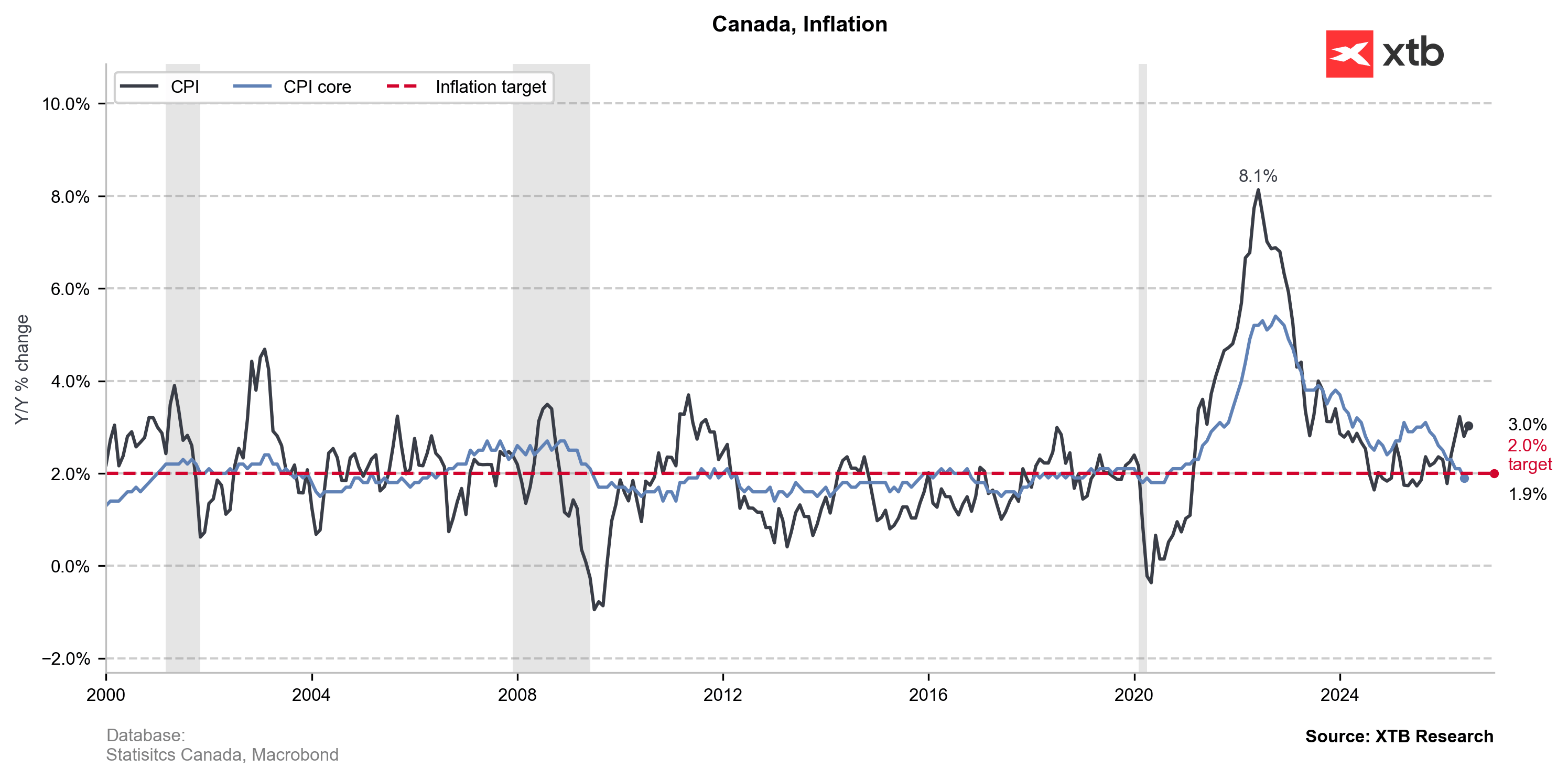
- CPI inflation increased by 3.0% versus a 2.9% forecast and 2.8% previously, while the monthly rate came in at 0.5% versus a 0.4% consensus.
- The unemployment rate stood at 6.4%, while employment increased by 75.1 thousand.
- Prices of travel tours rose by 15.2% year over year, while airfares increased by 12% year over year.
- The preliminary GDP estimate points to annualized growth of 3.4% in Q2.
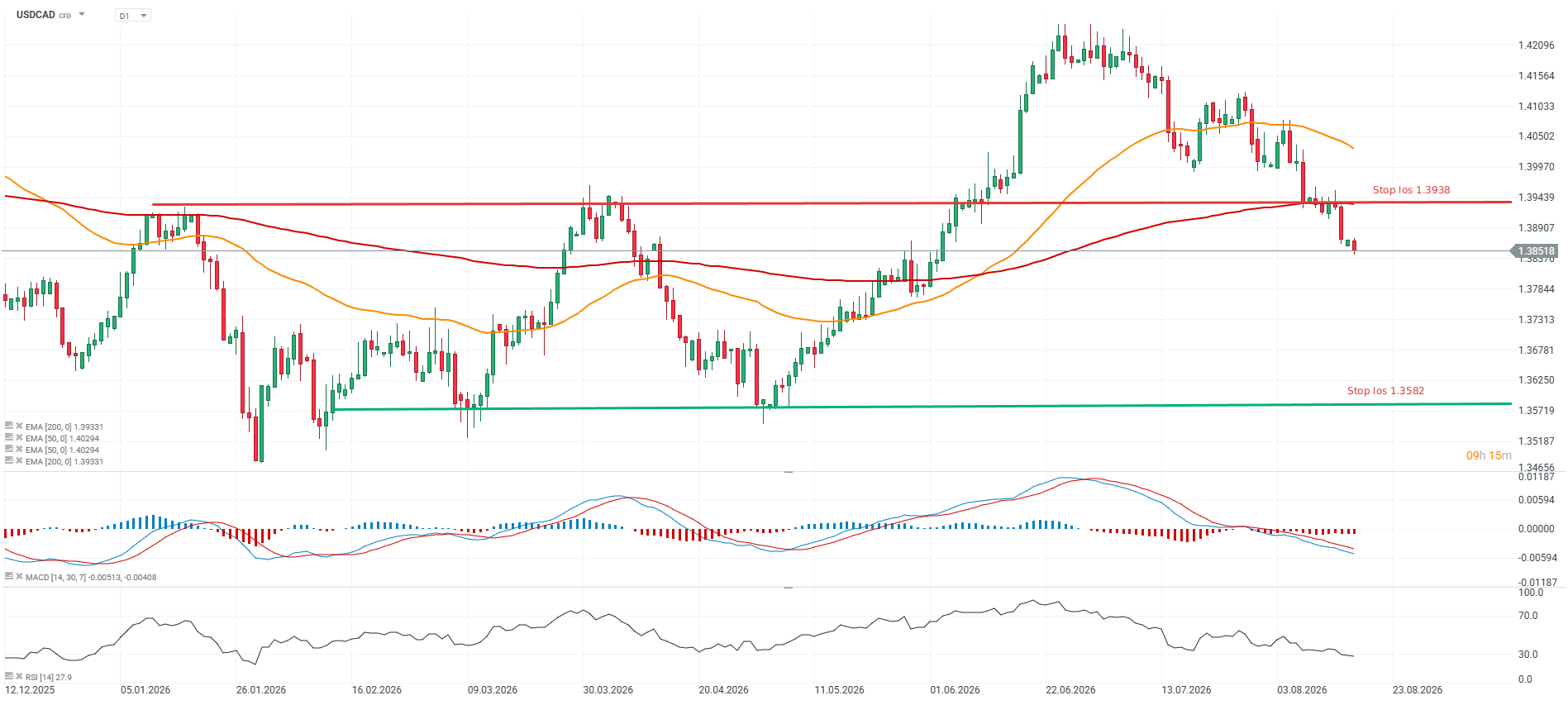
Recommendation Short position on USDCAD at the market price
- Take Profit: 1.3582
- Stop Loss: 1.3938
Opinion Against the backdrop of recent macroeconomic data, the balance of risks for USDCAD may gradually be shifting to the downside. U.S. CPI inflation came in line with expectations and the latest PPI report showed weaker price pressures, while Canada’s July CPI accelerated to 3.0% year over year and exceeded the consensus. Importantly, core inflation measures also came in above forecasts, which may limit the Bank of Canada’s room to pursue a more accommodative monetary policy. The pressure was not limited to fuel prices. CPI Core Trim rose to 1.9%, Core Median to 2.0%, and inflation excluding food and energy to 1.9% year over year. All three measures came in above consensus. At the same time, U.S. data did not provide a comparable inflationary impulse: CPI was in line with expectations, while PPI weakened.
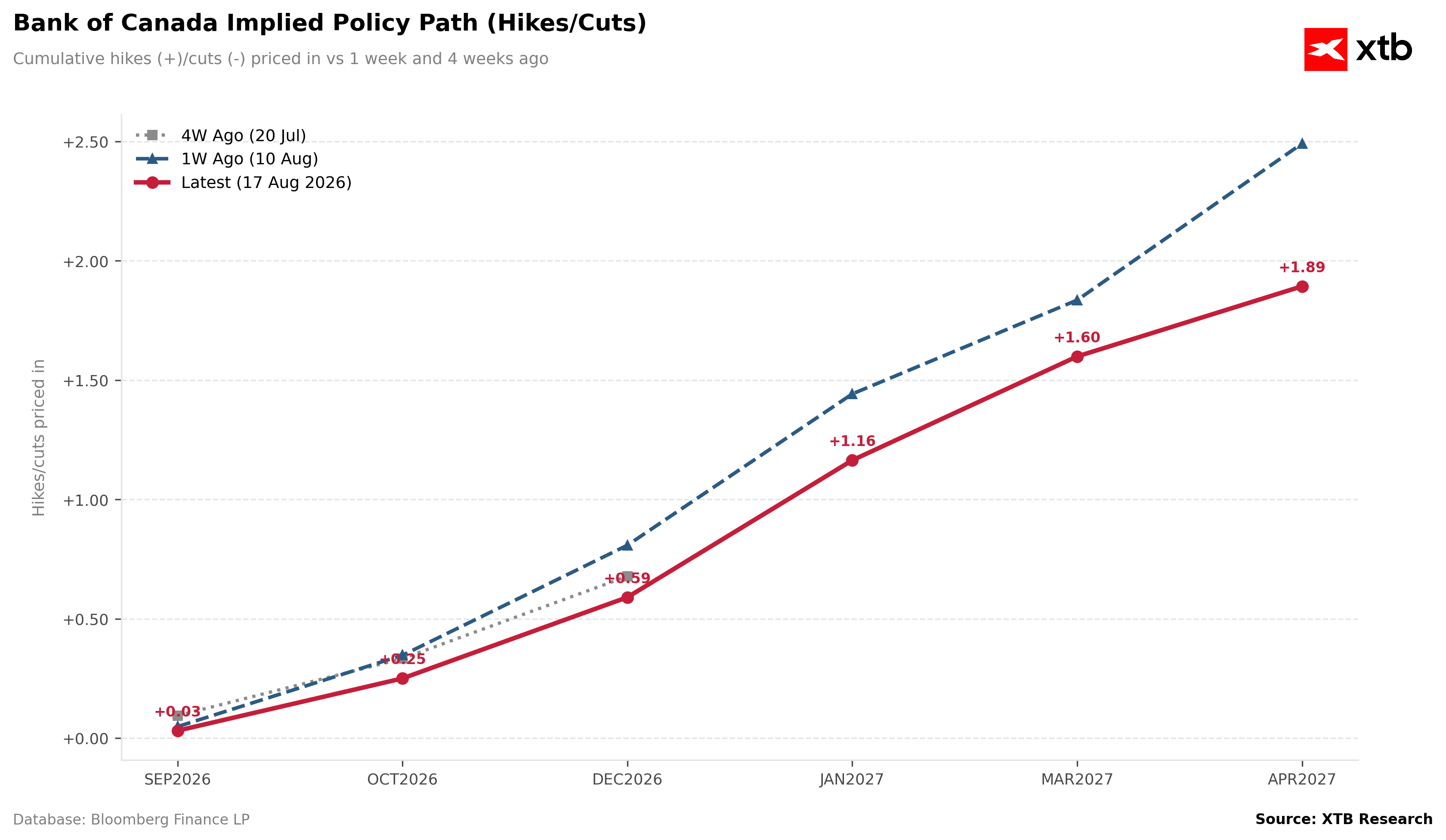
This divergence may support the CAD if it begins to translate into relatively more hawkish expectations for the Bank of Canada compared with the Fed. The Canadian economy is also not currently sending unambiguous signals that would require rapid monetary easing: employment rose by 75.1 thousand, while the preliminary estimate points to annualized GDP growth of 3.4% in Q2. The market is pricing in the first possible BoC rate hike only in January, so a further series of stronger inflation readings could leave room for a shift in interest-rate expectations and additional support for the CAD. From a USDCAD perspective, this creates an argument for a possible further pullback, as the relative inflation path is beginning to look more favorable for the Canadian dollar. The key point is not the 3.0% CPI reading itself, as part of the increase came from fuel, transport and World Cup-related factors, but rather the fact that several core measures also exceeded expectations.
The Canadian dollar remains sensitive to oil prices, global risk sentiment and the condition of the U.S. economy, while a single CPI report does not determine a change in BoC policy. However, if subsequent data confirm more persistent inflation in Canada alongside further easing of price pressures in the U.S., relative expectations for the BoC and the Fed could increasingly favor the CAD, raising the risk of a further decline in USDCAD. Canada’s annual consumer inflation rate accelerated to 3.0% in July, exceeding market expectations of 2.9%. The renewed increase, following the slowdown to 2.8% in June, was driven primarily by sharp increases in fuel prices as well as higher travel and transport costs, supported by stronger activity around the football World Cup. Although inflation remains elevated, this does not automatically imply a return to hawkish expectations for rate hikes, so we recommend taking a short position in the pair with a relatively tight stop-loss level defined by the 200-period exponential moving average, EMA200, shown by the red line, and recent price reactions around 1.393, with a target level at 1.3582.
USDCAD chart (D1 interval)
Source: xStation5 Supporting graphics
Source: XTB Research