S&P 500 — US Large Cap Index
 FTSE 100 — UK Blue Chips
 Euro Stoxx 50 — Eurozone Leaders
 DAX 40 — German Equities
 CAC 40 — French Market Index
 Nikkei 225 — Japan Benchmark
 Hang Seng — Hong Kong Index
 Shanghai Composite — China Mainland
 ASX 200 — Australian Market
 TSX Composite — Canada Index
 Nifty 50 — India Large Cap
 STI Index — Singapore Market
 KOSPI — South Korea Index
 Bovespa — Brazil Equities
 JSE Top 40 — South Africa Index
 IPC Index — Mexico Market
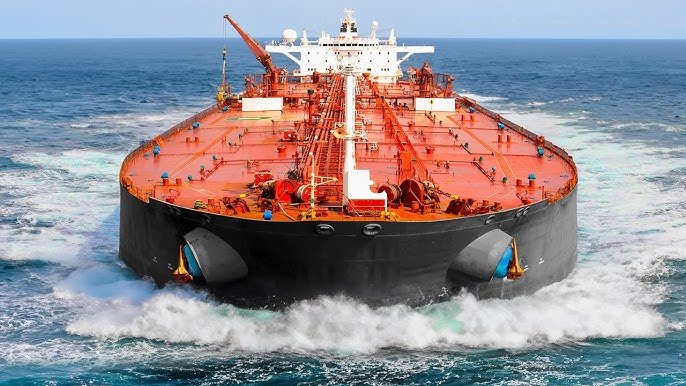
September WTI crude oil (CLU26) on Friday closed up +1.15 (+1.42%), and September RBOB gasoline (RBU26) closed up +0.0561 (+1.79%).
Crude oil saw support Friday after reports that Iran on Thursday night attacked two Abu Dhabi oil vessels transiting the Strait of Hormuz. Those attacks suggested that Iran intends to continue threatening vessel traffic in the Strait of Hormuz to impose long-term control over the Strait, gaining a strong geopolitical lever and possibly collecting lucrative tolls down the road.
However, oil prices on Friday were still down from Tuesday’s 2-week high as the Trump administration pivots to economic pressure rather than fresh US military attacks to try to force Iran to fully reopen the Strait of Hormuz. Treasury Secretary Bessent said Friday that the administration will soon announce unprecedented economic measures against Iran that “have never been seen in the history of economic isolation of a country.” The economic measures would add to the current US naval blockade of Iranian ports.
There have been no signs of progress toward a US-Iran agreement to fully open the Strait of Hormuz. An Iranian military spokesperson said Thursday that no ship can safely pass the Strait of Hormuz without Iran’s authorization and supervision and that President Trump’s claims of control over the Strait are “nothing more than lies.” The Iranian statement was in response to President Trump’s comment late Tuesday that the US has “total control over the Hormuz Strait” and that “we own it.”
Traffic through the Strait of Hormuz remains slow, tightening global crude supplies and boosting oil prices. Energy Aspects said on Monday that only an average of five vessels are transiting through the Strait, down from 14 ships a day seen after the US and Iran reached a memorandum of understanding in June.
In a supportive factor, the International Energy Agency (IEA) said in its monthly report, released on Wednesday, that the global oil supply deficit will worsen, even as oil demand is taking a hit from the war and high prices. The IEA said global oil inventories will fall in Q3 at twice the previously estimated rate because of ongoing disruptions from the US-Iran war.
Crude prices have support as Ukraine intensifies drone attacks on Russian oil infrastructure. Ukraine has attacked Russian refineries, oil tankers, and major pipeline infrastructure at least 30 times in July, the second-highest monthly number of attacks since the war began in 2022. According to EA Analytics, Russian crude-processing rates averaged 3.51 million bpd in July, the lowest in 24 years, amid damage to Russian energy infrastructure caused by drone and missile attacks from Ukraine.
As a bearish factor for crude, OPEC delegates on August 2 approved their final increase of +188,000 bpd in crude production for September. The group has now restored all of the 1.65 million bpd supply cutback it made back in 2023 and said it plans to hold output steady for the rest of the year after the September hike. The production increases by OPEC+ might prove difficult to achieve amid renewed US-Iran military attacks in the region. OPEC’s July crude production rose by +1.16 million bpd to 19.44 million bpd.
Vortexa reported on Monday that crude oil stored on tankers that have been stationary for at least 7 days fell -0.7% w/w to 119.28 million bbl in the week ended August 7.
Wednesday’s weekly EIA crude inventories rose by 17.4 million bbl, the largest increase in more than three years. The increase was mainly due to a sharp drop in US crude oil exports. Meanwhile, gasoline inventories fell by -968,000 barrels, slightly less than the expected -1.15 million bbl decline.
Wednesday’s EIA report showed that (1) US crude oil inventories as of Aug 7 were -1.8% below the seasonal 5-year average, (2) gasoline inventories were -5.8% below the seasonal 5-year average, and (3) distillate inventories were -11.9% below the 5-year seasonal average. US crude oil production in the week ending Aug 7 rose +0.01% w/w to 13.805 million bpd, just below the record high of 13.862 million bpd posted in November 2025.
Baker Hughes reported Friday that the number of active US oil rigs in the week ended August 14 rose by +1 to a 1.25-year high of 455 rigs.