S&P 500 — US Large Cap Index
 FTSE 100 — UK Blue Chips
 Euro Stoxx 50 — Eurozone Leaders
 DAX 40 — German Equities
 CAC 40 — French Market Index
 Nikkei 225 — Japan Benchmark
 Hang Seng — Hong Kong Index
 Shanghai Composite — China Mainland
 ASX 200 — Australian Market
 TSX Composite — Canada Index
 Nifty 50 — India Large Cap
 STI Index — Singapore Market
 KOSPI — South Korea Index
 Bovespa — Brazil Equities
 JSE Top 40 — South Africa Index
 IPC Index — Mexico Market
Nvidia Finds a Back Door Into China. Vera Could Unlock a New Phase of Growth

Nvidia’s decision to begin selling its Vera processors in China could prove to be one of the most important developments for investors following the AI sector in 2026. At first glance, this may appear to be little more than the launch of a new server processor. In reality, however, much more is at stake. For the first time since the tightening of U.S. export restrictions, Nvidia is attempting to regain its footing in China not by introducing another downgraded version of its AI accelerators, but by entering an entirely new market segment.
Over the past several quarters, China has become a growing source of uncertainty for Nvidia. Restrictions on exports of advanced AI chips have gradually limited the company’s access to one of the world’s most important technology markets. As a result, many investors have begun to question whether Nvidia can maintain its extraordinary growth trajectory without full access to Chinese customers. Vera may represent the company’s first meaningful answer to that challenge.
The new processor was designed for next-generation artificial intelligence systems, particularly so-called AI agents, autonomous systems capable of performing complex tasks with minimal human supervision. According to recent media reports, Nvidia has already begun discussions with Chinese customers and informed them that orders can now be placed, with initial deliveries potentially starting as early as August.
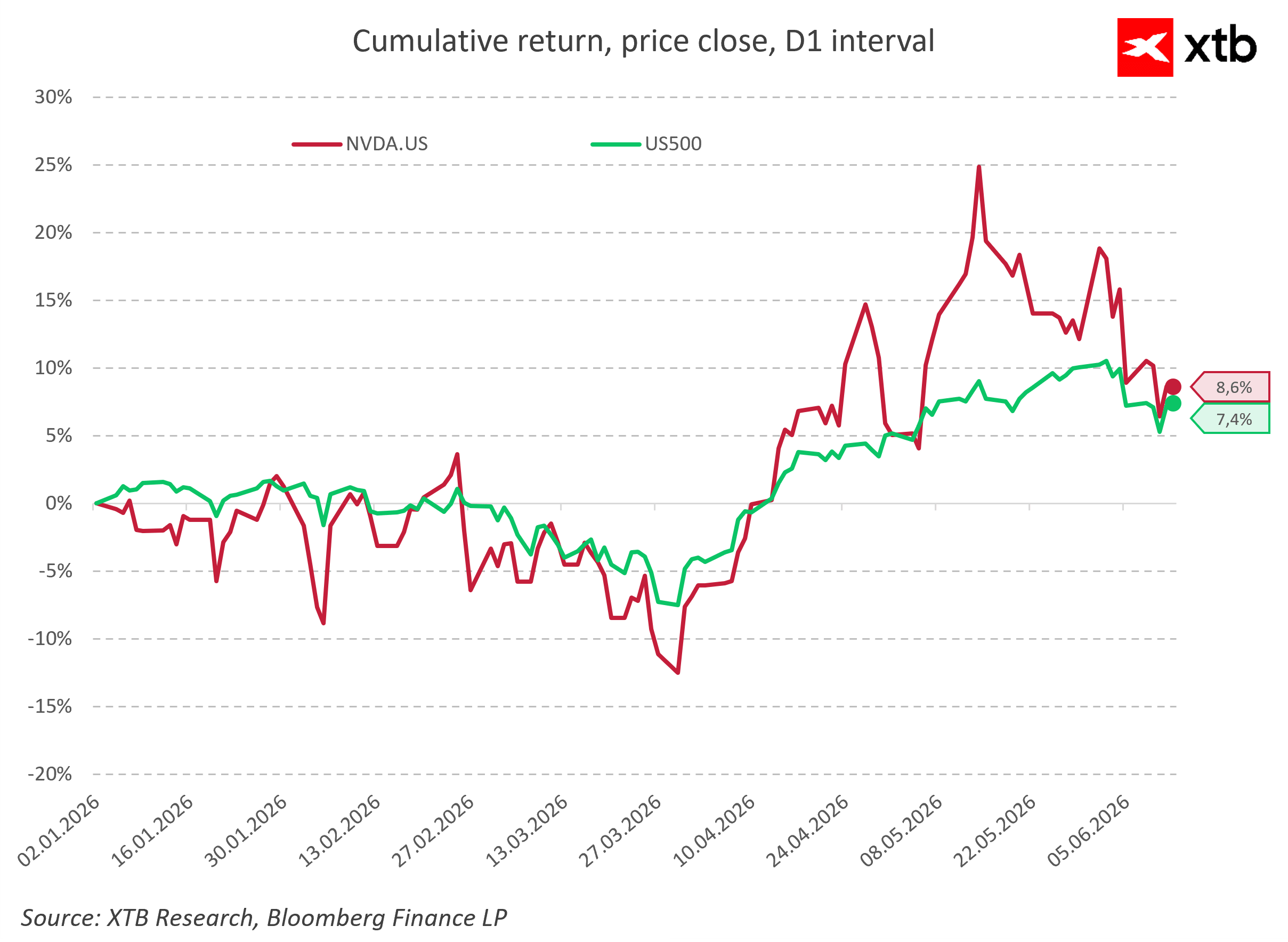
For the market, however, the key question is not when the first shipments will arrive, but who will be buying the first Vera-powered systems. If these processors find their way into the hands of China’s largest cloud providers, AI developers, and data center operators building infrastructure for the next wave of AI-driven services, it would send a powerful signal that Nvidia remains the industry standard even in markets where it can no longer offer its most advanced GPUs. From an investor’s perspective, maintaining relationships with major customers is often more valuable than a short-term increase in sales. In the near term, the news is primarily important for sentiment surrounding Nvidia’s stock. Investors are being reminded that the company continues to actively pursue new growth opportunities and is not willing to passively accept the loss of a significant portion of the Chinese market.
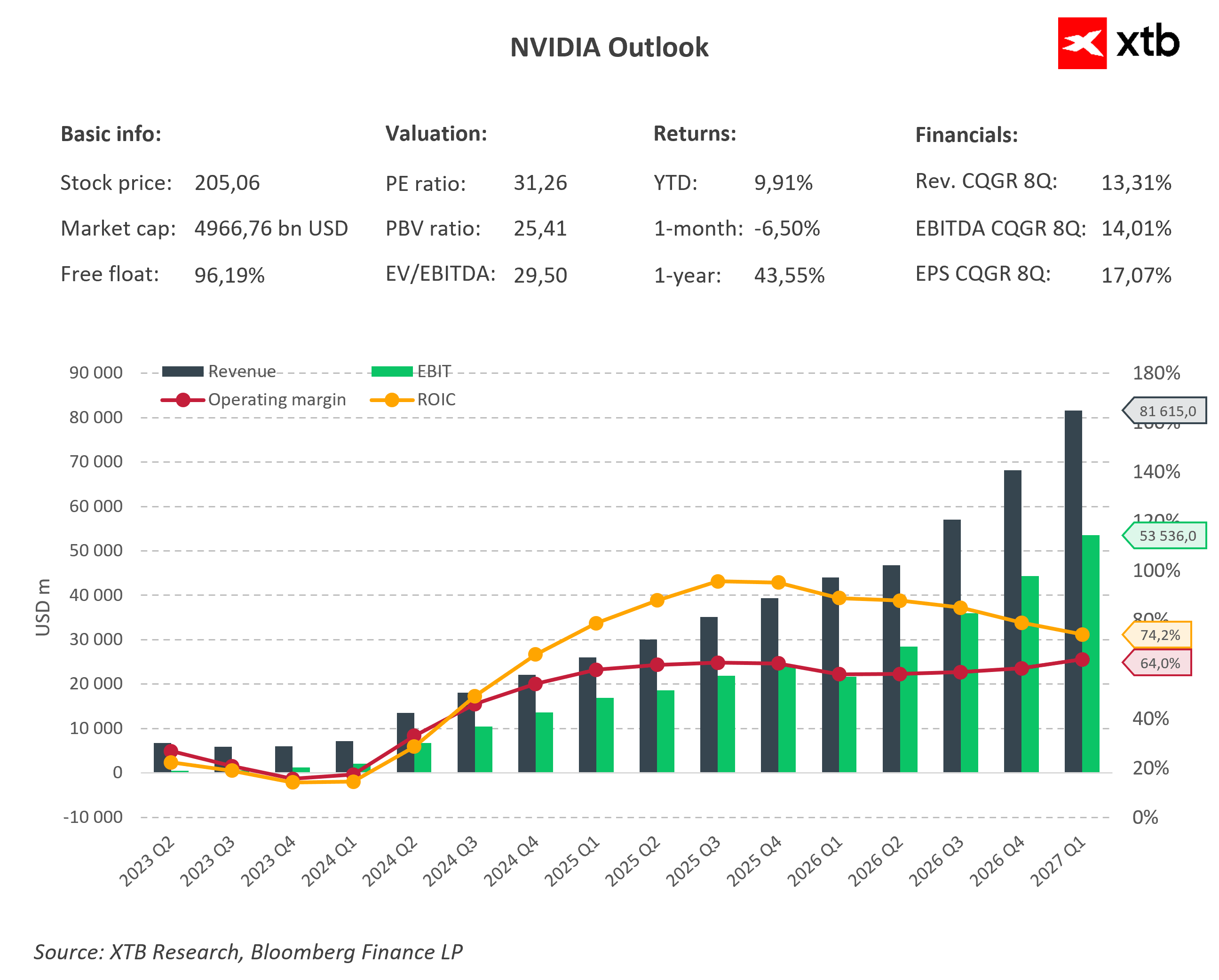
Expectations for the first wave of orders remain relatively modest, but even limited deployments could carry symbolic importance. They demonstrate that Nvidia has identified a product capable of preserving its presence in China despite current export restrictions. The long-term implications are even more compelling. Vera is not simply another addition to Nvidia’s product portfolio. It is part of a much broader strategy aimed at transforming the company from a dominant GPU manufacturer into a provider of complete AI infrastructure. Just a few years ago, Nvidia’s success depended largely on sales of graphics processors and AI accelerators. Today, the company is building an ecosystem that includes CPUs, GPUs, networking technologies, HBM memory, the CUDA software platform, and fully integrated server systems ready for deployment by enterprise customers.
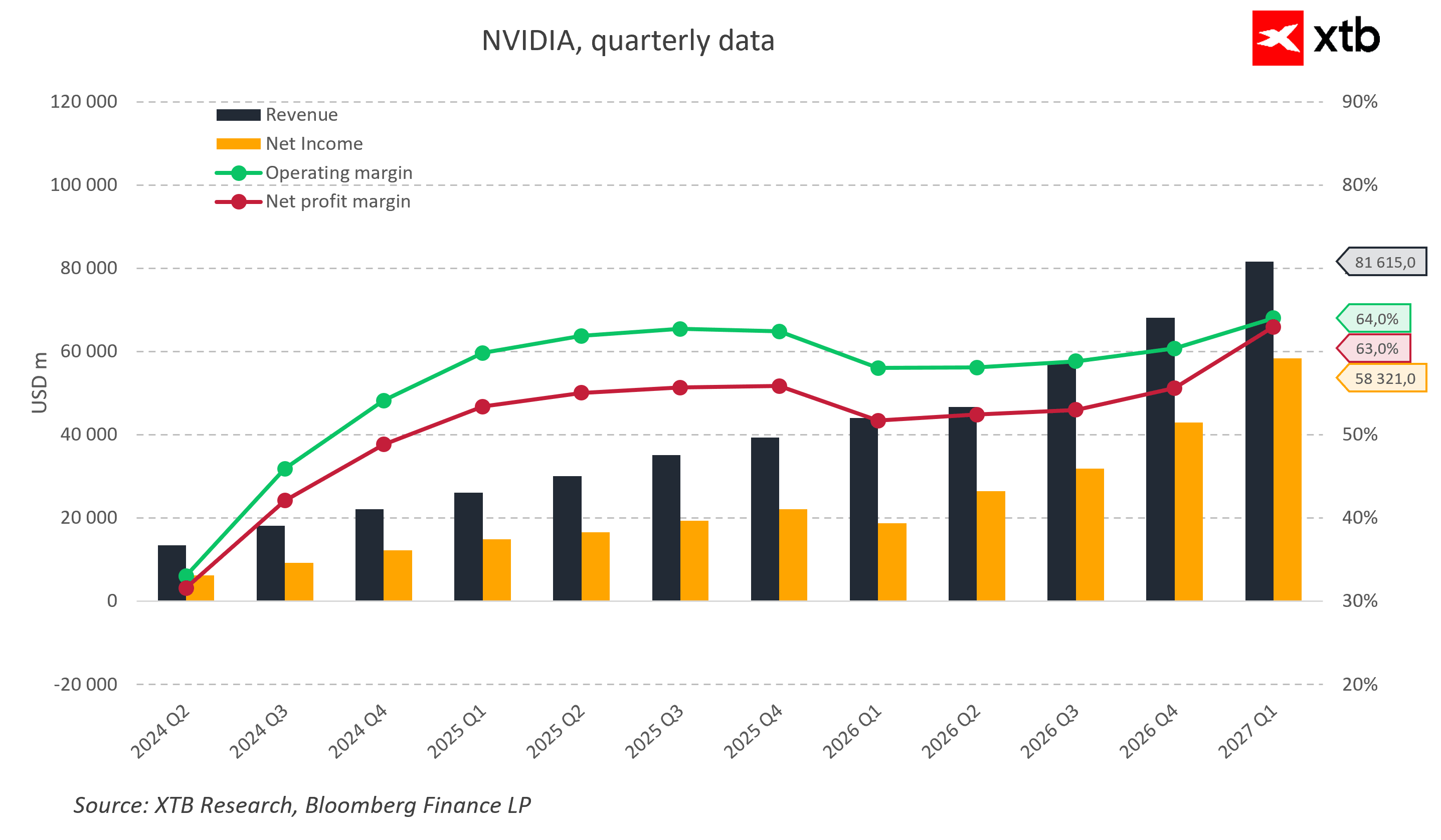
This may ultimately be the most important aspect of the story for investors. The more of a customer’s infrastructure that relies on Nvidia technology, the harder it becomes for competitors to displace the company. In practice, this creates opportunities to increase revenue per customer while strengthening long-term competitive advantages. If the strategy succeeds, investors may begin valuing Nvidia not merely as the leader in GPUs, but as the dominant supplier of computational infrastructure for the AI era.
Competition with Intel and AMD is another important element of this story. Until now, the primary battleground has been the AI accelerator market, where Nvidia enjoys a significant lead. Vera, however, marks an entry into territory traditionally controlled by server CPU manufacturers. If the new architecture gains traction among customers, competition among the industry’s largest semiconductor companies will expand into another multi-billion-dollar market. That said, success is far from guaranteed. The most obvious risk remains geopolitics.
While CPUs are currently not subject to the same strict export controls as advanced AI accelerators, the regulatory landscape can change quickly. If U.S. authorities determine that Nvidia’s new processors contribute to the development of advanced AI systems in China, additional restrictions on this segment cannot be ruled out. A second major risk is China’s growing technological self-sufficiency. Beijing has spent years investing heavily in its domestic semiconductor industry, and local manufacturers continue to narrow the gap with their Western counterparts. Companies such as Huawei are developing their own solutions for data centers and artificial intelligence, meaning that some Chinese customers may view Nvidia’s products as temporary solutions until domestic alternatives become sufficiently competitive.
Investors should also keep in mind the risks associated with demand for AI infrastructure itself. The market is currently experiencing an unprecedented investment cycle, with major technology companies committing tens of billions of dollars to expanding data center capacity. However, there is no guarantee that this pace of spending will continue indefinitely. If the monetization of artificial intelligence progresses more slowly than expected, some customers may reduce capital expenditures, which would inevitably affect demand for Nvidia’s future products as well. The broader significance of Vera extends well beyond the launch of another processor.
Once again, Nvidia is demonstrating its ability to adapt to a rapidly evolving regulatory and geopolitical environment. Rather than focusing solely on restrictions affecting GPU exports, the company is searching for new avenues of growth and new ways to maintain relationships with its most important customers. For that reason, the importance of Vera reaches far beyond the potential revenue generated by initial orders. For investors, it represents a test of whether Nvidia can leverage its dominant position in AI to build another multi-billion-dollar business while maintaining a foothold in a market that only recently appeared nearly inaccessible. If the strategy succeeds, it could mark the beginning of a new chapter in the company’s growth story and provide further evidence that Nvidia is becoming far more than just an AI chipmaker.
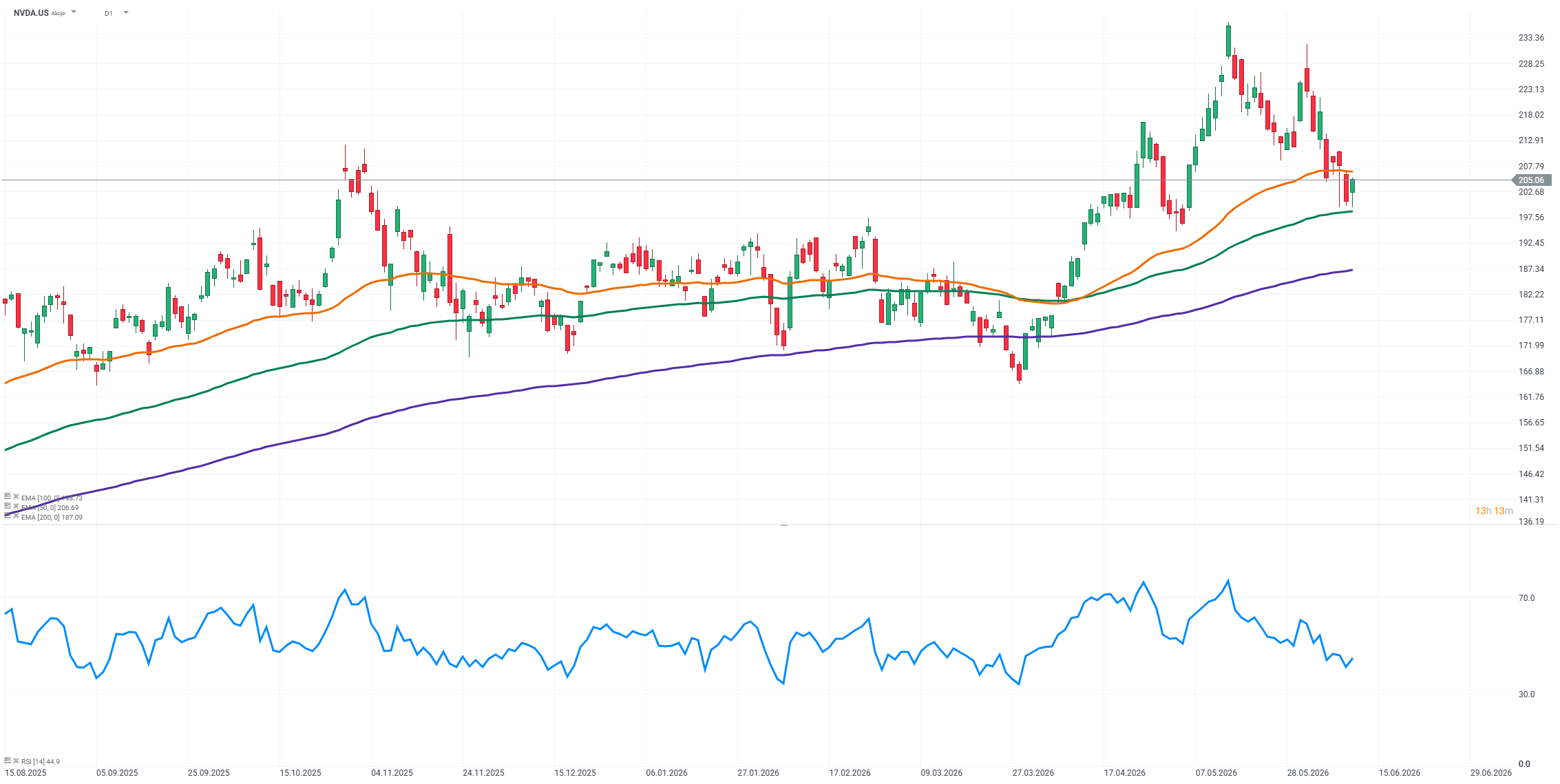
Source: xStation5