S&P 500 — US Large Cap Index
 FTSE 100 — UK Blue Chips
 Euro Stoxx 50 — Eurozone Leaders
 DAX 40 — German Equities
 CAC 40 — French Market Index
 Nikkei 225 — Japan Benchmark
 Hang Seng — Hong Kong Index
 Shanghai Composite — China Mainland
 ASX 200 — Australian Market
 TSX Composite — Canada Index
 Nifty 50 — India Large Cap
 STI Index — Singapore Market
 KOSPI — South Korea Index
 Bovespa — Brazil Equities
 JSE Top 40 — South Africa Index
 IPC Index — Mexico Market
Orlen, CEE’s largest listed company, slides as oil falls below $80


Key takeaways
- Orlen (PKN.PL) shares have fallen from around PLN 148 to PLN 124.
- Global crude oil prices have retreated below $80 per barrel, down from a peak of nearly $120 reached in spring 2026.
- According to the published Memorandum of Understanding (MoU), Iran has committed not to possess nuclear weapons.
The biggest company in the Central Europe region, polish Orlen (PKN.PL) shares have fallen nearly 15% from their recent highs after crude oil prices plunged across global markets following the US-Iran agreement and the reopening of the Strait of Hormuz, where shipping restrictions are expected to be further eased in the coming days. It is difficult to identify any major driver behind the decline other than the sharp move in oil prices, which have a substantial impact on Orlen’s margins and profitability. The recent price action also highlights just how dependent the company remains on developments in global energy markets. Updated oil forecasts following the Iran agreement generally point to lower prices compared with levels seen earlier this spring. Among the largest financial institutions, only the World Bank still maintains a Brent crude forecast above $90 per barrel. So far, Brent has retreated to approximately $78.6 per barrel from nearly $120 per barrel on March 9, 2026.
Institutions revise forecasts following the Iran deal
- Goldman Sachs now expects Brent crude to average around $80 per barrel in the fourth quarter of 2026, compared with its previous forecast of $90 per barrel.
- Morgan Stanley has also lowered its outlook, forecasting Brent at roughly $90 per barrel in the third quarter of 2026 and $80 per barrel in the fourth quarter.
- Even more bearish is Citi, which expects Brent to average around $75 per barrel in the third quarter of 2026 before declining further to approximately $70 per barrel by year-end.
- Forecasts for 2027 are even lower. Goldman Sachs expects Brent to average around $75 per barrel, while Citi forecasts a decline toward $65 per barrel.
Not all institutions share such a pessimistic outlook, however. The World Bank continues to expect average oil prices of approximately $94 per barrel in 2026, citing ongoing supply-side risks and persistent geopolitical uncertainty. Meanwhile, the US Energy Information Administration (EIA) forecasts a gradual decline in Brent prices during the second half of the year, with crude reaching approximately $79 per barrel by the end of 2026.
Oil remains the key driver for Orlen
The chart above clearly illustrates the strong relationship between Orlen’s share price and crude oil prices. Although Orlen has become a diversified energy group with significant exposure to refining, petrochemicals, power generation, gas, and retail operations, investors continue to treat the company largely as a proxy for energy market conditions. Lower oil prices typically translate into weaker earnings expectations, particularly when accompanied by declining refining margins and a less supportive macroeconomic backdrop. At the same time, the recent correction may indicate that investors are beginning to price in a prolonged period of lower commodity prices following the easing of geopolitical tensions in the Middle East.
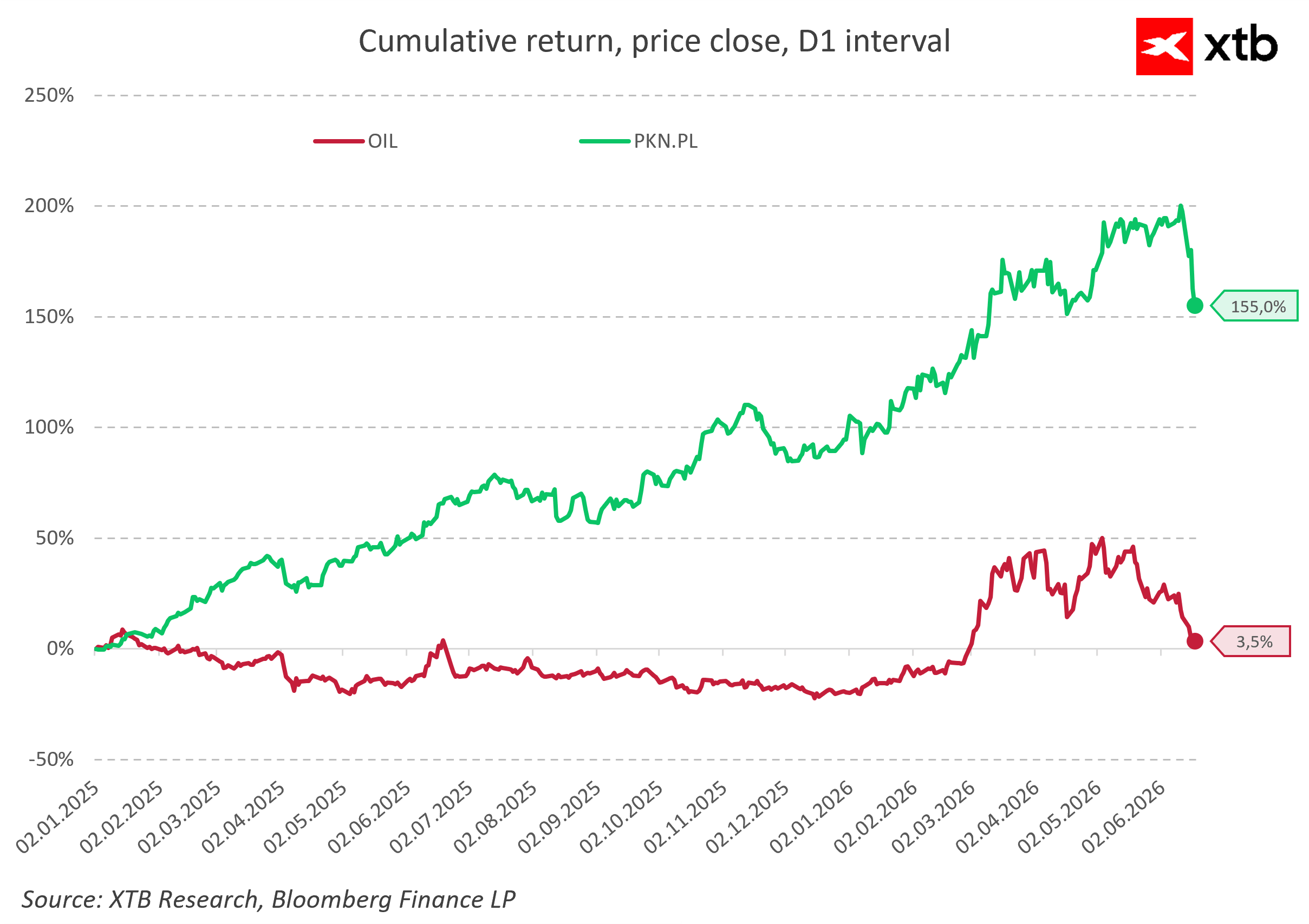
Source: XTB Research, Bloomberg Finance L.P.
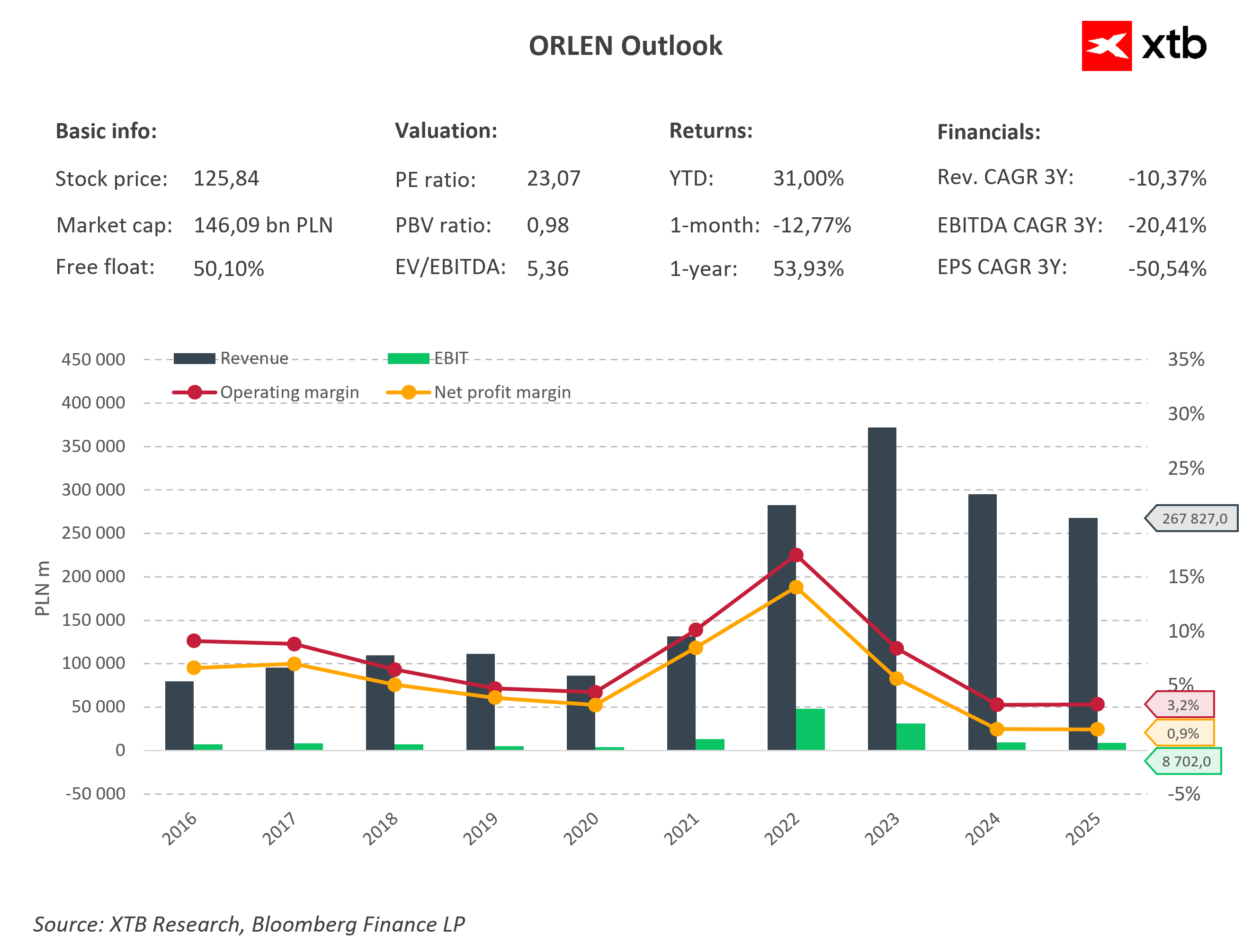
Source: XTB Research, Bloomberg Finance L.P.
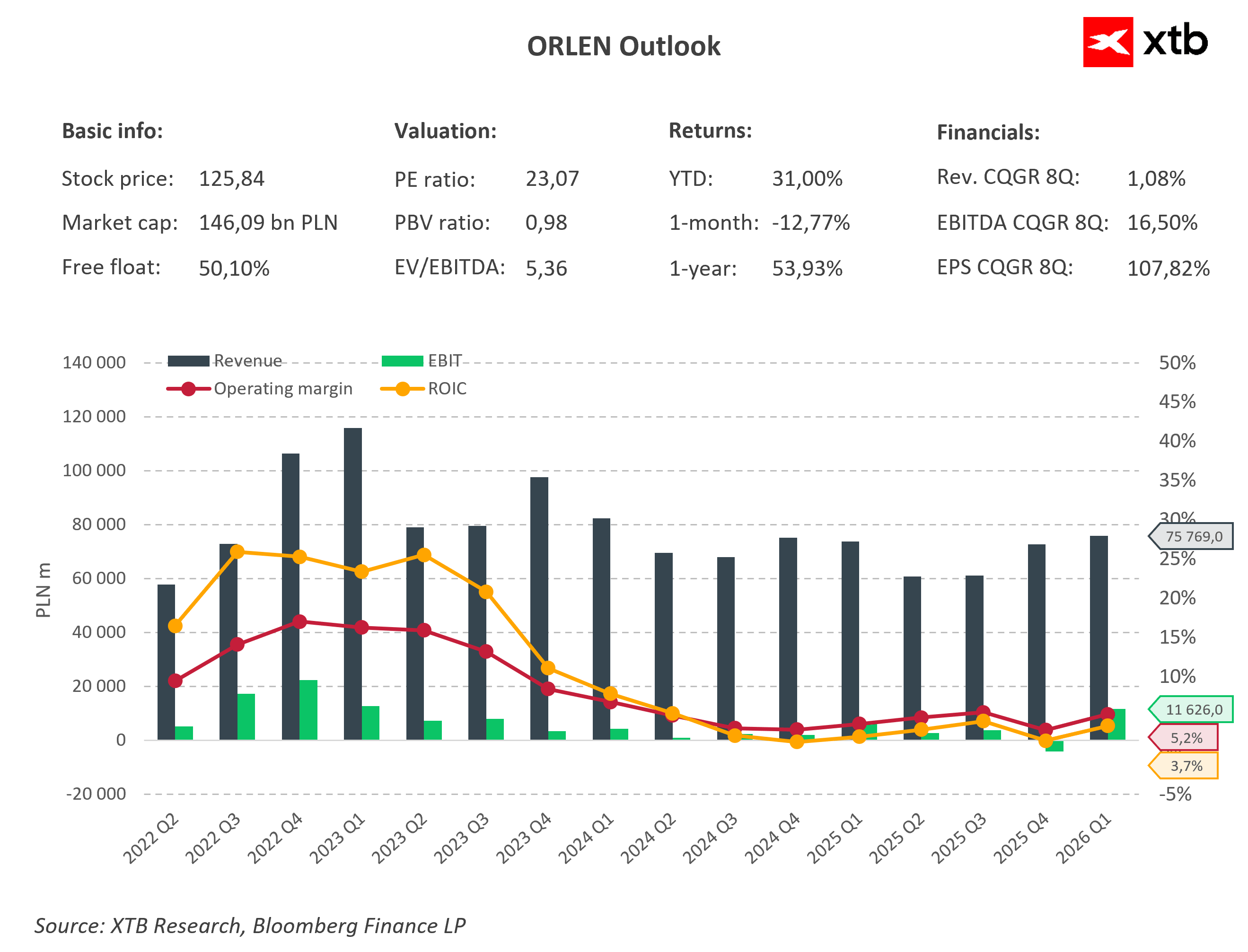
Source: XTB Research, Bloomberg Finance L.P. Orlen (PKN.PL), D1 timeframe The recent decline in Orlen shares reflects both the sharp correction in crude oil prices and growing expectations that Brent may remain significantly below the highs reached earlier this year. Unless energy markets experience a renewed supply shock or geopolitical tensions escalate again, lower oil prices could continue to weigh on investor sentiment toward the stock in the coming months.
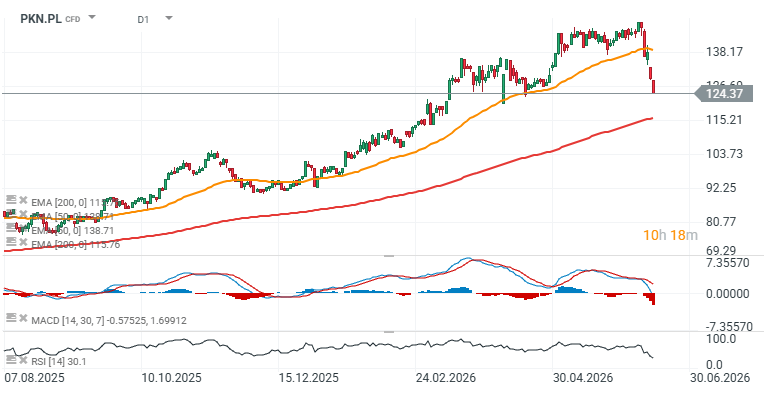
Source: xStation5