S&P 500 — US Large Cap Index
 FTSE 100 — UK Blue Chips
 Euro Stoxx 50 — Eurozone Leaders
 DAX 40 — German Equities
 CAC 40 — French Market Index
 Nikkei 225 — Japan Benchmark
 Hang Seng — Hong Kong Index
 Shanghai Composite — China Mainland
 ASX 200 — Australian Market
 TSX Composite — Canada Index
 Nifty 50 — India Large Cap
 STI Index — Singapore Market
 KOSPI — South Korea Index
 Bovespa — Brazil Equities
 JSE Top 40 — South Africa Index
 IPC Index — Mexico Market

For years, Rocket Lab has been viewed primarily as a launch company, focused on delivering satellites into orbit. Its announced acquisition of Iridium Communications in a deal valued at approximately $8 billion, however, demonstrates that the company’s ambitions extend far beyond launch services. For investors, this is not only the largest acquisition in Rocket Lab’s history but also a clear signal that the company is entering the next phase of its transformation. Iridium’s most valuable asset is not its satellites themselves, but the services they enable.
For decades, the company has provided truly global communications in areas where traditional telecommunications infrastructure simply does not exist. Its network is used by maritime operators, airlines, emergency responders, military organizations, and businesses operating in some of the world’s most remote regions. For Rocket Lab, this represents entry into an entirely different market segment—one built on long-term contracts and stable, recurring revenue. This may ultimately be the most important aspect of the deal from an investor’s perspective. The launch business is inherently project-based, with the number of missions varying from one quarter to the next. Satellite communications services, by contrast, generate far more predictable cash flows and foster long-term customer relationships.
By acquiring Iridium, Rocket Lab becomes less dependent on the cadence of rocket launches and more reliant on recurring service-based revenue. The acquisition also reflects a broader shift in the company’s business philosophy. In today’s space industry, the greatest value is increasingly created not by placing a satellite into orbit, but by the services that satellite delivers over many years. Rocket Lab appears determined to participate in the entire satellite lifecycle—from design and manufacturing to launch and ultimately generating recurring revenue through satellite operations.
This move is far from accidental. Over the past several years, Rocket Lab has steadily acquired companies specializing in satellite components, optical communications systems, and other technologies critical to the space industry. The purchase of Iridium is by far its largest acquisition to date and represents the logical culmination of a long-term strategy to build a fully integrated space services ecosystem. The significance of this transaction extends well beyond Rocket Lab itself. For many years, the space industry operated under a fragmented model in which one company built satellites, another launched them, and others provided communications services. Increasingly, however, the market is maturing. Competitive advantage is shifting toward companies capable of controlling the entire value chain and delivering comprehensive, end-to-end solutions.
There is also an important geopolitical dimension. Satellite communications now play a growing role not only in telecommunications but also in defense, maritime transportation, aviation, and emergency management. Iridium has long-standing relationships with government agencies and military customers, giving Rocket Lab access to a market characterized by high barriers to entry and relatively stable demand. Naturally, an acquisition of this scale also carries significant risks. Integrating two organizations will require time, substantial investment, and careful execution. Investors will closely monitor the transaction’s impact on Rocket Lab’s debt levels and future profitability.
In the near term, these factors are likely to have the greatest influence on the company’s share price. From a long-term perspective, however, the more important conclusion may be that Rocket Lab is evolving beyond its identity as a rocket launch provider. It is increasingly becoming a company building a comprehensive space infrastructure platform—integrating satellite design, manufacturing, orbital transportation, and communications services within a single ecosystem. If this strategy proves successful, the acquisition of Iridium may ultimately be remembered as the moment Rocket Lab began its transformation into one of the world’s leading players in the emerging space economy.
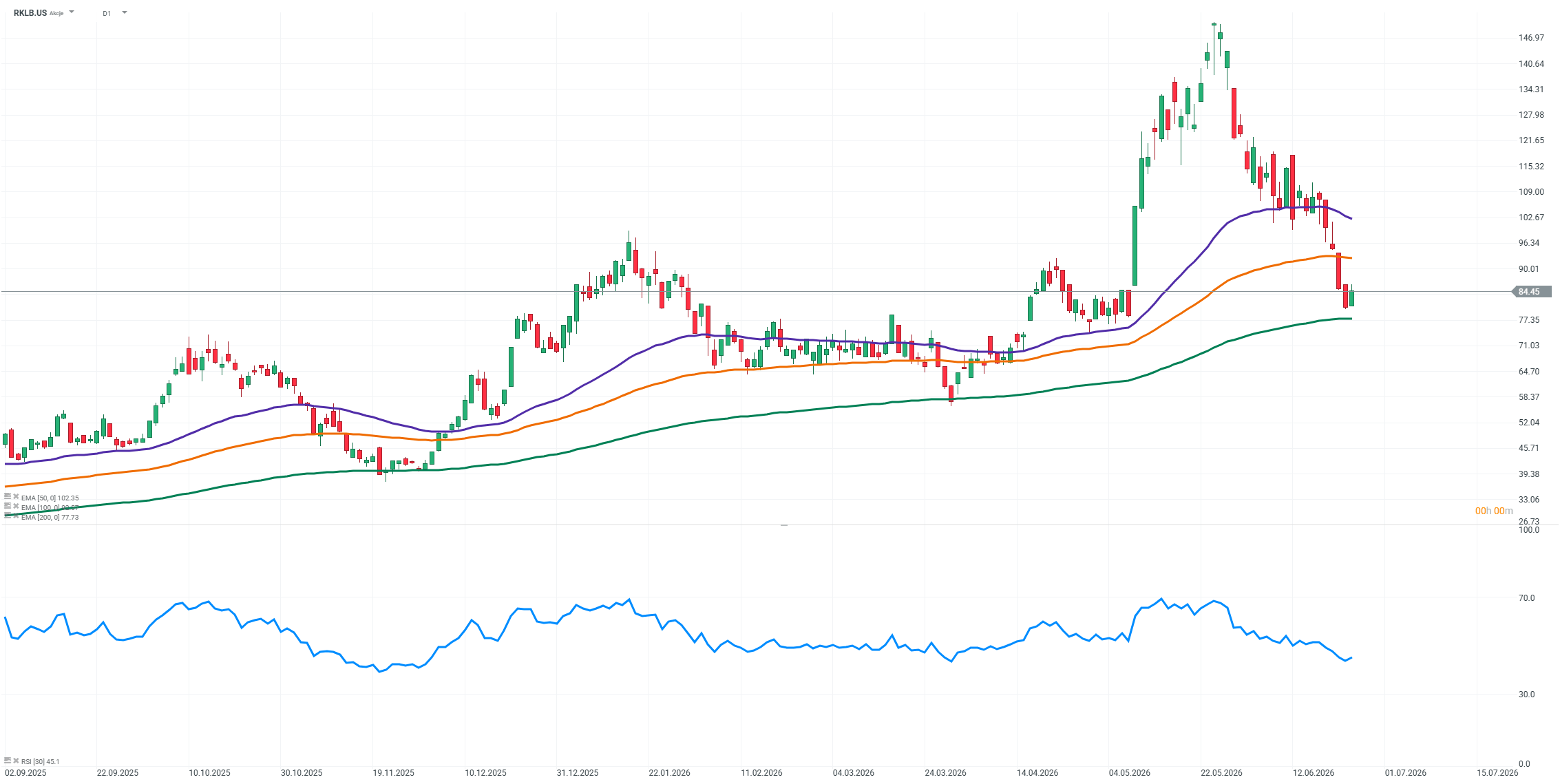
Source: xStation5