S&P 500 — US Large Cap Index
 FTSE 100 — UK Blue Chips
 Euro Stoxx 50 — Eurozone Leaders
 DAX 40 — German Equities
 CAC 40 — French Market Index
 Nikkei 225 — Japan Benchmark
 Hang Seng — Hong Kong Index
 Shanghai Composite — China Mainland
 ASX 200 — Australian Market
 TSX Composite — Canada Index
 Nifty 50 — India Large Cap
 STI Index — Singapore Market
 KOSPI — South Korea Index
 Bovespa — Brazil Equities
 JSE Top 40 — South Africa Index
 IPC Index — Mexico Market
DAXMarketsStocksTechnical Analysis

European Caution, Fragile Hormuz Truce, and Gold Market Correction


Stock Market / Equities
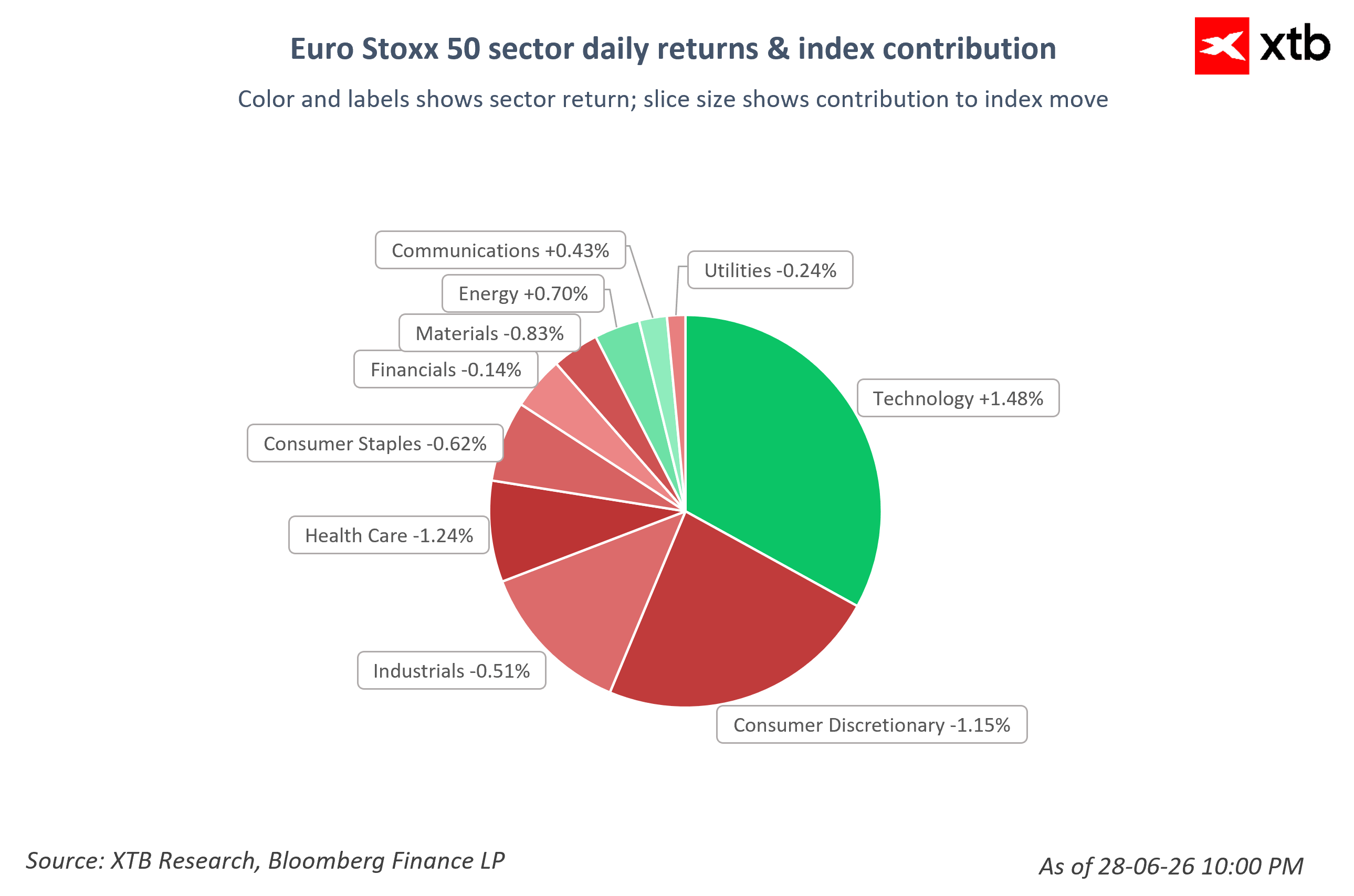
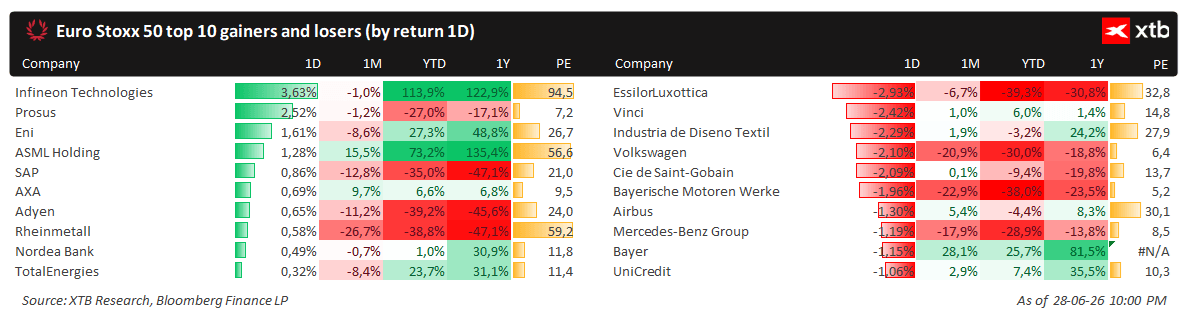
- European stock markets are recording slight declines or moving sideways today, reflecting cautious investor sentiment in response to tensions in the Middle East.
- Market movements are minor, and the sessions are characterized by sideways or slightly downward trends, indicating an absence of panic or mass sell-offs.
- The most important European indices are trading slightly below Friday’s reference levels.
- The pressure on European indices stems from tensions between the US and Iran, crude oil price fluctuations, and uncertainty regarding the stability of energy supplies, which aligns with a typical “risk-off light” reaction (caution without fleeing the market).
🌍 Macroeconomics and Geopolitics
- The US and Iran have announced a halt to mutual attacks and a return to talks, yet the situation remains extremely volatile.
- According to reports, the parties have agreed to cease shelling and continue talks (including in Doha) aimed at securing navigation in the Strait of Hormuz region.
- Previous agreements are described as “fragile” and have been repeatedly violated, as evidenced by earlier attacks on vessels and military retaliation.
- The key point of contention remains the control and security of shipping in the Strait of Hormuz, a strategic route for the global oil trade.
- Although a “de-escalation” has been formally announced, in practice, the continuous risk of a return to military clashes persists.
- Global financial markets are currently operating in a risk-pricing mode, where geopolitics is keeping indices locked in place, preventing distinct gains.
🛢️ Commodities and Precious Metals
- The conflict in the Hormuz region is causing strong fluctuations in crude oil prices, making this commodity currently the most sensitive barometer of the US-Iran situation.
- On an intraday basis, oil initially gained on risks associated with an escalating conflict, only to partially retrace following signals of de-escalation.
- The precious metals market is seeing a further deepening of its correction. Gold contracts are falling by over 1% to $4,050 per ounce.
- Silver is following gold’s lead, dropping by over 0.5% and testing the $58 per ounce level.
🪙 Cryptocurrencies
- The cryptocurrency market is showing mixed but relatively stable trends amid low volatility.
- The flagship cryptocurrency, Bitcoin, is recording a symbolic 0.1% decline to the $60,100 level.
- On the other hand, Ethereum, the second-largest by market capitalization, shows a slight advantage for buyers, rising by 0.1% and testing the $1,580 mark.
🏢 Companies and Corporations
- British American Tobacco (BAT) plans to reduce its workforce by approximately 20%.
- The primary driver behind such a deep restructuring is the implementation of AI technologies and process automation.
- BAT’s move fits into a broader market trend where FMCG companies and global corporations are cutting personnel costs while aggressively investing in automation and artificial intelligence.