S&P 500 — US Large Cap Index
 FTSE 100 — UK Blue Chips
 Euro Stoxx 50 — Eurozone Leaders
 DAX 40 — German Equities
 CAC 40 — French Market Index
 Nikkei 225 — Japan Benchmark
 Hang Seng — Hong Kong Index
 Shanghai Composite — China Mainland
 ASX 200 — Australian Market
 TSX Composite — Canada Index
 Nifty 50 — India Large Cap
 STI Index — Singapore Market
 KOSPI — South Korea Index
 Bovespa — Brazil Equities
 JSE Top 40 — South Africa Index
 IPC Index — Mexico Market
TSMC Raises AI Chip Prices. Is the Bill for the Artificial Intelligence Boom Starting to Grow?

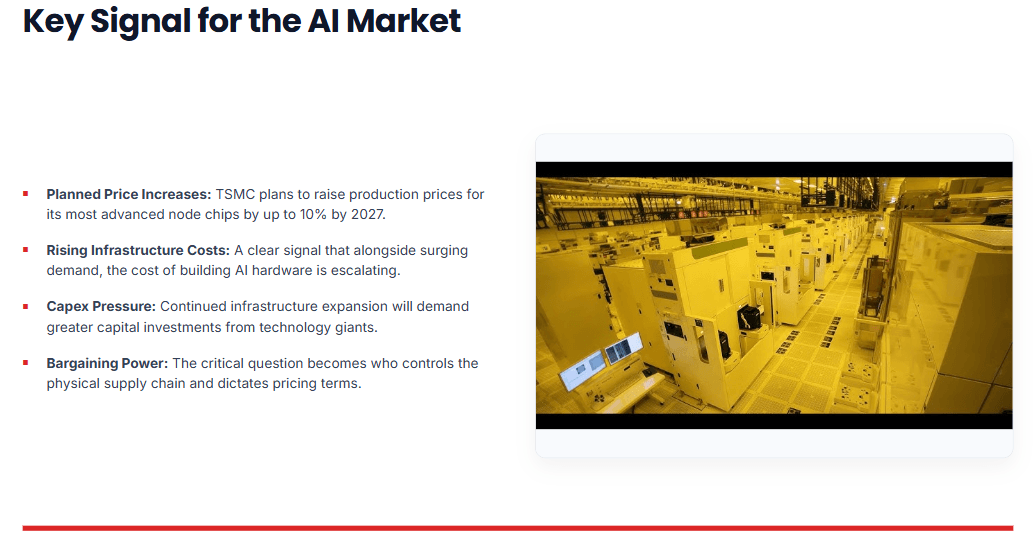
The news that TSMC plans to increase prices for the production of its most advanced chips by as much as 10% in 2027 may initially look like a standard business decision from the world’s largest semiconductor manufacturer. In reality, it is a much more important signal for the entire artificial intelligence market. It shows that as AI continues to expand, not only is demand for infrastructure increasing, but so is the cost of building it. Over the past months, markets have been focused primarily on the scale of demand for AI chips and whether manufacturers are able to deliver enough of the most advanced semiconductors. Nvidia, AMD, and the largest cloud providers have continued increasing spending on data centers, while limited production capacity at TSMC has become one of the biggest challenges facing the entire sector.
Now, the other side of the equation is becoming increasingly important. Markets are beginning to ask how much further expansion of AI infrastructure will cost and which companies will have the strongest negotiating position across the supply chain. TSMC currently holds a unique position. The Taiwanese company is the key manufacturer of the most advanced semiconductors used by the world’s largest technology companies. Its factories produce chips designed by Nvidia, AMD, and many other industry leaders. Access to the most advanced manufacturing processes has become one of the most important constraints on the development of the entire AI ecosystem.
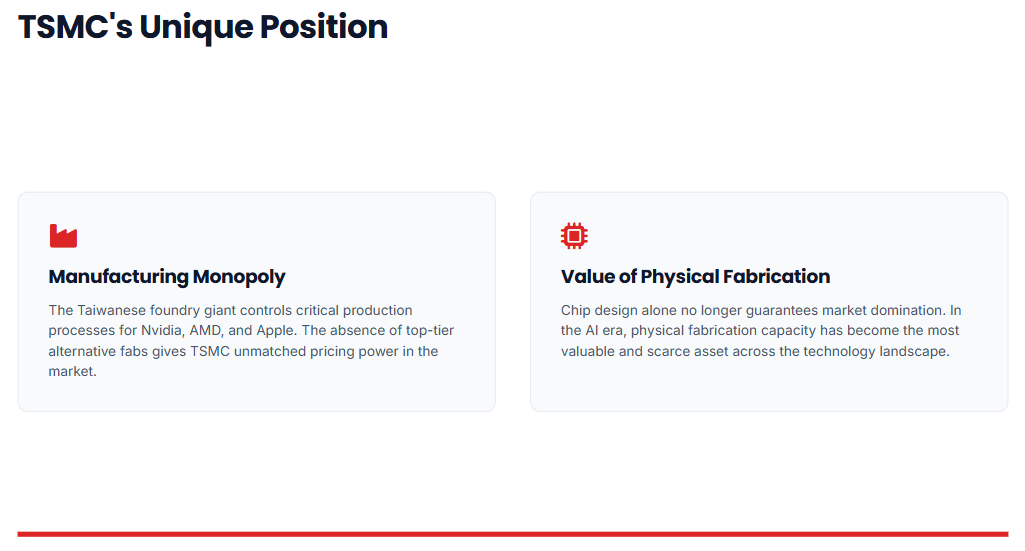
In this environment, higher prices are not simply an attempt to increase margins. They also reflect the growing value of an increasingly strategic asset: the ability to manufacture the most advanced chips. TSMC is showing that in the era of artificial intelligence, competitive advantage does not come only from designing chips. Control over their production is equally important. For Nvidia, information about higher manufacturing costs is particularly significant. The company remains the biggest beneficiary of the current AI boom, and its chips form the foundation of infrastructure being built by the largest cloud and technology companies. On one hand, higher production costs could increase expenses associated with future generations of AI processors. On the other hand, Nvidia’s current market position allows it to maintain extremely high margins, as demand for its solutions remains exceptionally strong.
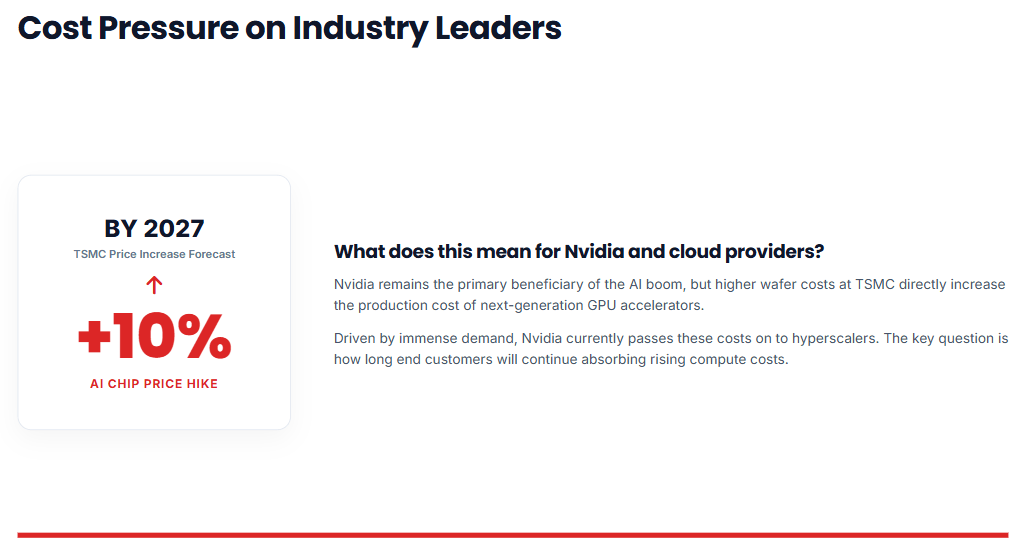
The key question is therefore not simply whether costs are rising, but whether the entire AI ecosystem will be able to pass those higher expenses on to end customers. For a long time, the dominant narrative around artificial intelligence was based on the belief that the winners would be companies with access to the largest computing capacity. The biggest technology players competed for GPU supply, built massive data centers, and increased capital expenditure in preparation for the next generation of AI models. However, as the market grows, another question is becoming increasingly important: will simply expanding infrastructure be enough, or will the key advantage come from using existing resources more efficiently? This could become one of the most important factors shaping the next phase of the industry. Rising chip manufacturing costs, enormous data center investments, and increasing competition across AI markets mean companies will need to analyze returns on investment much more carefully. This does not mean that the artificial intelligence boom is coming to an end. Demand for computing power remains extremely strong. The development of large language models, AI agents, and business automation continues to require increasingly advanced technological resources. However, the nature of the competition is changing. The next stage of AI development may depend less on simply spending more money and more on how effectively those investments are utilized. TSMC’s price increases could also influence the strategies of the largest technology companies. If the cost of purchasing the most advanced chips continues to rise, internally developed solutions from hyperscalers may become increasingly attractive. Companies such as Meta, Google, Microsoft, and Amazon are already developing their own chips designed for specific applications. The goal is not to completely replace Nvidia’s solutions, but rather to gain greater control over costs and create infrastructure that is better optimized for their own needs.
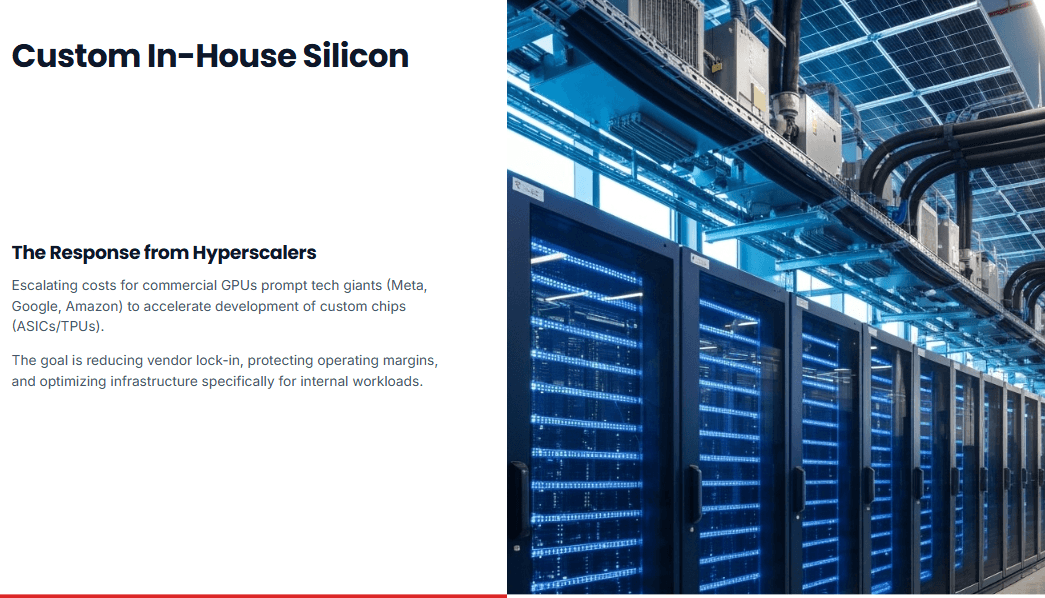
Over the long term, this could reshape the structure of the semiconductor market. Nvidia is likely to remain the leader in the most advanced and universal AI solutions, but some specialized applications could increasingly be handled by custom chips developed by the largest technology companies. For TSMC, the current environment is extremely favorable. The company sits at the center of one of the biggest technological trends of the modern era and possesses an advantage that competitors cannot easily replicate. Building new semiconductor factories and developing next-generation manufacturing technologies requires enormous capital investment and years of experience. At the same time, markets will increasingly focus on whether rising AI infrastructure costs are being matched by sufficiently strong growth in revenue generated from these technologies. This may become the biggest challenge of the next phase of the AI boom. The key question is no longer only who will build the largest data centers and purchase the most chips. The more important question is who will be able to use this infrastructure most effectively and transform it into real business value.
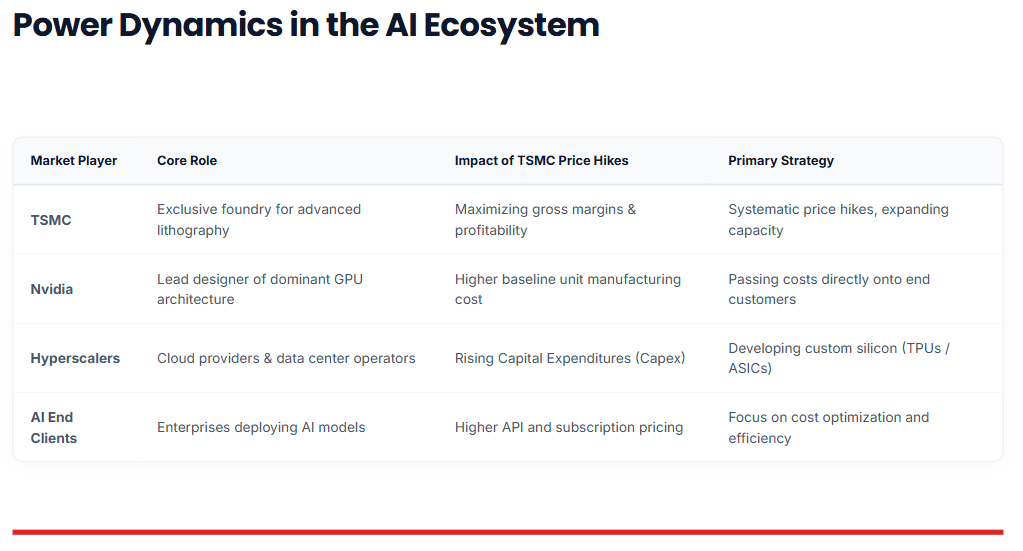
By raising production prices, TSMC is sending a clear message to markets. In the world of artificial intelligence, value is increasingly concentrated not only among companies creating models and designing chips, but also among those controlling the most critical parts of the technology supply chain. Without access to the world’s most advanced manufacturing facilities, even the best chip design remains only a design.
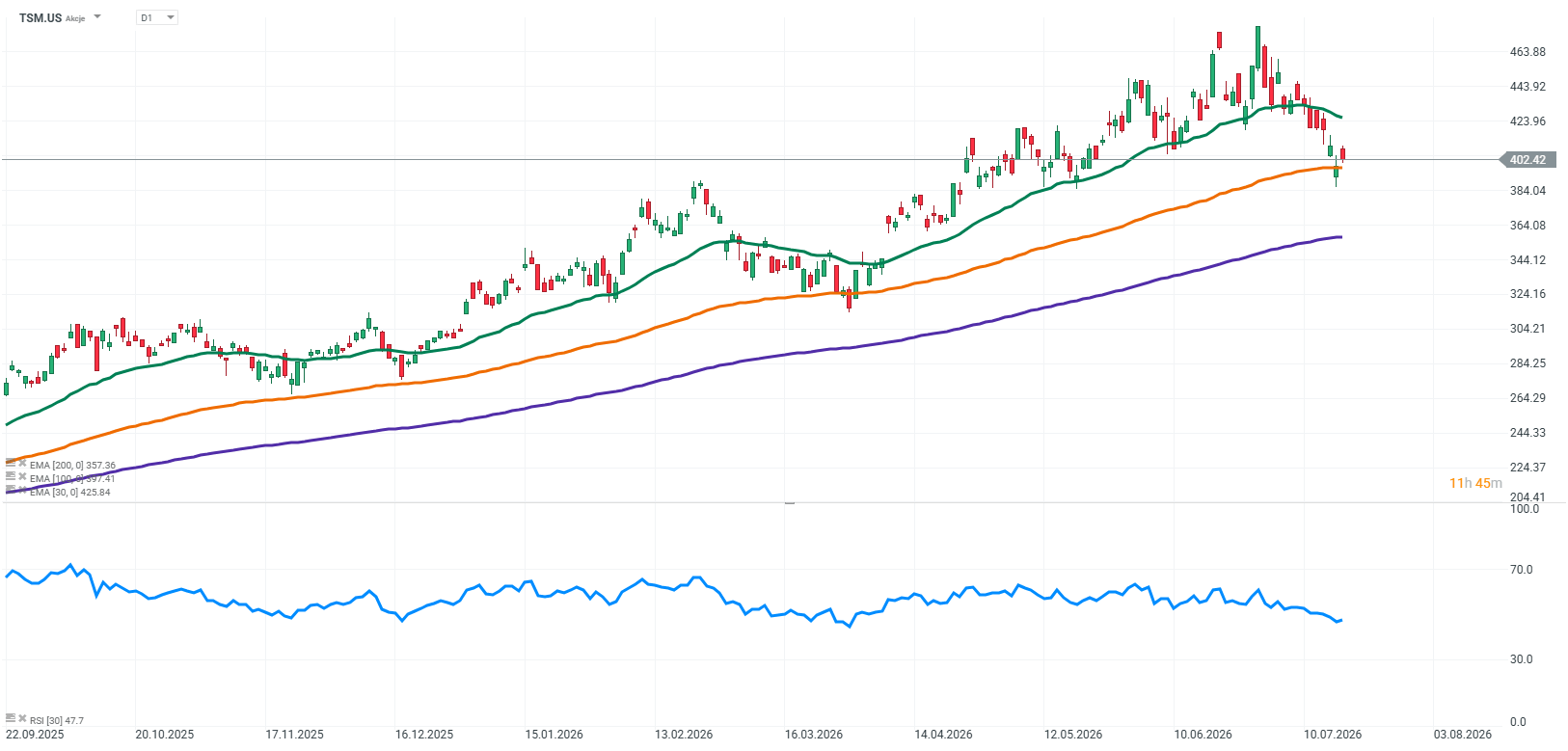
Source: xStation5