S&P 500 — US Large Cap Index
 FTSE 100 — UK Blue Chips
 Euro Stoxx 50 — Eurozone Leaders
 DAX 40 — German Equities
 CAC 40 — French Market Index
 Nikkei 225 — Japan Benchmark
 Hang Seng — Hong Kong Index
 Shanghai Composite — China Mainland
 ASX 200 — Australian Market
 TSX Composite — Canada Index
 Nifty 50 — India Large Cap
 STI Index — Singapore Market
 KOSPI — South Korea Index
 Bovespa — Brazil Equities
 JSE Top 40 — South Africa Index
 IPC Index — Mexico Market
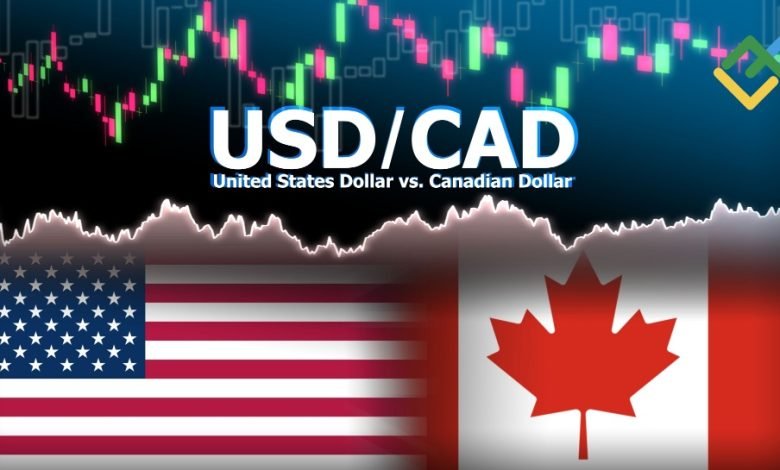
- USD/CAD weakens as the US Dollar declines amid falling Treasury yields.
- Global trade tensions escalate after US President Donald Trump announces a 25% tariff on auto imports.
- Canadian Prime Minister Mark Carney condemns the US tariffs, calling them a “direct attack” on auto sector workers.
USD/CAD remains subdued for the fourth consecutive day, hovering around 1.4260 during Asian trading hours on Thursday. The pair is under pressure as the US Dollar (USD) weakens amid declining Treasury yields.
The US Dollar Index (DXY), which tracks the USD against six major currencies, is retreating from recent gains, trading near 104.30. Meanwhile, yields on US Treasury bonds stand at 4.0% for the 2-year note and 4.35% for the 10-year note at the time of writing.
Investors are closely watching key US economic data set for release later in the day, including weekly Initial Jobless Claims and the final Q4 Gross Domestic Product (GDP) Annualized report. Additionally, Friday’s release of the Personal Consumption Expenditures (PCE) report—the Fed’s preferred inflation gauge—will provide further policy insights.
However, USD/CAD’s downside may be limited as the Canadian Dollar (CAD) could face headwinds following new US trade measures. On Wednesday, US President Donald Trump signed an order imposing a 25% tariff on auto imports, effective April 2, with collections beginning the next day. A one-month reprieve will apply to auto parts imports.
However, parts originating from Canada and Mexico that comply with the United States-Mexico-Canada Agreement (USMCA) will be exempt until US Customs and Border Protection establishes a system to enforce tariffs on non-US parts, according to a White House fact sheet.
Reacting to the announcement, Canadian Prime Minister Mark Carney called the tariffs a “direct attack” on auto sector workers and is set to return to Ottawa to coordinate the government’s response with his cabinet, as reported by CNN Business.