S&P 500 — US Large Cap Index
 FTSE 100 — UK Blue Chips
 Euro Stoxx 50 — Eurozone Leaders
 DAX 40 — German Equities
 CAC 40 — French Market Index
 Nikkei 225 — Japan Benchmark
 Hang Seng — Hong Kong Index
 Shanghai Composite — China Mainland
 ASX 200 — Australian Market
 TSX Composite — Canada Index
 Nifty 50 — India Large Cap
 STI Index — Singapore Market
 KOSPI — South Korea Index
 Bovespa — Brazil Equities
 JSE Top 40 — South Africa Index
 IPC Index — Mexico Market
WTI Rebounds Toward Four-Month Highs as Saudi Pipeline Shutdown Revives Supply Risks

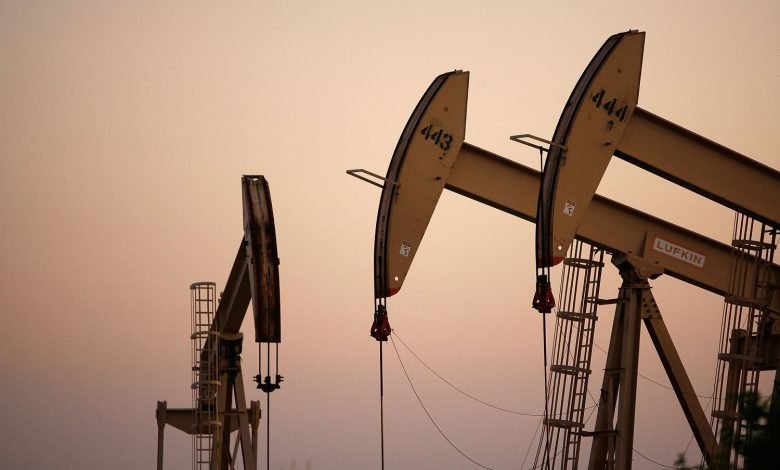
Today Markets Analysis: West Texas Intermediate (WTI) crude rebounded toward nearly four-month highs after Saudi Arabia shut its major East-West crude pipeline following drone attacks, highlighting renewed risks to Middle Eastern energy infrastructure. The disruption comes as diplomatic efforts to establish a temporary shipping corridor through the Strait of Hormuz have been postponed, leaving traders focused on whether alternative export routes can continue to protect global supply.
WTI recovered to around $99.40 per barrel during Asian trading on Monday after falling almost 4% in the previous session. The rebound reflects renewed concern that the latest attacks could create a more persistent disruption to regional crude flows.
Saudi Pipeline Shutdown Adds Fresh Supply Risk
Saudi Arabia suspended operations on its East-West pipeline following Thursday’s drone attacks.
The pipeline is particularly important because it provides an alternative route for transporting Saudi crude to Red Sea ports without relying on the Strait of Hormuz.
With a capacity of approximately 7 million barrels per day, the infrastructure represents a significant part of Saudi Arabia’s ability to redirect exports away from the Gulf’s most strategically sensitive shipping corridor.
The temporary shutdown therefore carries significance beyond the immediate loss of pipeline flows. It raises questions about how much spare logistical capacity remains available if disruptions around Hormuz persist.
Hormuz Shipping Talks Face Another Setback
The pipeline disruption comes against an increasingly uncertain diplomatic backdrop.
Talks involving Iran and several Gulf nations aimed at establishing a temporary shipping corridor through the Strait of Hormuz have reportedly been postponed.
Oman’s Foreign Minister Badr Albusaidi confirmed the delay, while reports indicated that Saudi Arabia had reservations about the proposal. Bahrain has also stated that it would not participate.
For oil markets, the postponement matters because Hormuz remains one of the world’s most important energy chokepoints.
Any prolonged uncertainty surrounding the corridor increases the risk premium embedded in crude prices, even if physical supply has not yet been materially reduced.
Seven Million Barrels a Day Highlights the Scale of the Risk
The East-West pipeline was designed in part to provide Saudi Arabia with an alternative export route should shipping through Hormuz become constrained.
Its roughly 7 million-barrel-per-day capacity makes the current shutdown particularly significant.
The market is therefore dealing with two related risks:
| Market factor | Potential impact on crude |
|---|---|
| Saudi East-West pipeline shutdown | Bullish |
| 7 million bpd alternative-route capacity affected | Bullish |
| Hormuz shipping uncertainty | Bullish |
| Postponed diplomatic talks | Bullish |
| Previous WTI sell-off | Potential bargain buying |
| Restoration of Saudi pipeline flows | Bearish |
| Successful Hormuz shipping agreement | Bearish |
The key issue is duration. A temporary precautionary shutdown would have a very different market impact from an extended disruption.
Oil’s Geopolitical Risk Premium Remains Elevated
The recent decline in crude prices does not necessarily signal that geopolitical risk has disappeared.
Brown Brothers Harriman’s Elias Haddad has argued that geopolitical uncertainty remains an important constraint on any sustained downside in oil prices.
That creates an important distinction for traders.
Crude can fall sharply when immediate supply fears ease, but if the underlying infrastructure and shipping risks remain unresolved, sellers may struggle to generate a sustained bearish trend.
For WTI, the market is therefore balancing short-term profit-taking against a still-elevated geopolitical risk premium.
Higher Oil Prices Create a Second Market Problem
The implications extend beyond the crude market itself.
A sustained rise in oil prices can feed directly into transportation, industrial and consumer energy costs. That can complicate the inflation outlook at precisely the moment when financial markets are already focused heavily on central-bank policy.
This creates a potentially difficult combination for risk assets:
Geopolitical escalation → higher crude prices → higher inflation expectations → tighter monetary-policy expectations → higher yields → pressure on equities and risk-sensitive currencies.
That transmission mechanism is increasingly important for traders because the oil market is no longer operating in isolation.
Currency Hedger: Oil Creates a Major FX Transmission Channel
For currencies, the direction of crude prices can produce very different effects depending on whether an economy is a major energy exporter or importer.
Higher oil prices can support currencies such as the Canadian dollar, while creating greater pressure on energy-importing economies through deteriorating trade balances and higher imported inflation.
The more persistent the oil shock becomes, the greater the potential impact on central-bank expectations and interest-rate differentials.
Currency Hedger therefore views the current oil market as a broader macroeconomic event rather than simply a commodity-price move. The relationship between crude, inflation, interest rates and currencies could become increasingly important if WTI remains close to $100.
What Traders Are Watching Next
The immediate focus for crude traders is likely to remain on:
- Whether Saudi Arabia restores the East-West pipeline quickly.
- Whether further attacks target regional energy infrastructure.
- Developments surrounding the Strait of Hormuz.
- Any renewed diplomatic negotiations involving Iran and Gulf nations.
- US crude inventories and refinery demand.
- Whether WTI can sustain prices near the $100 psychological level.
- The impact of higher oil prices on inflation and central-bank expectations.
The $100 level is likely to become an important psychological reference point. A sustained move above it would reinforce the perception that geopolitical risk is becoming structurally embedded in crude pricing.
Today Markets View
WTI’s rebound is significant because the market is confronting a combination of infrastructure disruption and unresolved geopolitical risk.
The Saudi East-West pipeline was specifically designed to reduce dependence on the Strait of Hormuz. Its shutdown therefore demonstrates that even alternative energy routes remain vulnerable when regional attacks escalate.
“The most important issue for oil markets is not simply whether WTI can trade above $100. It is whether the infrastructure designed to protect Gulf energy exports from a Hormuz disruption can actually remain operational during a prolonged regional crisis. If the Saudi pipeline remains offline while uncertainty around Hormuz continues, the geopolitical risk premium could become much more persistent.”
— Louis Roche, Analyst at Today Markets
Bottom Line
WTI has rebounded toward $99.40 per barrel after Saudi Arabia shut its 7 million-barrel-per-day East-West pipeline following drone attacks.
The postponed Hormuz shipping talks add another layer of uncertainty, while the pipeline shutdown demonstrates that alternative export infrastructure remains exposed to regional security risks.
For traders, the next major question is whether this is a temporary disruption or the beginning of a more persistent supply-risk premium in crude.
Analysis by Louis Roche, Analyst, Today Markets
Currency Hedger Contributor: Currency Hedger Market Intelligence