S&P 500 — US Large Cap Index
 FTSE 100 — UK Blue Chips
 Euro Stoxx 50 — Eurozone Leaders
 DAX 40 — German Equities
 CAC 40 — French Market Index
 Nikkei 225 — Japan Benchmark
 Hang Seng — Hong Kong Index
 Shanghai Composite — China Mainland
 ASX 200 — Australian Market
 TSX Composite — Canada Index
 Nifty 50 — India Large Cap
 STI Index — Singapore Market
 KOSPI — South Korea Index
 Bovespa — Brazil Equities
 JSE Top 40 — South Africa Index
 IPC Index — Mexico Market

Microsoft has once again come into the spotlight, but this time not because of earnings or advances in artificial intelligence, rather due to rising regulatory risk. A UK court has allowed a class action lawsuit worth up to $2.8 billion to proceed, targeting the company’s cloud licensing practices. At first glance, this may seem like just another case against a Big Tech giant.
In reality, however, its implications are much broader. The dispute centers on how Microsoft differentiated pricing for Windows Server licenses depending on the environment in which they were deployed. According to the claimants, nearly 60,000 companies, primarily small and medium-sized enterprises, using the software outside Microsoft’s own cloud environment resulted in significantly higher costs. If confirmed, such a pricing structure could suggest that Microsoft’s competitive edge was not based solely on service quality, but also on how its pricing model was designed. In practice, this could limit customer choice and strengthen the company’s own platform at the expense of competitors.
Microsoft denies these allegations, emphasizing that its licensing policies are transparent and have been applied consistently for years. At this stage, the court has not ruled on the merits of the case but has determined that there are sufficient grounds for it to move forward, which alone is enough to draw market attention. The situation fits into a broader trend of increasing regulatory pressure on major technology companies.
The UK’s Competition and Markets Authority is already investigating competition in the cloud market, while similar probes are underway in other jurisdictions. This raises the risk that any eventual ruling could set a precedent extending beyond a single market. From an investor perspective, what matters most is that the case directly affects one of Microsoft’s most important business segments.
Cloud services account for a significant share of the company’s revenue and remain a key growth engine, further supported by the rapid expansion of AI-driven solutions. In the short term, the impact of the lawsuit may be limited בעיקר to increased volatility and greater sensitivity of the stock to regulatory headlines. Even potential financial penalties would likely be manageable relative to the company’s scale. However, the long-term implications are far more important.
If regulatory pressure leads to changes in the licensing model, Microsoft could lose part of its structural advantage in the cloud. That would force the market to reassess not only margins, but also the growth trajectory of the entire segment. And this is where the core of the story lies. This is not a story about $2.8 billion. It is a story about whether Microsoft can continue to scale its cloud business under the current rules, or whether it will be forced to operate in a more level, regulated playing field. For investors, this means one thing: valuation is no longer driven solely by growth, but increasingly shaped by regulation, which can both influence and, in extreme cases, constrain that growth.
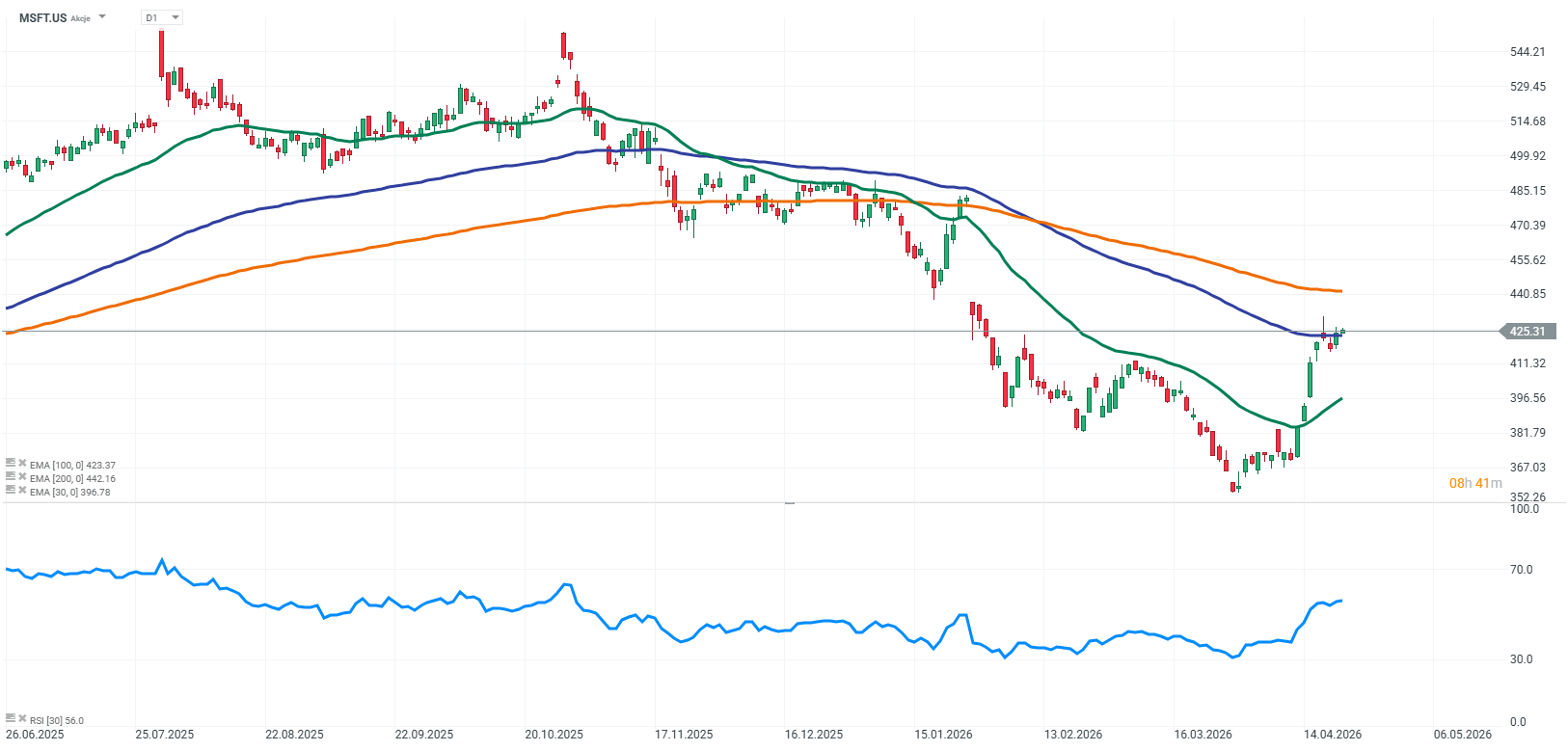
Source: xStation5