S&P 500 — US Large Cap Index
 FTSE 100 — UK Blue Chips
 Euro Stoxx 50 — Eurozone Leaders
 DAX 40 — German Equities
 CAC 40 — French Market Index
 Nikkei 225 — Japan Benchmark
 Hang Seng — Hong Kong Index
 Shanghai Composite — China Mainland
 ASX 200 — Australian Market
 TSX Composite — Canada Index
 Nifty 50 — India Large Cap
 STI Index — Singapore Market
 KOSPI — South Korea Index
 Bovespa — Brazil Equities
 JSE Top 40 — South Africa Index
 IPC Index — Mexico Market
Asian Stocks in the Green, Bitcoin Rallies 8% – Has Risk Appetite Returned?

Most Asian indices are trading in the green today. The Chinese Hang Seng is up 1.1%, while the Japanese Nikkei 225 has gained 1.3%. Meanwhile, the Korean KOSPI is trading significantly higher, up 5.9%.
📈 Equities
The primary catalyst for these gains can be attributed to yesterday’s announcements by US Treasury Secretary Scott Bessent. His remarks led to a substantial decline in long-term bond yields (-1.8% or 9 bps in the case of the 30-year) and a notable (-0.9%) weakening of the US dollar. A portion of this capital has been redirected toward the equity markets, which has subsequently benefited Asian exchanges. The KOSPI is further bolstered by a more than 12% rise in SK Hynix shares, following the company’s announcement yesterday of a 40 trillion won (approximately $29 billion) share buyback plan. The firm intends to acquire and cancel up to 24 million shares by 19 November. Regarding the Treasury Department’s actions, the programme aims to:
- At least double the maximum threshold for individual buyback operations (from $2 billion to $4 billion);
- Focus on the long end of the curve, specifically the purchase of long-dated Treasury bonds (resulting in increased liquidity);
- Commence on 9 September and remain in effect until at least 4 November, when the Treasury Department will release new quarterly plans.
🧈 Precious metals
The decline in bond yields naturally supported gold prices, which were driven 4.4% higher yesterday. Today, we are observing a slight correction in this area (-0.7%). A similar trend occurred yesterday with silver, which gained 5.8%.
- The current price for a troy ounce of gold is approximately $4,490, while silver is trading at $67.
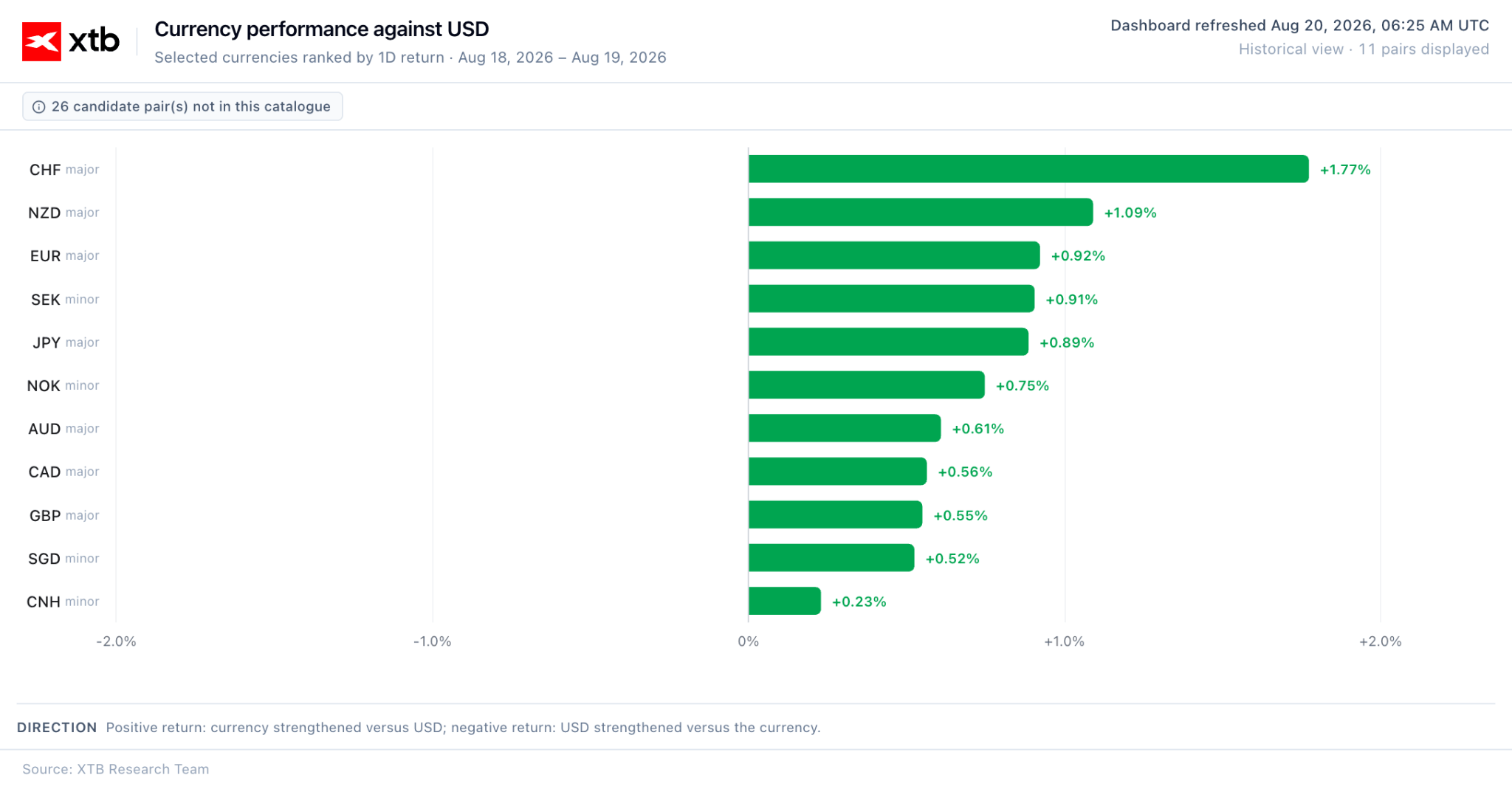
₿ Cryptocurrencies Major cryptocurrencies also appreciated in value. Bitcoin’s dynamic climb past $69,000 was underpinned by political pressure from Donald Trump, who is urging Congress to pass the CLARITY Act. These efforts coincided with a meeting with industry representatives at the White House, which strongly reignited market hopes for favourable regulations. 💱 Currencies The situation on the traditional foreign exchange market appeared differently. The trade-weighted dollar index fell by 0.9% yesterday, reaching its lowest level since May. A similar move was observed in the EURUSD pair (+0.9%), which approached 1.17. A weakening of this magnitude was last seen following the July Fed meeting, which led investors to withdraw a significant portion of their bets on interest rate hikes. While technically yesterday’s actions by the Treasury Department do not constitute monetary easing (which falls under the jurisdiction of the Federal Reserve), the market effect was similar. The decision implies a greater supply of dollars in the market, which naturally led to the currency’s depreciation. Figure 1: Performance of Selected Currencies (19.08.2026)
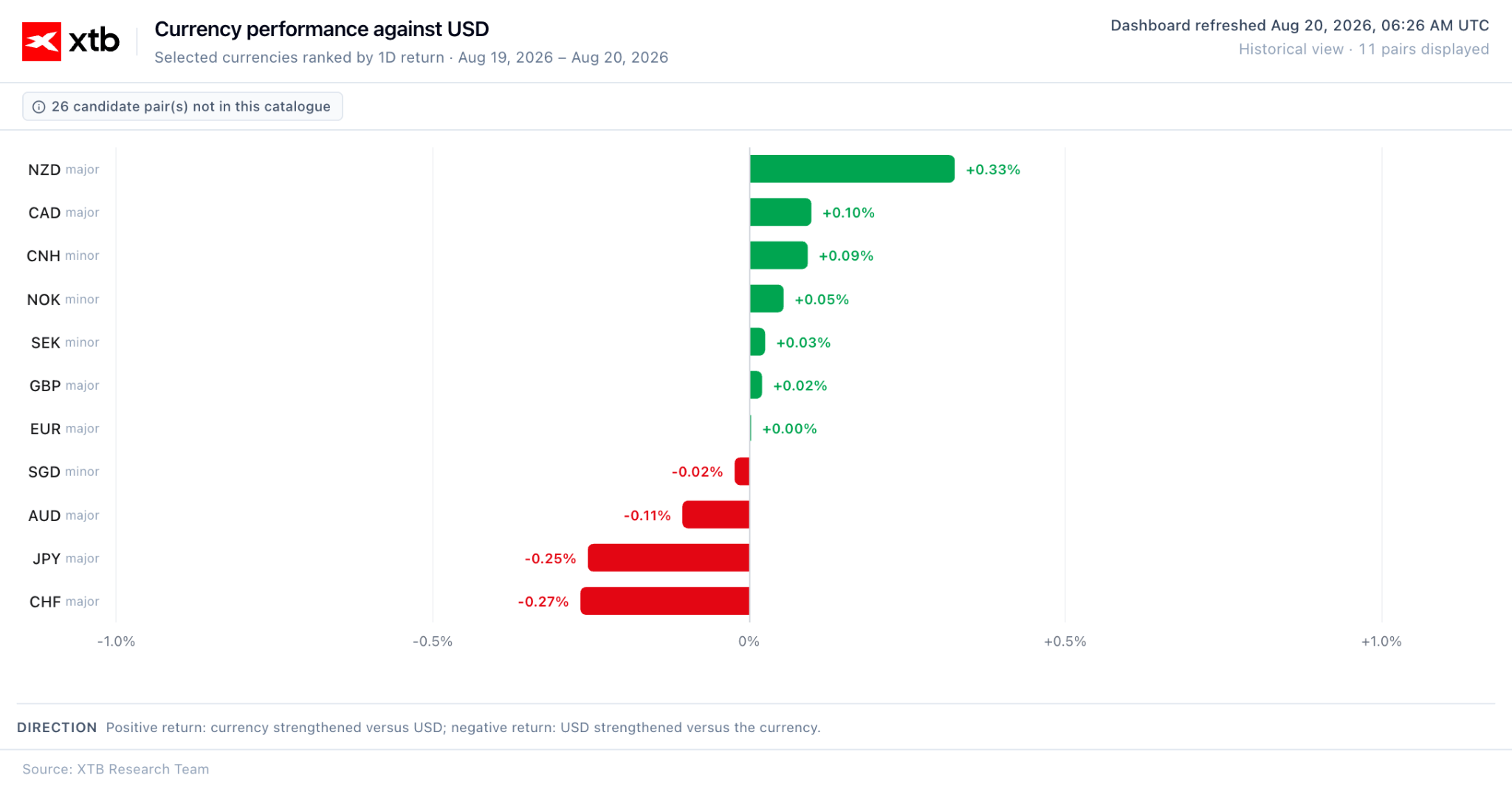
Source: XTB Research, 20.08.2026 Today, the situation is stabilising. Currencies typically sold in carry trade transactions are particularly losing ground. The Australian dollar is also performing poorly, weighed down by macroeconomic data released in recent hours. Figure 2: Performance of Selected Currencies (20.08.2026)
Source: XTB Research, 20.08.2026
📈 Macroeconomic data and monetary policy
Today, our focus will primarily be on yesterday’s minutes, the transcript of the debate from the most recent FOMC meeting. What did we learn?
- “Many” policymakers concluded that further monetary tightening would likely be necessary if inflation fails to subside.
- The Committee remains deeply divided on the assessment of inflation prospects. While a “majority” of participants anticipate a gradual decline in inflation later this year, “many” remain concerned that it could stay stubbornly elevated. It was noted that core inflation indicators remain worryingly high, and inflation expectations have reached levels exceeding those seen prior to the conflict in Iran.
- Those policymakers who advocated for maintaining interest rates at current levels in July argued that a pause would allow for a more accurate diagnosis of the situation. Since that meeting, the publication of weaker labour market data and slightly softer inflation readings has significantly strengthened their position.
- Members voting for a hike estimated that such a move would likely mitigate the need for more aggressive and potentially more costly economic tightening at a later stage.
🌍 Geopolitics Finally, a brief mention of recent reports from Axios. Citing American officials, the portal reported that the US military has been discreetly operating a secure shipping corridor through the southern channel of the Strait of Hormuz, just off the coast of Oman, for several weeks. Between 15 and 20 tankers are reportedly being escorted through the strait each night, allowing for daily exports of approximately 10 million barrels of oil – nearly half the volume recorded before the conflict. On certain nights, this volume reportedly reaches as high as 15-20 million barrels. US forces are said to be directly facilitating the export of both loaded vessels departing the Gulf and empty ships arriving to collect crude.
🛢️ Energy commodities
Thus far, these reports have not had a material impact on global oil or gas prices.
- Brent crude oil is currently priced at just over $92 per barrel, representing an increase of approximately 4% compared to levels seen a week ago.
- WTI crude prices have risen at a similar rate, with a barrel now costing just under $85.
- Over the same period, European gas prices have increased by approximately 6%. Currently, the price for a MWh of liquefied natural gas on the Dutch TTF exchange is roughly $63.50.