S&P 500 — US Large Cap Index
 FTSE 100 — UK Blue Chips
 Euro Stoxx 50 — Eurozone Leaders
 DAX 40 — German Equities
 CAC 40 — French Market Index
 Nikkei 225 — Japan Benchmark
 Hang Seng — Hong Kong Index
 Shanghai Composite — China Mainland
 ASX 200 — Australian Market
 TSX Composite — Canada Index
 Nifty 50 — India Large Cap
 STI Index — Singapore Market
 KOSPI — South Korea Index
 Bovespa — Brazil Equities
 JSE Top 40 — South Africa Index
 IPC Index — Mexico Market

BoJ’s Takata calls for nimble, data-dependent rate hikes rather than a fixed pace

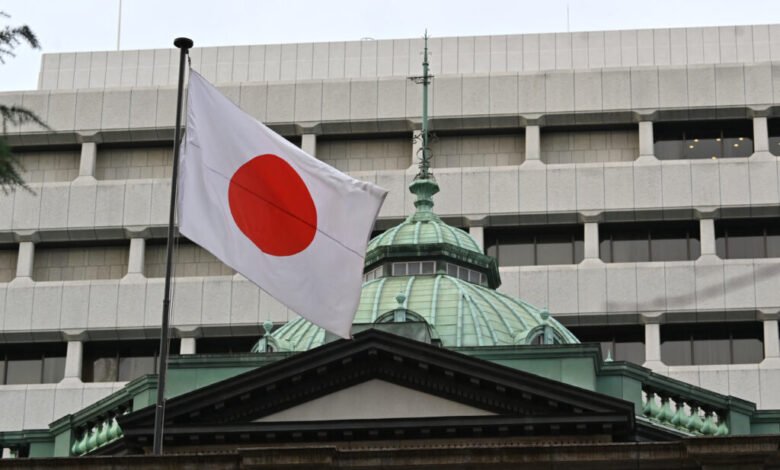
Bank of Japan (BoJ) board member Hajime Takata said on Monday that the central bank should not carry out rate hikes at a fixed pace and size, but instead needs to take nimble and data-dependent actions in response to the price and economic environment in Japan.
Key quotes
Price increases now have a greater tendency to generate second-round effects.
Given some FX market participants have recently paid attention to not only nominal but also real interest rate differentials, it is necessary to monitor price developments transmitted through exchange rates.
Such developments represent one of the reasons why interest rate hikes are currently needed.
BoJ should not carry out rate hikes at a fixed pace and size, but instead needs to take nimble and data-dependent actions in response to the price and economic environment in Japan.
Japan’s policy interest rate has only finally approached the neutral zone.
Must bring BoJ’s policy interest rate sufficiently close to neutral rate level to be able to respond nimbly to possible second-round effects of prices.
With central banks abroad entering rate-hike cycle, BoJ must be mindful of risk overseas interest rates could push Japan’s neutral rate above level expected by markets.
I believe BoJ must demonstrate to market its determination to prevent upward price deviations, while giving consideration to impact via fx markets.
Inflationary pressures could become evident toward the second half of fiscal 2026.
BoJ must undergo a regime change, placing its policy interest rate at an early stage in what I would call a “good” position.
In regard to further rate hikes, my view is that BoJ should not aim to reach expected neutral rate, nor should it be bound by particular intervals or ranges anticipated in the markets.
I believe BoJ needs to conduct rate hikes nimbly after gauging degree of accommodation in domestic financial conditions, while examining developments overseas.
Each time BoJ raises rates, it is necessary to examine whether subsequent lending attitudes of banks, other financial institutions and the funding environment for firms are accommodative.
At this point, the funding environment in Japan remains accommodative.
Developments in stock, real estate, and foreign exchange markets are also important in assessing financial conditions.
Once higher rates start to adversely affect corporate behavior, BoJ can take this as a sign policy rate has reached neutral and begin to envision a potential rate cut.
I believe BoJ is at a new stage that calls for nimble responses when it comes to either raising or lowering the policy interest rate.
That said, I believe the timing of the cumulative effects of policy interest rate hikes taking hold is still some way off.
Despite turbulence in the stock market in early November, mainly related to global AI-related stocks, I believe AI investment will remain solid overall,
BoJ is still in process of raising its policy rate, as it seeks to normalize policy, respond to global shift in monetary and fiscal policies.
Risk of a significant slowdown in Japan’s economy has recently decreased.
2026 represents a new phase, in which it has become necessary to move BoJ’s focus more to upswings in prices.
BoJ’s takata flags second-round inflation risks, supporting a stronger yen
Takata’s speech score of 9.2/10 on FXS Speechtracker, exactly in line with the historic average, signals a consistently hawkish stance rather than a surprise shift, but the emphasis on second-round price effects and real rate differentials marks a clear reinforcement of tightening bias. The argument that recent FX market focus on real interest rate gaps and the need to move the policy rate “sufficiently close” to the neutral level, while remaining nimble and data-dependent, underpins a constructive backdrop for the Yen as markets price in further rate hikes.
Takata’s warning that overseas rate cycles could push Japan’s neutral rate above what markets expect, combined with the need to demonstrate determination to prevent upward price deviations and to monitor transmission via FX markets, strengthens the case for additional BoJ tightening. The expectation that inflationary pressures could become evident toward the second half of fiscal 2026, alongside the notion of a “regime change” to place the policy rate in a “good” position, supports a hawkish interpretation that should limit Yen downside and encourage investors to reassess the path of Japanese rates.
Market reaction
As of writing, the USD/JPY pair is trading around 159.64, down nearly 0.10% for the day.