S&P 500 — US Large Cap Index
 FTSE 100 — UK Blue Chips
 Euro Stoxx 50 — Eurozone Leaders
 DAX 40 — German Equities
 CAC 40 — French Market Index
 Nikkei 225 — Japan Benchmark
 Hang Seng — Hong Kong Index
 Shanghai Composite — China Mainland
 ASX 200 — Australian Market
 TSX Composite — Canada Index
 Nifty 50 — India Large Cap
 STI Index — Singapore Market
 KOSPI — South Korea Index
 Bovespa — Brazil Equities
 JSE Top 40 — South Africa Index
 IPC Index — Mexico Market
Broadcom Delivers Record Results. The Market Is Already Looking Much Further Ahead


Broadcom closed its third fiscal quarter of 2026 with results that, on an operational level, are difficult to describe as anything other than outstanding. Revenue reached $29.59 billion, up 86% year over year and above analysts’ expectations. Earnings growth was even more impressive.
Key figures:
- Revenue: $29.59 billion, up 86% year over year
- GAAP operating income: $15.96 billion, up 171% year over year
- GAAP net income: $13.09 billion, up 216% year over year
- GAAP earnings per share: $2.68, up 215% year over year
- Cash flow from operations: $14.20 billion, up 98% year over year
- Free cash flow: $13.67 billion, up 95% year over year
What stands out most is that such a substantial improvement in results was not driven by a single one-off event. There was no transaction or extraordinary revenue item in the third quarter that would explain the 171% year-over-year increase in operating income and the 216% increase in net income. A lower effective tax rate had some positive impact on net income, but its contribution was relatively small compared with the scale of the overall improvement. The primary drivers of growth therefore remain rapidly rising sales and the high profitability of Broadcom’s core business.
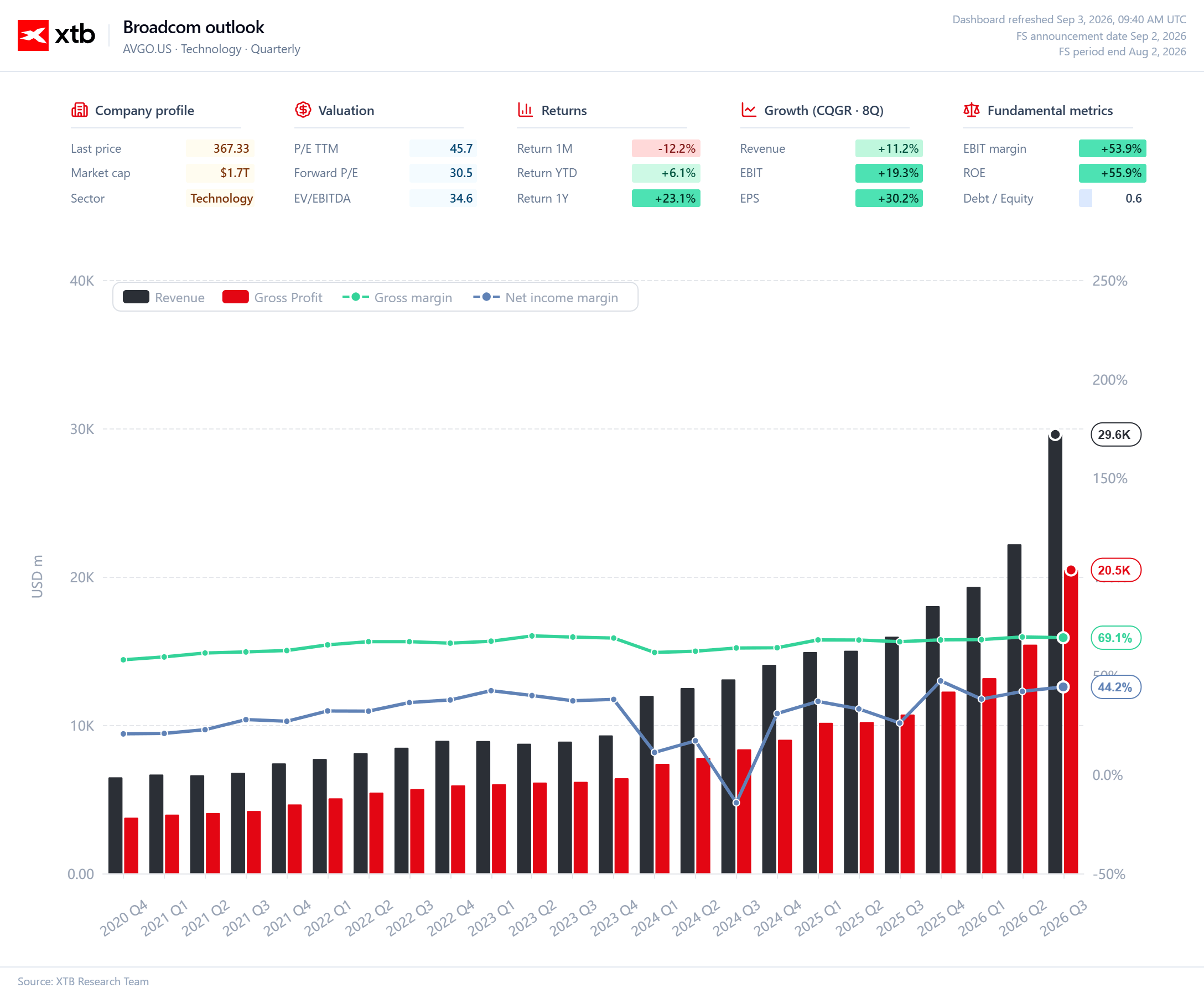
The main source of this growth continues to be sales of chips designed for computing infrastructure. Revenue in the Semiconductor Solutions segment reached $20.84 billion, up 127% from the third quarter of the previous year. Data center chip sales were particularly strong. They reached $16.7 billion in the third quarter, representing a 221% year-over-year increase and a 54% increase compared with the second quarter of fiscal 2026. Broadcom expects data center revenue to rise to $21.7 billion in the fourth quarter. That would represent an increase of roughly 30% sequentially and 236% year over year. The main issue from an investor perspective is not the quality of the quarter that has just ended, but the level of expectations for the next one. Broadcom forecasts fourth-quarter revenue of approximately $34.8 billion, up 93% from the same quarter a year earlier. The guidance itself is very strong, but it proved insufficient against the market’s extremely high expectations. That is why the initial investor reaction was negative, even though the company expects revenue to remain almost twice as high as it was a year earlier.
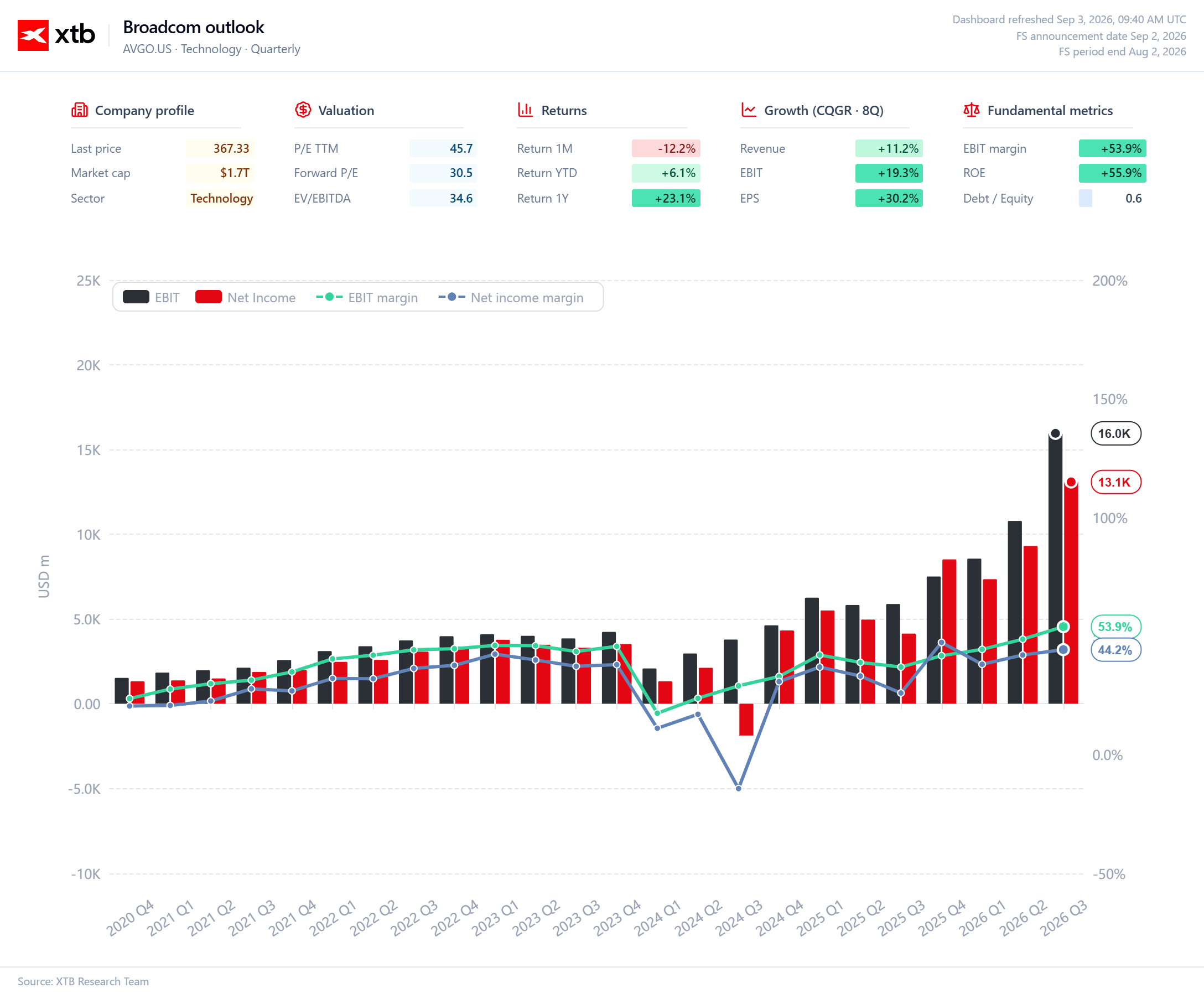
More interesting than the guidance for the next quarter is the outlook for the next several years. Broadcom expects approximately $58 billion in data center chip revenue in fiscal 2026, around $115 billion in 2027, and as much as $230 billion in 2028. That would represent growth of roughly 98% in 2027 compared with 2026, followed by another increase of about 100% in 2028 compared with 2027. With assumptions this ambitious, the market will naturally demand regular confirmation through actual results. It is precisely this potential scale of long-term growth that could matter more to shareholders than a few billion dollars of difference in near-term quarterly guidance. Broadcom is no longer presenting merely a short period of exceptionally strong growth. Instead, it is outlining a plan to multiply the scale of its computing infrastructure business several times over. At the same time, such ambitious targets increase the risk of disappointment, particularly if investment by the company’s largest customers begins to slow or competition from internally designed chips proves stronger than expected. Broadcom delivered a very strong report, and the negative stock-market reaction is primarily a reflection of the fact that the market expected even more. Year-over-year growth of 86% in revenue, 171% in operating income and 216% in net income, combined with $13.7 billion in free cash flow, demonstrates the extraordinary scale of the company’s current growth. For investors, the key question now is whether Broadcom can maintain a pace of expansion sufficient to deliver on its very ambitious 2027 and 2028 targets. Against this backdrop, weaker-than-expected guidance for a single quarter looks more like a problem of an exceptionally high bar than a sign of deteriorating fundamentals.
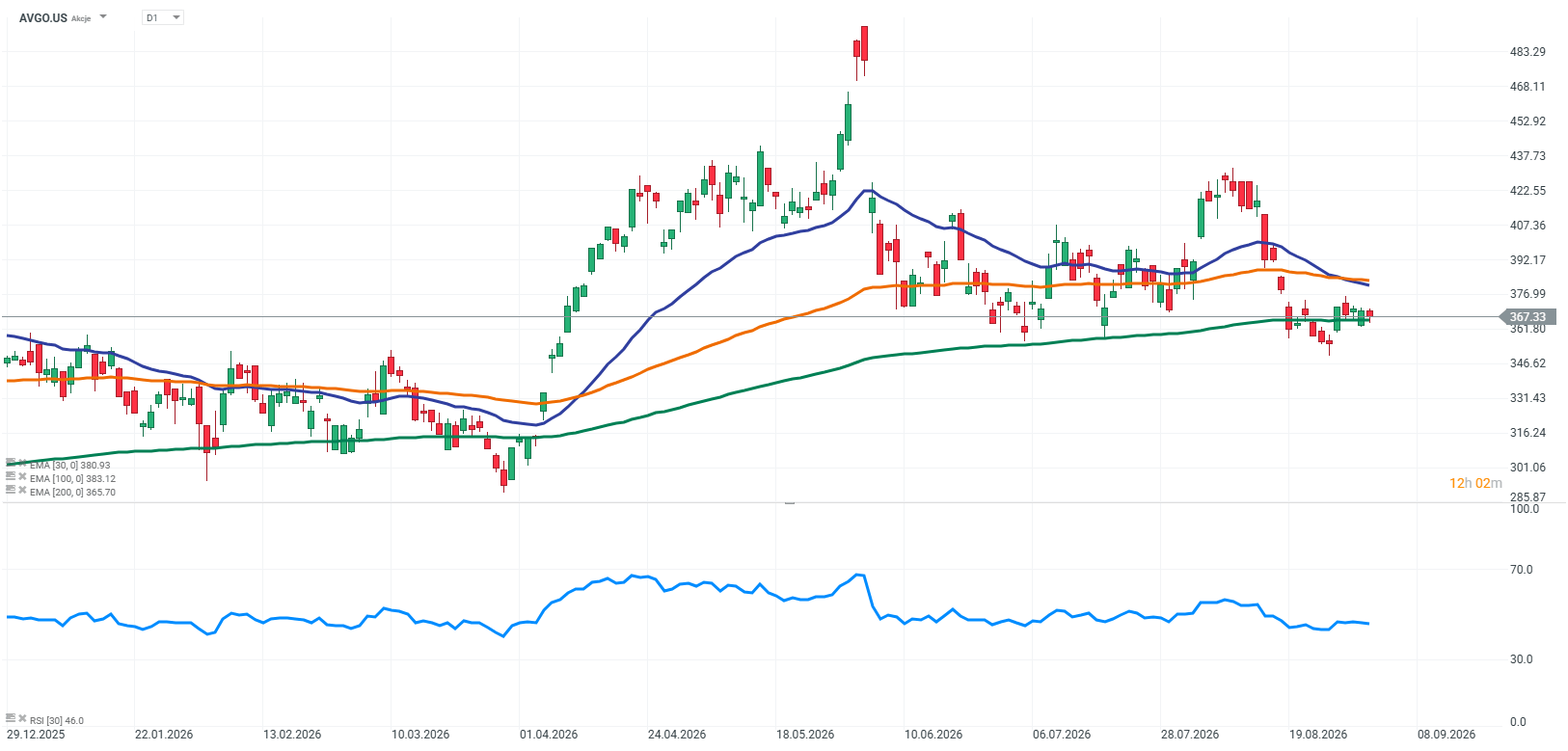
Źródło: xStation5