S&P 500 — US Large Cap Index
 FTSE 100 — UK Blue Chips
 Euro Stoxx 50 — Eurozone Leaders
 DAX 40 — German Equities
 CAC 40 — French Market Index
 Nikkei 225 — Japan Benchmark
 Hang Seng — Hong Kong Index
 Shanghai Composite — China Mainland
 ASX 200 — Australian Market
 TSX Composite — Canada Index
 Nifty 50 — India Large Cap
 STI Index — Singapore Market
 KOSPI — South Korea Index
 Bovespa — Brazil Equities
 JSE Top 40 — South Africa Index
 IPC Index — Mexico Market

Gold Price Forecast: Gold Slides Towards $4,000 as AI Stock Sell-Off Triggers Precious Metals Liquidation

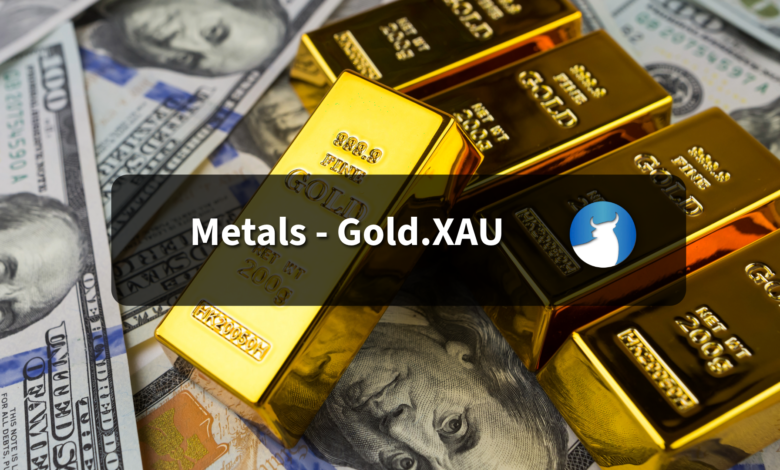
Gold prices are falling towards $4,000 per ounce, approaching their lowest levels in nearly three months as a deepening sell-off in technology and artificial intelligence stocks triggers widespread liquidation across precious metals. Investors are selling gold to cover losses and meet liquidity requirements elsewhere in their portfolios, placing additional pressure on prices despite continuing uncertainty across financial markets.
The broader equity downturn has intensified following renewed concerns about the scale and sustainability of AI investment. Meta Platforms’ plans to increase capital expenditure have reignited fears that technology companies may take on additional debt to finance the AI buildout, raising questions about future returns and the durability of one of the key drivers of US economic growth.
Rising oil prices are adding another challenge for gold by increasing inflation concerns and strengthening expectations that interest rates could remain elevated for longer. However, growing doubts about the sustainability of AI investment have also prompted markets to scale back expectations for further Federal Reserve rate hikes, potentially providing some support for precious metals if monetary policy expectations become more favourable.
Gold Market Snapshot
| Market Indicator | Current Situation |
|---|---|
| Gold Price | Falling towards $4,000 per ounce |
| Price Trend | Bearish |
| Recent Low | Approaching a nearly three-month low |
| Primary Pressure | Liquidation amid the technology and AI stock sell-off |
| Equity Market Driver | Concerns over the sustainability of AI investment |
| Corporate Spending | Meta plans higher capital expenditure |
| Inflation Risk | Rising oil prices |
| Interest-Rate Outlook | Elevated rates may persist, but expectations for further Fed hikes have eased |
| Key Market Question | Whether forced selling continues or monetary policy expectations support a recovery |
Current Gold Price Action: Selling Pressure Intensifies
Gold is approaching $4,000 per ounce as investors reduce precious metals exposure amid a broader financial market sell-off. The decline highlights the pressure that can emerge when investors need to raise cash quickly, even in assets traditionally viewed as stores of value during periods of uncertainty.
The latest weakness follows a deepening downturn in technology and AI-related equities. Concerns that the cost of building AI infrastructure may rise faster than the returns it generates have encouraged investors to reassess their exposure to technology stocks and related investments.
As losses spread across portfolios, gold has become a source of liquidity. Investors selling precious metals to cover losses elsewhere are adding to the downward pressure, creating a market dynamic in which financial positioning is competing with gold’s traditional defensive characteristics.
The approach towards $4,000 places the market at an important psychological price area. Whether gold stabilises or extends its decline will depend on the intensity of liquidations, the direction of oil prices and changes in expectations for Federal Reserve policy.
AI Investment Concerns Weigh on Financial Markets
The sustainability of artificial intelligence investment has become a central source of market uncertainty. Meta Platforms’ plans to increase capital expenditure have reignited concerns that technology companies may need to take on additional debt to finance the expansion of AI infrastructure.
Although AI investment has been an important driver of US economic growth and investor enthusiasm, rising spending commitments can also increase scrutiny of future returns, financing costs and profitability.
The latest concerns have contributed to a broader equity downturn, encouraging investors to reduce risk and reassess positions across asset classes.
For gold, the immediate impact has been negative. Rather than benefiting from uncertainty in equity markets, the metal is facing liquidation pressure as investors seek cash to meet obligations and offset losses.
The longer-term implications are less straightforward. If concerns about AI investment lead to a sustained deterioration in economic confidence, expectations for monetary policy could change, potentially creating a more supportive environment for precious metals.
Liquidity-Driven Selling Changes Gold’s Safe-Haven Dynamics
Gold is often viewed as a defensive asset during periods of geopolitical and economic uncertainty. However, its behaviour can change when financial market stress creates an urgent need for liquidity.
Investors facing losses in equities or other assets may sell gold because it is liquid and can be converted into cash. This can produce short-term price declines even when uncertainty remains elevated.
Three factors are particularly important in the current environment:
- Portfolio losses: Falling technology stocks are putting pressure on investors to reduce exposure and manage losses.
- Cash requirements: Liquidating gold can help investors raise funds to cover losses or meet margin calls elsewhere.
- Changing risk appetite: Market participants may prioritise liquidity over defensive positioning during periods of acute financial stress.
If these pressures persist, gold could remain under pressure regardless of its longer-term role as a portfolio diversifier. A stabilisation in equity markets and a reduction in forced selling could help the metal regain support.
Rising Oil Prices Increase Inflation Concerns
Higher oil prices are adding to gold’s difficulties by reinforcing concerns that inflation could remain persistent.
Energy prices influence headline inflation directly and can also raise costs across transportation, manufacturing and other sectors. If elevated oil prices continue, central banks may have less scope to reduce interest rates, particularly if broader inflation pressures remain difficult to contain.
For gold, the implications are mixed. Inflation uncertainty can support demand for precious metals as a potential store of value, but expectations of higher interest rates can work in the opposite direction.
Gold does not generate interest income. When investors expect borrowing costs and market yields to remain elevated, the opportunity cost of holding the metal can increase, potentially reducing its appeal relative to interest-bearing assets.
The current combination of rising oil prices and liquidity-driven selling is therefore creating a challenging environment. The direction of gold will depend partly on whether inflation concerns dominate or whether changes in monetary policy expectations begin to provide support.
Federal Reserve Expectations Offer a Potential Counterbalance
Despite the pressure from rising energy prices, growing concerns about the sustainability of AI investment have prompted markets to scale back expectations for further Federal Reserve rate hikes.
This shift could provide a potential source of support for gold. If investors become less convinced that the Fed will need to tighten monetary policy further, expectations for future interest rates may become less restrictive for non-yielding assets.
However, reduced expectations for additional rate hikes do not automatically guarantee a gold recovery. The market is simultaneously dealing with forced liquidations, equity market weakness and inflation concerns.
The key question is whether the reassessment of Fed policy becomes strong enough to offset the immediate selling pressure.
If expectations for tighter policy continue to ease and financial market conditions stabilise, gold could find a more supportive backdrop. If liquidity needs remain dominant, the metal may continue to fall despite the change in rate expectations.
Bullish Sentiment: Factors That Could Support Gold
- Reduced expectations for further Fed rate hikes: Markets have scaled back expectations for additional tightening, potentially improving the outlook for non-yielding precious metals.
- Easing liquidation pressure: If technology stocks stabilise and investors no longer need to sell liquid assets to cover losses, gold could recover from recent declines.
- Persistent economic uncertainty: Concerns about the sustainability of AI investment could continue to unsettle financial markets and eventually revive defensive demand for gold.
- Moderation in oil prices: Lower energy prices could ease inflation concerns and reduce pressure on interest-rate expectations.
- Improving market confidence in gold: If investors return to precious metals after the immediate liquidity squeeze passes, buying interest could help prices stabilise.
Bearish Sentiment: Factors That Could Drive Further Losses
- Continued technology stock weakness: Further losses in AI-related equities could trigger additional liquidation across liquid assets, including gold.
- Persistent inflation risks: Rising oil prices could reinforce expectations that interest rates will remain elevated for longer.
- Higher opportunity costs: If market yields remain attractive relative to non-yielding assets, investors may reduce gold exposure.
- Further portfolio deleveraging: Investors facing losses in other markets may continue selling gold to raise cash.
- Prolonged uncertainty over AI returns: Continued concerns about technology companies’ capital expenditure and financing needs could sustain volatility across financial markets.
Gold Price Forecast: What Traders Are Watching
Gold’s near-term outlook remains under pressure as prices approach $4,000 per ounce. The immediate trend is being shaped by forced selling and the broader equity market downturn, while oil prices and Federal Reserve expectations are creating competing influences.
The next direction will depend on whether liquidity-driven selling continues and whether the changing outlook for monetary policy begins to outweigh the pressure from financial market losses.
Bearish scenario: If technology stocks continue to decline, investors face further liquidity demands and oil prices remain elevated, gold could experience additional selling pressure. Persistent expectations of higher interest rates for longer would add to the downside risk.
Recovery scenario: If equity markets stabilise, forced liquidations ease and expectations for further Fed rate hikes continue to decline, gold could attempt to recover. A reduction in inflation concerns would also help improve the outlook by reducing pressure on interest-rate expectations.
The $4,000 area is a key psychological reference point, but the available information does not establish a confirmed technical support level. Traders should monitor actual price behaviour around this area rather than assume that it will hold.
Gold Supply Outlook
The available market information points primarily to financial flows, monetary policy expectations and investor positioning rather than a specific change in gold production or physical supply.
In the near term, these financial factors appear to be exerting a stronger influence on prices than supply-side considerations. If liquidations continue, selling pressure could persist independently of changes in mine production or physical availability.
For a sustained recovery, gold may need a reduction in forced selling alongside renewed investment demand. Evidence of stabilising financial conditions could therefore be more important to the immediate price outlook than supply developments not identified in the current market information.
Gold Demand Outlook
Gold demand is facing conflicting forces.
On one side, economic uncertainty and concerns about the sustainability of AI investment could eventually encourage investors to seek defensive assets. On the other, the current market downturn is forcing some investors to sell gold to raise liquidity and cover losses.
The interest-rate outlook adds another layer of uncertainty. Reduced expectations for further Federal Reserve rate hikes could support investment demand, while persistent inflation concerns and elevated yields could continue to limit the metal’s appeal.
The critical distinction is between short-term selling driven by liquidity needs and longer-term demand based on economic uncertainty, inflation risks and monetary policy. A recovery is more likely to become sustainable if forced selling eases and investment demand strengthens.
Market Outlook for the Coming Sessions
Gold enters the coming sessions under significant pressure as the technology and AI stock sell-off drives liquidation across precious metals. The approach towards $4,000 per ounce reflects the strength of immediate selling forces, even as markets reassess the outlook for Federal Reserve policy.
Three developments will be particularly important:
- Technology equity performance: Whether concerns about AI investment and rising capital expenditure trigger another wave of portfolio liquidations.
- Oil prices and inflation: Whether higher energy costs reinforce expectations that interest rates will remain elevated.
- Federal Reserve expectations: Whether markets continue to reduce expectations for further rate hikes, potentially improving the outlook for gold.
For now, the immediate balance of risks remains tilted to the downside while forced selling dominates. However, a reduction in expectations for additional Fed tightening could provide a counterweight, particularly if financial market conditions begin to stabilise.
Today Markets Analysis
Gold’s decline towards $4,000 per ounce demonstrates how liquidity pressures can temporarily override its traditional defensive role. The current sell-off is being driven by investors raising cash amid losses in technology and AI-related stocks, with concerns over corporate capital expenditure and the sustainability of AI investment contributing to broader market weakness.
Rising oil prices are complicating the outlook by increasing inflation concerns and supporting expectations that interest rates could remain elevated. However, the scaling back of expectations for further Federal Reserve rate hikes offers a potential source of support for precious metals.
The key issue is whether the market moves from forced liquidation towards a more fundamental assessment of monetary policy and economic risk. Until selling pressure eases, gold may remain vulnerable despite the uncertainty surrounding US growth and AI investment.
Currency Hedger View
Gold’s recent decline highlights the importance of monitoring the relationship between commodity prices, interest-rate expectations and currency movements. Changes in US monetary policy expectations can influence both precious metals and the US dollar, affecting businesses with international payment obligations and commodity-linked cash flows.
For businesses exposed to cross-border transactions, managing foreign-exchange risk can help reduce uncertainty around future payment costs and receipts as financial markets remain volatile.
Currency Hedger provides international payment and foreign-exchange risk-management solutions to help businesses manage cross-border payments and currency exposure.
Explore Currency Hedger:
Disclaimer: This article is provided for informational and educational purposes only and does not constitute investment advice, financial advice or a recommendation to buy or sell gold or any other financial instrument. Commodity prices can be volatile, and trading derivatives or leveraged products involves a substantial risk of loss. Market forecasts and interest-rate expectations may change as economic conditions and investor sentiment evolve. Readers should conduct their own research and seek independent professional advice where appropriate before making investment decisions.