S&P 500 — US Large Cap Index
 FTSE 100 — UK Blue Chips
 Euro Stoxx 50 — Eurozone Leaders
 DAX 40 — German Equities
 CAC 40 — French Market Index
 Nikkei 225 — Japan Benchmark
 Hang Seng — Hong Kong Index
 Shanghai Composite — China Mainland
 ASX 200 — Australian Market
 TSX Composite — Canada Index
 Nifty 50 — India Large Cap
 STI Index — Singapore Market
 KOSPI — South Korea Index
 Bovespa — Brazil Equities
 JSE Top 40 — South Africa Index
 IPC Index — Mexico Market

Metals Market Update: Lithium Carbonate Rises 1.34% as Silver and Gold Advance

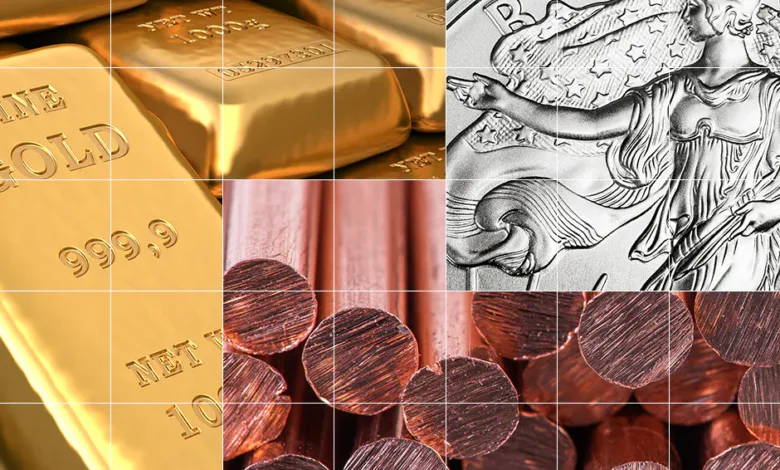
Metals markets are showing mixed performance in the latest commodity snapshot, with lithium carbonate leading the gainers at 1.34%, followed by silver, up 0.55%, and gold, which advances 0.46%. On the downside, platinum falls 0.82%, while iron ore traded in Chinese yuan declines 0.67%.
The contrasting moves highlight differing price dynamics across battery materials, precious metals and industrial commodities. Lithium carbonate records the strongest advance among the listed metals, while silver and gold also move higher. Platinum and iron ore, meanwhile, remain under pressure in the reported snapshot.
The available figures establish the direction and relative magnitude of these price movements but do not identify their underlying causes. Changes in supply expectations, industrial demand, investment flows, inventories, interest-rate expectations and broader economic sentiment can all influence metals markets, although further evidence is required to determine which factors are driving the current moves.
For manufacturers, commodity traders, industrial buyers and businesses exposed to international metals prices, the divergence reinforces the importance of monitoring individual markets rather than assuming that all metals will move in the same direction.
Market Snapshot
| Metal | Reported change | Market direction |
|---|---|---|
| Lithium carbonate | +1.34% | Leading gainer |
| Silver | +0.55% | Higher |
| Gold | +0.46% | Higher |
| Iron ore (CNY) | -0.67% | Lower |
| Platinum | -0.82% | Biggest loser |
Percentage changes are based on the supplied market snapshot. The reporting period and underlying price levels were not specified.
Current Price Action: Lithium Leads as Precious Metals Rise
Lithium carbonate records the strongest performance in the snapshot, gaining 1.34%. Silver follows with a 0.55% increase, while gold advances 0.46%.
The gains across lithium carbonate and the two precious metals contrast with declines in platinum and iron ore. This divergence suggests that the listed markets are responding to different influences rather than moving together as a single metals complex.
However, the figures alone do not establish whether lithium’s advance reflects changes in battery-material demand, supply expectations or trading activity. Similarly, the increases in gold and silver cannot be attributed to a particular shift in interest rates, the US dollar or investor demand without additional market information.
The next stage of trading will help determine whether the reported gains and losses persist or prove temporary.
Lithium Carbonate Forecast: Battery Material Leads Market Gains
Lithium carbonate rises 1.34%, making it the strongest performer among the five metals listed.
Lithium prices are closely associated with the battery supply chain, including electric vehicles, energy-storage systems and lithium-ion battery manufacturing. Changes in production, inventories, downstream purchasing and expectations for battery demand can influence market prices.
The current snapshot does not provide evidence of a specific change in any of these factors. Traders should therefore avoid interpreting the price increase as confirmation of a tightening supply balance or a recovery in end-user demand.
Key developments to monitor include:
- Battery-sector demand: Whether purchasing from battery manufacturers and other downstream users strengthens.
- Supply conditions: Whether production levels and available inventories change expectations for market availability.
- Electric vehicle and energy-storage activity: Whether demand trends support sustained consumption of lithium-based materials.
- Inventory and procurement behaviour: Whether buyers increase purchasing or continue to manage stock cautiously.
- Price follow-through: Whether the reported 1.34% gain is sustained in subsequent sessions.
For battery-material buyers and manufacturers, sustained price increases could affect procurement budgets, inventory valuations and supply-contract negotiations.
Silver Forecast: Industrial and Investment Factors Remain Important
Silver gains 0.55% in the latest snapshot, outperforming gold’s 0.46% advance.
Silver has both precious-metal and industrial characteristics. Its price can respond to investment demand and expectations for monetary policy, while industrial consumption also links it to manufacturing and applications such as electronics and solar technology.
The reported increase does not establish which of these influences is responsible for the move. Further evidence from the US dollar, interest-rate expectations, investment flows and industrial-demand indicators would be needed to assess the durability of the advance.
For businesses that purchase or sell silver, the key commercial consideration is whether price volatility could affect input costs, inventory values or expected revenue.
Gold Forecast: Prices Advance in the Latest Snapshot
Gold rises 0.46%, extending the positive direction across the precious metals listed in the report.
Gold can be influenced by real interest rates, US dollar movements, central-bank demand, investment flows and geopolitical uncertainty. However, the supplied figures do not identify a specific catalyst behind the latest gain.
Traders will need to monitor broader financial-market developments and subsequent price action to determine whether the advance develops into a more sustained trend.
For businesses with exposure to gold, including manufacturers, jewellers and traders, changes in the metal’s price can influence the cost of inventory and the value of outstanding purchase or sales commitments.
Platinum Forecast: Metal Records the Largest Decline
Platinum falls 0.82%, making it the weakest performer in the supplied metals snapshot.
Platinum has important industrial applications, including automotive catalysts and other manufacturing processes. Its price can be influenced by industrial demand, production conditions, inventories and expectations for the wider economy.
The current data do not identify which factors are behind the decline. A single reported percentage change is insufficient to establish whether platinum is entering a sustained bearish trend or experiencing a short-term correction.
Market participants should monitor subsequent price action alongside production, inventory and industrial-demand information before drawing conclusions about the outlook.
Iron Ore Forecast: Chinese-Yuan Pricing Moves Lower
Iron ore traded in Chinese yuan declines 0.67%, placing it among the reported commodity losers.
Iron ore demand is closely connected to steel production and construction activity, particularly developments in major consuming markets. Changes in steel-mill purchasing, infrastructure spending, property-sector conditions, port inventories and supply availability can influence prices.
However, the supplied snapshot does not provide evidence that any particular demand or supply factor is responsible for the decline.
The currency denomination is also relevant for international buyers. A movement in the CNY-denominated iron ore price does not, by itself, determine the final cost for a business paying in US dollars, euros or another currency. The applicable exchange rate and contract terms can alter the effective purchase cost.
Bullish Sentiment
- Lithium carbonate leads gains: The 1.34% increase makes lithium the strongest performer in the supplied metals snapshot.
- Silver advances: The 0.55% gain provides another positive signal among the listed metals.
- Gold moves higher: The 0.46% increase adds to the gains across precious metals.
- Potential follow-through: If subsequent trading confirms the advances and supporting fundamentals emerge, the three gaining metals could attract further market attention.
- Supply-demand developments: New evidence of tighter supply or stronger demand could provide additional support to individual metals.
Bearish Sentiment
- Platinum underperforms: The 0.82% decline makes it the weakest performer in the report.
- Iron ore falls: The 0.67% loss highlights continued price pressure in the Chinese-yuan-denominated market snapshot.
- Uneven market conditions: The divergent performance indicates that gains in selected metals are not shared across the entire group.
- Unconfirmed catalysts: Without supporting supply, demand or financial-market data, the sustainability of the gains remains uncertain.
- Further downside risk: If subsequent trading confirms the weakness in platinum and iron ore, additional selling may follow, although the supplied data do not establish future price targets.
Metals Price Forecast: What Traders Are Watching
The immediate outlook is mixed, with lithium carbonate, silver and gold advancing while platinum and iron ore decline.
Scenario 1: Gains extend across lithium and precious metals
If subsequent trading confirms the advances and relevant market data support stronger demand or tighter supply, lithium carbonate, silver and gold could maintain positive momentum.
Scenario 2: Performance remains divided
Different supply-demand dynamics may continue to produce divergent movements across battery materials, precious metals and industrial commodities. In this scenario, each market will require its own fundamental assessment.
Scenario 3: Weakness extends in platinum and iron ore
If selling pressure persists and subsequent data reinforce concerns about industrial demand or supply conditions, platinum and iron ore could remain under pressure.
These are conditional scenarios, not guaranteed forecasts or price targets.
Supply Outlook
The supplied market snapshot does not include production estimates, inventory data, mine output, refinery activity or changes in available stocks for the metals listed.
Supply conditions nevertheless remain important to the outlook. Lithium carbonate prices can respond to changes in battery-material production and inventories. Platinum is sensitive to mine supply and recycling, while iron ore depends on mining output, shipments and stock availability. Silver and gold are also influenced by mine production, recycling and investment-related flows.
Traders should seek confirmation from updated supply and inventory information before concluding that the latest price movements signal a lasting change in market availability.
Demand Outlook
Demand conditions differ significantly across the metals in the report.
- Lithium carbonate: Battery production, electric vehicles and energy-storage requirements are important demand considerations.
- Silver: Industrial applications and investment demand can both influence prices.
- Gold: Investment flows, central-bank activity and broader financial-market conditions are relevant.
- Platinum: Automotive and other industrial applications contribute to demand.
- Iron ore: Steel production and construction-related activity are important influences.
The supplied figures do not provide new consumption estimates or demand forecasts. Consequently, the latest price changes should be treated as market-performance indicators rather than proof of a shift in underlying demand.
Market Outlook for the Coming Sessions
Metals traders will be watching whether the current performance pattern continues or begins to reverse.
Lithium carbonate is the main gainer, while silver and gold also record advances. Platinum and iron ore are under pressure, highlighting the importance of distinguishing between battery materials, precious metals and industrial commodities.
Key developments to monitor include:
- Lithium carbonate: Whether the 1.34% gain is sustained and supported by battery-sector demand or supply developments.
- Silver and gold: Whether the advances continue alongside changes in investment demand, interest-rate expectations and the US dollar.
- Platinum: Whether the 0.82% decline extends or attracts buying interest.
- Iron ore: Whether the 0.67% decline is reinforced by further information on steel demand, inventories or supply.
- Currency effects: Whether exchange-rate movements alter the effective cost of metals for international buyers.
Overall, the latest snapshot shows positive momentum in lithium carbonate and selected precious metals, but weaker performance in platinum and iron ore. Further market data will be needed to determine whether these moves develop into sustained trends.
Currency Hedger View
Metals-price volatility can affect manufacturers, industrial buyers, commodity traders, jewellery businesses and companies operating across the battery supply chain. Rising prices may increase procurement costs, while falling prices can reduce inventory values or put pressure on expected sales revenue.
For businesses importing metals or purchasing materials priced in foreign currencies, exchange-rate movements can amplify or offset changes in the underlying commodity price. A decline in a metal’s quoted price does not automatically translate into lower local-currency costs if the relevant currency strengthens against the buyer’s operating currency.
Businesses should review their metal exposure alongside payment currencies, purchasing schedules, inventory levels and contractual pricing arrangements. Depending on the nature of the exposure, commodity and foreign-exchange risk management may help improve budget visibility, although hedging carries costs and cannot eliminate every risk.
Currency Hedger helps businesses assess commodity-price and currency exposure and explore risk-management strategies suited to their commercial requirements.
Review your commodity and currency exposure:
- Open a Currency Hedger account
- Visit currencyhedger.com to learn more about commodity and foreign-exchange risk management.
Disclaimer
This article is for informational purposes only and does not constitute investment, financial or trading advice, or a recommendation to buy or sell any commodity, currency or financial instrument. Market changes are based on the supplied report, and the underlying causes have not been independently verified. Commodity markets can be volatile, and forecasts or scenarios may not materialise. Hedging involves costs and risks and may not be suitable for every business. Seek appropriate professional advice before entering into a financial transaction or hedging arrangement.