S&P 500 — US Large Cap Index
 FTSE 100 — UK Blue Chips
 Euro Stoxx 50 — Eurozone Leaders
 DAX 40 — German Equities
 CAC 40 — French Market Index
 Nikkei 225 — Japan Benchmark
 Hang Seng — Hong Kong Index
 Shanghai Composite — China Mainland
 ASX 200 — Australian Market
 TSX Composite — Canada Index
 Nifty 50 — India Large Cap
 STI Index — Singapore Market
 KOSPI — South Korea Index
 Bovespa — Brazil Equities
 JSE Top 40 — South Africa Index
 IPC Index — Mexico Market

Metals Price Forecast: Titanium Falls 4.65% as Platinum and Silver Slide, While Lithium Gains

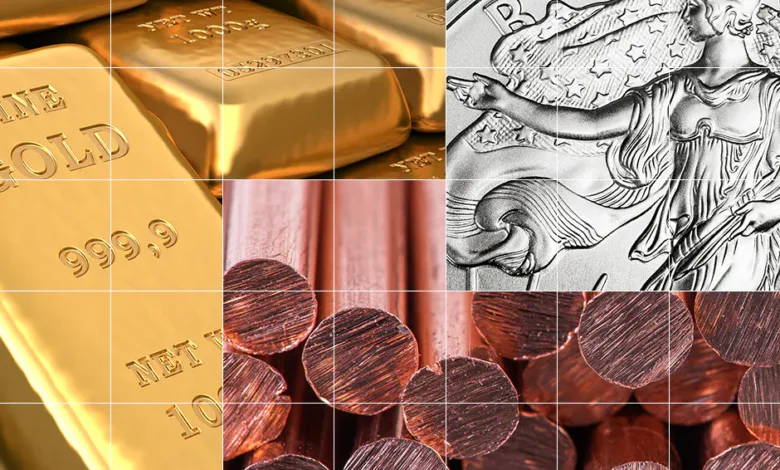
Metals markets are experiencing broad selling pressure, led by a sharp decline in titanium, while platinum, silver and gold also trade lower. Lithium carbonate is the only gainer in the latest market snapshot, advancing 1.07% against declines across the other reported metals.
Titanium records the steepest fall at 4.65%, followed by platinum, down 3.23%, and silver, which loses 2.01%. Gold is comparatively resilient, declining by 0.45%. Lithium carbonate moves in the opposite direction, rising 1.07%.
The divergence highlights the importance of distinguishing between industrial metals, precious metals and battery-related materials. Their prices can respond to different supply conditions, industrial demand trends, investment flows and expectations for economic growth.
For traders, the immediate question is whether the declines in titanium, platinum and silver represent short-term corrections or the beginning of a broader bearish move. Gold’s smaller decline and lithium’s advance also suggest that the selling pressure is not uniform across the metals complex.
Market Snapshot
| Metal | Reported price change | Market direction |
|---|---|---|
| Titanium | -4.65% | Strongly bearish |
| Platinum | -3.23% | Bearish |
| Silver | -2.01% | Bearish |
| Gold | -0.45% | Mildly bearish |
| Lithium carbonate | +1.07% | Bullish |
The supplied update provides percentage changes only. Absolute prices, contract specifications, trading volumes and technical indicator readings are not available.
Current Metals Price Action
Titanium is the weakest performer in the latest snapshot, falling 4.65%. The scale of the decline makes it the primary market to watch for continued selling pressure, although the percentage change alone does not establish the underlying cause.
Platinum is also under significant pressure, losing 3.23%, while silver declines by 2.01%. Gold’s smaller 0.45% fall indicates comparatively stronger performance within the precious-metals group, but it does not establish that gold has entered a bullish trend.
Lithium carbonate is the exception, gaining 1.07%. Its positive performance highlights the contrasting price dynamics that can develop between battery-related materials and other industrial or precious metals.
The latest figures do not establish whether the movements are driven by changes in physical demand, supply availability, currency movements, interest-rate expectations or technical positioning. Traders should avoid attributing the declines to a single factor without additional market evidence.
The next directional move will depend on whether the weakest metals extend their losses, whether gold stabilises, and whether lithium can maintain its gains.
Titanium: Sharp Decline Puts Market Direction in Focus
Titanium’s 4.65% fall places it well ahead of the other reported losers. Such a move warrants close monitoring for follow-through selling, particularly if prices are breaking established support levels.
Titanium has applications across industrial manufacturing, aerospace, chemical processing and other specialised sectors. Its market outlook can therefore depend on end-user demand, production availability, manufacturing activity and the economics of processing the material.
However, the supplied data does not identify a specific titanium supply or demand development behind the latest decline. It would be premature to conclude that the fall reflects weakening industrial demand or an increase in available supply without further confirmation.
For traders, the priority is to establish whether the decline has altered the market’s technical structure. A break below a recent swing low could indicate that sellers remain in control, while a rapid recovery above the breakdown area could suggest that the move is losing momentum.
Businesses with physical titanium exposure should also distinguish between a market-price movement and its actual effect on procurement costs, inventory valuations and contracted sales margins.
Platinum and Silver: Precious Metals Face Stronger Selling Pressure
Platinum has fallen 3.23%, while silver is down 2.01%. Both have declined considerably more than gold in the supplied snapshot, pointing to weaker relative price performance.
Platinum has significant industrial applications, including automotive catalysts and specialised manufacturing. Its price can be influenced by industrial demand, mine supply, recycling and changes in the availability of alternative materials.
Silver has both industrial and investment demand. Its performance can therefore reflect changes in manufacturing expectations alongside movements in precious-metal investment flows, interest rates and the US dollar.
Neither metal’s latest decline can be attributed to a specific fundamental catalyst based on the supplied figures alone.
What platinum traders should watch
- Whether the latest decline continues below recent chart support.
- Whether industrial demand expectations and physical-market indicators improve or deteriorate.
- Whether prices recover above the level from which the latest sell-off accelerated.
- Whether trading volume confirms continued selling or indicates a potential exhaustion of momentum.
What silver traders should watch
- Whether the market establishes lower highs and lower lows.
- Whether gold stabilises and helps support broader precious-metal sentiment.
- Whether changes in the US dollar and interest-rate expectations influence investment demand.
- Whether industrial-demand indicators provide additional direction.
The relative weakness of platinum and silver is worth monitoring, but a single market snapshot is insufficient to establish a sustained bearish trend.
Gold: Relative Resilience Despite a Decline
Gold falls by 0.45%, making it the least affected of the four reported declining metals.
Its smaller loss suggests relative resilience in the current snapshot, but traders should not interpret this as definitive evidence of safe-haven buying or a change in the longer-term trend.
Gold can respond to real interest rates, US dollar movements, central-bank purchases, investment flows and geopolitical uncertainty. These drivers can differ from the industrial factors affecting titanium and platinum.
The next important signal is whether gold holds above recent support while other metals remain under pressure. Continued relative strength could indicate that gold is attracting comparatively stronger demand. Conversely, a break below support accompanied by a stronger dollar or rising yields could increase downside risk.
The latest percentage change alone does not confirm either scenario.
Lithium Carbonate: The Sole Gainer
Lithium carbonate rises by 1.07%, making it the strongest performer in the supplied metals update.
Lithium prices are influenced by battery manufacturing demand, electric-vehicle production, energy-storage deployment, inventory levels and supply from producing regions. Changes in production economics and the pace at which new capacity enters the market can also influence prices.
The gain could reflect a short-term recovery, changing expectations or market-specific buying. The available data does not identify which explanation applies.
For traders, the key question is whether lithium can sustain the advance. A move above recent resistance, supported by stronger volume and improving price structure, would provide better evidence of a developing recovery. Failure to hold the gain could indicate that the move is temporary.
For battery manufacturers and other industrial buyers, the latest increase also illustrates why procurement exposure should be assessed against actual contract terms and purchasing schedules rather than a single daily price change.
Bullish Sentiment
- Lithium carbonate leads the gainers: Its 1.07% advance demonstrates positive price action within the battery-materials segment, although further confirmation is needed to establish a sustained recovery.
- Gold shows relative resilience: Gold’s 0.45% decline is considerably smaller than the falls in platinum and silver, making its relative performance important to monitor.
- Potential for technical rebounds: Sharp declines in titanium, platinum and silver can be followed by corrective recoveries if selling pressure eases and buyers return.
- Market-specific fundamentals may diverge: Improvements in individual supply-demand balances could support a recovery in selected metals even if the broader complex remains weak.
- Confirmation from price structure: A recovery above recent resistance, supported by volume, could strengthen the bullish case for individual metals.
Bearish Sentiment
- Titanium records the largest decline: The 4.65% fall makes it the clearest downside performer and raises the risk of further technical selling if support breaks.
- Platinum loses 3.23%: The sizeable decline points to significant short-term weakness, although its underlying catalyst remains unconfirmed.
- Silver falls 2.01%: The decline could extend if sellers retain control and the market breaks below recent support.
- Gold also trades lower: Its 0.45% decline shows that the precious-metals complex is not uniformly positive, despite gold’s relative resilience.
- Lithium’s gain may prove temporary: A single positive session does not establish a lasting recovery, particularly without confirmation from volume and market fundamentals.
- Broad uncertainty over market drivers: Without additional supply, demand and positioning data, traders face the risk of misreading short-term price movements as a durable trend.
Metals Technical Analysis and Price Forecast
The latest percentage changes indicate negative short-term price action in titanium, platinum, silver and gold, while lithium carbonate is moving higher. However, these changes alone do not provide enough information to confirm trend strength or calculate reliable support and resistance levels.
Titanium technical outlook
Bias: Bearish based on the reported move.
- Bearish scenario: A confirmed break below the latest swing low could extend the decline, especially if selling volume increases.
- Recovery scenario: Stabilisation followed by a move above the recent breakdown area could indicate that downside momentum is easing.
- Key confirmation: Recent price structure, trading volume and updated physical-market information.
Platinum technical outlook
Bias: Bearish based on the reported move.
- Bearish scenario: Continued lower highs and lower lows would support further downside risk.
- Recovery scenario: A sustained move above recent resistance could signal a corrective rebound or a potential change in short-term direction.
- Key confirmation: Chart structure, industrial-demand developments and changes in supply expectations.
Silver technical outlook
Bias: Bearish based on the reported move.
- Bearish scenario: A break below recent support would reinforce the selling trend.
- Recovery scenario: A recovery above resistance, alongside improving momentum, would weaken the immediate bearish case.
- Key confirmation: Relative performance against gold, the US dollar, interest-rate expectations and volume.
Gold technical outlook
Bias: Mildly bearish on the reported move, with relative resilience.
- Bearish scenario: A confirmed break below recent support could expose gold to further losses.
- Recovery scenario: Holding support and reclaiming recent resistance could strengthen the case for a recovery.
- Key confirmation: Real yields, US dollar movements and investment demand, alongside price structure.
Lithium carbonate technical outlook
Bias: Positive on the reported move, but not yet a confirmed uptrend.
- Bullish scenario: A sustained move above recent resistance could attract further buying.
- Bearish scenario: A reversal below recent support would suggest that the latest gain has failed to establish a durable recovery.
- Key confirmation: Volume, battery-material demand, inventory developments and supply conditions.
RSI and MACD can help traders assess momentum, while moving averages can provide additional trend context. Current readings are not available from the supplied update, so no specific overbought, oversold or crossover signals can be confirmed.
Technical conclusion: Titanium, platinum and silver warrant particular attention because of their larger reported declines. Gold is showing relative resilience, while lithium is the only reported gainer. The next tradeable signal should come from confirmed chart structure rather than percentage changes alone.
Market Outlook for the Coming Sessions
The metals complex is showing divergent performance, with titanium, platinum and silver leading the declines, gold falling more modestly and lithium carbonate advancing.
Titanium is the key downside market in the snapshot. Traders should watch whether its 4.65% decline extends below recent support or attracts buying that stabilises prices. Platinum and silver also require close monitoring for confirmation of continued selling.
Gold’s smaller decline may indicate relative resilience, but a clearer directional signal will require evidence from price structure and broader precious-metal drivers. Lithium’s advance should similarly be treated as an initial positive move rather than proof of a sustained recovery.
The most important developments to monitor are:
- Whether titanium establishes a new low or begins to recover.
- Whether platinum and silver extend their declines or stabilise near support.
- Whether gold maintains its relative strength against other precious metals.
- Whether lithium carbonate sustains its gains and breaks above resistance.
- Whether fresh supply-demand information confirms the current direction of each market.
Overall outlook: Short-term sentiment is negative across most of the reported metals, particularly titanium, platinum and silver. Lithium carbonate is moving in the opposite direction, while gold is displaying relative resilience. Traders should assess each metal separately and wait for confirmation before assuming that the current divergence will persist.
Currency Hedger View
Metals-price volatility can affect the procurement costs, inventory valuations and profit margins of manufacturers, processors, distributors, recyclers and other businesses with physical commodity exposure.
A business may face additional risk when metals are purchased or sold in a currency different from the one used for financial reporting. Changes in the underlying metal price and exchange rate can combine to alter the final cost of a transaction or the value of expected receipts.
Currency Hedger encourages businesses to map their actual exposure, including the metal involved, quantity, pricing basis, settlement currency and timing of payment. Commodity-price and foreign-exchange risks should be assessed together where relevant, while recognising that each may require a different risk-management approach.
Explore Currency Hedger or open an account to discuss your business’s currency exposure and risk-management requirements.
Disclaimer: This article is for informational and educational purposes only and does not constitute investment advice or a recommendation to buy or sell any financial instrument. Metals markets can be volatile and may involve substantial losses. The outlooks described are conditional assessments based on the supplied percentage changes; current prices, technical levels and indicator readings have not been verified against live charts. Any hedging strategy should be assessed against the underlying commercial exposure, financial circumstances and risk tolerance.